
Sight · Afghanistan
Tillya Tepe
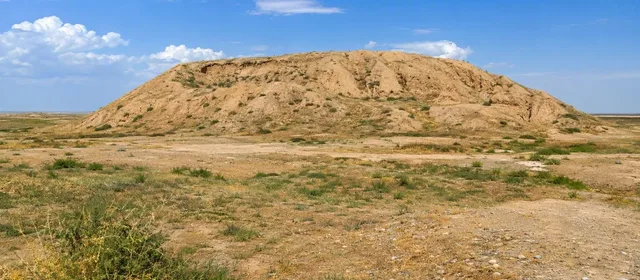
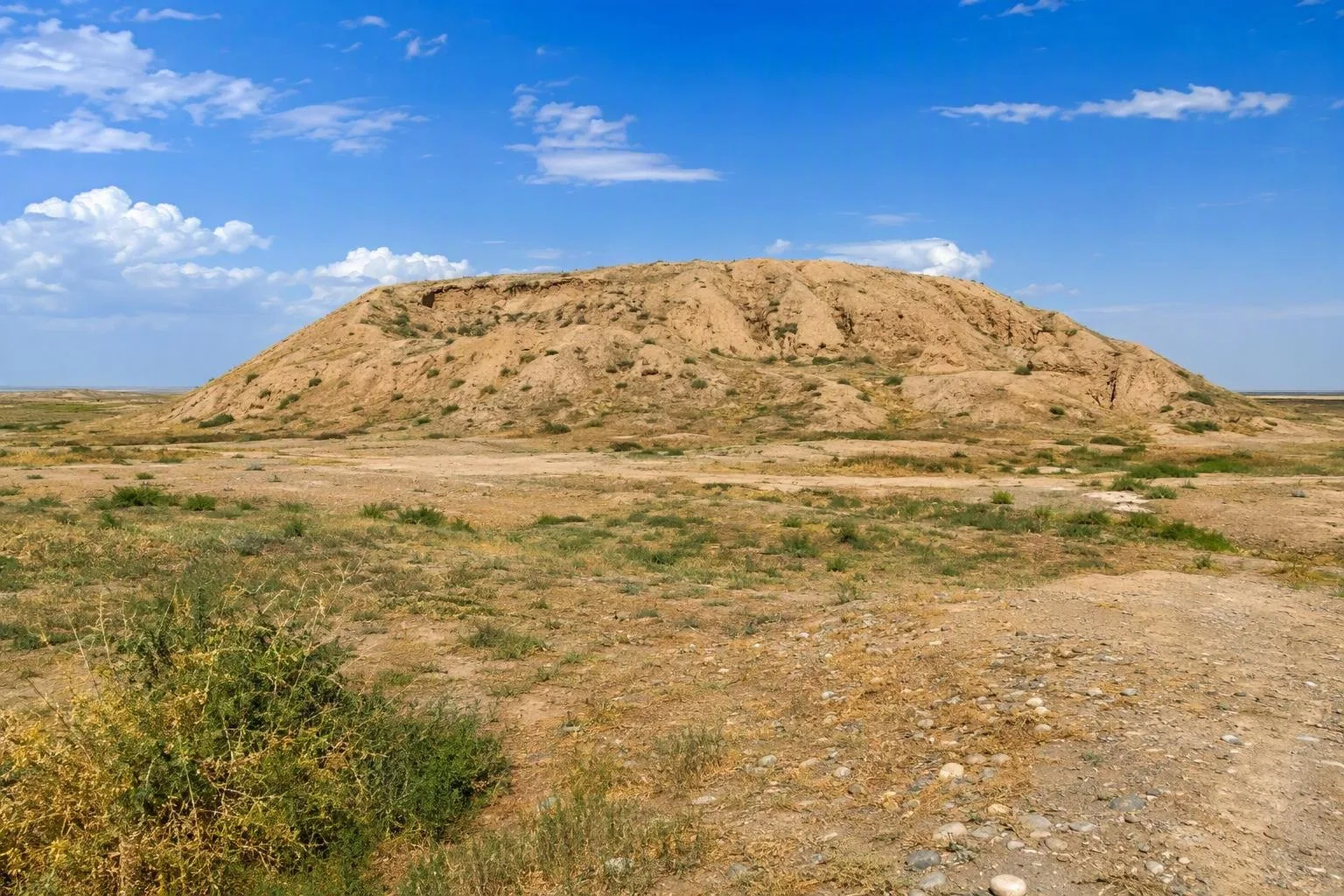
Tillya Tepe, meaning “Golden Hill”, is an archaeological mound and necropolis near Sheberghan in Jowzjan Province, northern Afghanistan. Its six richly furnished early first-millennium graves produced the collection known as the Bactrian gold.
The site
Tillya Tepe stands near Sheberghan in the historic region of Bactria. It is an archaeological mound rather than a monument with reconstructed buildings: a low rise in the northern Afghan plain containing the remains of successive occupations and burials.
The name means “Golden Hill” or “Golden Mound.” Earlier structures on the mound included a substantial brick-built complex, probably a temple; long after it was abandoned, graves were cut into its ruins. The place is therefore important both for its deep archaeological sequence and for a single extraordinary cemetery.
The 1978 excavation
A Soviet-Afghan expedition led by Viktor Sarianidi excavated six graves here in 1978. They held five women and one man, buried with exceptional personal adornment, weapons, coins and clothing ornaments. The burials date broadly from the first century BCE to the first century CE.
More than 20,000 objects were recovered. Much of the material was gold, but the assemblage also includes silver, ivory and inlays of turquoise and other stones. These finds are widely known as the Bactrian gold.
Read the objects closely
The folding gold crown from one of the women’s graves is the signature object: its tree-shaped elements could be dismantled, a practical design for a mobile elite. Look beyond the crown for the small, densely worked details—gold appliqués once sewn to garments, belts, pendants, clasps and weapon fittings.
The collection combines steppe traditions with Greek, Iranian, Indian and Chinese imagery. Coins and styles reveal a region connected across long distances, but the identity of the people buried here remains unsettled. Yuezhi, Saka/Scythian and eastern Parthian associations have all been proposed; none should be treated as certain.
The treasure’s later history
The objects were moved to Kabul after excavation and later hidden during years of conflict. They were publicly recovered from secure vaults in 2003–04, after having been widely feared lost. Tillya Tepe itself is the findspot, not a place where the gold remains displayed in the graves.
Travel reality
Security: Current UK official advice is against all travel to Afghanistan, including organised tours. Treat Tillya Tepe as an archaeological reference site, not an independently accessible stop; conditions, permissions and local security can change rapidly.
From the magazine
Stories about Tillya Tepe
Editorial stories linked directly to Tillya Tepe.
No stories about Tillya Tepe have been published yet.
Routes from our editors
Travel through Tillya Tepe
Editorial routes connecting Tillya Tepe with other countries, cities and hotspots.
No routes through Tillya Tepe have been published yet.
More in Afghanistan
Related hotspots
Other cities, nature areas and places within Afghanistan.
Begram Archaeological Site
1 linked stories and routes
Hadda
1 linked stories and routes
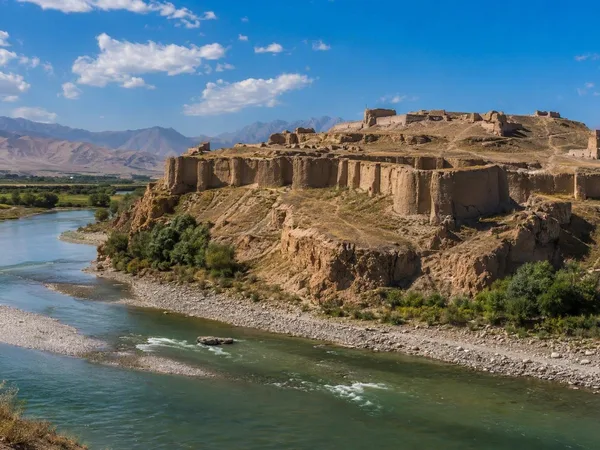
Ai Khanum
1 linked stories and routes
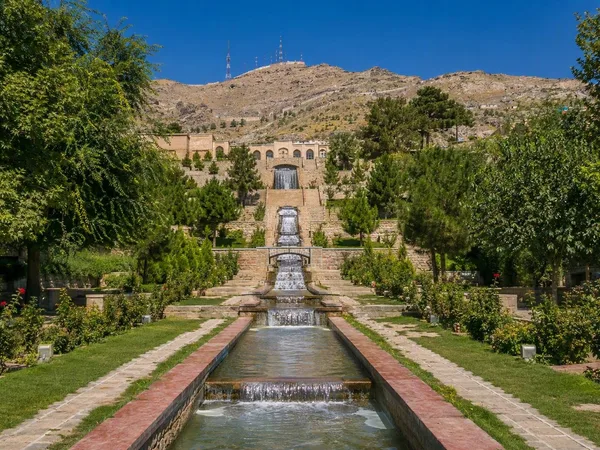
Kabul
1 linked stories and routes
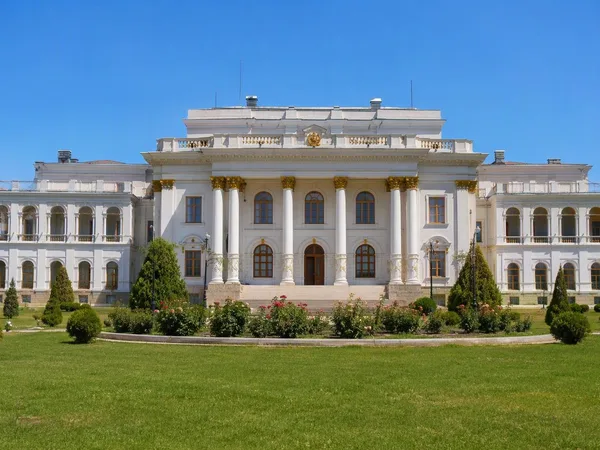
Darulaman, Kabul
1 linked stories and routes
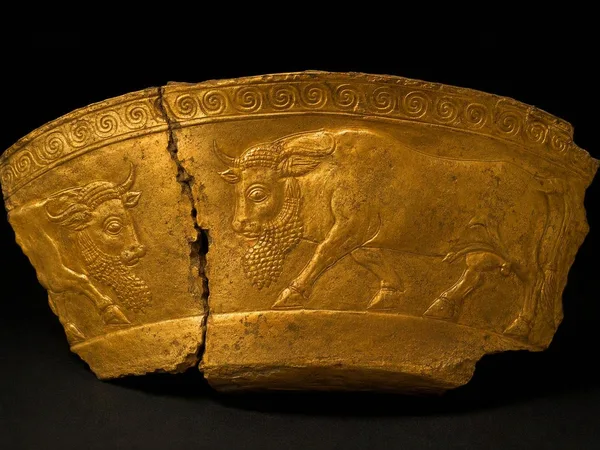
Tepe Fullol Archaeological Site
1 linked stories and routes