Sight · Afghanistan
Begram Archaeological Site
Begram is the ancient urban site near Bagram in Parwan Province, north of Kabul. Its sealed Kushan-era rooms produced one of Afghanistan’s defining archaeological finds: ivories, glass, bronzes and Chinese lacquerware.
Why Begram matters
Begram is the archaeological name for the ancient city associated with Kapisa, positioned near the meeting of routes through the Hindu Kush. Under the Kushans, it was a major urban centre and, in the traditional identification, a summer capital. The site’s importance is not a single monument but the extraordinary material culture recovered from it.
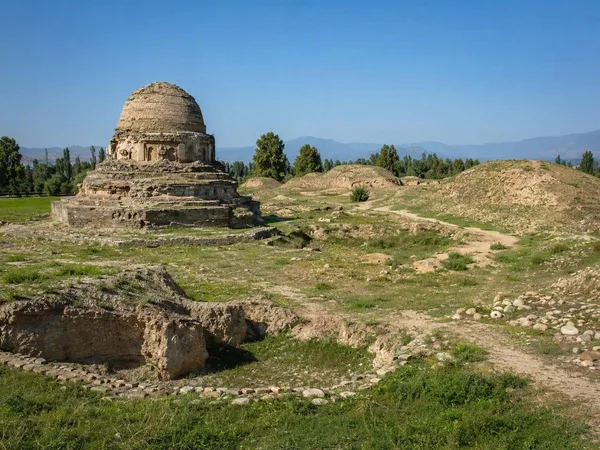
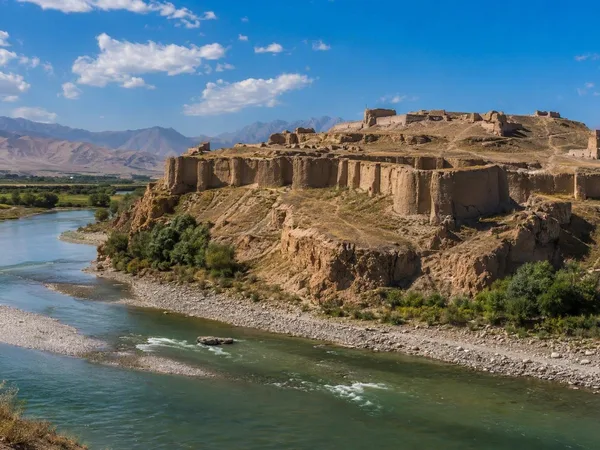
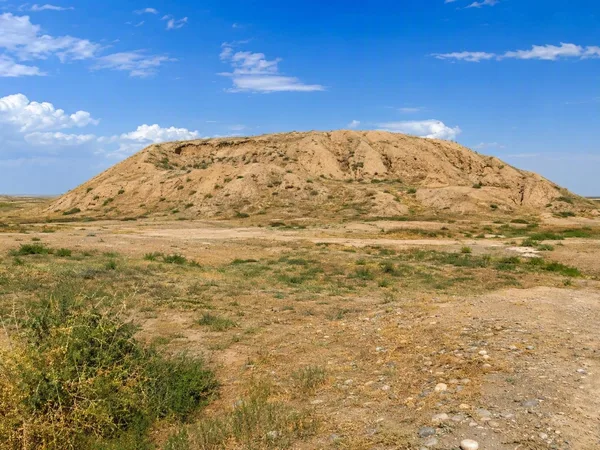
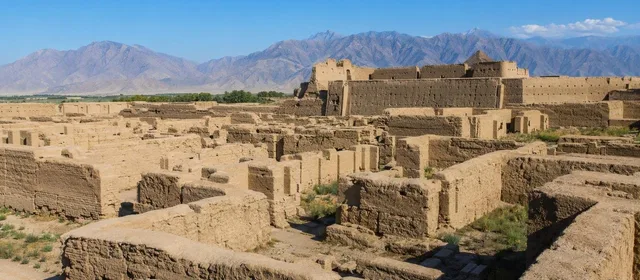
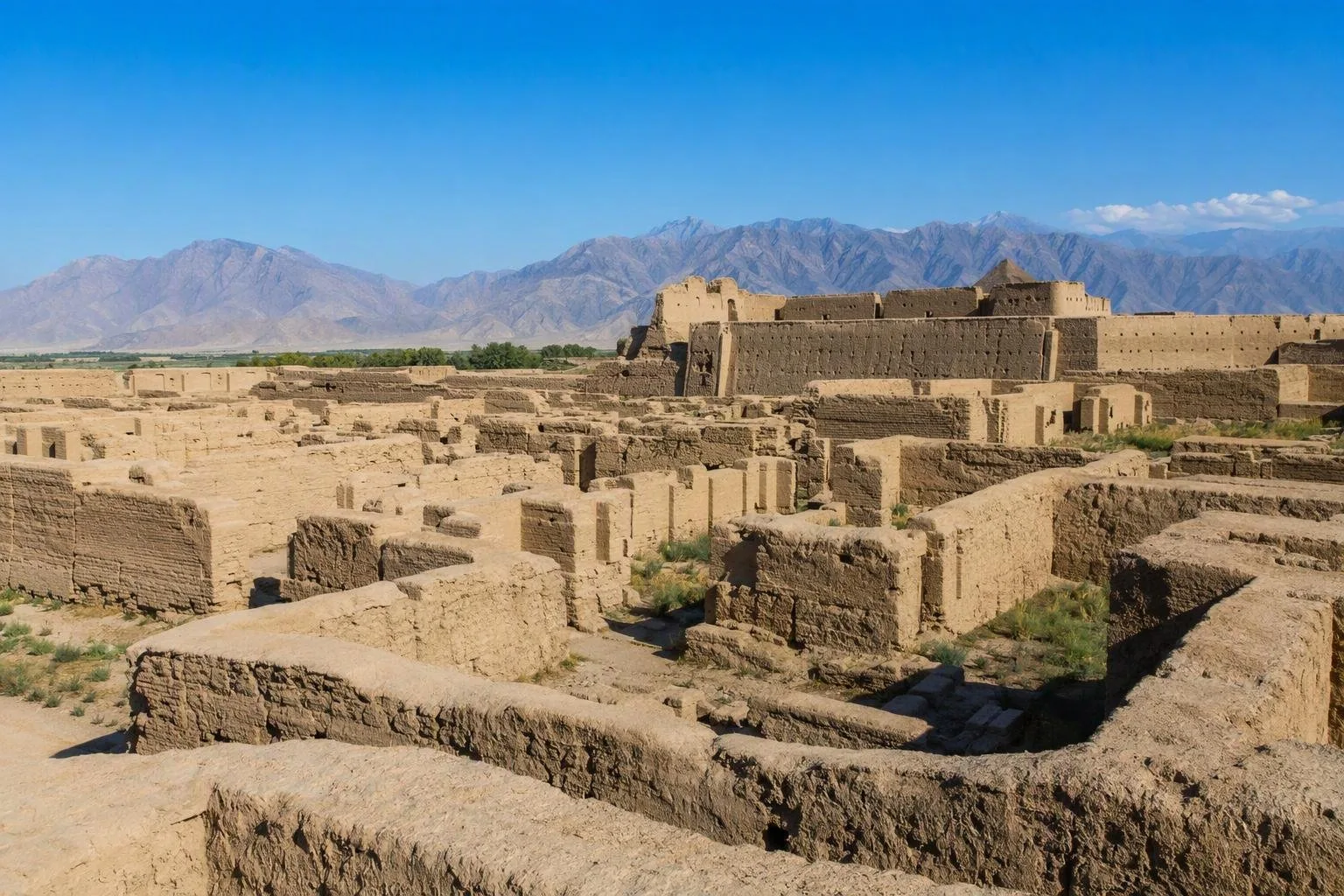
The excavated city included fortified enclosures, the area termed the New Royal City, and a southern urban extension. What survives above ground is an archaeological landscape of walls, mounds and traces of a large settlement rather than a restored ruin complex.
The sealed rooms
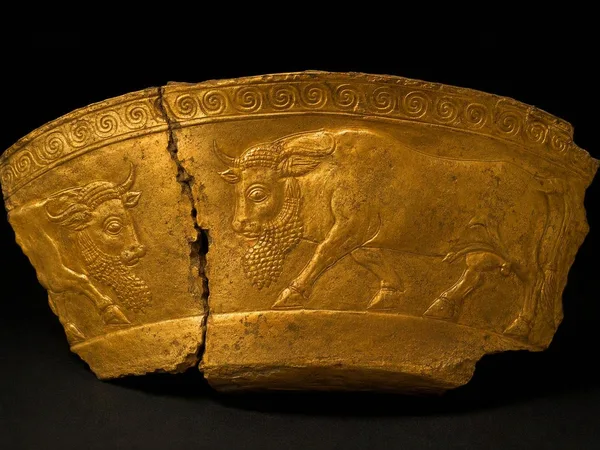
French excavations begun in 1936 transformed Begram’s standing. Two rooms, numbered 10 and 13, had been sealed in antiquity. They yielded a concentrated group of luxury goods whose varied origins make the site essential for understanding Kushan-period connections.
Key finds included:
- Carved ivory plaques and bands, originally fitted to wooden stools and seats
- Fine glass vessels, including fish-shaped flasks
- Bronze vessels and figurines
- Chinese lacquerware
- Plaster medallions with Greek mythological imagery
The ivories are particularly revealing: their carvings include architectural frames, animals, vegetation and fantastic creatures. They are generally linked with Indian artistic traditions, while the glass and medallions point westward and the lacquerware eastward. Begram was not simply a stop on a line called the Silk Road; its collection records elite ownership and use of objects moving through several networks.
Reading the site
Do not expect the Begram hoard to be displayed in the ruins. The objects were divided between Afghan and French collections after excavation, and surviving pieces are associated with museum collections in Kabul and Paris. The site itself supplies the setting: a substantial Kushan city beside routes linking Bactria, Gandhara and the Kabul region.
For a useful mental picture, separate the place from the treasure. The earthworks and fortified plan explain Begram as an urban centre; the objects explain the range of contacts and tastes sustained there.
Access and security
This is not currently a conventional independent-visitor archaeological stop. Afghanistan carries severe, countrywide security warnings from multiple governments, citing terrorism, kidnapping, detention risk and very limited consular and medical support. Do not travel to Begram for tourism.
If circumstances change for authorised research or heritage work, treat access to the archaeological ground as permission-dependent. Do not enter, climb on, remove material from, or photograph sensitive infrastructure around Bagram without explicit local authorisation.
When to study Begram instead
The most reliable way to encounter Begram now is through its documented finds in museum collections and archaeological publications. Focus on the contrast between the fragile carved ivories, lacquer fragments and glassware, and the exposed earthen fabric of the city where they were found.
From the magazine
Stories about Begram Archaeological Site
Editorial stories linked directly to Begram Archaeological Site.
No stories about Begram Archaeological Site have been published yet.
Routes from our editors
Travel through Begram Archaeological Site
Editorial routes connecting Begram Archaeological Site with other countries, cities and hotspots.
No routes through Begram Archaeological Site have been published yet.
More in Afghanistan
Related hotspots
Other cities, nature areas and places within Afghanistan.