Seven European train routes where the railway is the destination
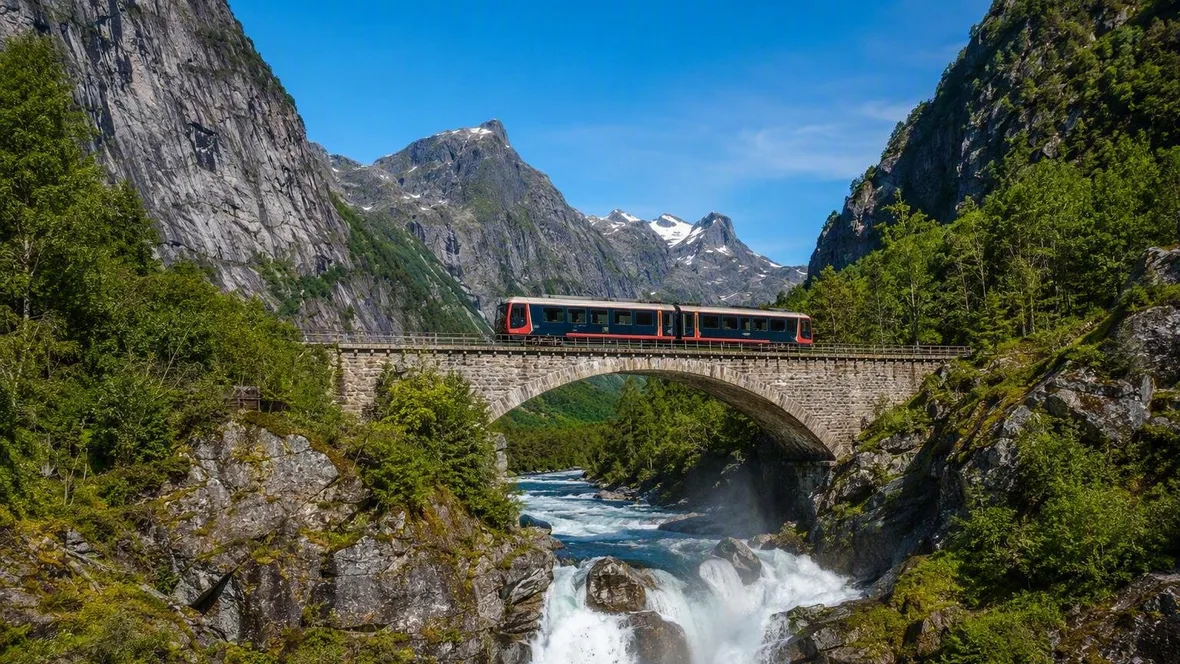
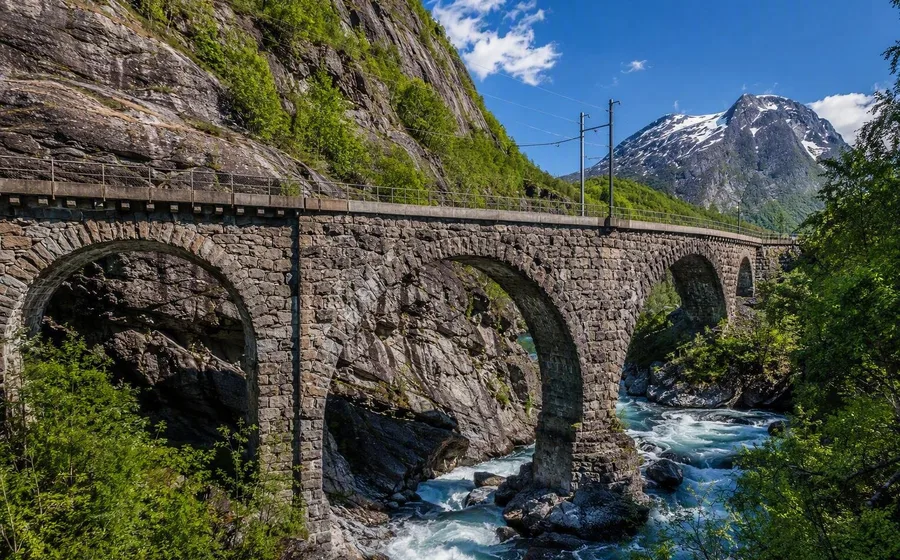
Above Vermafossen, a regular train crosses the stone Kylling Bridge before dropping between the rock walls of Romsdal. These seven lines put landscape, railway construction and ordinary public transport in the same frame.
Practical notes
All seven routes carry regular public trains, so none needs a luxury booking. 7 Centovalli, Locarno–Domodossola: allow about 1 hour 50 minutes; mid-October to early November brings the strongest autumn colour. Regional trains are the standard service, while the reservable Centovalli Express uses the same tracks. 6 Semmering, Gloggnitz–Mürzzuschlag: allow roughly 45–70 minutes on a train via Semmering; winter sets snow against the stone viaducts. 5 Douro, Porto São Bento–Pocinho: allow about 3 hours 20 minutes; September and October pair harvest activity with changing vineyard colour. 4 Rauma, Dombås–Åndalsnes: allow about 80 minutes; May and early June bring snow on the high peaks and full waterfalls. The Golden Train is a separate seasonal excursion, not the regular service. 3 West Highland, Glasgow Queen Street–Mallaig: allow about 5 hours 18 minutes; late May to mid-June gives long days before the busiest summer weeks. ScotRail runs the public service; the Jacobite steam train is a separate seasonal operation. 2 Bergensbanen, Oslo S–Bergen: allow 6½–7½ hours; late spring keeps snow on Hardangervidda while the lower valleys turn green. 1 Bernina, Chur–Tirano: allow around 4½ hours on the direct Bernina Express and longer on regional connections; May and June show green valleys below a snowy pass. Regional Rhätische Bahn trains do not require reservations, but the Bernina Express does. Pullman Class is the lone luxury product and runs only between St Moritz and Tirano.
7. Centovalli: Locarno to Domodossola
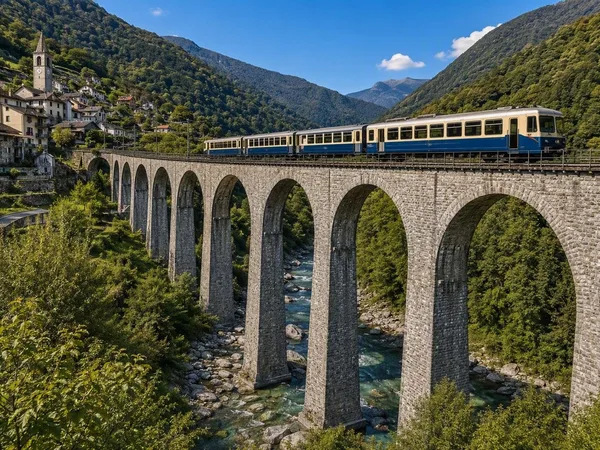
The narrow-gauge train leaves Locarno for wooded ravines, side valleys and small stations in the Swiss Centovalli, then reaches Italy’s wider Valle Vigezzo before Domodossola. It does not tackle a high pass. Instead, the 52-kilometre line threads through difficult ground with 31 tunnels and 83 bridges.
The steel Isorno bridge near Intragna and the Ruinacci bridge near Camedo give the route its clearest engineering moments. The railway opened in 1923, when no continuous road connected the two valleys, and it still links settlements across the border. That modest, useful character places it seventh.
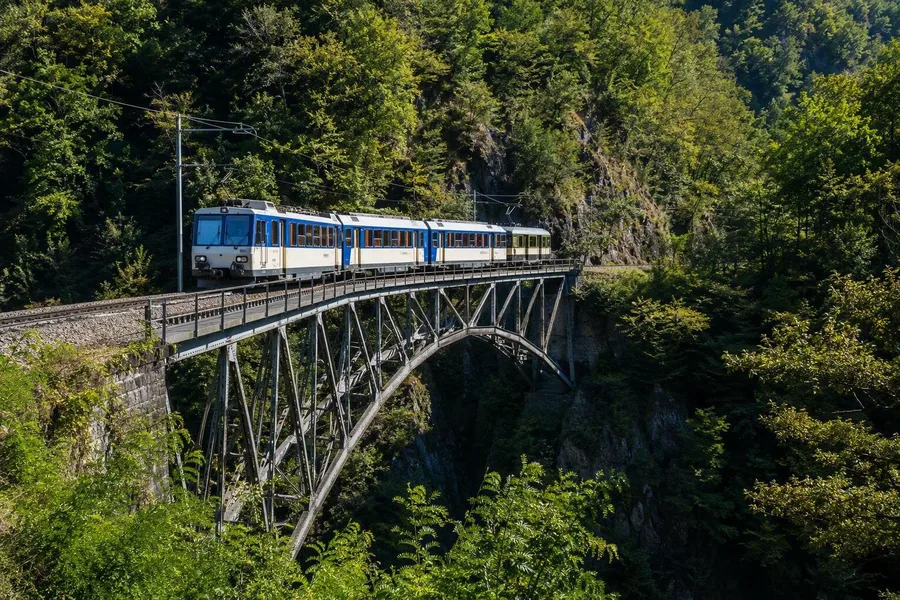 A Centovalli train crosses the steel Isorno bridge near Intragna in the Swiss Centovalli.
6. Semmering: Gloggnitz to Mürzzuschlag
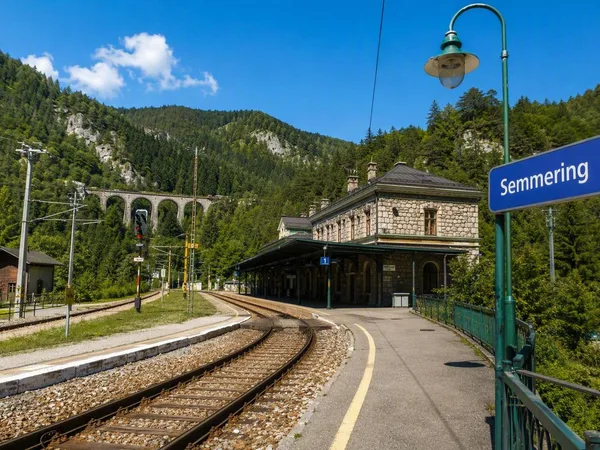
From Gloggnitz, trains climb through the Schwarza and Auerbach valleys towards the Semmering Pass, then descend through the Roschnitz valley to Mürzzuschlag. Forested slopes and villages sit close to the line. The railway itself holds the attention.
Builders laid this normal-gauge route between 1848 and 1854, gaining height with curves, tunnels and masonry viaducts instead of forcing a straight path through the mountains. At Kalte Rinne, the curved, double-deck viaduct carries the line across the valley before the Semmering Tunnel takes trains beneath the pass. Regular trains still use this historic section on the Vienna–Graz corridor. It ranks sixth because its finest view is often a piece of stubbornly elegant 19th-century engineering.
5. Douro: Porto to Pocinho
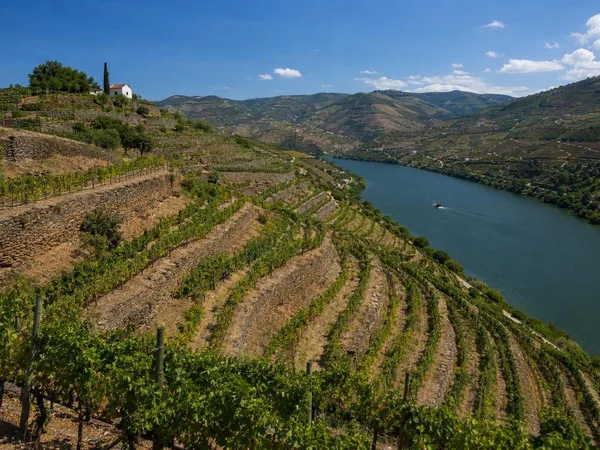
The line leaves Porto and settles beside the Douro as vineyards begin to cover the slopes. Beyond Régua and Pinhão, terraces, villages and wine estates fill the workable ledges; farther east, exposed rock narrows the river valley.
Pinhão station provides a useful stop. Its azulejo panels show vineyard labour and local landscapes, while the river outside explains why the railway mattered. The tracks reached Régua in 1879 and later continued to Spain, carrying passengers and wine from a region that had lacked easy connections. The Portuguese line now ends at Pocinho after the section farther east closed. Fifth place suits a railway that follows a working river corridor for most of the day.
4. Rauma: Dombås to Åndalsnes
The Rauma Line starts at the junction at Dombås and descends towards Åndalsnes as the Rauma River, waterfalls and steep mountain walls close around the valley. The journey is short. It wastes none of its distance.
Near Verma, the Stavem reversing tunnel and Kylling Bridge let the railway negotiate three levels of difficult ground in a compact stretch. The hand-built stone bridge crosses above Vermafossen, while Trollveggen rises almost vertically farther down the line. Ordinary trains still connect Romsdal with eastern Norway and Trøndelag. Åndalsnes stands directly beside the Romsdalsfjord.
3. West Highland Line: Glasgow to Mallaig
ScotRail trains leave Glasgow Queen Street, pass Loch Lomond and head north as the settlements thin out. Beyond Crianlarich, the Mallaig branch crosses Rannoch Moor on track laid over peat, calls at Corrour and continues towards Fort William.
After Fort William, lochs Eilt, Ailort and Nan Uamh lead towards the sands near Morar and the harbour at Mallaig. Glenfinnan Viaduct curves above Loch Shiel on 21 concrete arches. Completed in 1901, it remains Scotland’s longest concrete railway viaduct. The viaduct is famous, but the line takes third because moorland, mountains and Atlantic coast each occupy a real stretch of the journey.
2. Bergensbanen: Oslo to Bergen
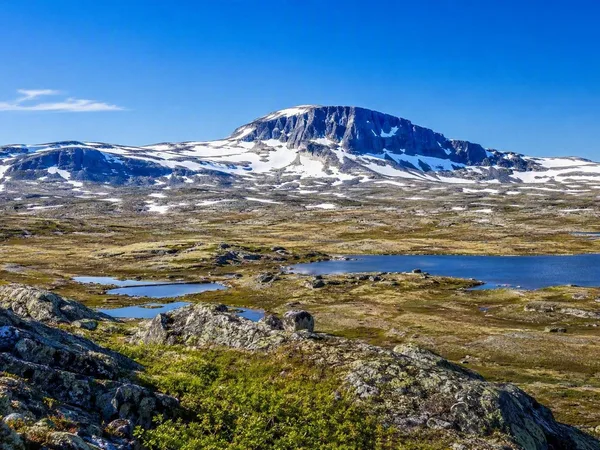
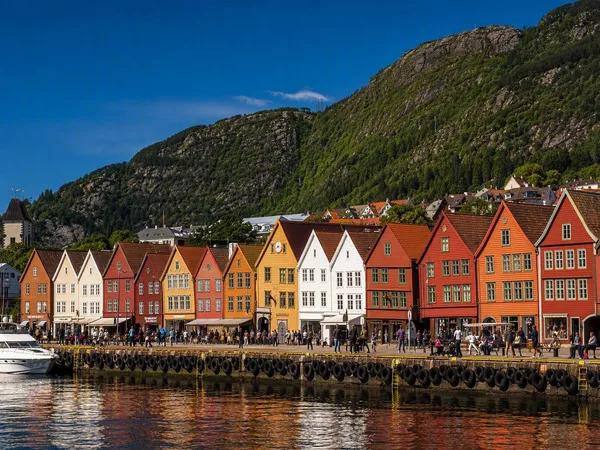
The train from Oslo runs through farms, forests and river country, climbs Hallingdal and reaches the open Hardangervidda plateau near Finse. It then drops through Raundalen towards Voss and the narrow western valleys before Bergen.
The Bergensbanen opened in 1909, reaches 1,237 metres near Finse and contains 182 tunnels. Later work included the Finse Tunnel, which replaced an exposed high-altitude section that suffered from severe weather. This is a regular electric long-distance route, not the Flåmsbana; that separate branch begins at Myrdal. Second place reflects the scale of its full crossing, from inland fields to snow country and fjord-side valleys.
1. Bernina: Chur to Tirano
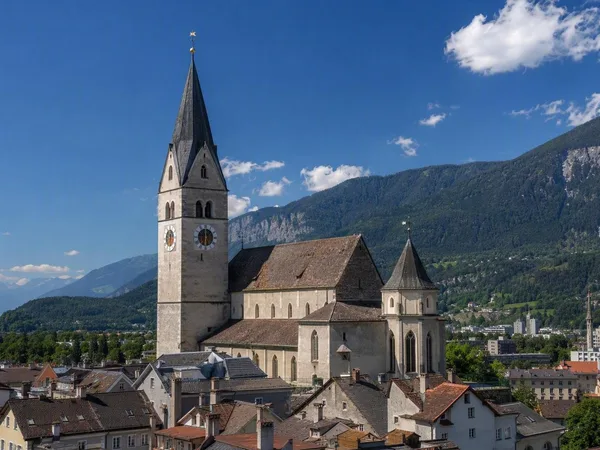
Chur and Tirano sit at opposite ends of a marked Alpine transition. Between them, the Albula and Bernina railways were built in the early 20th century to connect mountain communities, and regional trains still use the same public corridor.
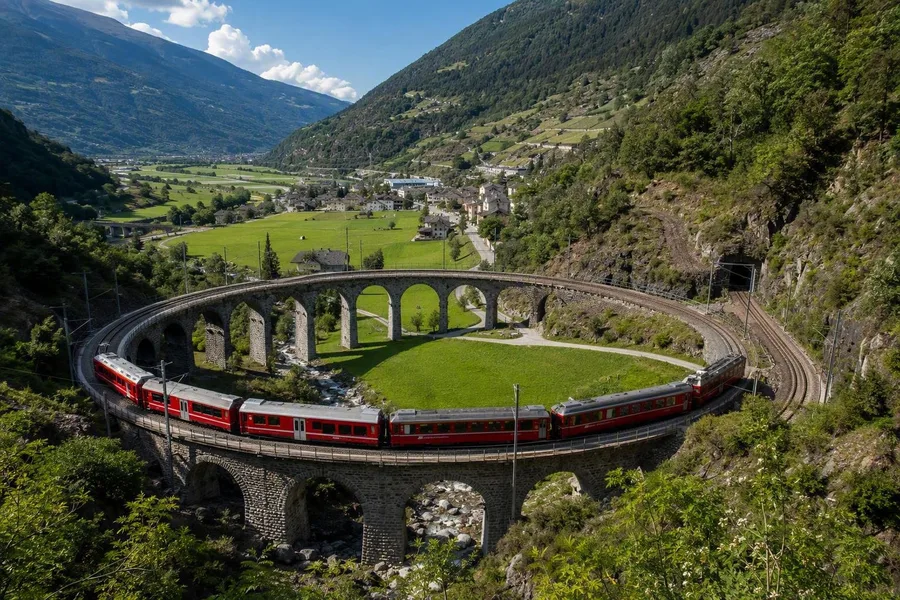 A regional train curves across the circular Brusio Viaduct shortly before Tirano.
From Chur, the route runs through Thusis, Filisur and Bergün towards St Moritz. Regional passengers usually change there for Pontresina and Tirano. Tunnels, galleries and viaducts carry trains into high country, where Lago Bianco and the Palü Glacier mark the Bernina crossing. South of the pass, the line descends through Poschiavo and curves around the circular Brusio Viaduct towards the Valtellina.
The Bernina Express adds panoramic windows, catering and compulsory reservations, but not a private railway. Regular trains see the same pass and stop at the communities along it. After the loop at Brusio, the red carriages reach Tirano, where snowy high ground has yielded to the softer Italian valley.
Keep exploring
Places in this story
Romsdal, Norway
Romsdal is a traditional region in Møre og Romsdal, western Norway, whose inland Romsdalen valley follows the Rauma River from high ground to Åndalsnes and the Romsdalsfjord. It is defined by steep mountain walls, waterfalls and the Rauma Railway.
Centovalli
Locarno
Semmering
Douro
Porto
Åndalsnes
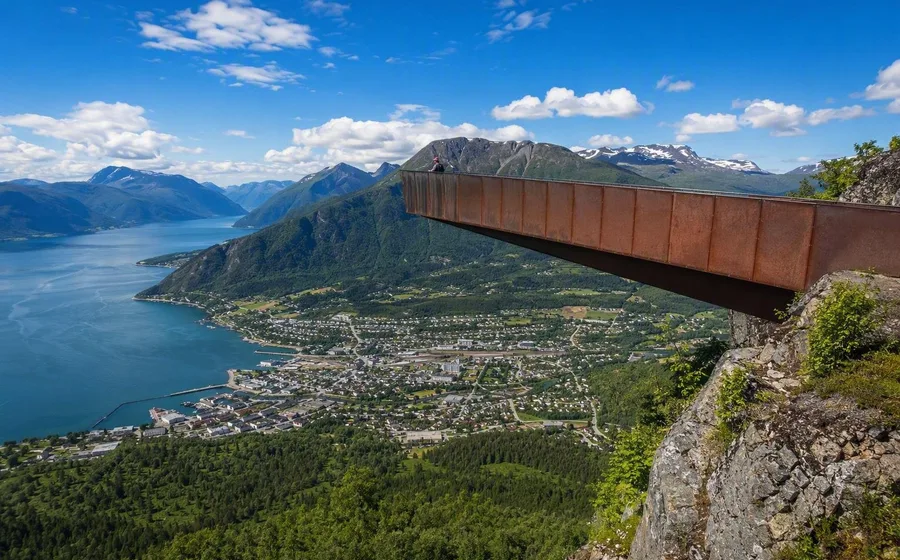
Åndalsnes is a small town at the head of Romsdalen, where the Rauma River reaches the Romsdalsfjord in western Norway. It is the rail terminus and practical base for mountain viewpoints, the Rauma Line and the surrounding valleys.
Glasgow
Hardangervidda
Bergen
Chur, Graubünden