Kabul, Between the Bookshelves and the Spoken Line
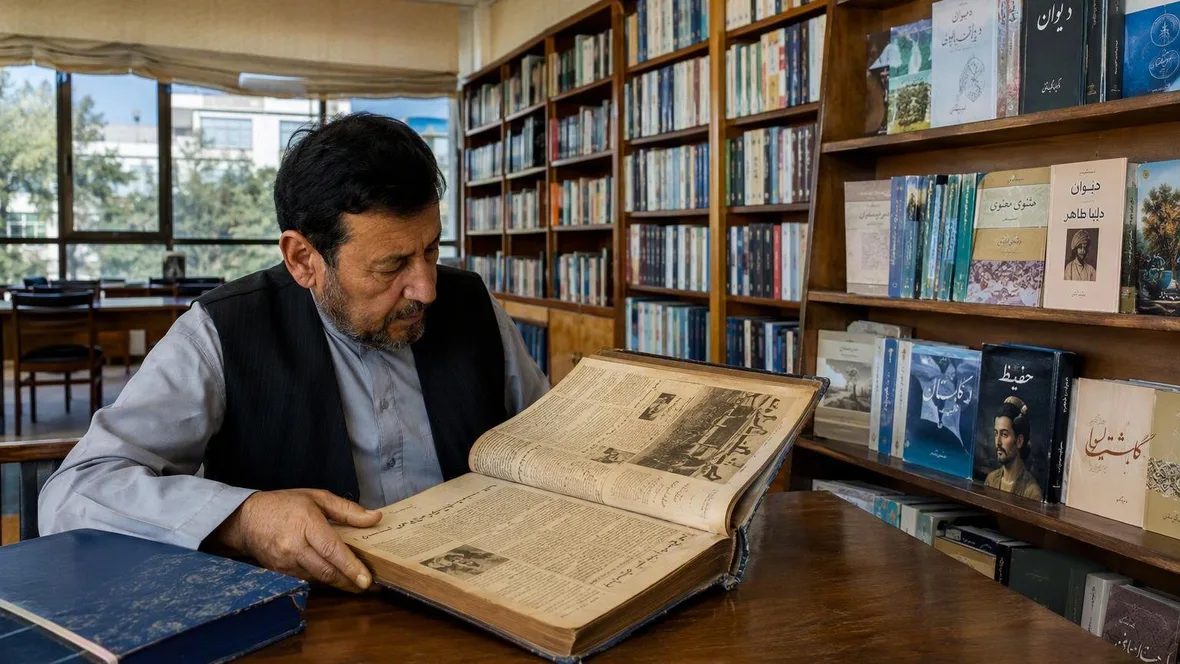
At Kabul Public Library, poetry collections sit beside children’s books, reference works and bound newspaper cuttings that reach back to the 1920s. Those shelves belong to a city where literature has moved between the printed page, a recited verse and the close discussion of a single line.
Among the shelves at Malik Asghar Square
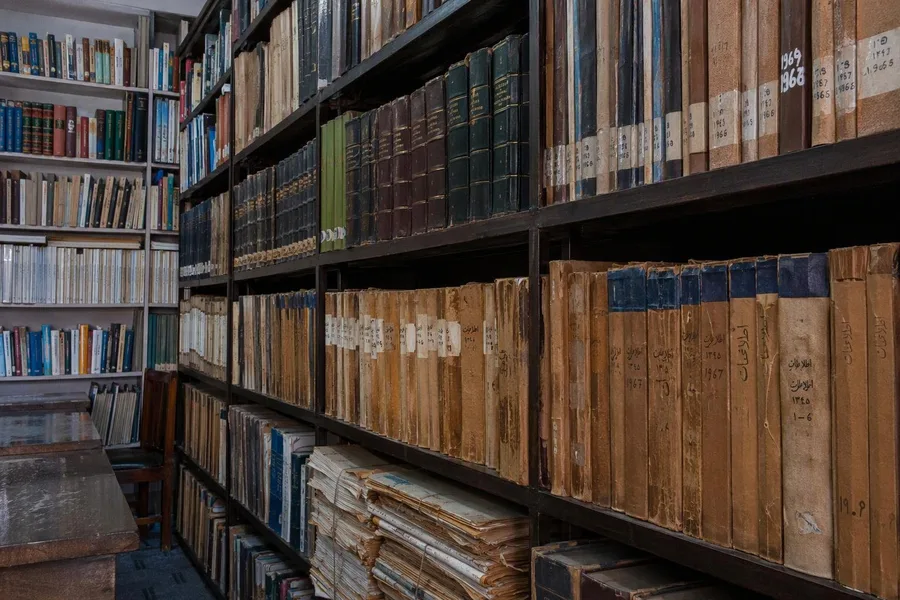 Bound newspaper volumes and book shelves line Kabul Public Library near Malik Asghar Square.
Kabul Public Library, near Malik Asghar Square, opened in 1966 and has served as the capital’s central public reading place. Its holdings have included literature, Afghanistan studies, newspapers and children’s books.
The building does not offer a polished picture of literary life. One account described dim rooms, dusty and poorly ordered shelves, and books placed in corridors when the rooms ran short of space. Students often came looking for material for university papers, and staff knowledge could matter as much as the catalogue when a visitor needed a particular title. In the newspaper section, bound volumes of cuttings from the 1920s onward stand along the walls.
For years, poetry gave the library another role. The Sufi poet Ghulam Haidar Haidari Wujodi, who helped establish the library, received students, musicians and young writers at a desk surrounded by books. His group met twice a week to read, sing and discuss mystical verse, and a phone on a tripod later carried sessions online. Wujodi died in 2020, so those gatherings belong to the library’s recent history rather than a confirmed current programme.
That history matters because Kabul’s book culture has never been only silent reading. A poem can be read aloud, explained, sung and passed to another voice.
Dari, Persian and the Kabul page
Kabul did not produce all of Afghanistan’s Persian literary inheritance. Balkh, the birthplace of the thirteenth-century poet Rumi, and Herat are equally important to that history. Yet Kabul became a place where the wider Dari and Persian tradition was printed, taught, ordered in collections and made public.
Dari is Afghanistan’s form of Persian, and it shares Kabul’s literary life with Pashto rather than replacing it. The Kabul Literary Society, active from 1930 to 1940, maintained a multilingual library, encouraged translations and worked on modern Persian prose and poetry. Its monthly magazine, Kābol, published classical Persian writers and Afghan authors, as well as Persian-language writing on Pashto language and literature. The printed record shows a multilingual literary city, not a single-language canon.
A nineteenth-century book makes that tradition physical. Kabul printers produced the Dīvān-i Āyishah in 1881 or 1882, a lithographed collection of Persian qasidas and ghazals by the Durrani poet Āyishah. Its nastaliq script and leather binding show poetry circulating as a carefully made object, while Āyishah’s work adds a female voice to a canon often told through male names.
Khalilullah Khalili gave the capital a twentieth-century literary figure whose life joined classical form to public upheaval. Born in Kabul, he wrote traditional qasidas as well as poems about education, women’s rights, colonialism and national solidarity. After the Soviet invasion, war, loss and resistance entered his poetry more directly. Khalili also served at Kabul University and wrote for the city’s periodicals.
Where Kabul keeps and sells books
Kabul has no single literary quarter. Its book world has spread across shops, public reading rooms, university collections and archives, each with a different task.
Shah M Book Co. at Charahi Sadarat was documented as a seller of new and second-hand books in Dari, Pashto, English and other languages. Its recorded range included fiction, children’s books, religious works, medicine, engineering and politics, while its research collection focused on Afghanistan. The available listing records the shop’s address and historical profile, not its current shelves.
Kabul University preserves a larger academic record. Its Central Library, founded in 1932, holds about 150,000 volumes and catalogues, lends and repairs books, while maintaining periodicals and Afghanistan-studies collections. On the same campus, the Afghanistan Center at Kabul University collects and digitises manuscripts, maps, photographs, newspapers, theses and audiovisual material. Its reading and research rooms place archival material beside computers and digital access.
The centre also publishes locally written books for children and adults, including stories and poetry in national and local languages. Elsewhere, book sellers and publishers have brought translations and imported books from Iran and Pakistan into Kabul’s circulation. The city’s shelves have therefore held religious texts and poetry alongside novels, textbooks, history and books in languages beyond Dari and Pashto.
When poems are spoken
Poetry also travels through daily life beyond libraries and shops. Verses appear at births and funerals, in lullabies, on vehicle windows, in schoolbook margins and on social media. Rumi, born in Balkh and writing in Persian, remains part of the much wider tradition behind these forms of quotation and recitation.
A musha'ara can turn recitation into exchange: a poet may answer an earlier poem with a new one. Broadcast programmes have carried such readings beyond the hall, sometimes alongside religious-poetic taranas. Before 2021, students from the Kabul University Poetry Association met in a Pole-e Surkh café to read new work and offer criticism; during the pandemic, their weekly exchange moved to Telegram.
Women have also sustained literary networks on more protected terms. Mirman Baheer used changing private locations for readings and discussion, with experienced poets and teachers advising younger writers. Participants who could not attend could share poems by telephone. This practice sits alongside the Pashto landay, an often anonymous two-line form especially associated with women’s composition and recitation.
A smaller public shelf
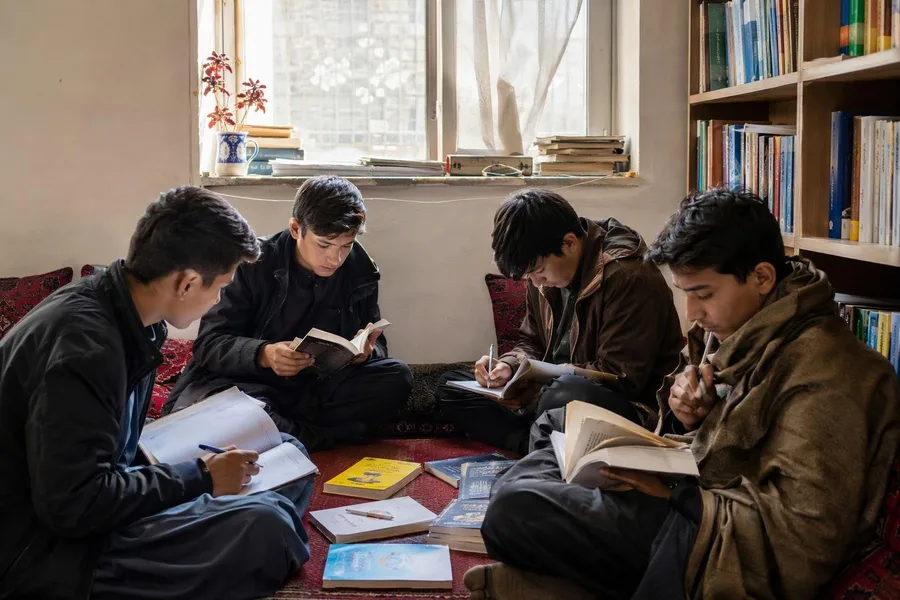 Students in west Kabul read and write stories together in a discreet reading group.
Since 2021, books and public poetry have remained present in Kabul, but the terms of circulation have narrowed. Bookshops and libraries received lists of prohibited titles, including works on recent Afghan history, women’s rights, philosophy, Shi’a communities and translated fiction. Imports have faced checks of texts and images, while publishers have reported delays in obtaining permission for manuscripts.
The changes have removed visible places for reading together. A women’s library in Pole-e Surkh, opened in 2022, closed after six months following repeated interruptions and scrutiny, and its books were taken into private homes. In west Kabul, a small student reading group met discreetly to read and write stories.
Official poetry programmes continue, but regulations published in 2025 barred criticism of the supreme leader and poetry about secular love at official gatherings. The rules addressed male poets and effectively excluded women from those events. Government-backed recitals and broadcast taranas continue with religious or official themes, while other writing has circulated privately through channels such as WhatsApp.
At Kabul Public Library, the bound newspapers remain beside shelves of Dari and Pashto poetry. A volume can still be taken from that row and opened on a table.
Keep exploring
Places in this story
Asia
4 landen en gebieden
Middle East
Afghanistan
Iran
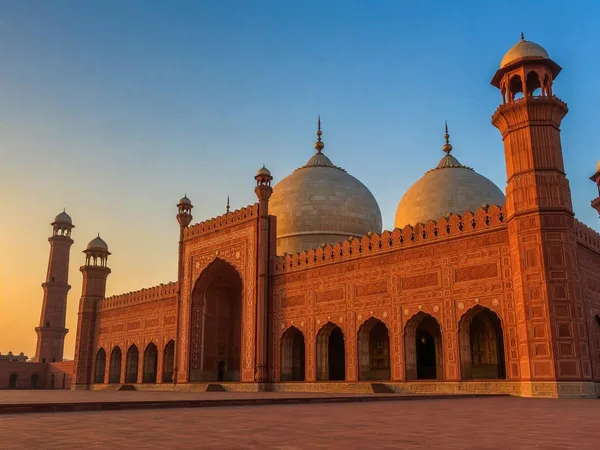
Pakistan
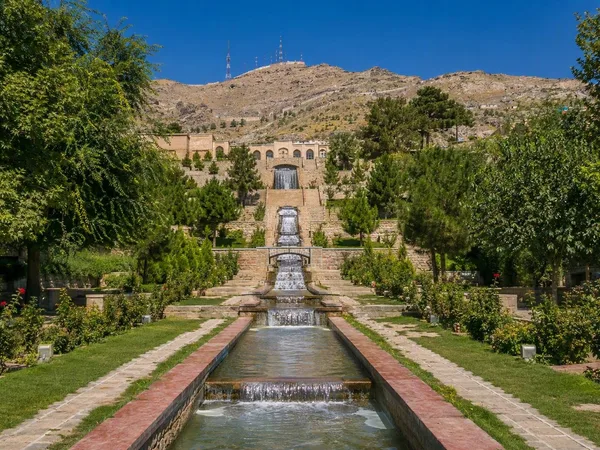
Kabul
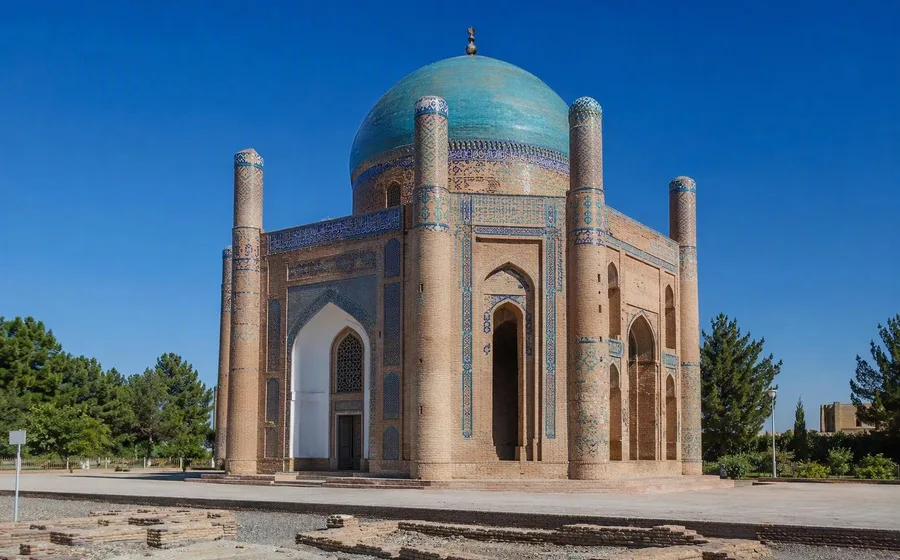
Balkh
Balkh is an ancient city in northern Afghanistan, about 22 km west of Mazar-e Sharif. Formerly Bactra, it preserves a vast archaeological landscape of earthen walls, Buddhist remains and Islamic monuments.
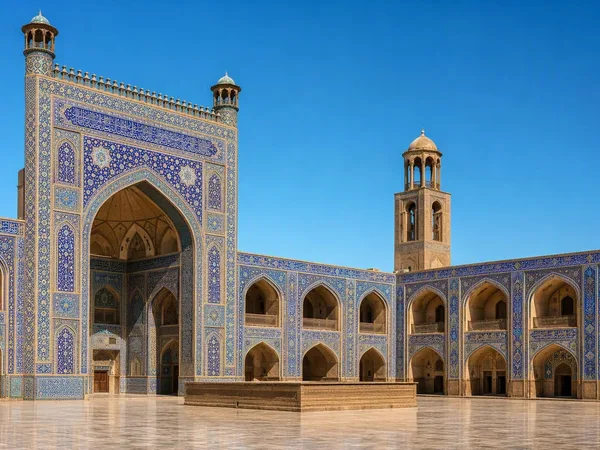
Herat