Asia’s five most exceptional beaches, ranked
Natural beauty alone does not settle this ranking. These five beaches are judged equally on scenery, swimming or snorkelling, access, crowd levels and the season in which each one is at its best.
A spectacular cliff or an unusual colour can only carry a beach so far. This ranking gives equal weight to natural beauty, the quality of swimming or snorkelling, accessibility, crowd levels and a reliable travel season. That puts a fine all-round swimming beach ahead of a harder-to-reach reef stop, while a dramatic bay loses points when day boats crowd its sand.
5. Nacpan Beach, Palawan: room on an open coast
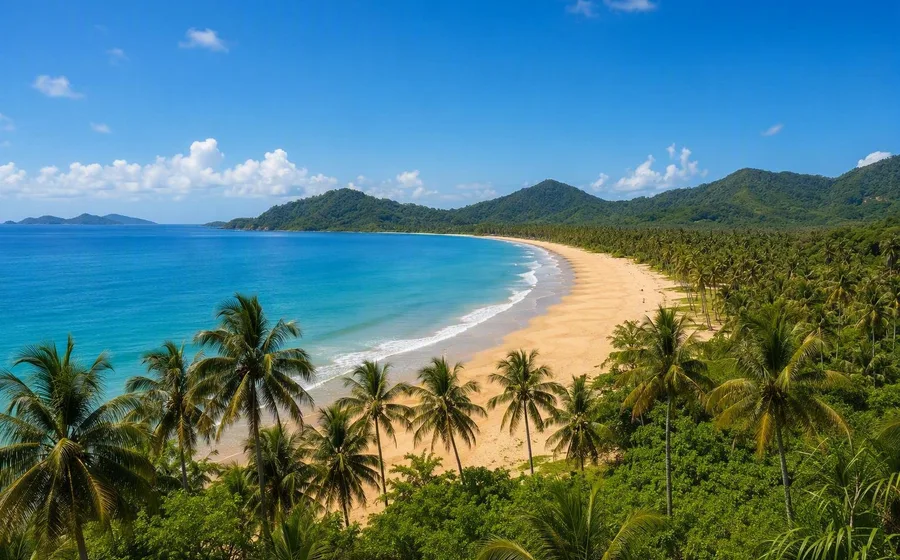
Nacpan comes fifth because the sea offers less than the other four, not because the coast lacks character. Its long, west-facing curve carries gold-coloured, medium-fine sand between headlands. Coconut palms, low wooded hills and small agricultural plots line the back of the beach, while open water brings regular swell rather than the stillness of a sheltered lagoon.
At the northern end, a narrow vegetated ridge separates Nacpan from Calitang, its calmer twin on the other side. The open Nacpan shore catches wind and waves; Calitang sits behind the ridge in a more protected bay. Fishing boats and nets remain part of the working shoreline, and small family-run food stalls cluster near the entrance.
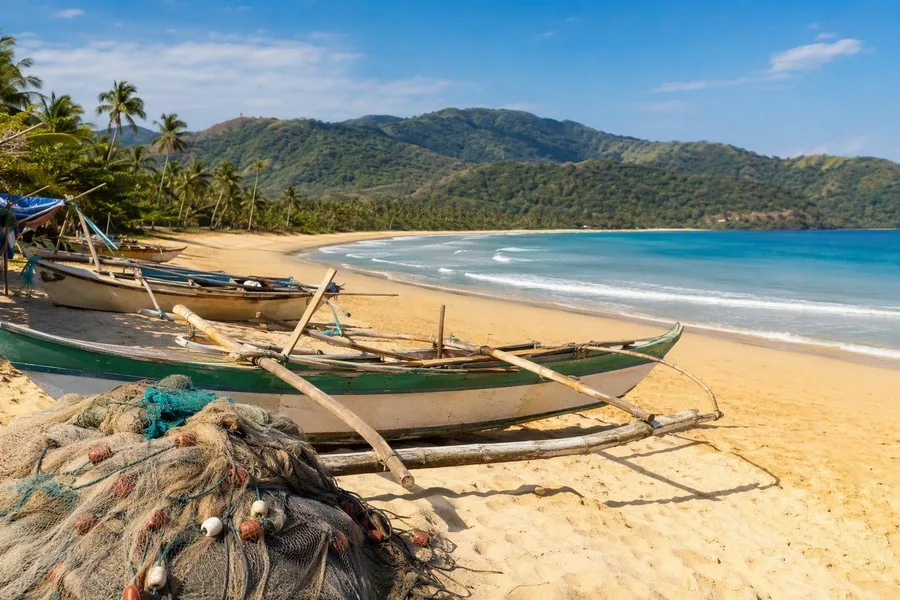 Fishing boats and nets line Nacpan Beach beneath palms and wooded hills in Palawan.
Swimming is the main draw. The sandy bottom slopes gently, and November to May usually brings the most dependable sea conditions. There is no house reef, so snorkelling remains limited. Nacpan also handles visitors better than the compact coves in this ranking: its length leaves space towards both ends, even after vehicles arrive from El Nido.
One concern: side or offshore currents can form in rough weather even when waves look modest, so treat a rough-sea day as a beach walk rather than guaranteed swimming.
4. Railay Beach, Krabi: limestone walls and working boats
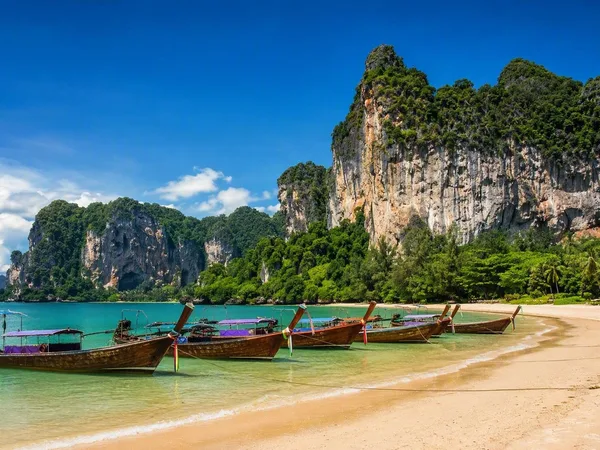
Railay has the grandest landforms in this group. Ancient marine limestone rose above sea level, then tropical rainwater slowly dissolved and cut it into the vertical karst walls, caves and towers that surround the peninsula’s sandy bays. Those cliffs sever Railay from the road network, although the peninsula remains attached to mainland Thailand.
The coast has more than one use. Climbers take to bolted routes in the limestone around Railay and nearby Tonsai. Longtail boats bring beachgoers to Railay West, while Railay East serves as a shallow mangrove mudflat and boat-side settlement rather than a swimming beach. At Phra Nang Cave, fishers leave wooden offerings at a shrine connected with safe crossings and good catches.
Railay West is the swimming side. November to April generally brings calmer, clearer Andaman Sea conditions, while snorkelling is secondary here. Railay ranks above Nacpan because the landscape is extraordinary and the boat ride from Ao Nang is simple. It falls below the reef beaches and Radhanagar because the shore is busy and less spacious.
One concern: Phra Nang Beach fills with day boats from late morning into mid-afternoon; go early or later in the day for more sand.
3. Pink Beach, Komodo: a shoreline made by the reef
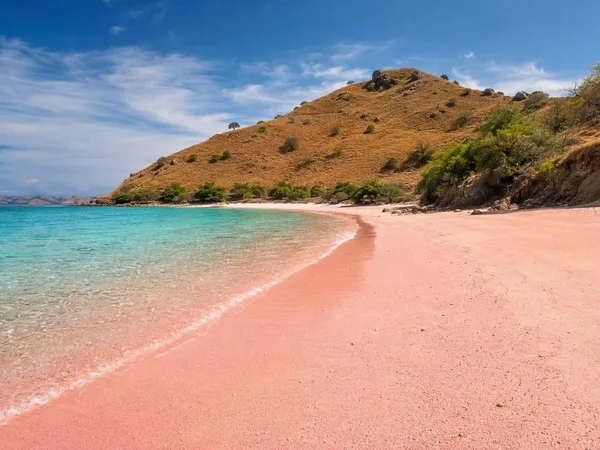
Pink Beach has the most unusual sand in the ranking, though the colour is softer than many edited photographs suggest. Red fragments from foraminifera and pieces of red organ-pipe coral mix with white carbonate grains. Wet sand at the waterline shows the clearest pink.
Dry volcanic hills and savanna stand behind a small bay, and an uncommonly shallow reef begins just offshore. Pink Beach lies in Komodo National Park, a protected volcanic island group with coral-rich waters and strong, nutrient-rich currents. In the wider area, Komodo, Bima and Manggarai communities farm, while many Bajo and Bugis migrant communities depend on fishing.
The inner bay moderates the stronger currents found elsewhere around Komodo. Hard and soft corals, along with schools of reef fish, make this one of the two strongest snorkelling beaches here. May to October generally brings calmer crossings and clearer water. July and August also bring the most tour boats. Pink Beach takes third because it combines a rare-looking shore with serious snorkelling, but most visitors see it as a short stop on an organised boat trip from Labuan Bajo.
One concern: park entry requires a confirmed, date-specific permit, so a last-minute visit is not assured.
2. Yonehara Beach, Ishigaki: coral within swimming distance
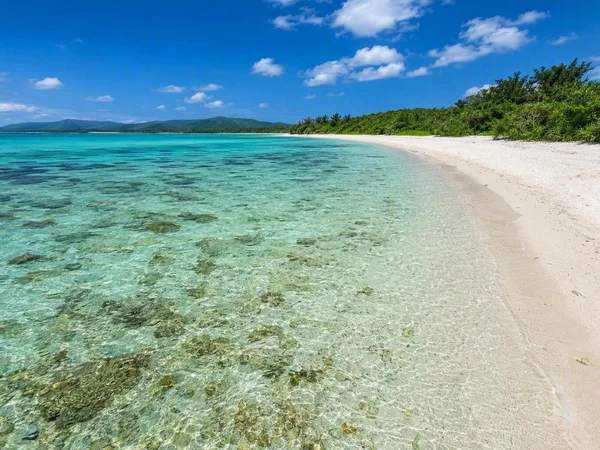
Yonehara takes second place because no other beach here puts a rich reef so close to the sand. A shallow lagoon leads straight to a fringing reef, where living coral and tropical fish sit close to the pale shore. It is the strongest choice in this ranking for snorkellers who want to enter from land rather than board a boat.
The beach itself comes from the reef. Its pale sand consists largely of broken coral, shells, foraminifera and calcareous algae. Coastal vegetation and protected Yaeyama palms border this northern Ishigaki coast in Iriomote-Ishigaki National Park. The result is a compact reef shore, not a broad, easy swimming bay.
Tide matters more than a fixed month. Higher water leaves enough depth above the reef for swimming without contact, while low tide exposes broad coral plates. Summer water is warm, but it also falls in typhoon season; strong wind can quickly spoil sea conditions. A hire car makes access straightforward, and free entry helps explain the beach’s popularity.
One concern: channels through the reef can pull water offshore, so use a flotation vest and do not snorkel alone.
Getting to the five beaches
Reach Radhanagar by ferry to Swaraj Dweep, then take local road transport from the jetty. Book a boat from Labuan Bajo for Pink Beach and arrange the required park permit in advance. Nacpan is an overland trip from El Nido by shuttle or hired tricycle; the final stretch is unpaved. A hire car is most practical for Yonehara, where roadside parking is prohibited. Railay has no road connection; shared longtail boats run from Ao Nang, generally from about 08.00 to 18.00, and leave when enough passengers board.
1. Radhanagar Beach, India: the strongest all-rounder
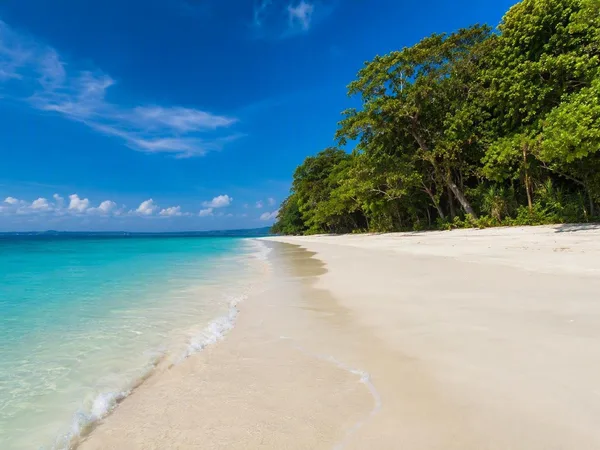
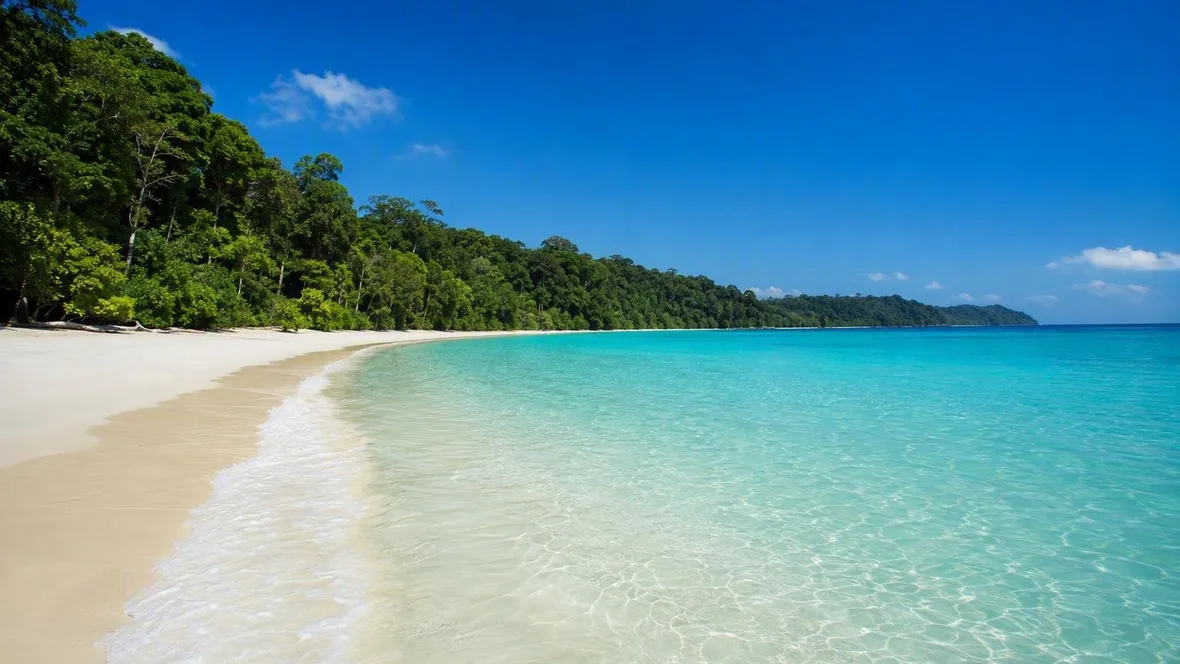
Radhanagar wins because it sacrifices very little. On Swaraj Dweep in India’s Andaman archipelago, a broad crescent of fine white sand meets turquoise water, with dense forest running directly behind the shore rather than a continuous strip of development.
This is first and foremost a swimming beach. The sandy seabed slopes gradually, and marked, netted bathing areas make swimming more dependable than at Yonehara’s reef or Pink Beach’s current-sensitive bay. Snorkelling is limited here; Elephant Beach elsewhere on the island is the better snorkelling choice. Radhanagar still takes first because its calm-water swimming, natural scale, manageable access and long usable season form the most convincing whole.
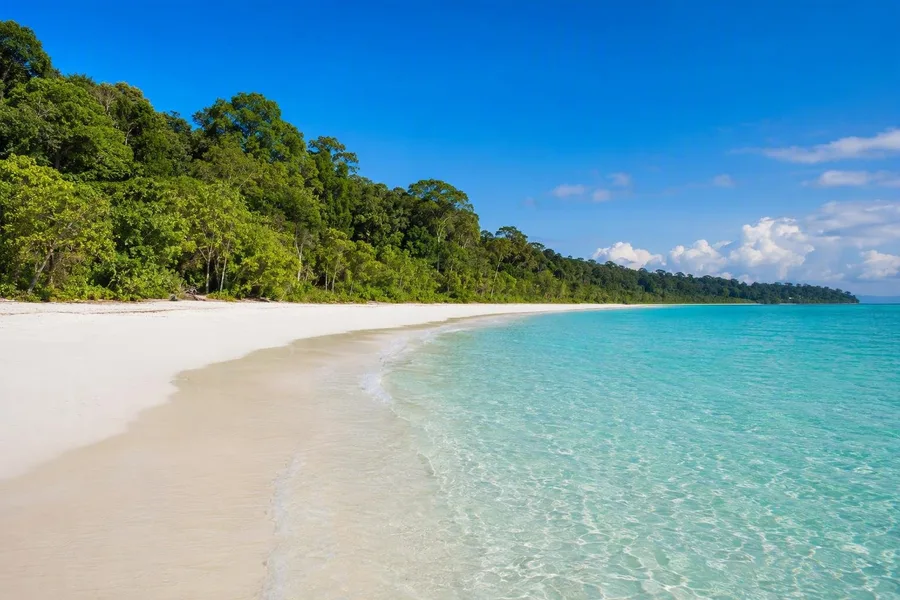 Dense forest borders Radhanagar Beach’s broad white sand and turquoise swimming water on Swaraj Dweep.
The coastal zone includes coral habitat, mangroves and turtle-nesting areas, which explains why some sections have restricted access. A small trading area sits near the entrance, where local sellers gather without spilling across the beach. December to February is busiest. October, April and early mornings usually offer more room, while October to May provides the most useful travel window before monsoon weather roughens the sea and ferry crossings.
One concern: swim only within the marked zone and leave the water when lifeguards raise a red flag.
Beyond the entrance stalls, the view narrows to three clean bands: dark forest, white sand and calm turquoise water.
Keep exploring
Places in this story
Asia
4 landen en gebieden
Philippines
Indonesia
Japan

India
Thailand
Nacpan Beach, El Nido
Nacpan Beach is a roughly four-kilometre mainland beach in Barangay Bucana, north of El Nido on Palawan. Come for an open sweep of pale sand, coconut palms and a slower beach day than El Nido’s boat-tour coves.
Railay Beach, Krabi
Pink Beach (Pantai Merah), Komodo Island
Yonehara Beach, Ishigaki