
Sight · Iran
Marble Throne
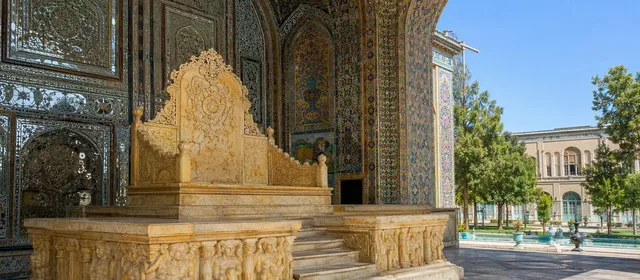
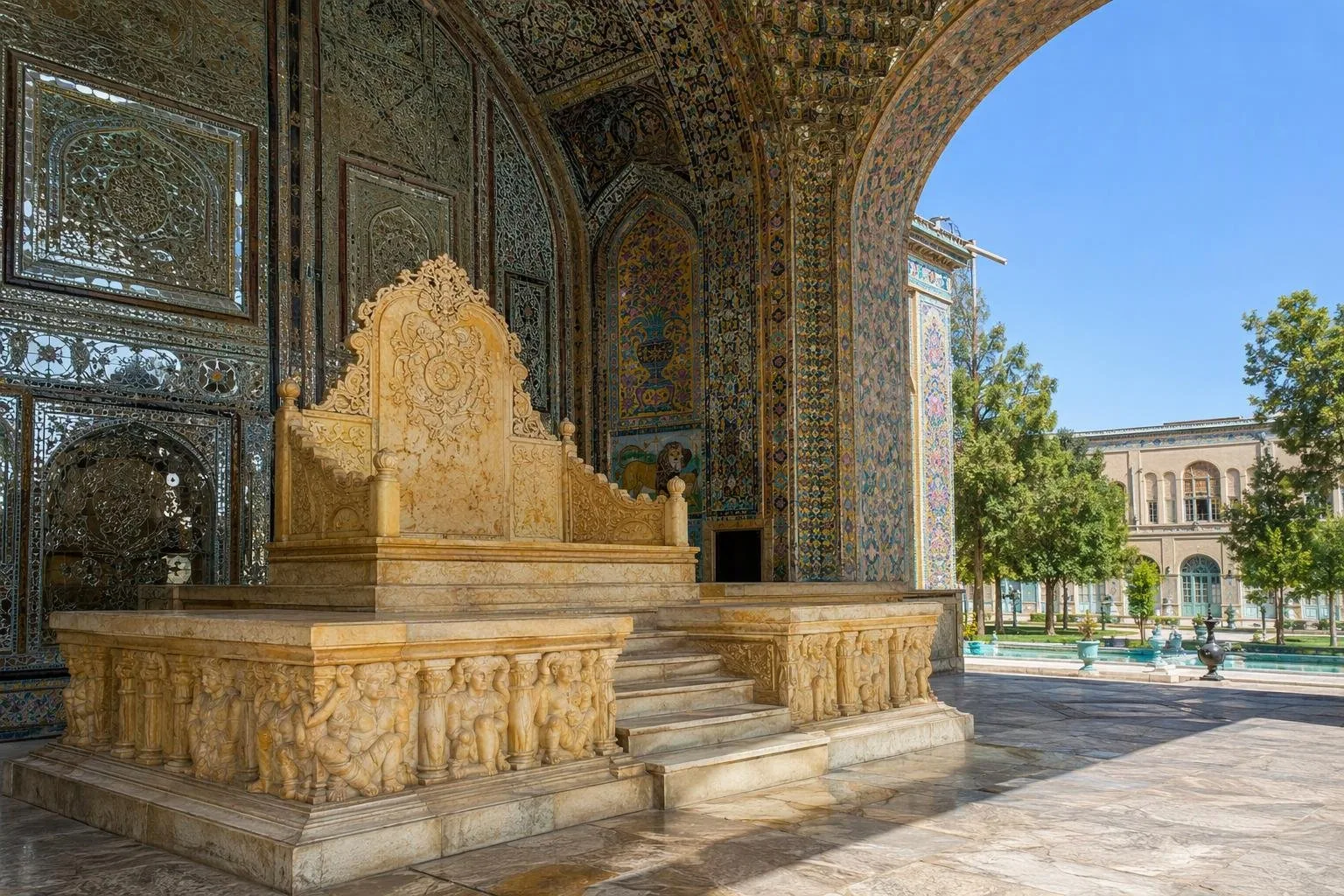
The Marble Throne, or Takht-e Marmar, is a ceremonial Qajar throne in the open iwan of Golestan Palace in central Tehran. Its raised yellow-marble seat turns an older Zand-era terrace into a concentrated display of royal power.
Orientation
The Marble Throne sits in Ayvān-e Takht-e Marmar, an open-fronted audience terrace within Golestan Palace. It is not a separate palace or museum: visit it as part of the wider walled palace complex in Tehran’s historic core.
The iwan is the palace’s oldest surviving structure, dating to the Zand period. Qajar rulers remade its decorative scheme and installed the throne that gives the terrace its name. The result is a useful shortcut through the site’s layered history: an older Iranian ceremonial form, presented with Qajar colour, imagery and court ritual.
Read the throne first
Fath Ali Shah commissioned the yellow-marble throne in 1806. Look beyond the seat itself:
- The support figures: carved human and fantastic figures carry the elevated platform.
- The material: the throne is assembled from 65 pieces of yellow marble from Yazd.
- The setting: tilework, wall paintings, carved wood and mirrored decoration make the iwan an architectural frame rather than a neutral shelter.
The raised seat is deliberately theatrical. From the garden side, the ruler appeared above the court and visitors; the throne, terrace and decoration worked together to stage hierarchy.
Ceremonial purpose
This was a place for coronations, formal appearances and court ceremonies, not a private royal room. That public function explains its open side and its emphatic central axis. The throne was also known as the Throne of Solomon, a name that reinforced its symbolic authority.
Treat the iwan as a complete composition. Start with the throne’s sculpted base, then trace upward to the painted walls and ceiling. Step back far enough to see how the open terrace faces the palace garden; that relationship between garden, court and elevated seat is the point.
Visiting it well
Enter through Golestan Palace rather than searching for a separate Marble Throne entrance. The iwan is one stop among the palace buildings, so allow time to see it in context rather than treating it as a quick standalone photograph.
Best approach: see the throne before the enclosed reception halls. Its outdoor-facing ceremonial logic makes the increasingly elaborate interiors easier to read.
At the monument: keep behind barriers and avoid touching the marble or decorative surfaces. This is a fragile historic ensemble, and the most revealing view is usually the broad frontal one from the garden-facing side.
Nearby context
The smaller Karim-Khani pavilion is close by and offers a useful contrast: a more intimate terrace beside the water rather than a formal stage for monarchy. Elsewhere in Golestan, reception rooms, gardens and towers show how the Qajar court combined residence, government and display.
The Marble Throne remains the clearest place to see that system distilled into one object: a ruler’s seat made inseparable from its setting.
From the magazine
Stories about Marble Throne
Editorial stories linked directly to Marble Throne.
No stories about Marble Throne have been published yet.
Routes from our editors
Travel through Marble Throne
Editorial routes connecting Marble Throne with other countries, cities and hotspots.
No routes through Marble Throne have been published yet.
More in Iran
Related hotspots
Other cities, nature areas and places within Iran.
Tehran
2 linked stories and routes
Yazd
1 linked stories and routes

Alborz Mountains
1 linked stories and routes
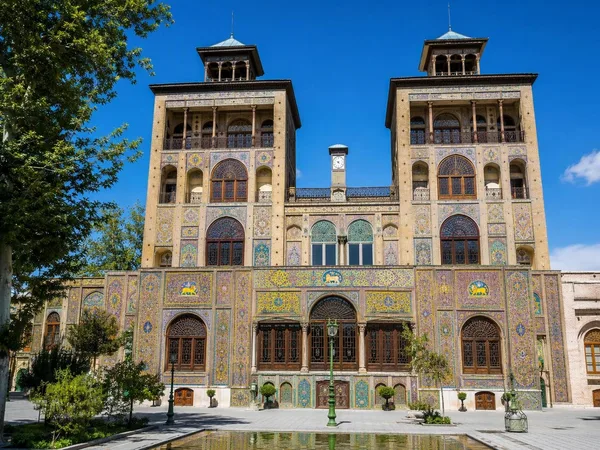
Golestan Palace
1 linked stories and routes
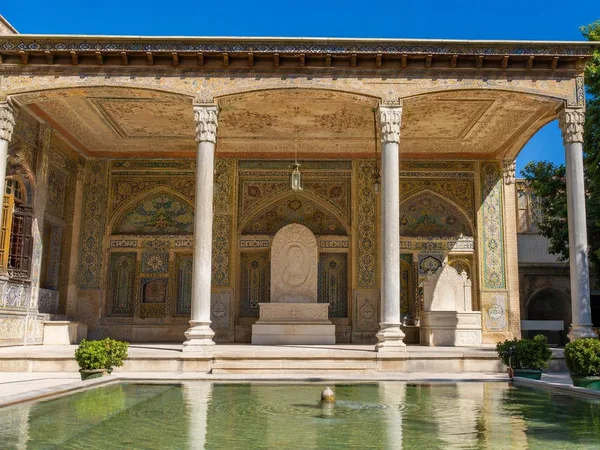
Karim-Khani pavilion (Khalvat-e Karim Khani)
1 linked stories and routes
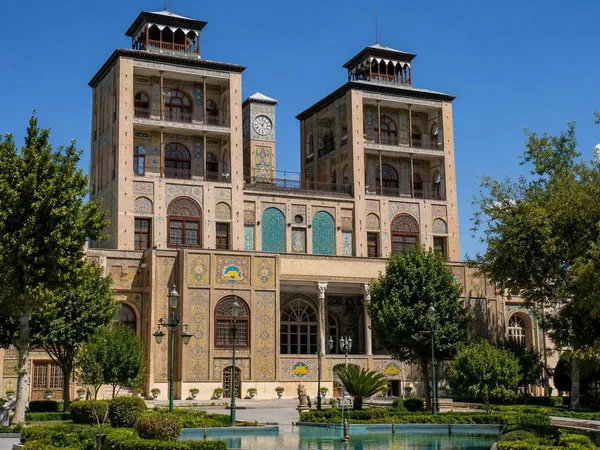
Shams-ol-Emareh
1 linked stories and routes
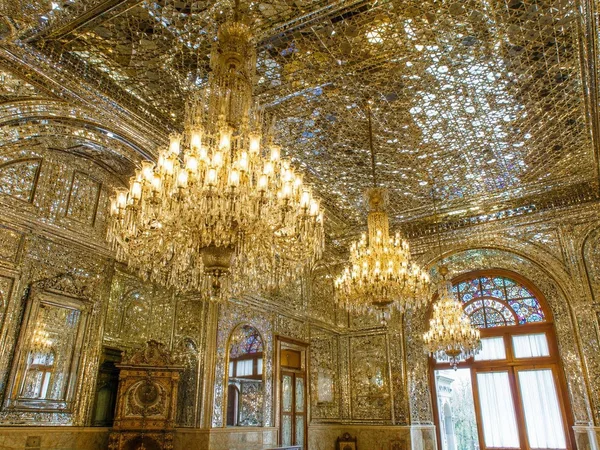
Brilliant Hall (Talar-e Brelian), Golestan Palace
1 linked stories and routes
Talar-e Salam
1 linked stories and routes