
City · Iran
Yazd
Yazd is a desert city in central Iran, where an inhabited earthen old town is shaped by qanats, windcatchers and shaded lanes. Its historic city has been a UNESCO World Heritage site since 2017.
Start with the old city
Yazd’s historic core is not a museum district. Its dense quarters remain lived in, with mosques, bazaars, water cisterns, traditional houses and small local businesses woven into the same street pattern. Begin around the Jameh Mosque, then walk through the surrounding lanes rather than treating the city as a list of isolated monuments.
The old city rewards slow navigation. Earthen walls, vaults, domes and partially covered alleyways create shade and compress the streets into a human scale. A sabat is a covered or partly covered passage: use these crossings to understand how the city moderated desert sun long before mechanical cooling.
Read the desert engineering
Yazd was built around scarce water and severe heat. Its qanats carried underground water into the city; each historic district developed around a qanat and communal centre. Look for the linked urban toolkit:
- Badgirs (windcatchers): towers that channel air through buildings.
- Ab-anbars: domed water reservoirs, often paired with windcatchers.
- Courtyards and thick earthen walls: features that temper interior conditions.
- Sunken and underground spaces: another response to the climate.
The skyline—windcatchers, minarets and domes—makes these systems visible from a distance. Dolat-Abad Garden, included within the World Heritage property, is a useful stop for seeing garden design and a prominent windcatcher together.
Key stops
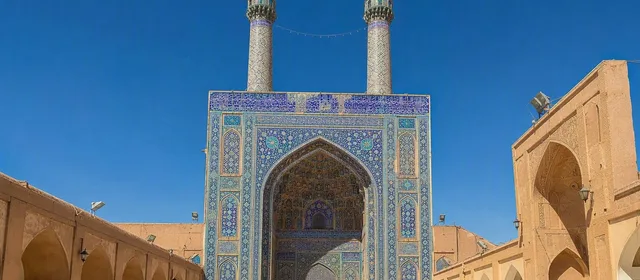
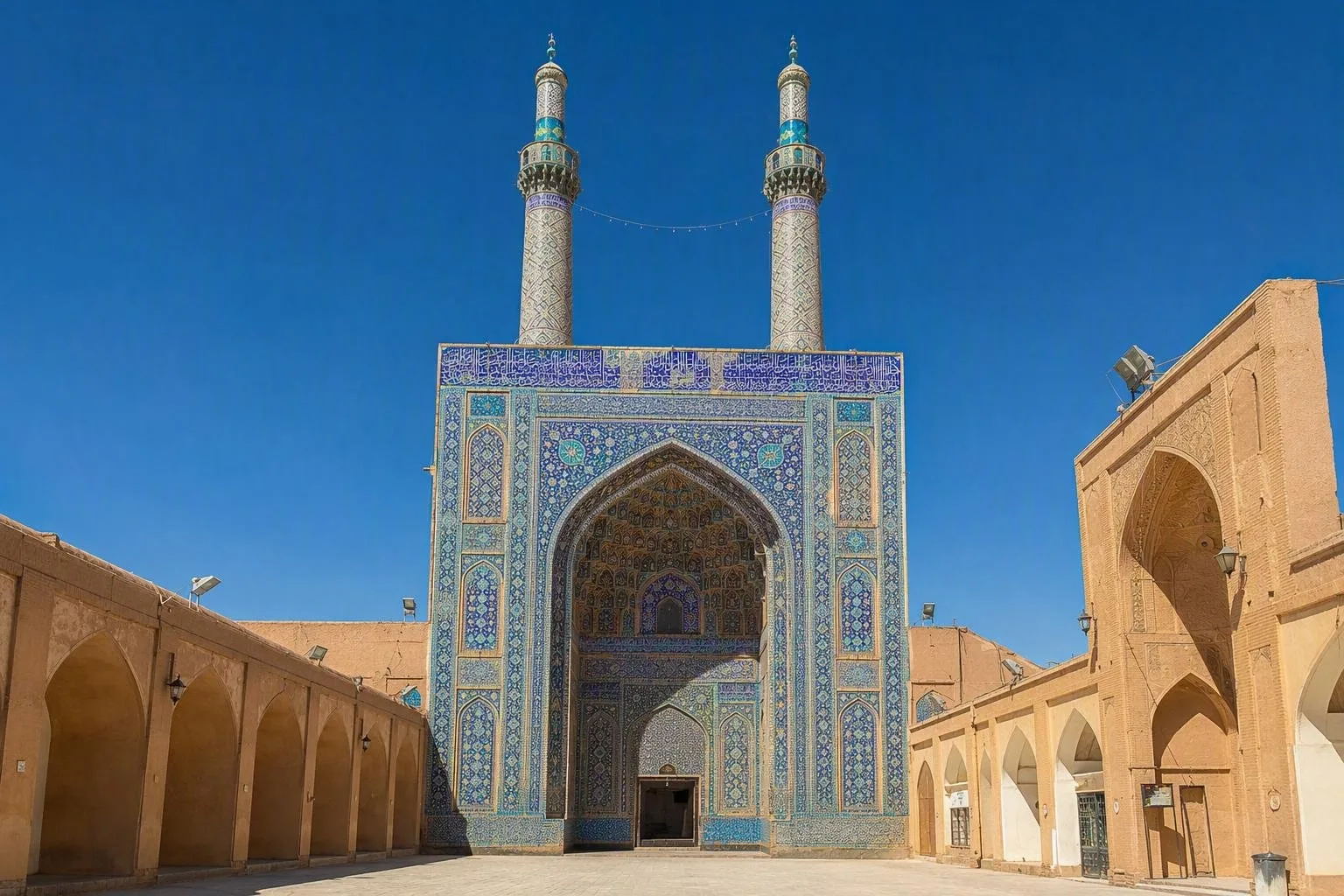
Jameh Mosque of Yazd is the old city’s main visual anchor. Its tiled entrance portal and twin minarets rise above the mud-brick lanes; enter respectfully, as it is an active Friday mosque.
Amir Chakhmaq Complex is a separate civic focus south of the old core. Its tiered façade of recessed arches faces the square, alongside a mosque, bazaar and other historic elements. It works well as an orientation point before or after walking the bazaar.
Yazd also preserves Islamic, Jewish and Zoroastrian heritage within its historic fabric. Treat religious sites as places of worship first: follow on-site rules on dress, photography and access.
Everyday Yazd
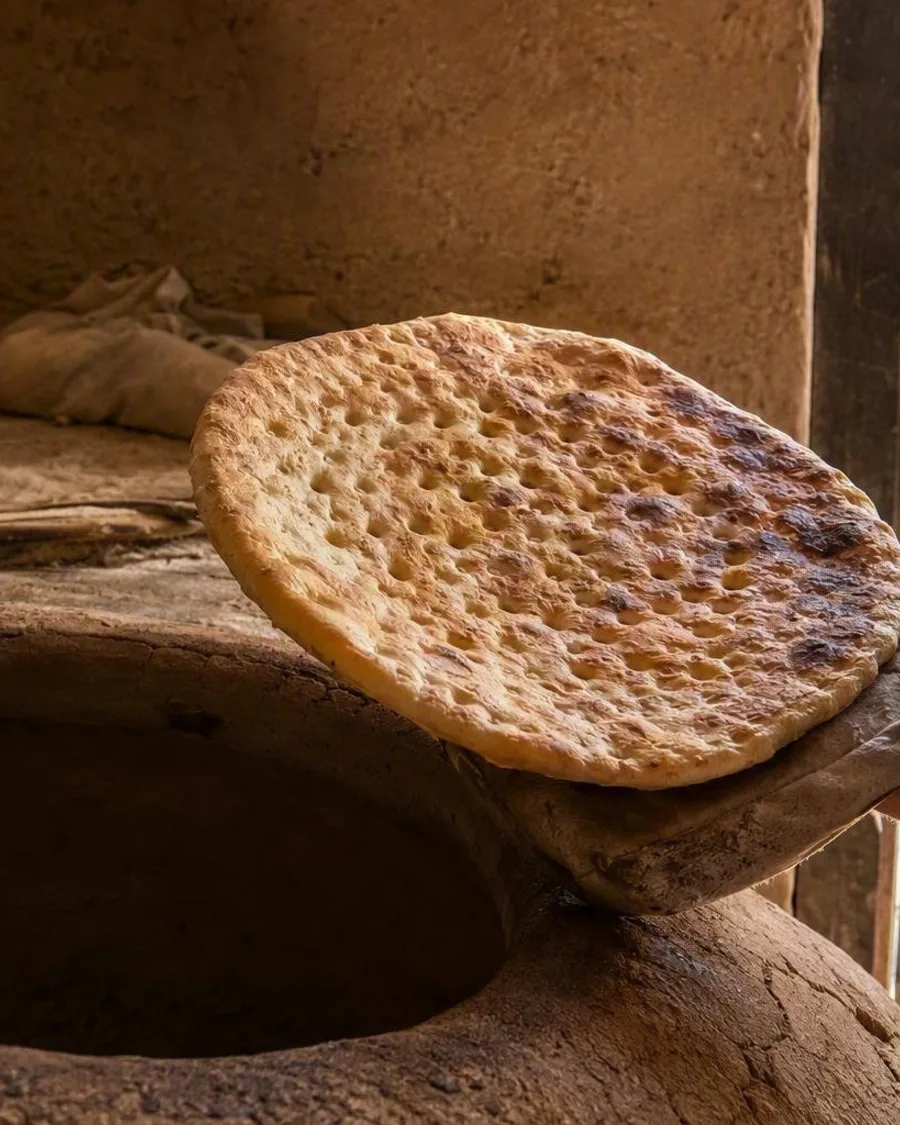
Leave time for a neighbourhood bakery in the morning. Fresh nan-e taftoon tanuri is a common traditional bread: soft rounds are flattened and pressed to the hot inner wall of a clay tanur using a cloth-covered bread cushion. This is routine food production, not a staged craft display.
The old lanes are best explored on foot; their narrow, irregular layout is not suited to fast vehicle access. Walk early or later in the day in hot weather, carry water, and keep to the shade where possible.
From the magazine
Stories about Yazd
Editorial stories linked directly to Yazd.
Routes from our editors
Travel through Yazd
Editorial routes connecting Yazd with other countries, cities and hotspots.
No routes through Yazd have been published yet.
More in Iran
Related hotspots
Other cities, nature areas and places within Iran.
There are no other hotspots in Iran yet.