City · Iran
Tehran
Iran’s capital spreads from the dry southern plain up towards the Alborz foothills. Its Qajar palaces, working bazaar, major museums and mountain-edge districts reveal a city best tackled one area at a time.
Read the city north to south
Tehran is large, steeply graded and built for long distances. The historic core sits lower and farther south; Tajrish, Darband and the former royal estates occupy the cooler northern foothills. Do not attempt to cross the city repeatedly in one day: group visits by district and use the metro to avoid road traffic.
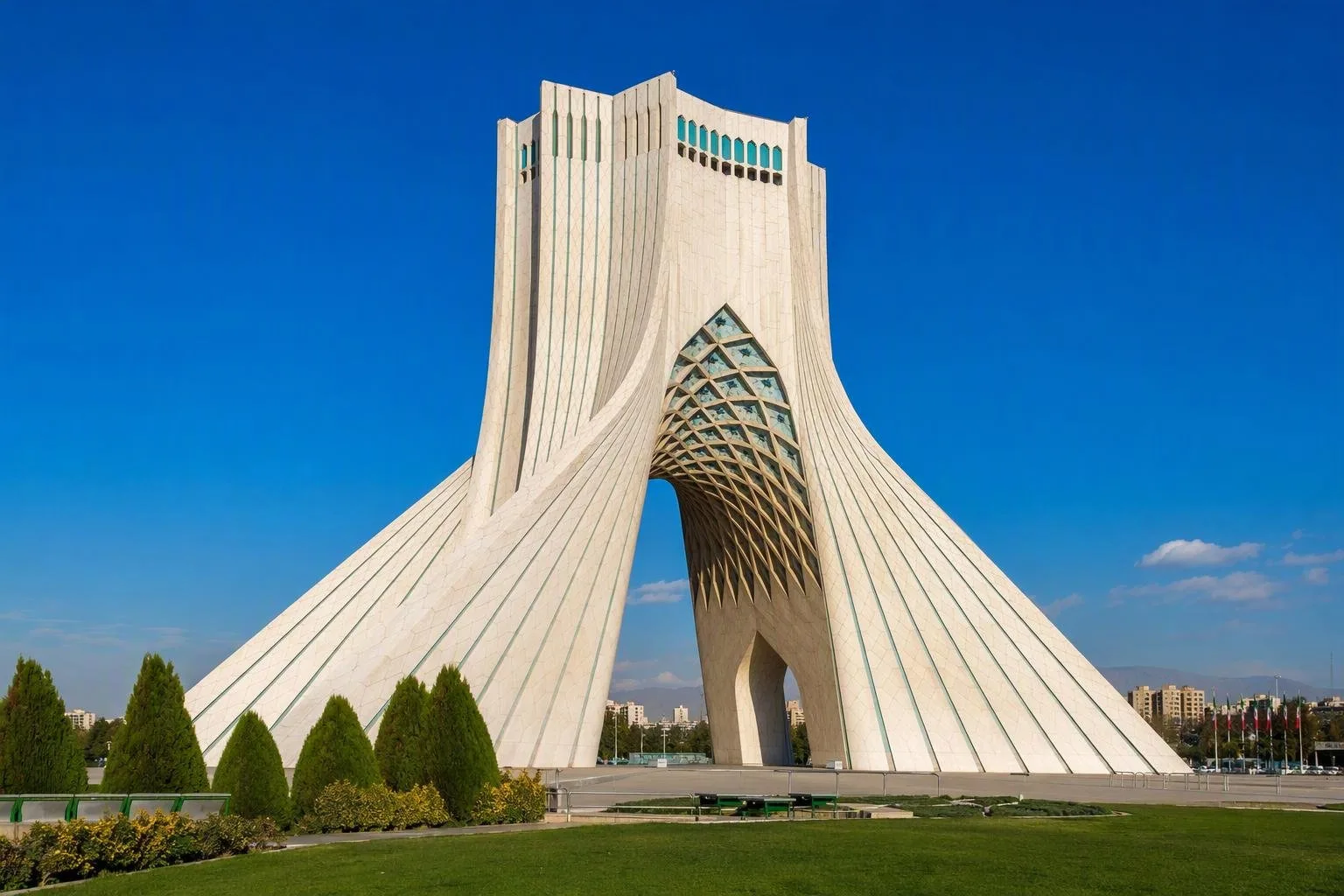
A useful first orientation is Azadi Tower, the 1971 white-marble gateway on the western approach. For a wider urban view, Milad Tower’s observation level shows the scale of the city and, on clear days, the Alborz range.
The historic core
Start around Golestan Palace and the Grand Bazaar. Golestan is the surviving Qajar seat of power: a walled garden complex of pools, tiled façades, ceremonial rooms and the distinctive Shams ol-Emareh building. Its Persian craftsmanship and European-influenced motifs explain much of 19th-century Tehran’s visual language.
The Grand Bazaar is immediately nearby and remains a working commercial district rather than a staged attraction. Its covered lanes, caravanserais, workshops and food stops require time and patience. Visit in the morning, then continue to the National Museum of Iran for the country’s archaeological sequence.
Palaces, art and cinema
North Tehran gives the capital a different scale. Sa’dabad and Niavaran preserve royal residences and gardens from the Qajar and Pahlavi periods. Tajrish Bazaar makes a practical stop before heading to Darband, where paths follow a mountain stream into the foothills.
For modern culture, choose the Tehran Museum of Contemporary Art or the Cinema Museum of Iran at Bagh-e Ferdows. The latter occupies a Qajar-era mansion and garden near Tajrish; its collections cover early film equipment, posters, scripts, dubbing, children’s cinema and Iranian film’s international history. Its screening halls make this more than a static archive.
Moving around
The metro is the most efficient way to cover major corridors. Line 1 links Tajrish with the historic centre; Panzdah-e Khordad is the practical stop for Golestan Palace and the Grand Bazaar. Line 4 serves Azadi Square and Mehrabad Airport. Buy single tickets or a rechargeable transport card at stations; cards also work on BRT buses.
Women-only sections are available at the ends of metro trains, while women may also use mixed carriages. Taxis fill gaps between stations and sights, especially in the north.
Timing and local essentials
Spring and autumn are the easiest seasons for walking; summer is hot and dry, while northern districts and mountain routes are noticeably cooler. Museums, palace interiors and the bazaar make sensible daytime choices in summer.
Local rules matter. Alcohol is illegal. Women, including visitors, must wear a headscarf and modest clothing in public. Carry cash: foreign bank cards generally do not work in Iran. Prices may be quoted in tomans rather than rials; one toman equals ten rials.
From the magazine
Stories about Tehran
Editorial stories linked directly to Tehran.
No stories about Tehran have been published yet.
Routes from our editors
Travel through Tehran
Editorial routes connecting Tehran with other countries, cities and hotspots.
No routes through Tehran have been published yet.
More in Iran
Related hotspots
Other cities, nature areas and places within Iran.