
Sight · Iran
Karim-Khani pavilion (Khalvat-e Karim Khani)
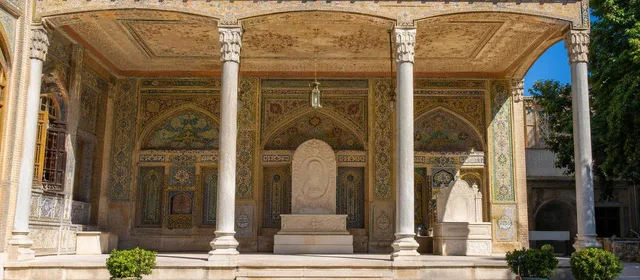
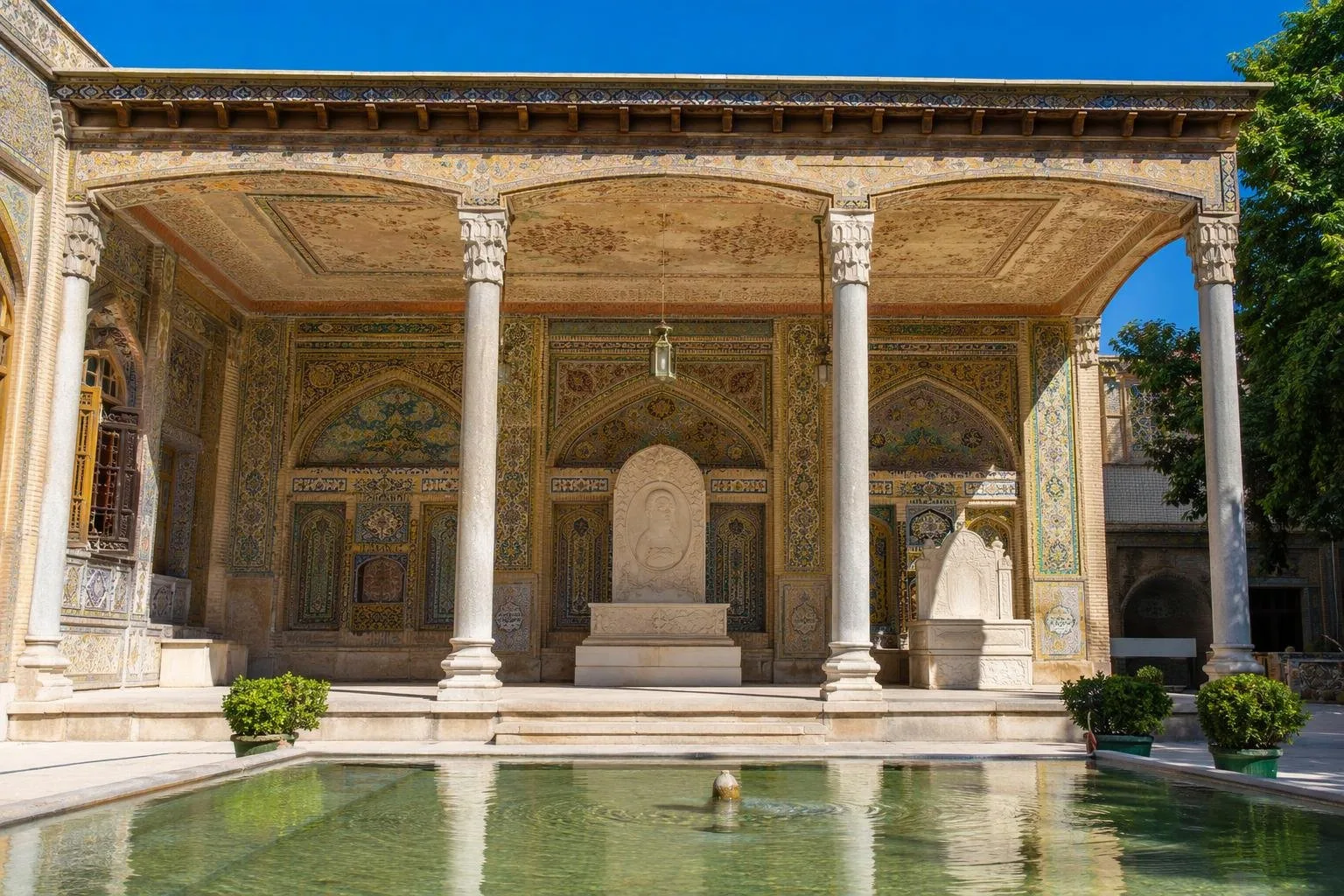
A compact Zand-era terrace in the north-west of Golestan Palace in central Tehran. Its columns, fountain basin and royal funerary monument offer a deliberately intimate counterpoint to the nearby Marble Throne terrace.
What it is
Karim-Khani pavilion, usually called Khalvat-e Karim Khani or the Karim Khani Nook, is a surviving part of the 1759 Zand-period complex within Golestan Palace. It is a small, roofed and columned iwan—an open-fronted terrace—rather than a palace hall. Its restrained scale matters: this was a place of retreat and passage, not a stage for state ceremony.
The pavilion stands where Golestan’s two garden areas meet, near the Marble Throne complex and beside the later Reception Hall. It is one of the palace’s oldest surviving structures.
Read the architecture
Look for the three open bays and the central basin. Water once rose from the Shah’s qanat in the fountain and continued through the palace gardens. The arrangement makes water, shade and a low platform the essentials of the space.
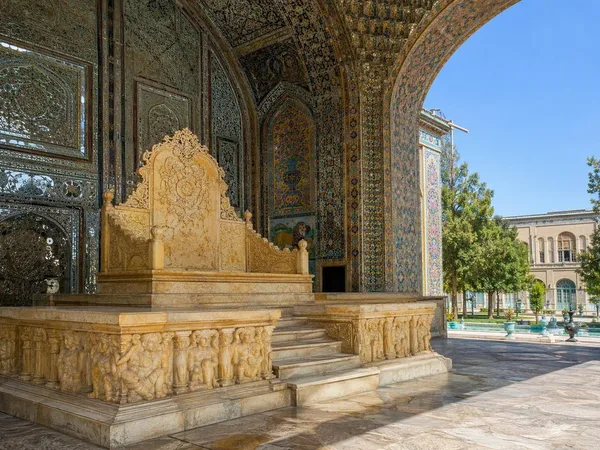
This is useful context for the much larger Marble Throne terrace nearby. There, an elevated throne and dense decoration projected royal authority. Here, the smaller terrace compresses the same courtly vocabulary into a quieter setting.
What to see
The pavilion now combines architecture with objects moved here from elsewhere in the royal complex.
- Central basin: the focal point of the terrace and the trace of its former water system.
- Naser al-Din Shah’s marble tombstone: a large carved funerary slab with a relief of the Qajar ruler. It was transferred to Golestan Palace from his shrine at Shah Abd al-Azim.
- Marble throne of Fath Ali Shah: smaller and plainer than the celebrated throne in the Marble Throne terrace; it was brought to this pavilion in the Pahlavi period.
- Tilework and painted surfaces: inspect them at close range rather than expecting the monumental façade of other Golestan buildings.
History in layers
Karim Khan Zand established the pavilion as part of his Tehran residence. Much of the original building was later demolished during construction of the Reception Hall under Naser al-Din Shah, leaving the reduced structure seen today. The route that once connected the inner residence and garden with the court and Marble Throne was also closed.
Naser al-Din Shah favoured this corner for rest. The pavilion therefore records several distinct uses: Zand residence, Qajar retreat, altered palace remnant and later display setting for royal monuments.
Visiting it
Enter through Golestan Palace on the north side of Arg Square, off 15 Khordad Street in historic Tehran. The nearest practical rail stop is 15 Khordad on Metro Line 1; the palace entrance is a short walk away.
The pavilion is within the palace grounds, not a separately accessed monument. Move through it slowly: the basin, tombstone and smaller throne are close together. Palace access and individual-building restrictions can change during conservation work, so confirm the day’s opening arrangement before making a special trip.
From the magazine
Stories about Karim-Khani pavilion (Khalvat-e Karim Khani)
Editorial stories linked directly to Karim-Khani pavilion (Khalvat-e Karim Khani).
No stories about Karim-Khani pavilion (Khalvat-e Karim Khani) have been published yet.
Routes from our editors
Travel through Karim-Khani pavilion (Khalvat-e Karim Khani)
Editorial routes connecting Karim-Khani pavilion (Khalvat-e Karim Khani) with other countries, cities and hotspots.
No routes through Karim-Khani pavilion (Khalvat-e Karim Khani) have been published yet.
More in Iran
Related hotspots
Other cities, nature areas and places within Iran.
Tehran
2 linked stories and routes
Yazd
1 linked stories and routes
Alborz Mountains
1 linked stories and routes
Golestan Palace
1 linked stories and routes
Marble Throne
1 linked stories and routes
Shams-ol-Emareh
1 linked stories and routes
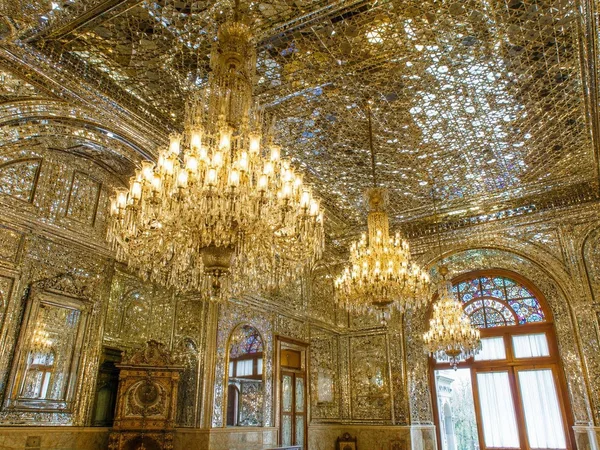
Brilliant Hall (Talar-e Brelian), Golestan Palace
1 linked stories and routes
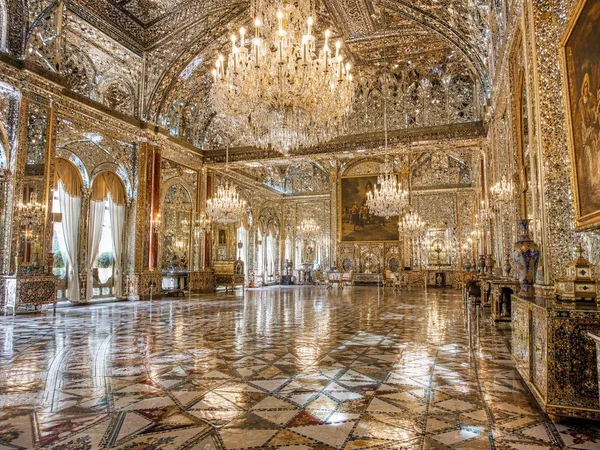
Talar-e Salam
1 linked stories and routes