Top 5 wildlife encounters that keep animals wild
These five encounters differ in more than their headline animals: one unfolds from a riverboat, another from a jeep, snorkel, tundra vehicle or ranger-led walk. Each depends on a habitat that concentrates wildlife at certain times, but none offers a guaranteed sighting.
5. Jaguars in Encontro das Águas State Park, Brazil
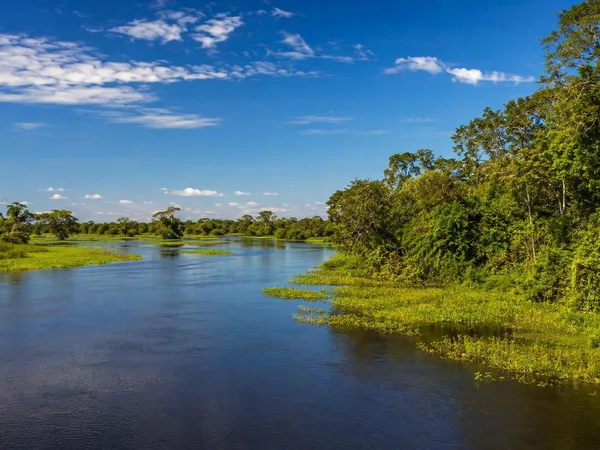
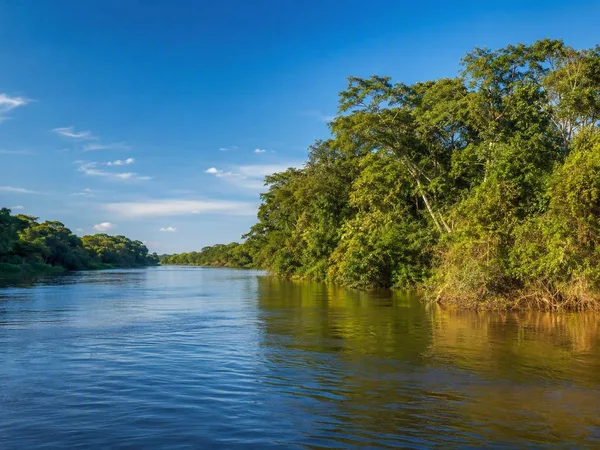
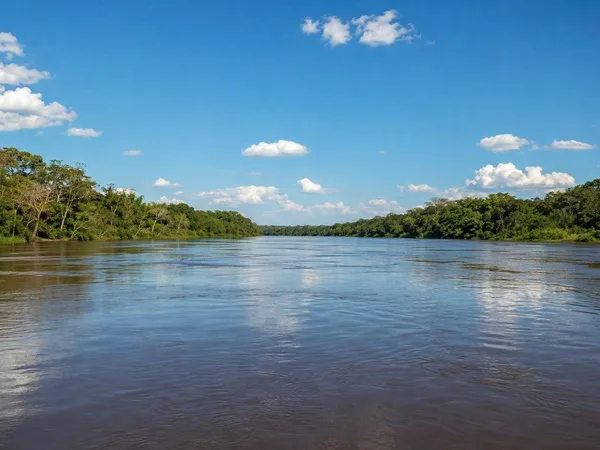
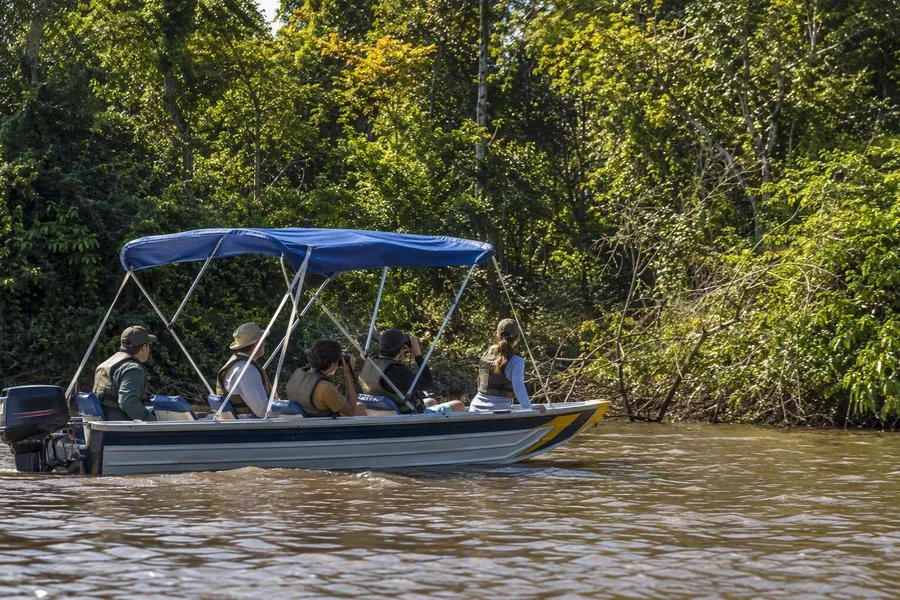 Passengers scan the Cuiabá River’s wooded banks in Encontro das Águas State Park.
This is the river safari. Boats leave Porto Jofre for the Cuiabá River and connected channels, scanning wooded banks, beaches and water edges rather than chasing a single animal. A jaguar may walk beside the river, rest in cover, hunt near the water or cross a channel. Giant otters, caimans, capybaras, jabirus and other waterbirds also use these waterways.
Encontro das Águas protects riverine forest and seasonally flooded savanna in the Pantanal. In the wet season, water spreads far beyond the channels and animals disperse across the floodplain. As water retreats, jaguars follow prey and cover towards the main rivers, where boats can search the banks without going ashore.
A good captain approaches slowly, keeps at least 25 metres from a jaguar and leaves its route open. Passengers should remain aboard. When a cat changes its behaviour or a boat blocks its path, the crew should back away.
4. One-horned rhinoceroses in Kaziranga National Park, India
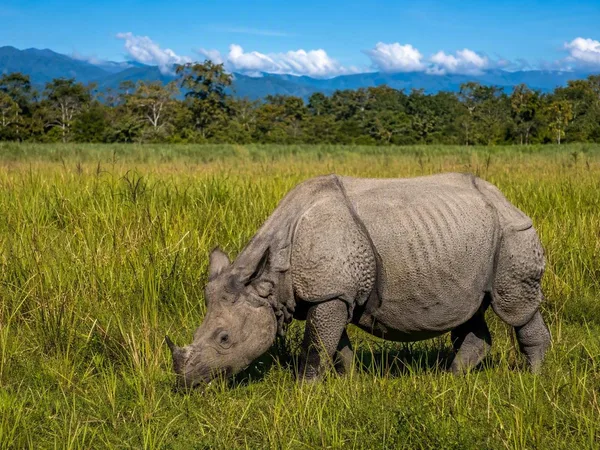
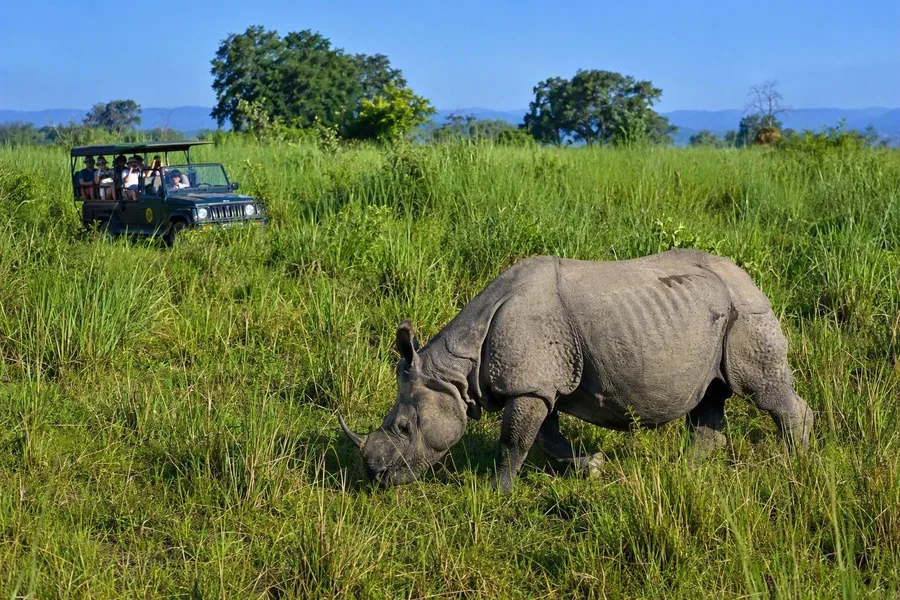 A greater one-horned rhinoceros grazes beside an authorised jeep safari in Kaziranga National Park.
Kaziranga offers a land-based safari in a very different kind of grassland. Tall elephant grass, reed-fringed pools and woodland fill the Brahmaputra floodplain between the river and the Karbi Anglong Hills. Annual floods and controlled burning maintain grassland across much of the park, providing feeding ground for its large population of greater one-horned rhinoceroses.
An authorised jeep safari can reveal a rhino grazing in open grass or standing near a marsh. Asian elephants, wild water buffalo and eastern swamp deer share the floodplain. Pelicans, raptors and other waterbirds gather around the wetlands. Tigers, hoolock gibbons and Ganges dolphins occur here too, but they are bonuses rather than likely safari sightings.
Drivers and guides use specified tracks, and visitors stay in the vehicle except at permitted places. Keep voices low near wildlife. Do not feed, attract or tease animals, or use horns, whistles and audio systems.
3. Whale sharks at Ningaloo Coast, Australia
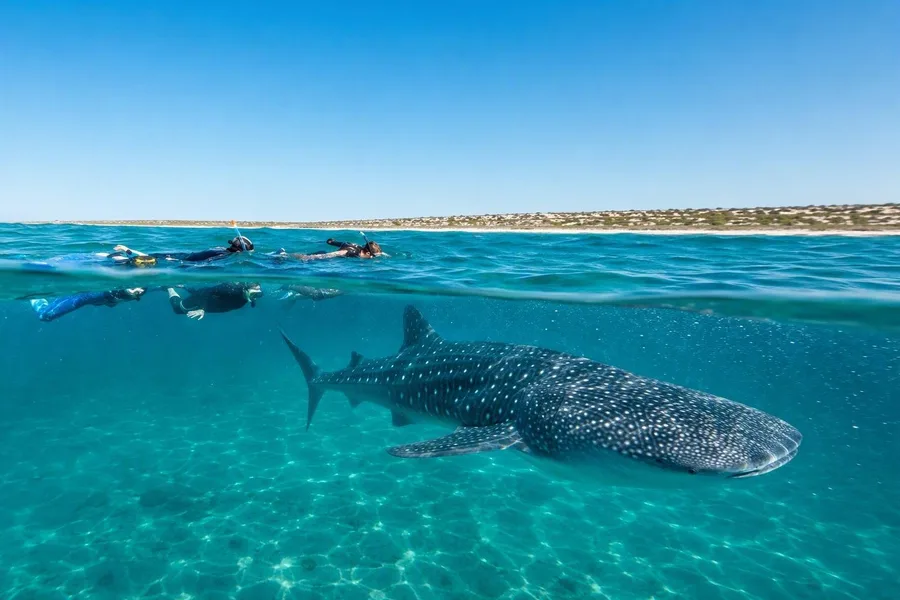 Snorkellers keep their distance from a free-swimming whale shark at Ningaloo Marine Park.
Ningaloo is the sole in-water entry on this list. Licensed operators take snorkellers into the nearshore waters of Ningaloo Marine Park off Western Australia’s North West Cape, where free-swimming whale sharks gather seasonally.
The sharks come to feed. Mass coral spawning in March and April is followed by plankton blooms, while local currents form eddies that retain food near Ningaloo Reef. A swimmer may see a blue-grey fish with white spots and stripes cruising or filter-feeding near the surface. Ningaloo’s whale sharks commonly measure 2 to 12 metres, and the aggregation is dominated by juvenile males.
The rules leave the shark room to move. No more than 10 swimmers may enter the water at once, and they must stay three metres from the head or body and four metres from the tail. Touching, riding, blocking, flash photography and motorised propulsion aids are prohibited. Only one vessel may enter the 250-metre approach zone at a time.
2. Polar bears near Churchill, Canada
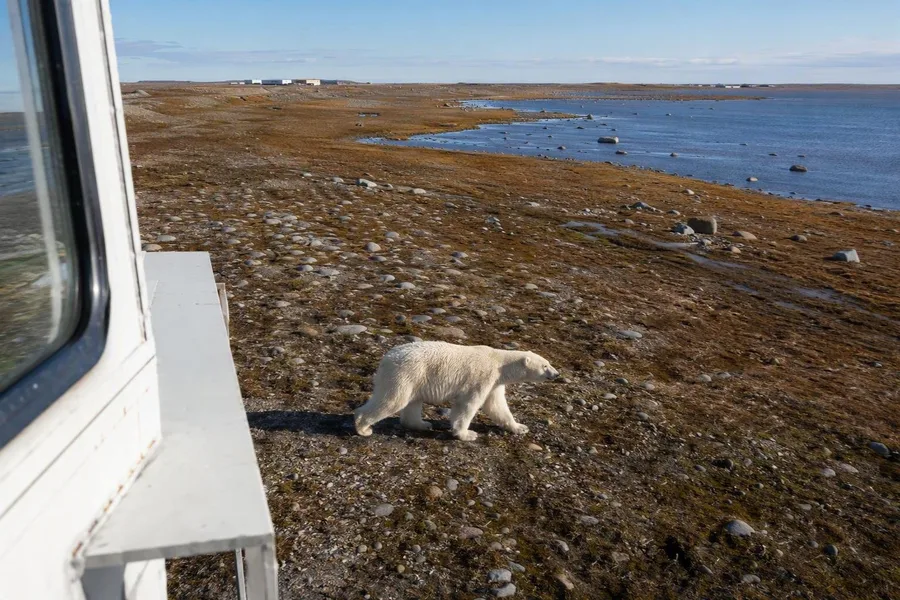 A polar bear walks across bare coastal tundra near Churchill beside a tundra vehicle.
Churchill’s autumn bear season follows the sea ice. Hudson Bay melts in summer, forcing Western Hudson Bay polar bears ashore; as temperatures fall, bears gather near the coast and wait for ice that will again carry them to seals. Churchill sits beside shallow coastal water where currents and freshwater from the Churchill, Nelson and Hayes rivers help ice form early.
Bears may walk the shoreline, rest on bare tundra or test newly forming ice. Adult and subadult males sometimes spar, pushing upright and tussling. Seal hunting is not a realistic expectation before stable ice forms.
Purpose-built tundra vehicles provide enclosed, elevated viewing on existing trails east of town. Permit conditions require vehicles to remain 100 metres from bears and prohibit drivers from blocking travel routes, intercepting animals or using food, scent or bait. Away from town, use a licensed operator or local guide rather than exploring the shoreline independently.
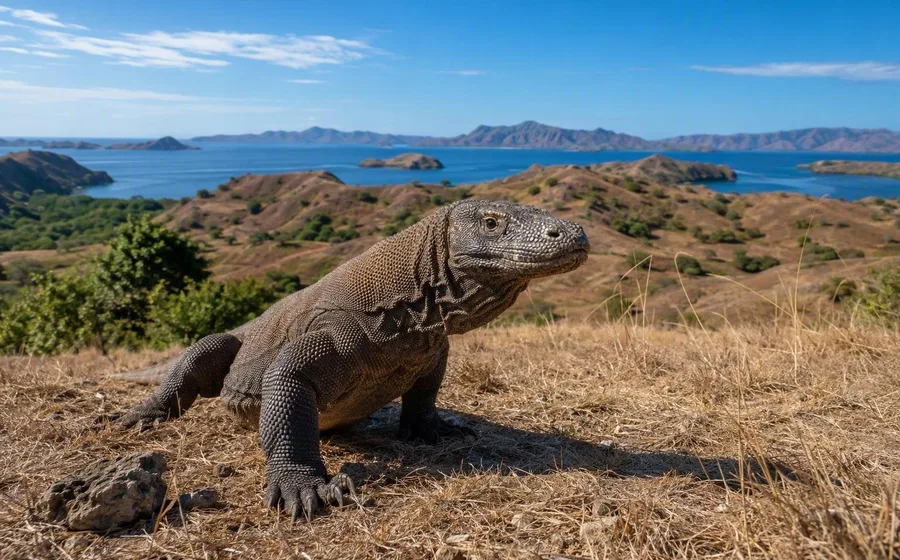
1. Komodo dragons in Komodo National Park, Indonesia
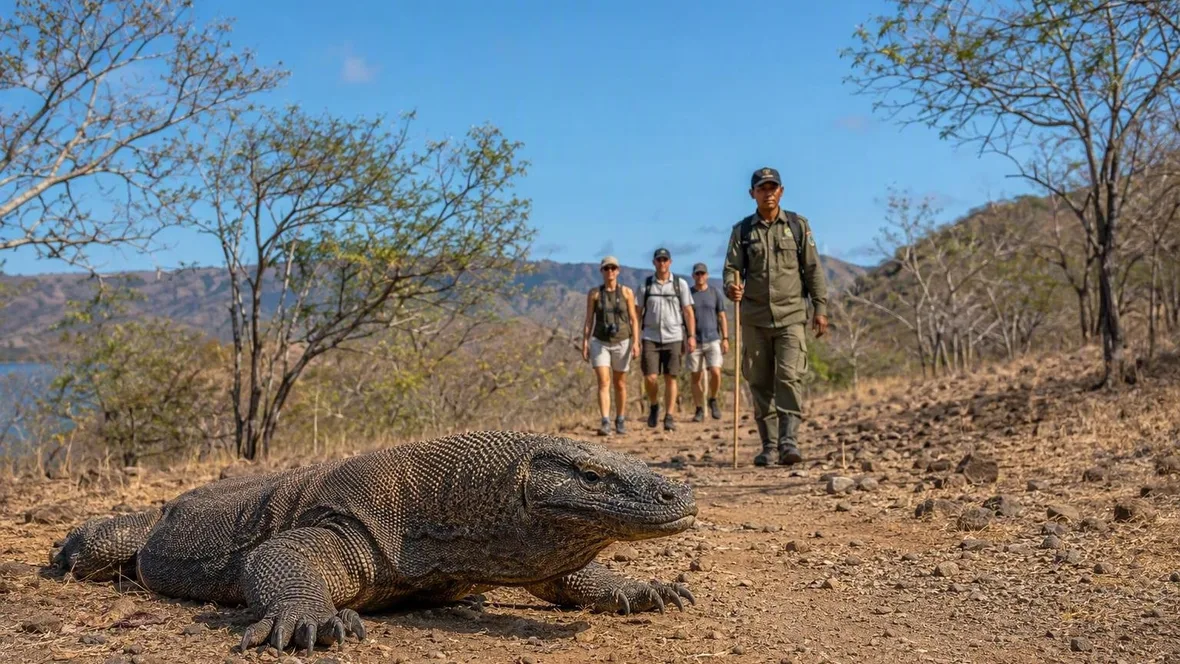
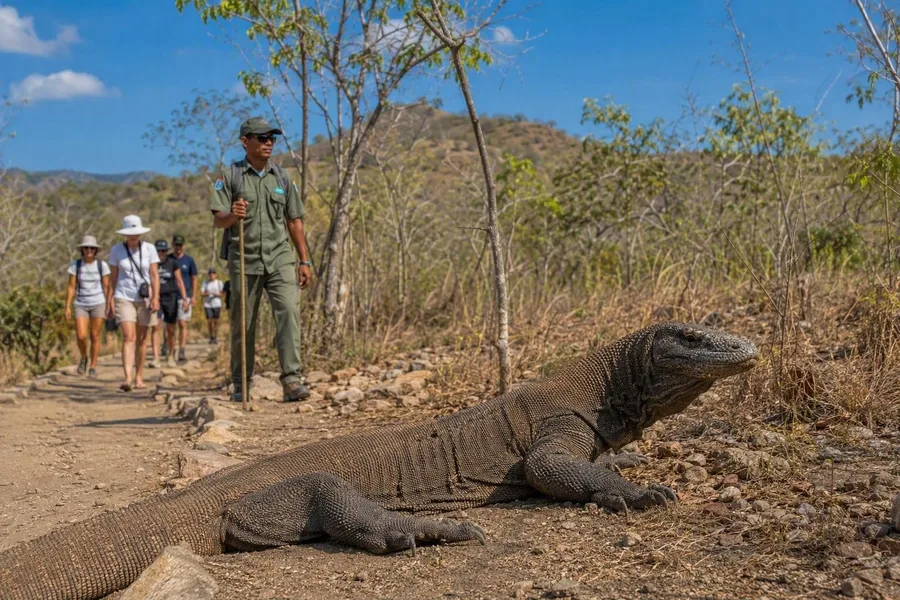 A Komodo dragon lies beside a marked trail as visitors follow a ranger in Komodo National Park.
Komodo National Park protects the only wild range of the world’s largest lizard. Its volcanic islands between Sumbawa and Flores carry dry grass-woodland savanna, thorny vegetation and pockets of monsoon forest. Mangroves, seagrass and coral reefs lie along the coast.
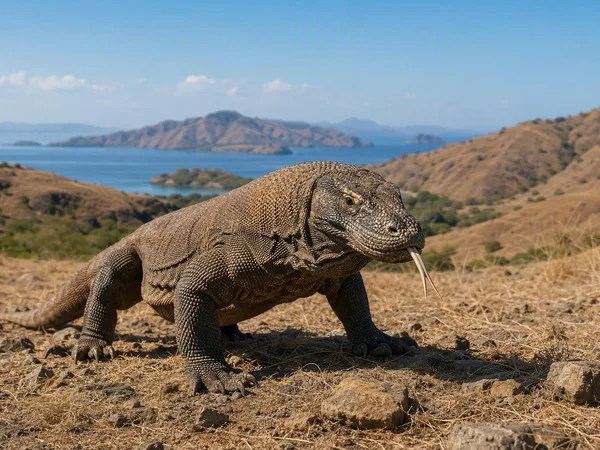
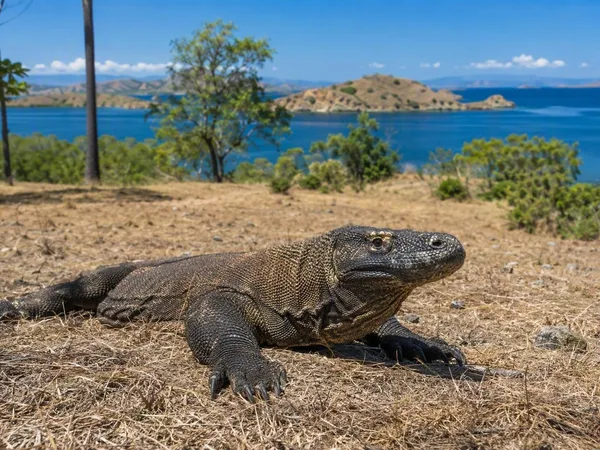
Dragons hunt Timor deer and wild pigs, and they also scavenge. On an authorised walk, visitors may see a dragon lying near a shaded path, waterhole or ranger building. Timor deer may appear in the same dry country. The park offers no scheduled dragon encounter, which is precisely the point of a wild population.
Independent trekking is forbidden. A licensed ranger selects the marked route and keeps the group together according to weather and dragon activity. Stay at least five metres from every dragon. Never feed, touch, bait or provoke one.
Practical timing and booking: Choose May to September for Pantanal jaguar trips, November to April for Kaziranga, March to July for Ningaloo, late October to early or mid-November for Churchill, and broadly April to November for Komodo. Kaziranga jeep safaris require official booking; Ningaloo trips require a licensed whale-shark operator. Churchill’s high-use tundra area requires a licensed commercial operator, while Komodo visits need a permitted boat trip and ranger escort. Confirm current prices, departures and access arrangements when booking.
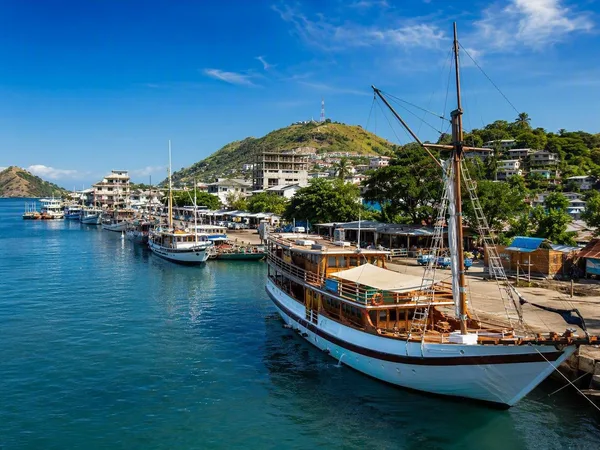
A licensed boat lands passengers at Loh Liang on Komodo or Loh Buaya on Rinca. The ranger then leads the group from the coral-fringed shore onto dry savanna, where a Komodo dragon can lie still beside the marked trail.
Keep exploring
Places in this story
Brazil
Brazil is a Portuguese-speaking country of Atlantic cities, vast river systems and deeply regional cultures.

India
Pantanal, Brazil
Encontro das Águas State Park
Porto Jofre
Kaziranga National Park
Komodo National Park
Komodo National Park is a protected island-and-sea landscape between Sumbawa and Flores in eastern Indonesia. Its dry volcanic islands are the principal wild refuge of the Komodo dragon, with coral reefs and strong-current channels offshore.
Komodo Island
Rinca Island