One Breath at a Time: Jeju’s Haenyeo at Work
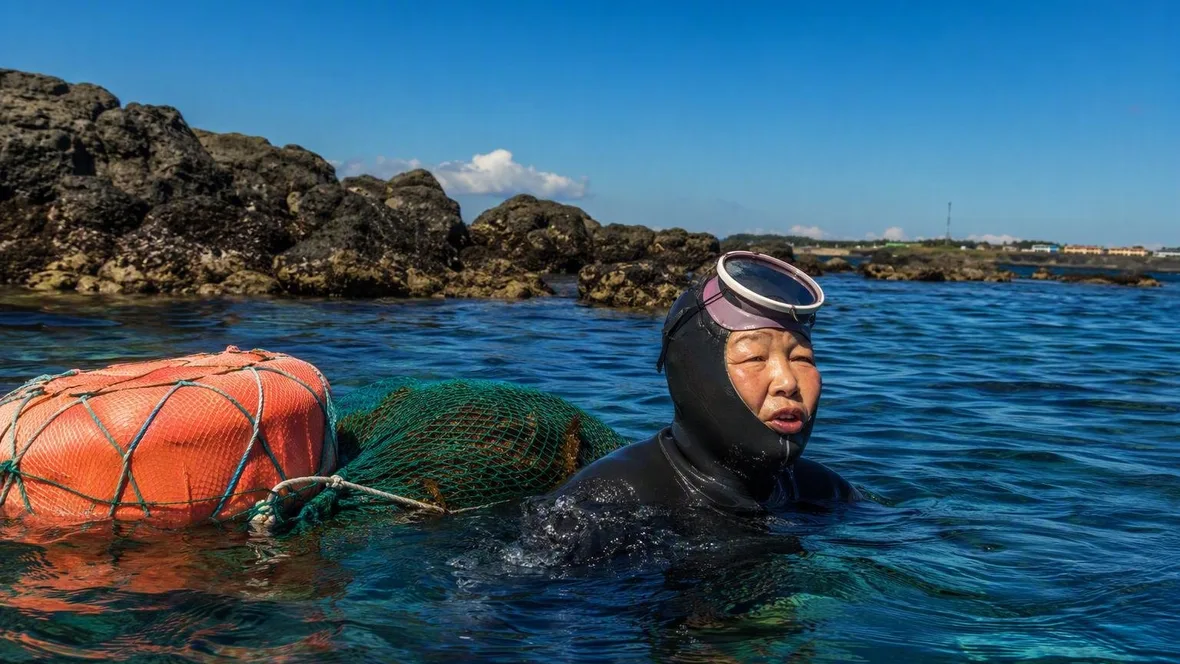
Jeju’s haenyeo enter the sea without air tanks, guided by wind, tide and knowledge passed between working divers. Their long, whistling breath at the surface belongs to hard, uncertain work, not a performance along the island’s basalt coast.
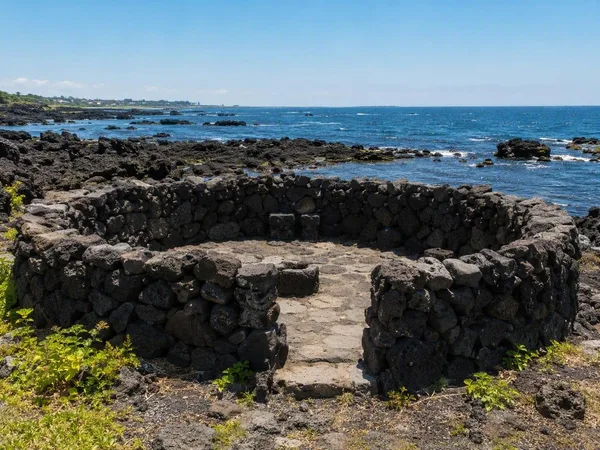
Before entering the water, haenyeo gather beside a coastal changing room or an old bulteok, a low circle of stone that once held a fire. They pull on diving suits and discuss the day’s conditions: which grounds are open, how the current is moving, and whether the wind allows safe work.
Each woman carries a mask, fins and simple hand tools. A floating tewak gives support at the surface, while a net bag hanging beneath it holds the catch. An iron bitchang can prise abalone from rock; a hook reaches into cracks where shellfish and octopus may hide.
The equipment is spare. The knowledge behind it is not. Haenyeo read tide and current, remember particular rocks and harvesting grounds, and know when shellfish are spawning or too small to take. Jeju’s diving communities call this shared coastal ground a sea field. Village cooperatives set its boundaries, closed periods, access and permitted methods.
Working beneath a tewak
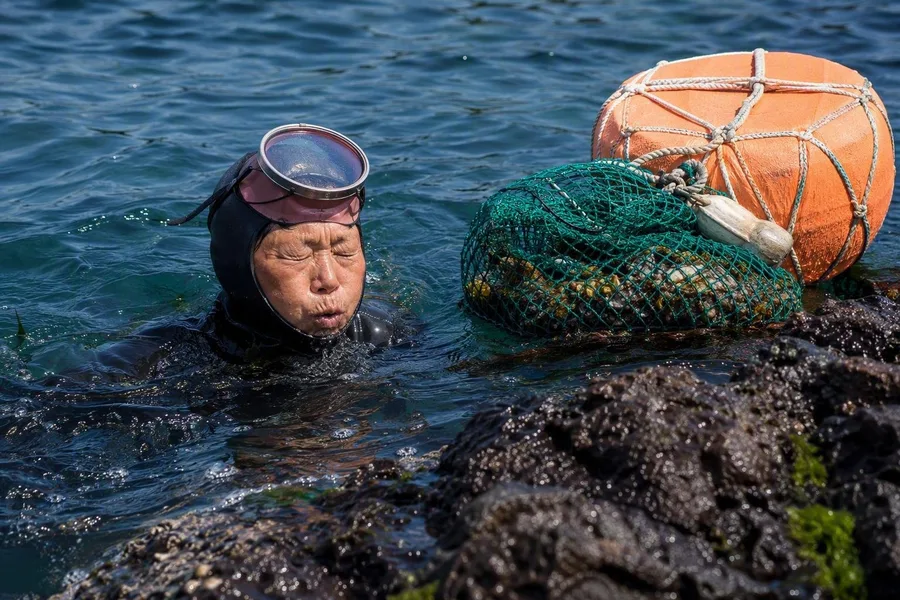 A haenyeo recovers beside her tewak after a breath-hold dive off Jeju’s basalt coast.
A haenyeo works on one breath. She descends, searches among the rocks, then returns to the tewak to recover before going down again. Without scuba equipment, divers commonly work at depths of about 10 metres, with dives lasting roughly one to two minutes.
At the surface comes the sumbisori, a long, high exhalation. It releases carbon dioxide before a quick intake of air and the next descent. The sound carries across the water, but it marks exertion and recovery, not a flourish for visitors.
The catch may include abalone, horned turban shells, sea urchins, sea cucumbers and octopus. Seaweed work includes sea mustard, hijiki and agar-producing algae; the main harvest changes with the season and local rules. What stays behind matters as much as what enters the net. Divers check shellfish for size and return undersized specimens to the water. They also avoid spawning periods.
Haenyeo do not work alone. They traditionally progress through the levels of hagun, junggun and sanggun, with the most experienced sanggun guiding less experienced divers. A senior diver may know how a current turns around a particular reef or where waves strike jagged basalt with dangerous force. Knowledge passes through conversation, observation and repeated work.
Some harvests remain individual, but communities may gather, dry and sell seaweed together. Haenyeo also remove underwater rubbish and clean rocks where seaweed grows. Cooperation determines who can work a sea field and helps prevent overharvesting.
The bulteok beside the sea
The old bulteok shows how this working culture took shape. Its stone wall sheltered women from Jeju’s wind as they changed clothes, warmed themselves and prepared to return to the water. It also gave them a place to compare conditions, discuss technique and make decisions about the fishing ground.
Modern heated changing and bathing rooms have replaced many of these enclosures, particularly since rubber diving suits became common. About 70 bulteok still survive. They served as changing rooms, rest stops, meeting places and informal schools for a demanding trade.
Men and women both dived in Jeju’s earlier fishing economy, but women gradually became the principal divers from the seventeenth century. Male migration, military service and taxes on marine products reduced the available male workforce, while diving brought income into households. That income could give women more authority at home, though it did not remove responsibility for children and domestic work.
Commercial expansion later sent some haenyeo to other coasts for seasonal work, including places beyond Korea. It brought opportunities, but also dependence on traders and pressure over prices. Family obligations, uneven earnings and physical danger have long shaped the work.
An ageing workforce in a changing sea
The work can be fatal. A diver who misjudges her remaining breath may not reach the surface. Breaking waves and sharp volcanic basalt can tear a suit or cut skin near the shore. Repeated descents also strain the body. Research on working haenyeo has linked long, repetitive diving to symptoms associated with decompression problems, including joint pain, dizziness, hearing loss, nausea and headaches.
At the end of 2025, Jeju had 2,371 active haenyeo, down from 4,377 in 2015. Sixty-three per cent were aged 70 or older, including 423 divers aged over 80. Their income comes from what they gather and sell, not from a fixed wage. New divers usually work at shallower depths and can earn little while they build skill and gain acceptance within a fishing community.
Warmer water, pollution and shrinking fishing grounds have made catches less predictable, while many younger women choose other work. Haenyeo schools now teach diving theory, breathing and safety techniques, marine ecology and practical skills under the guidance of experienced sanggun. In 2024, 27 newcomers joined fishing villages in Seogwipo, 25 of them through such schools. Training can teach a foundation, but local knowledge and trust still grow through work.
UNESCO added Jeju haenyeo culture to its Intangible Cultural Heritage list in 2016. The listing has raised public interest, but work dives still follow the sea, the harvest rules and the divers’ own condition rather than a visitor timetable.
Looking without getting in the way
The Jeju Haenyeo Museum in Gujwa offers a useful first stop. Its displays place divers in the history of fishing villages through their tools, working environment, folk culture and economic role. Community-led walks in Sehwa and Gimnyeong can include conversations with active haenyeo and supervised visits to places such as stone shelters and changing areas. At Beophwan, local divers lead shallow-water lessons designed as visitor activities, separate from normal harvesting work.
An organised demonstration is the proper way to watch diving at close range. A working group enters the sea only when wind, tide, season, harvesting rules and the divers’ condition permit it. Anyone who encounters haenyeo at work should stay on the public side of the shore, keep access routes clear and leave tewak, nets, catch and tools untouched. Portraits require permission. Changing rooms, resting places and warming spaces are private, and drones have no place above a working group.
Practical details
The Jeju Haenyeo Museum stands at 26 Haenyeobangmulgwan-gil in Gujwa and normally opens from 9am to 6pm, closing on the first Monday of each month. Check current arrangements and reserve village walks, demonstrations or shallow-water programmes through their operators; weather and sea conditions can alter or cancel outdoor activities.
Back at the basalt edge
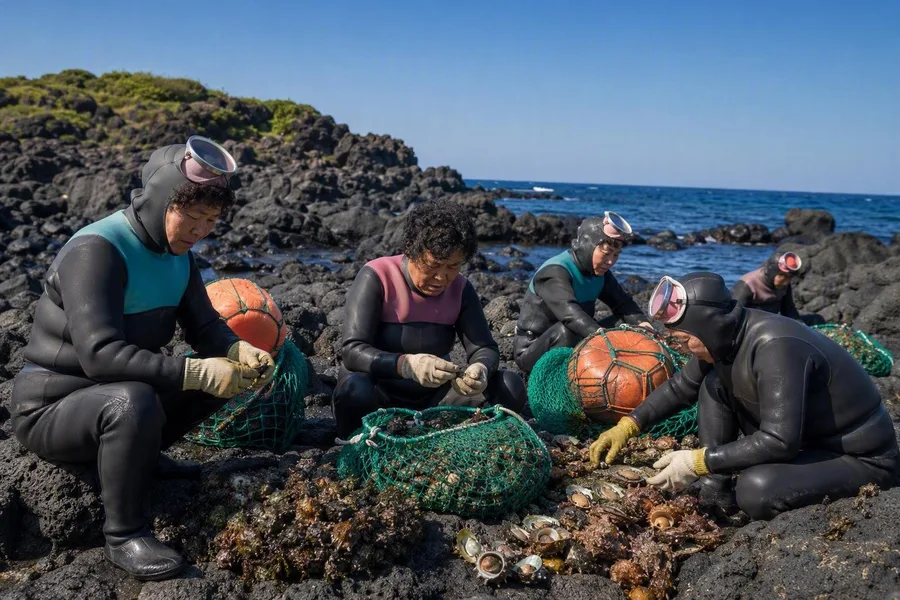 Haenyeo sort net bags by species and size on Jeju’s basalt shore.
After a dive, the women sort the net bags by species and size before weighing the catch. At the shore, they turn each shell over for inspection. Undersized shellfish return to the water beside Jeju’s dark basalt.
Keep exploring
Places in this story
Asia
4 landen en gebieden
South Korea
Jeju
Seogwipo
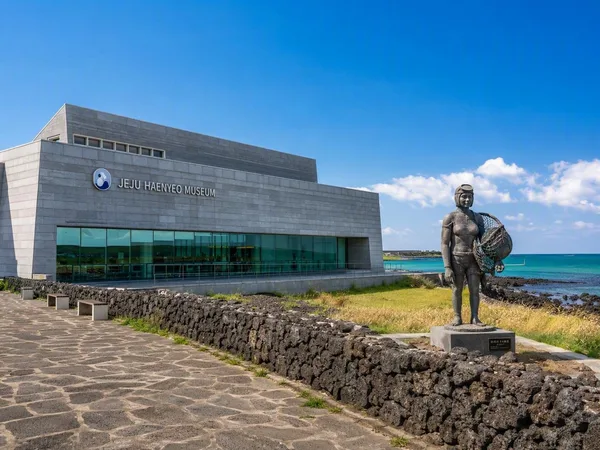
Gujwa
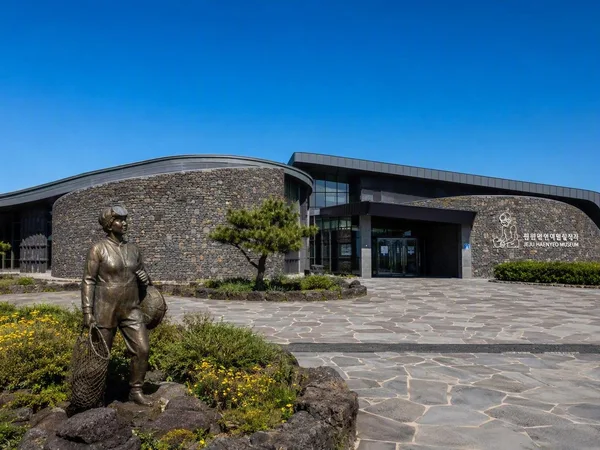
Jeju Haenyeo Museum
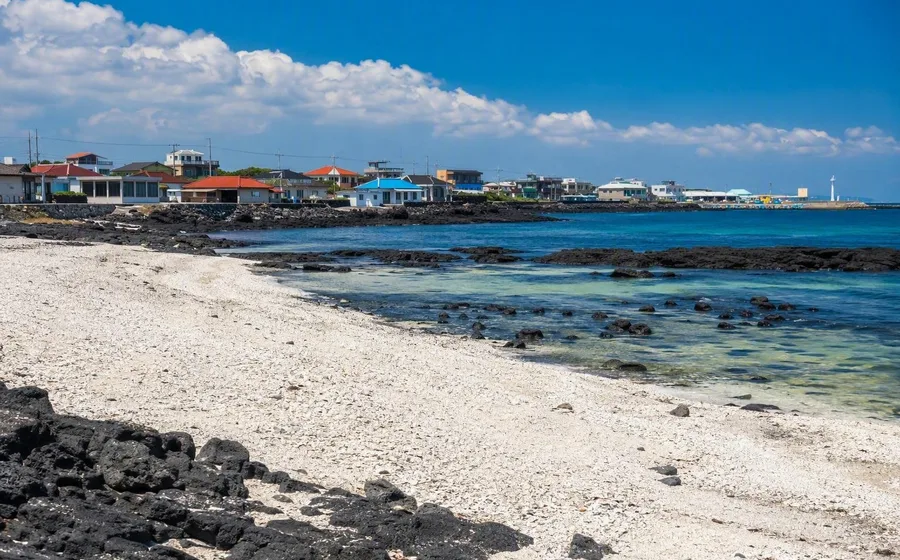
Sehwa, Jeju
Sehwa is a coastal village in Gujwa-eup on northeast Jeju, centred on a small tidal beach, a five-day market and the living culture of the haenyeo divers.
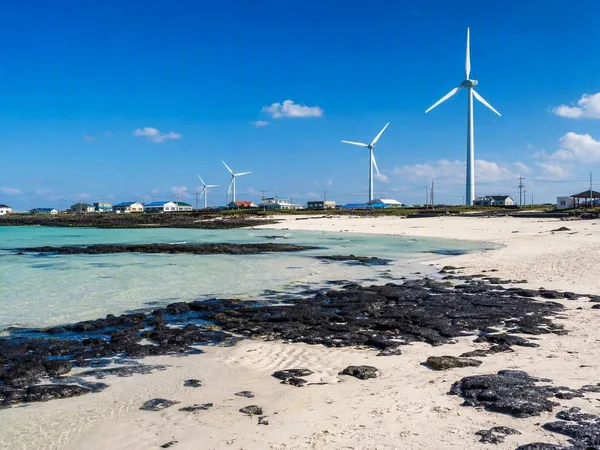
Gimnyeong