
Sight · Suriname
Arya Diwaker Temple
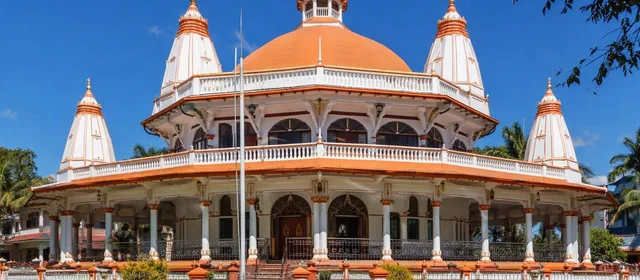
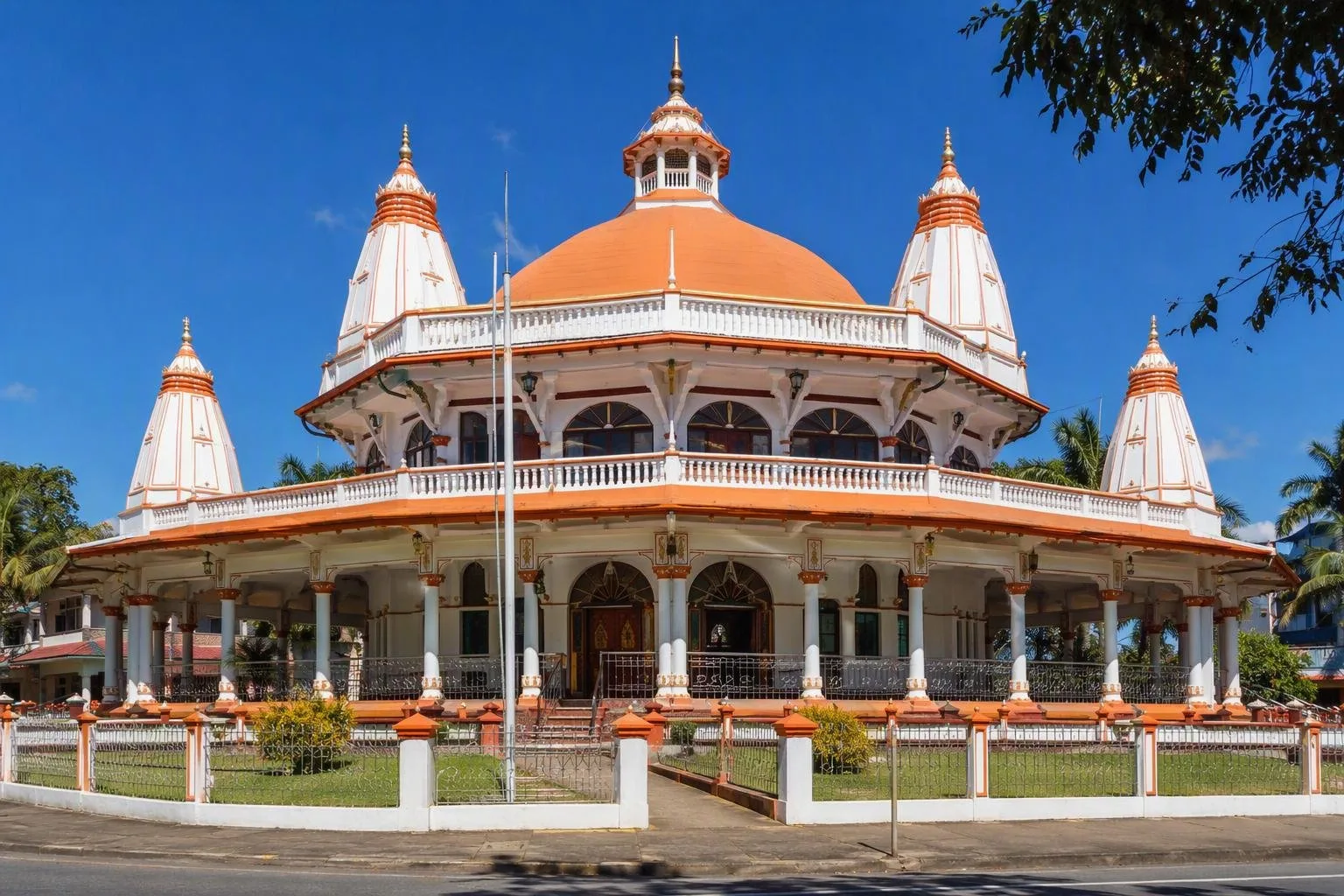
Arya Diwaker is the principal Arya Samaj mandir on Johan Adolf Pengelstraat in Paramaribo. Opened in 2001, it is a strikingly modern Hindu temple whose octagonal form, orange dome and open verandas are built for the Surinamese climate.
Orientation
Arya Diwaker stands at Johan Adolf Pengelstraat 210 in Paramaribo. The present two-storey mandir opened on 11 February 2001, replacing an earlier temple connected with the Arya Diwaker association, founded in 1929.
It is a working house of worship and a useful stop for understanding the Arya Samaj strand of Surinamese Hindu life. The movement centres on the Vedas and a single formless God, rather than worship of deity images.
Read the building from outside
The building is deliberately unlike a conventional sculptural Hindu temple. Its octagonal plan makes the structure read as almost circular, a reference to the sun, moon and earth. Look for:
- the large orange-clad central dome;
- two smaller flanking towers and a tower above the dome;
- broad covered verandas and deep eaves;
- white-painted, small-paned windows recalling older Surinamese houses.
The three towers represent God, humanity and nature. The stepped tops each use four levels, referring to the four Vedas. The verandas, overhangs and ventilated upper level are practical responses to intense sun, rain and airflow as well as strong visual elements.
The temple hall
The upper floor contains the ceremonial hall. Its focal point is a central fire altar for yajna, the Vedic fire ceremony. Benches form circles around it, making the congregation face the same centre rather than a raised image or shrine.
Do not expect statues of Hindu deities: Arya Samaj rejects image worship. Instead, the walls and ceiling carry Om signs, swastika symbols in their Hindu religious context, and Sanskrit and Hindi texts in Devanagari script. The visual programme makes the temple's theology unusually legible through architecture, text and ritual layout.
Visiting respectfully
Approach it as an active religious site, not a museum. Dress modestly, keep voices low and ask permission before entering the upper hall or taking photographs indoors, especially when a ceremony is under way. The exterior, verandas, dome and towers can be appreciated from the street-facing side without interrupting worship.
No fixed visitor hours are reliably published. If you want to see the hall rather than the exterior alone, arrange your visit with the temple community in advance.
From the magazine
Stories about Arya Diwaker Temple
Editorial stories linked directly to Arya Diwaker Temple.
No stories about Arya Diwaker Temple have been published yet.
Routes from our editors
Travel through Arya Diwaker Temple
Editorial routes connecting Arya Diwaker Temple with other countries, cities and hotspots.
No routes through Arya Diwaker Temple have been published yet.
More in Suriname
Related hotspots
Other cities, nature areas and places within Suriname.
Paramaribo
4 linked stories and routes

Commewijne District
2 linked stories and routes
Fort Nieuw Amsterdam
2 linked stories and routes

Mariënburg
1 linked stories and routes

Rust en Werk Plantation
1 linked stories and routes
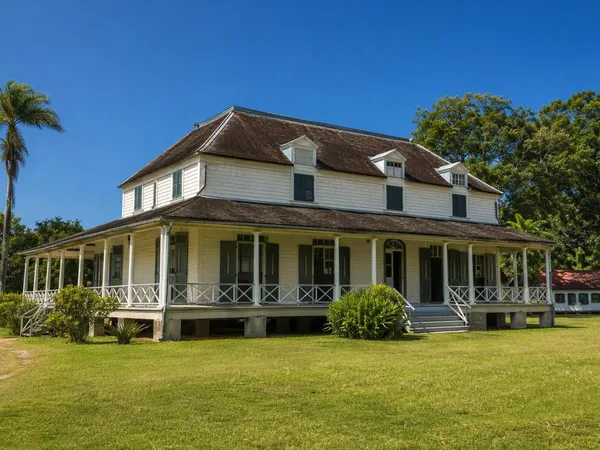
Frederiksdorp
1 linked stories and routes
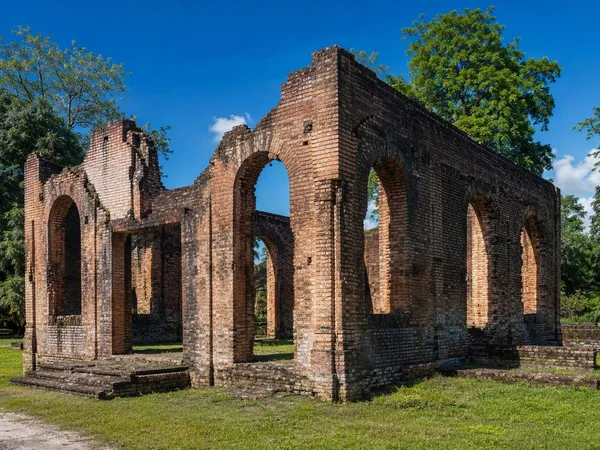
Jodensavanne
1 linked stories and routes
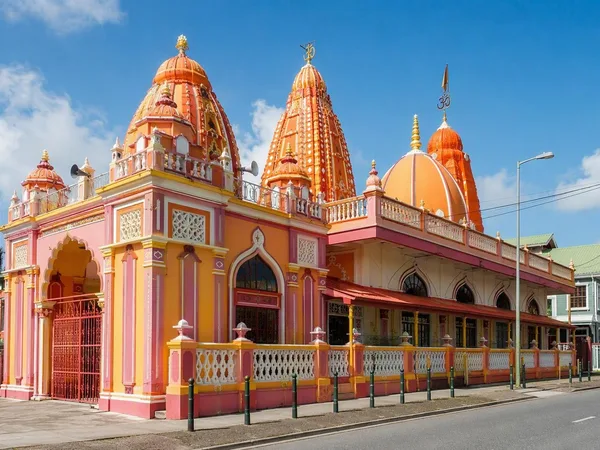
Sri Vishnu Mandir
1 linked stories and routes
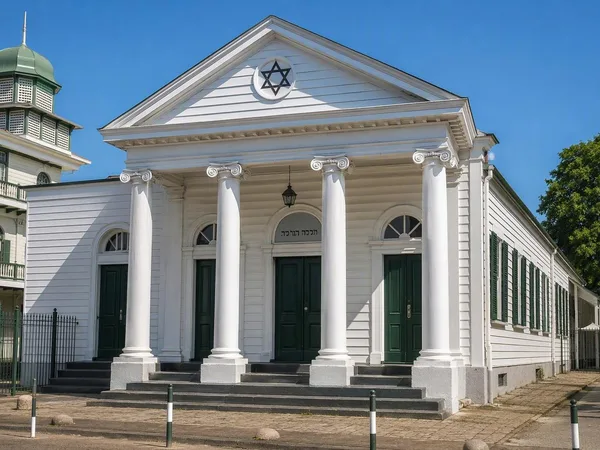
Neve Shalom Synagogue
1 linked stories and routes