
Guyana

Atlantic coast, rainforest and savanna

Guyana

Guyana brings Caribbean cultural ties to the rainforests, rivers and open savannas of South America.

Guyana stands apart in South America as its only English-speaking country, but English is only one part of the picture. Most Guyanese live on a low coastal strip, where Dutch canals cut through villages shaped by sugar estates and British-era wooden buildings face the Atlantic. In Georgetown, St George’s Cathedral stands above broad streets, while drainage channels run beside houses on stilts. Indian, African, Indigenous, Chinese and Portuguese cooking fills tables with pepperpot, cook-up rice, curries and roti. Each dish carries traces of the people who built lives along this coast.

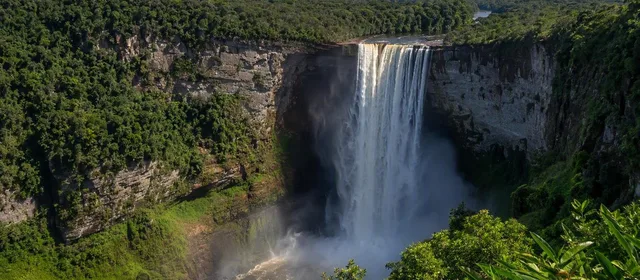
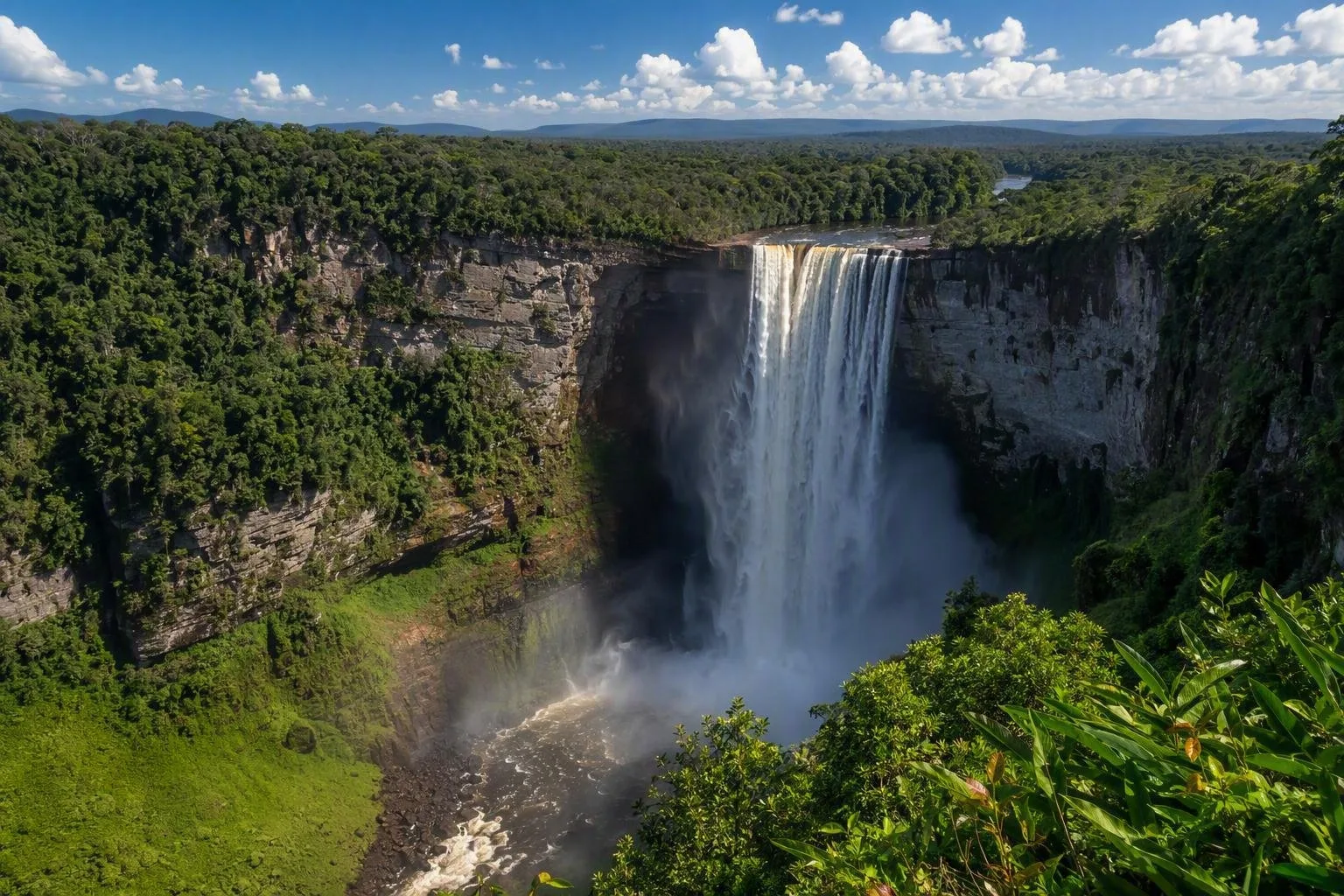
Beyond the coast, forest covers much of Guyana. Kaieteur Falls drops 226 metres in one broad plunge into a densely forested gorge. The Iwokrama Forest lies around the Essequibo basin, and farther south the Rupununi opens into savanna, wetlands and low mountains. Cattle ranches sit alongside Macushi and Wapishana communities in this sparsely populated region.

The Essequibo, Demerara and Berbice rivers run from the interior towards the sea. People have long used them for trade and travel, and boats still link riverside settlements where roads do not reach. Spend time in Georgetown’s markets, eat at a roadside curry shop, then travel inland by boat or small plane. Guyana offers a different view of South America, shaped by rivers, forest and the people who call them home.

When to go

Best time to travel

Monthly values are indicative average maximum temperatures for Georgetown and the coastal plain. Conditions vary meaningfully across the forested interior, river valleys and Rupununi savanna. Monthly values are indicative average maximum temperatures for Georgetown and the coastal plain. Conditions vary meaningfully across the forested interior, river valleys and Rupununi savanna.

jan29.1°C feb29.2°C mar29.7°C apr30.1°C may29.6°C jun29.2°C jul29.4°C aug30.1°C sep30.8°C oct31°C nov30.5°C dec29.6°C

Weather in the capital

Practical Guyana

On every country page we show the current weather for the capital.

Georgetown
Morning29°Cpartly cloudy
Afternoon30°Cdrizzle
Evening27°Cclear
today30°C / 26°Chigh and low

Current forecast by Open-Meteo

Visa and entry requirements

Requirements depend on your nationality, purpose of travel and length of stay. Check current details with the Ministry of Foreign Affairs, Guyana before departure.

Getting around

Minibuses and taxis handle most travel along the coast. Ferries cross major rivers, while scheduled and chartered aircraft serve many interior airstrips. Lodges and tour operators often arrange transfers where roads are limited.

Paying in Guyana

Cash remains important, especially in markets, small businesses and the interior. Larger hotels and restaurants in Georgetown often accept cards, and ATMs are concentrated in the main towns.

Where to stay

Georgetown has hotels and guesthouses at several price levels. Interior stays include rainforest lodges, ranches and community-run accommodation; many include meals and transport.

Before you leave

Worth knowing

A practical starting point for your trip. Check current conditions and local information before you leave.

01

Languages

English is the official language. Guyanese Creole is widely spoken, alongside Indigenous languages including Macushi, Wapishana and Patamona.

02

Calling code

Guyana’s international calling code is +592.

03

Driving side

Drivers use the left side of the road, and most vehicles have the steering wheel on the right.

04

Distances

Guyana uses metric measurements. Road signs generally show distances in kilometres and speeds in kilometres per hour.

05

Interior flights

Small aircraft link the coast with interior airstrips. Many services leave from Eugene F. Correia International Airport at Ogle, near Georgetown.

06

River transport

Passenger boats and vehicle ferries cross major rivers and serve riverside settlements. Travellers buy tickets at the landing or through an operator, depending on the service.

07

Minibuses

Privately operated minibuses follow numbered routes and gather at established parks, including those around Stabroek Market. Passengers can also flag them down along the route.

08

Mobile connections

Mobile coverage is strongest in Georgetown and along the populated coast. Signals and data access become less consistent in remote forest and savanna areas.

09

Business hours

Banks and offices generally open on weekdays, often from morning until mid-afternoon. Many shops stay open later and trade on Saturdays; Sunday hours are more limited.

10

Tipping

Tipping is appreciated but not always expected. Check whether a service charge is included; otherwise, about 10% is a common choice in restaurants and for guided services.

11

Mealtimes

Breakfast comes early, lunch falls around midday and dinner is usually eaten in the early evening. Casual restaurants and street stalls often serve filling rice, curry, roti and noodle dishes.

12

Community visits

Arrange visits to interior communities through a local guide, lodge or community contact. Ask before photographing people, homes or ceremonies, and follow local guidance on access and conduct.