
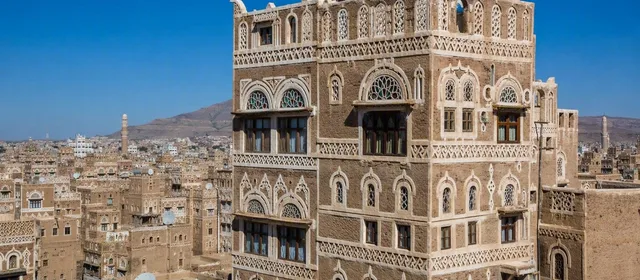
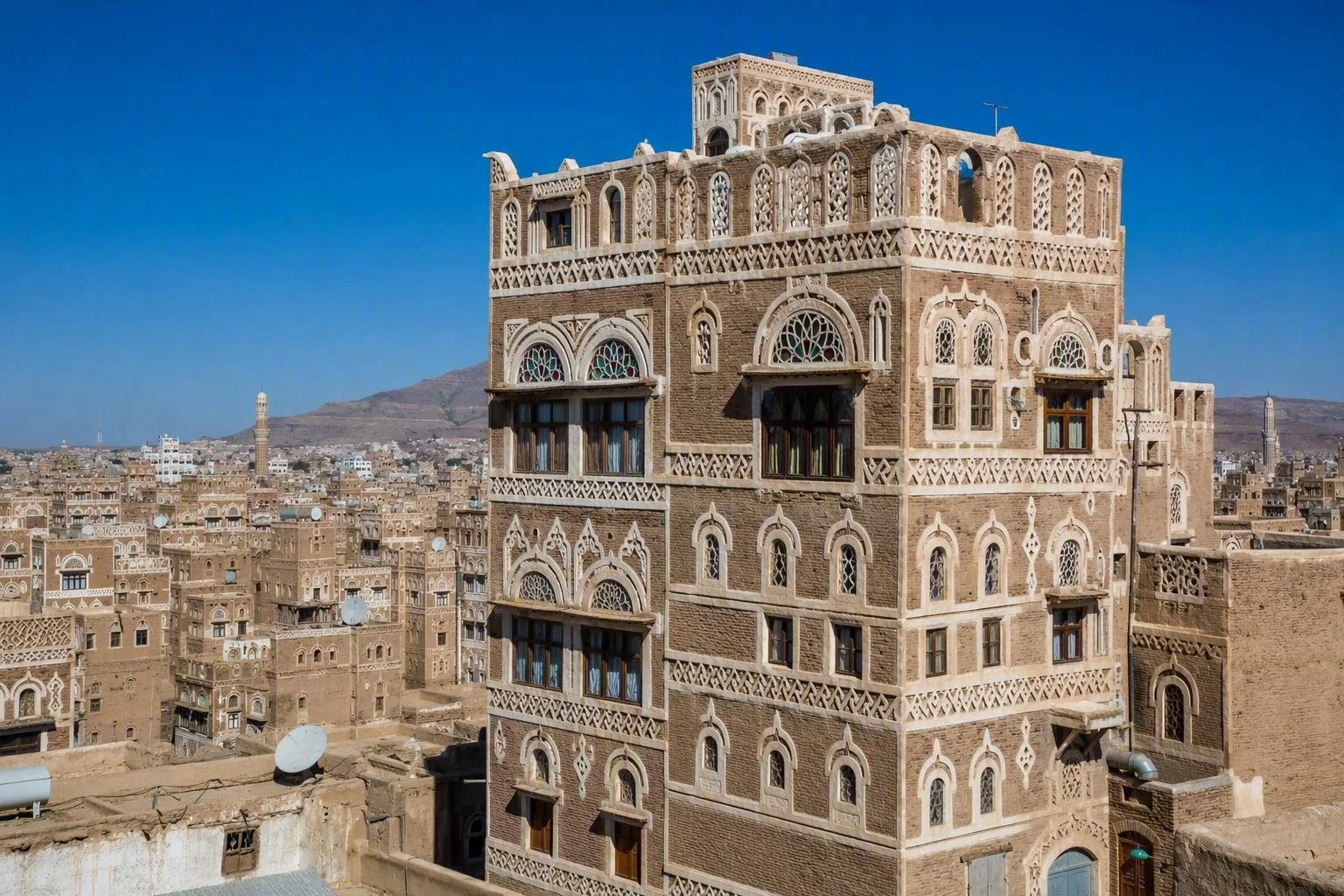
Look beyond the desert stereotype and Yemen’s built landscape stands out at once. In Sana’a, tall brown-brick houses carry white gypsum bands around their arched windows. Farmers have cut terraces into the highlands around the city for centuries, growing coffee and grain on narrow slopes. Farther east, the mud-brick towers of Shibam stand shoulder to shoulder on the floor of Wadi Hadramawt. Merchants, scholars and builders shaped these dense towns over generations, finding ways to live with heat, altitude and scarce building land.
The country changes quickly from the western mountains to the Tihama plain on the Red Sea and the broad valleys of Hadramawt. Ships once carried coffee from Mokha to ports around the world. At home, cooks serve saltah in hot stone bowls and bake flatbreads against the walls of clay ovens. Market stalls hold honey, spices, and curved jambiya daggers with decorated belts.
Socotra lies across the Arabian Sea and has a landscape unlike the mainland. Dragon’s blood trees spread flat, umbrella-shaped crowns over limestone plateaus. Bottle trees rise from dry, rocky slopes. Seafarers linked the island with Arabia, East Africa and the wider Indian Ocean for centuries, while many of its plants developed nowhere else. Take time over Yemen’s cities, food and landscapes, and there is much to look at beyond the headlines.


