

Neighbourhood · Yemen
Tawahi, Aden
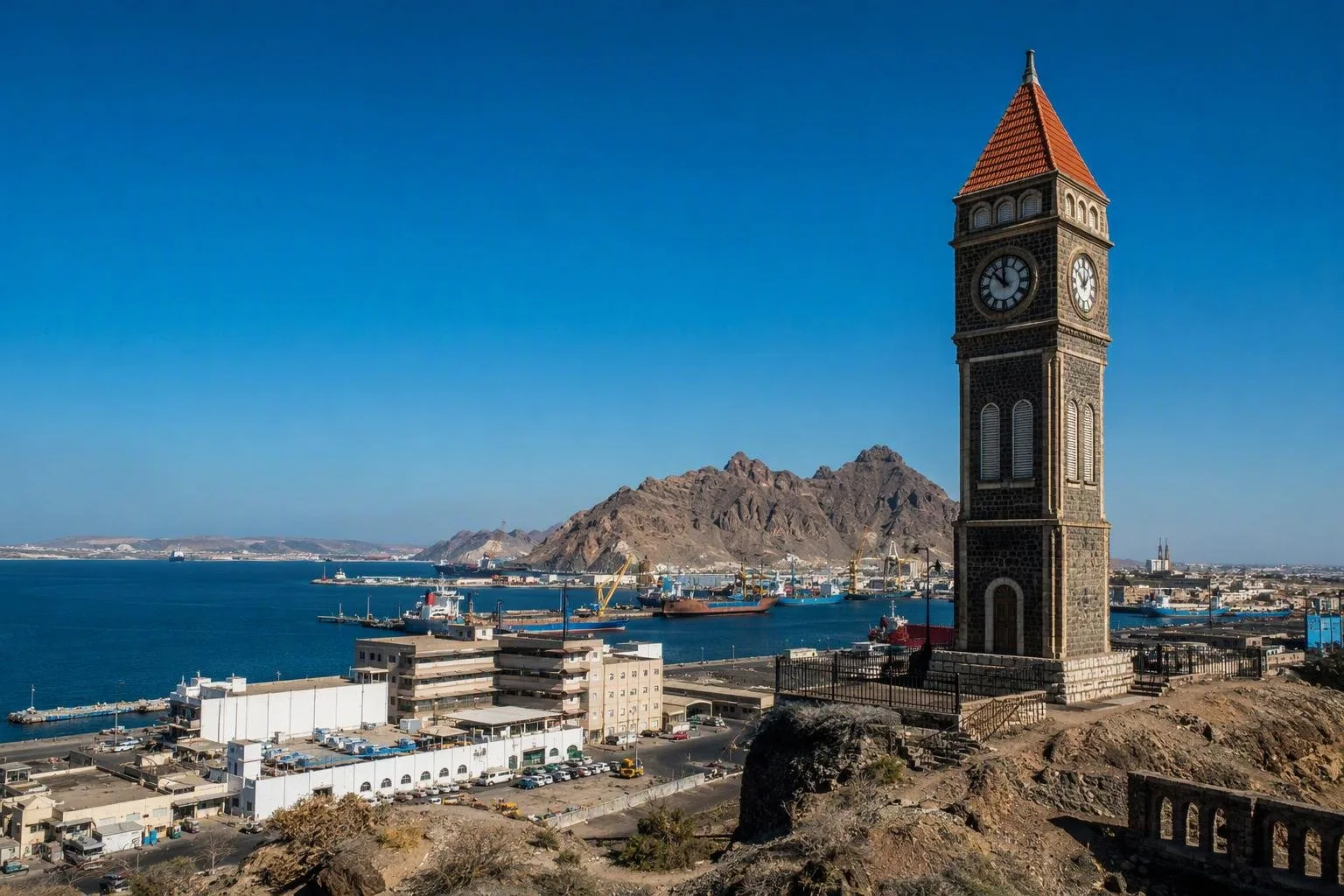
Tawahi is Aden’s historic harbour district in Yemen, known as Steamer Point under British rule. Its port-facing streets and clock tower preserve the clearest physical reminders of the city’s steamship era.
Orientation
Tawahi occupies the harbour side of Aden, west of the old Crater district. The name Steamer Point remains useful historical shorthand: this was the port district developed for steamship traffic, commercial activity and colonial administration in the nineteenth and twentieth centuries.
It is a working urban district rather than a preserved museum quarter. Read its streets as infrastructure: waterfront, piers, former commercial buildings and the slopes above the harbour all explain why this became a strategic part of Aden.
The harbour story
British control of Aden began in 1839. Tawahi was developed as the modern port area, and a P&O coal depot was established here in 1842. The opening of the Suez Canal in 1869 intensified traffic through Aden and made coaling, freight handling and port services central to the district.
The waterfront is the key to the layout. Warehouses, offices, landing places and service buildings once linked ships to the city’s commercial life. Look beyond individual façades: Tawahi’s significance lies in this relationship between harbour operations and a dense urban neighbourhood.
Hogg Clock Tower
Tawahi’s clearest landmark is the Hogg Clock Tower, often called Aden’s Little Ben. Built in 1890 on a hill overlooking the harbour, it is a dark-stone rectangular tower with a red-tiled pointed roof and clock faces on all sides.
The tower was both a civic marker and a practical harbour reference. Its position above the port makes it the best visual anchor for understanding old Steamer Point. Treat it as an exterior landmark; access inside historic structures cannot be assumed.
Reading the built fabric
Walkable heritage here is fragmentary. Notice:
- Port-facing sightlines between the low town and the harbour.
- Colonial-era civic and commercial architecture, often adapted, altered or in uneven condition.
- The hillside setting, which gives the clock tower its commanding relationship to the water.
Do not mistake Tawahi for Crater. Crater holds Aden’s older volcanic-bay core; Tawahi’s distinct identity is maritime, administrative and nineteenth-century in character.
Visit status and conduct
Travel warning: Yemen’s security conditions are unpredictable, and major foreign travel advisories advise against all travel. This is not a destination for independent leisure travel.
If you are already in Aden with a legitimate local purpose, keep movements locally arranged and limited. Do not photograph military, police, port-security or other sensitive facilities; Tawahi’s harbour setting makes this especially important. Dress conservatively, respect local rules, and treat access to waterfront areas and historic buildings as variable rather than guaranteed.
From the magazine
Stories about Tawahi, Aden
Editorial stories linked directly to Tawahi, Aden.
No stories about Tawahi, Aden have been published yet.
Routes from our editors
Travel through Tawahi, Aden
Editorial routes connecting Tawahi, Aden with other countries, cities and hotspots.
No routes through Tawahi, Aden have been published yet.
More in Yemen
Related hotspots
Other cities, nature areas and places within Yemen.

Aden
4 linked stories and routes

Sira (Crater District)
1 linked stories and routes
Crater, Aden
1 linked stories and routes
Tawila cisterns
0 linked stories and routes

Sira Castle
0 linked stories and routes
Main Pass, Aden
0 linked stories and routes
Ma'alla Beach, Aden
0 linked stories and routes
Khussaf, Aden
0 linked stories and routes