
Neighbourhood · Yemen
Khussaf, Aden
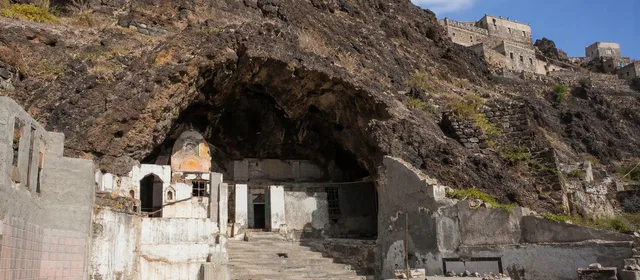
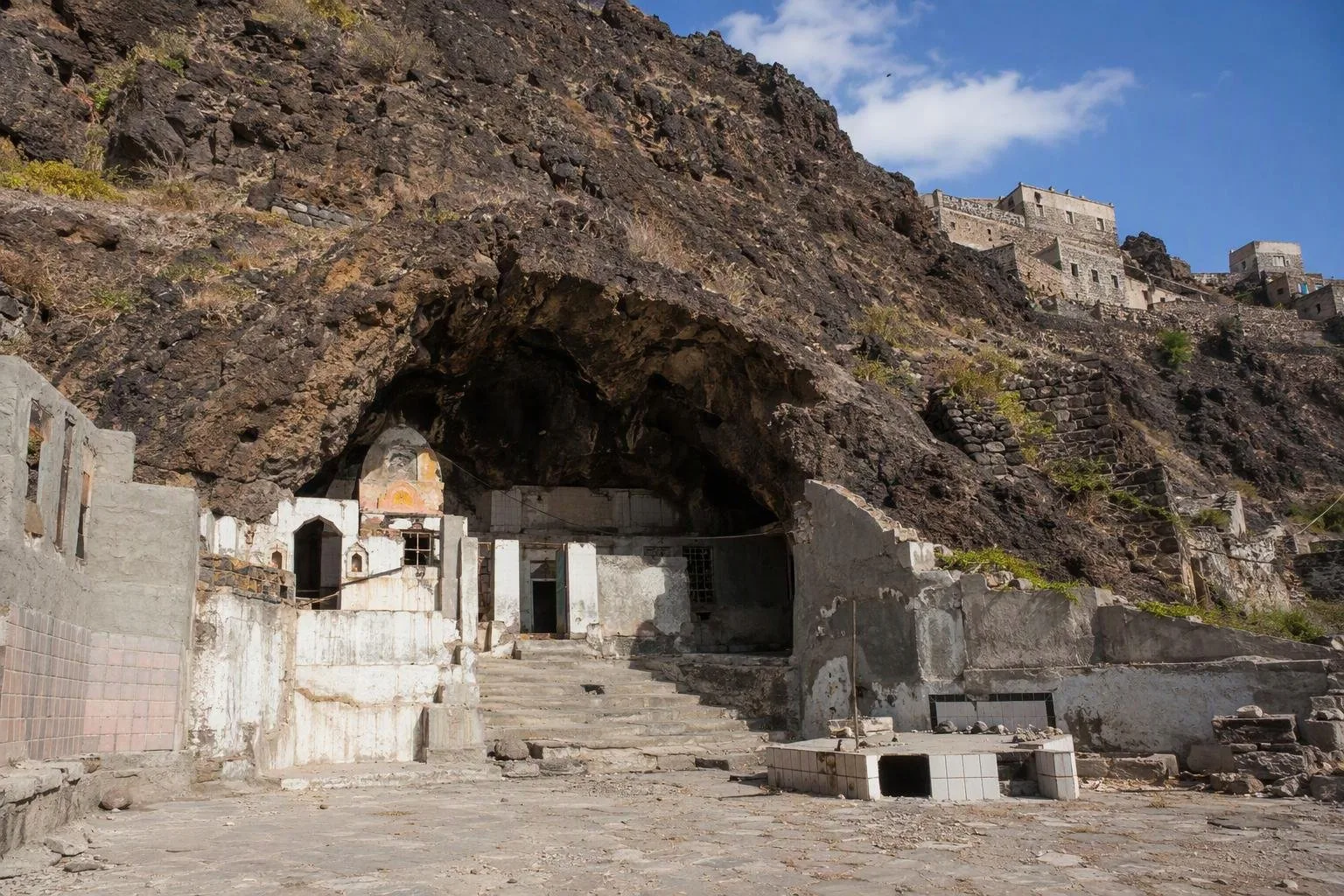
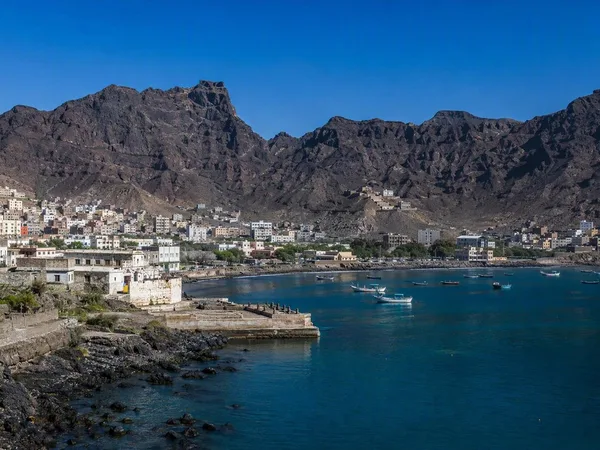
Khussaf is a historic neighbourhood and valley on the volcanic slopes of Crater, the old core of Aden. Its defining landmark is the cave-set Shree Hinglaj Mataji Mandir, a surviving trace of Aden’s Gujarati Hindu community.
Orientation
Khussaf lies in Crater, Aden’s historic volcanic district, in a valley beneath steep dark slopes. It is a compact urban area rather than a separate town, and its name is also rendered Khusaf or Khussaf Valley. The terrain explains the setting: lanes, homes and religious sites are pressed between the crater’s built-up floor and its volcanic foothills.
The key landmark is Shree Hinglaj Mataji Mandir, locally associated with the Banyan—Gujarati Hindu trader—community. Its cave setting, rather than a monumental street façade, makes it the clearest physical marker of Khussaf’s distinctive history.
The cave temple
Built more than 160 years ago, the mandir occupied a cave in the volcanic foothills and was the largest among Aden’s Hindu temples and Sikh gurdwaras. It was the city’s principal site for Hindu puja and took its name from the Hinglaj shrine in present-day Balochistan.
The temple belongs to the story of Aden as an Indian Ocean port. Under British rule, Aden was administered from Bombay for more than a century, and Indian commercial communities became a substantial part of the city. Gujarati, Marathi and Hindi were widely heard in the port. Khussaf’s shrine preserves that connection in a specific place: a Hindu sanctuary built into Aden’s volcanic landscape.
Heritage under pressure
The temple was still used by members of Yemen’s Indian community in early 2015. During the fighting that reached Aden that year, its deity images were destroyed and the complex was looted. It subsequently fell into severe disrepair.
The site and its precinct are treated locally as protected heritage, not as ordinary development land. Its courtyard, access and surrounding ground have been subject to attempted encroachment and legal disputes. What survives matters as an architectural record of Aden’s multi-faith, trading-city past—not as a restored or fully functioning temple.
Access and safety
Khussaf is not a casual sightseeing stop. The mandir is damaged, access arrangements are uncertain, and there are no dependable published opening hours or visitor facilities. Do not enter the compound, caves or adjacent plots without explicit local authorization.
More importantly, Yemen’s security situation makes independent leisure travel inappropriate. If you have a legitimate reason to be in Aden, treat Khussaf as a sensitive heritage location: use trusted local contacts, respect private property and ongoing heritage protection, and do not photograph people or premises without permission.
What to notice
From outside, focus on the relationship between the cave, courtyard and volcanic hillside. That geography is the point: a Gujarati-built Hindu sanctuary adapted to a natural hollow in the old city’s crater landscape. Khussaf is small in scale, but it carries a precise record of the Indian Ocean communities that once shaped Aden.
From the magazine
Stories about Khussaf, Aden
Editorial stories linked directly to Khussaf, Aden.
No stories about Khussaf, Aden have been published yet.
Routes from our editors
Travel through Khussaf, Aden
Editorial routes connecting Khussaf, Aden with other countries, cities and hotspots.
No routes through Khussaf, Aden have been published yet.
More in Yemen
Related hotspots
Other cities, nature areas and places within Yemen.
Aden
4 linked stories and routes
Sira (Crater District)
1 linked stories and routes
Crater, Aden
1 linked stories and routes
Tawila cisterns
0 linked stories and routes

Sira Castle
0 linked stories and routes
Main Pass, Aden
0 linked stories and routes

Ma'alla Beach, Aden
0 linked stories and routes
Tawahi, Aden
0 linked stories and routes