
Neighbourhood · Iraq
Old Rusafa
Old Rusafa is Baghdad’s historic core on the east bank of the Tigris, between Al-Rashid Street and the riverfront. Its tight lanes, souqs, courtyard houses and surviving Abbasid and Ottoman landmarks show the city as a working urban fabric rather than an open-air museum.
Orientation
Old Rusafa occupies Baghdad’s old centre on the Tigris’s east bank. It is a dense historic quarter of irregular lanes, markets, mosques, workshops and houses, with Al-Rashid Street forming a principal spine. The compact fabric is part of the experience: major streets carry commerce, while smaller passages lead into older residential and market blocks.
This is a lived-in district, not a single fenced monument. Expect restored facades beside altered, vacant or heavily used buildings.
Read the architecture
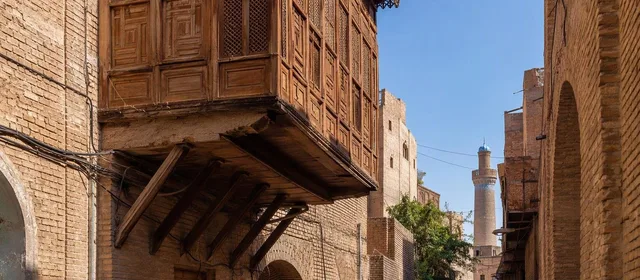
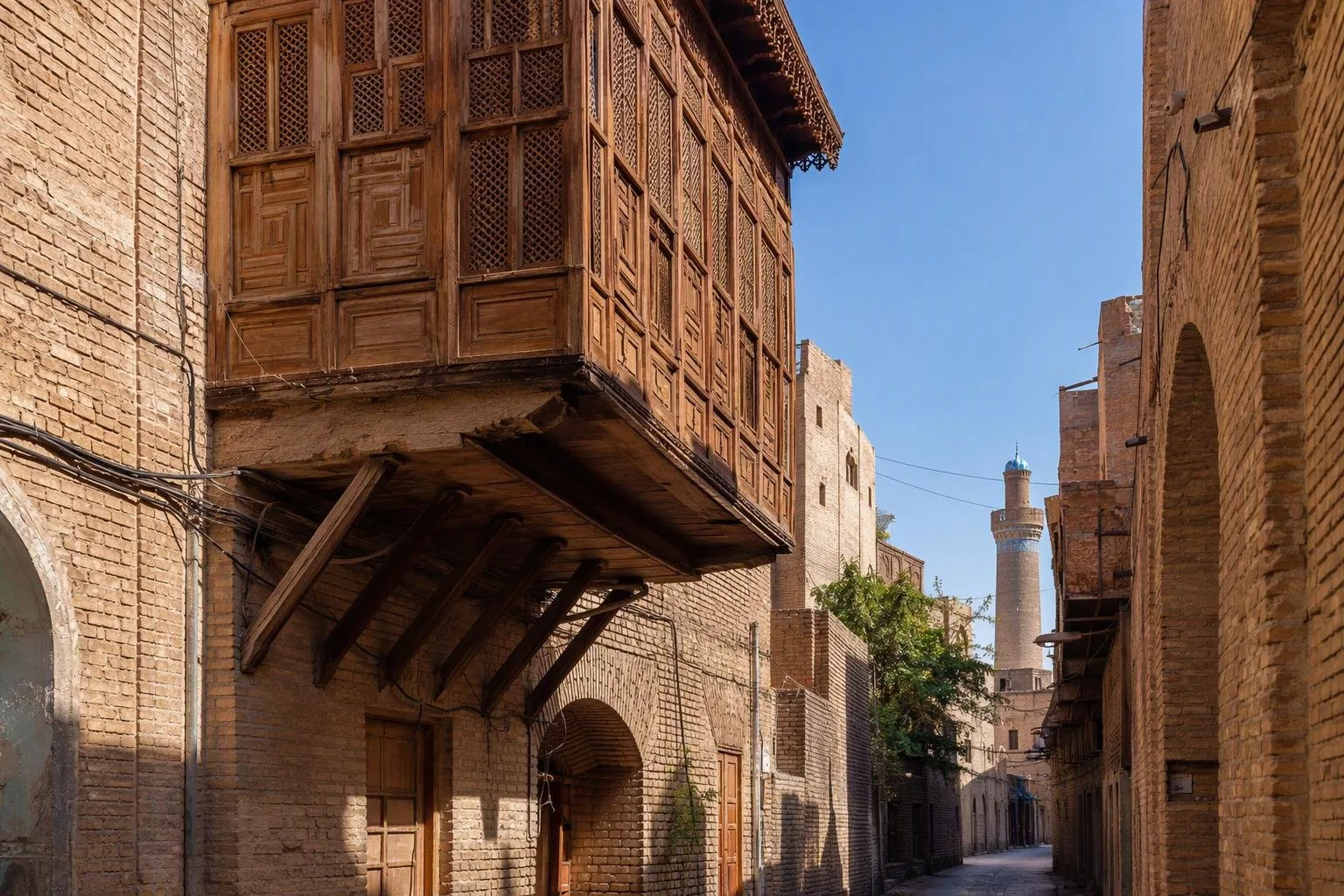
Traditional Baghdadi houses turn inward. Their plain brick street walls reveal little; rooms gather around an open hosh, or courtyard, which brings daylight and air into the house. Upper floors may project over the lane in timber shanasheel—enclosed screened bays that enlarged rooms, filtered hard sun and allowed occupants to observe the street with privacy.
Look upward rather than only at shop level. The contrast between heavy brick bases, timber projections and narrow shaded streets explains how this architecture moderated Baghdad’s heat.
Key stops
Use Al-Rashid Street as the main orientation line, then take the side streets toward the river.
- Al-Mustansiriya Madrasa: a major Abbasid-period monument founded in 1227 on the Tigris side of the quarter.
- Khan Murjan: a 14th-century caravanserai, distinguished by its tall covered brick hall rather than an open courtyard.
- Al-Sarai and Mutanabbi area: bookshops, market lanes and coffeehouses connect the commercial street to the riverfront heritage zone.
- Souq al-Safafeer: the coppersmiths’ market, where small-scale trade remains part of the quarter’s daily pattern.
Mosques and shrines are active religious places. Dress modestly and do not enter prayer areas during worship unless access is clearly appropriate.
Walking the quarter
Start on Al-Rashid Street and explore on foot; the lanes are too narrow and discontinuous for a useful driving circuit. Allow time for detours, since the historic centre rewards short walks between markets, religious buildings and riverfront monuments.
Some heritage buildings are under restoration, adapted to new uses or have limited interior access. Treat the streets and markets as the dependable visit; regard entry to individual historic interiors as a bonus. Early day is more comfortable for walking and better for reading the brickwork, timber screens and vaulted spaces.
Why it matters
Old Rusafa preserves more than isolated monuments. Abbasid, Ottoman and later structures sit within a street pattern shaped by trade, worship and domestic life. Its survival depends on keeping that relationship between buildings, lanes and everyday uses intact—not simply restoring landmark facades.
From the magazine
Stories about Old Rusafa
Editorial stories linked directly to Old Rusafa.
No stories about Old Rusafa have been published yet.
Routes from our editors
Travel through Old Rusafa
Editorial routes connecting Old Rusafa with other countries, cities and hotspots.
No routes through Old Rusafa have been published yet.
More in Iraq
Related hotspots
Other cities, nature areas and places within Iraq.
Baghdad
2 linked stories and routes
Al-Karkh, Baghdad
2 linked stories and routes
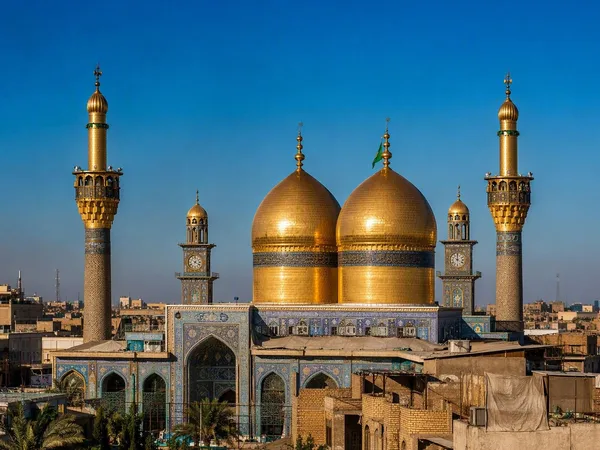
Kadhimiya, Baghdad
2 linked stories and routes
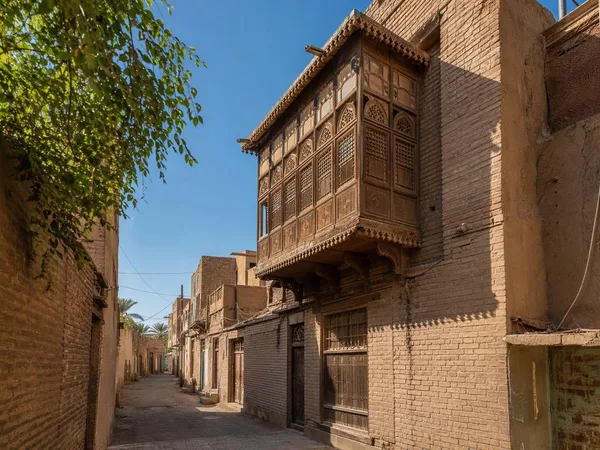
al-Azamiyya
1 linked stories and routes
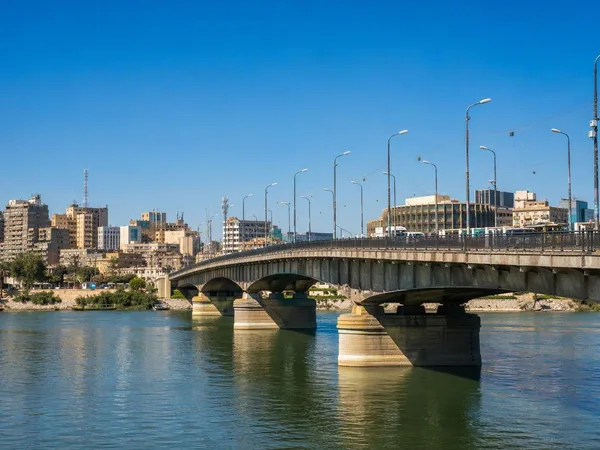
al-Sinek, Baghdad
1 linked stories and routes
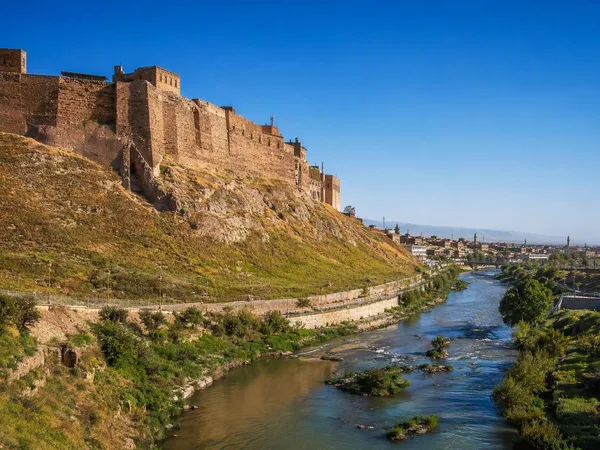
Kirkuk
0 linked stories and routes
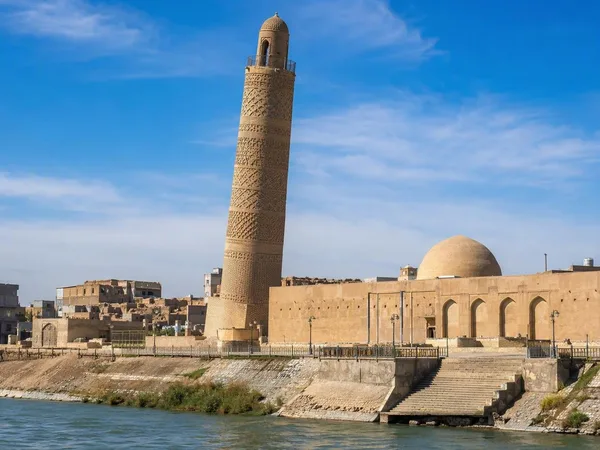
Mosul
0 linked stories and routes