
City · Iraq
Mosul
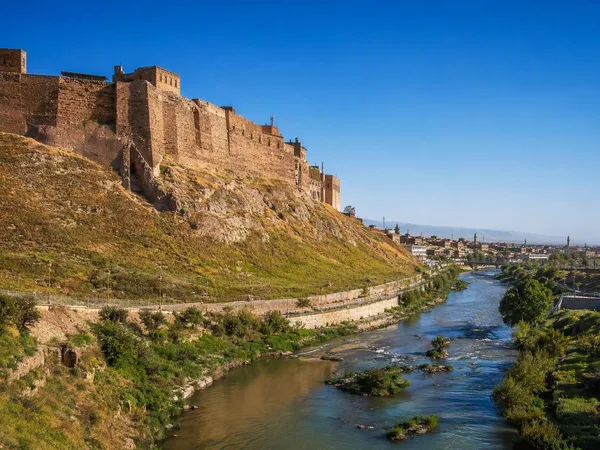
Mosul is a major city on the Tigris in northern Iraq and the capital of Nineveh Governorate. Its historic core on the river’s west bank faces the remains of ancient Nineveh and is defined by dense lanes, religious landmarks and ongoing restoration.
Orientation
Mosul straddles the Tigris in northwestern Iraq. The Old City occupies the west bank; the modern city has expanded across both sides of the river. Ancient Nineveh lies on the east bank, within the urban area, but Mosul’s medieval and Ottoman-era fabric is concentrated west of the water.
The city’s position made it a long-standing link between Syria, Anatolia and Persia. That role explains both its commercial history and the layered character of its streets, markets, mosques and churches.
Read the Old City
Start with the river-facing west bank and treat the Old City as a compact historic quarter rather than a single monument. Its narrow, irregular lanes preserve the pattern of a city that developed over centuries. Look for traditional houses built in stone and brick, often detailed with locally quarried alabaster around doors, windows and arcades.
Mosul reached a high point under the Zangid dynasty in the 12th century. It became known for fine metalwork and miniature painting; this is the historical setting for the city’s most recognisable religious architecture.
Key landmarks
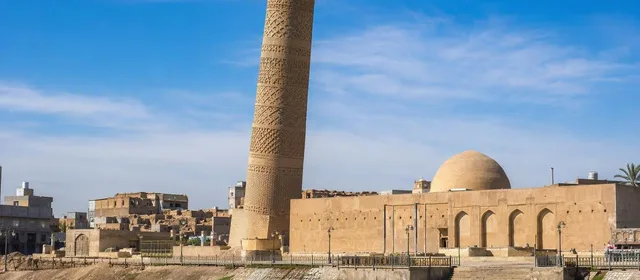
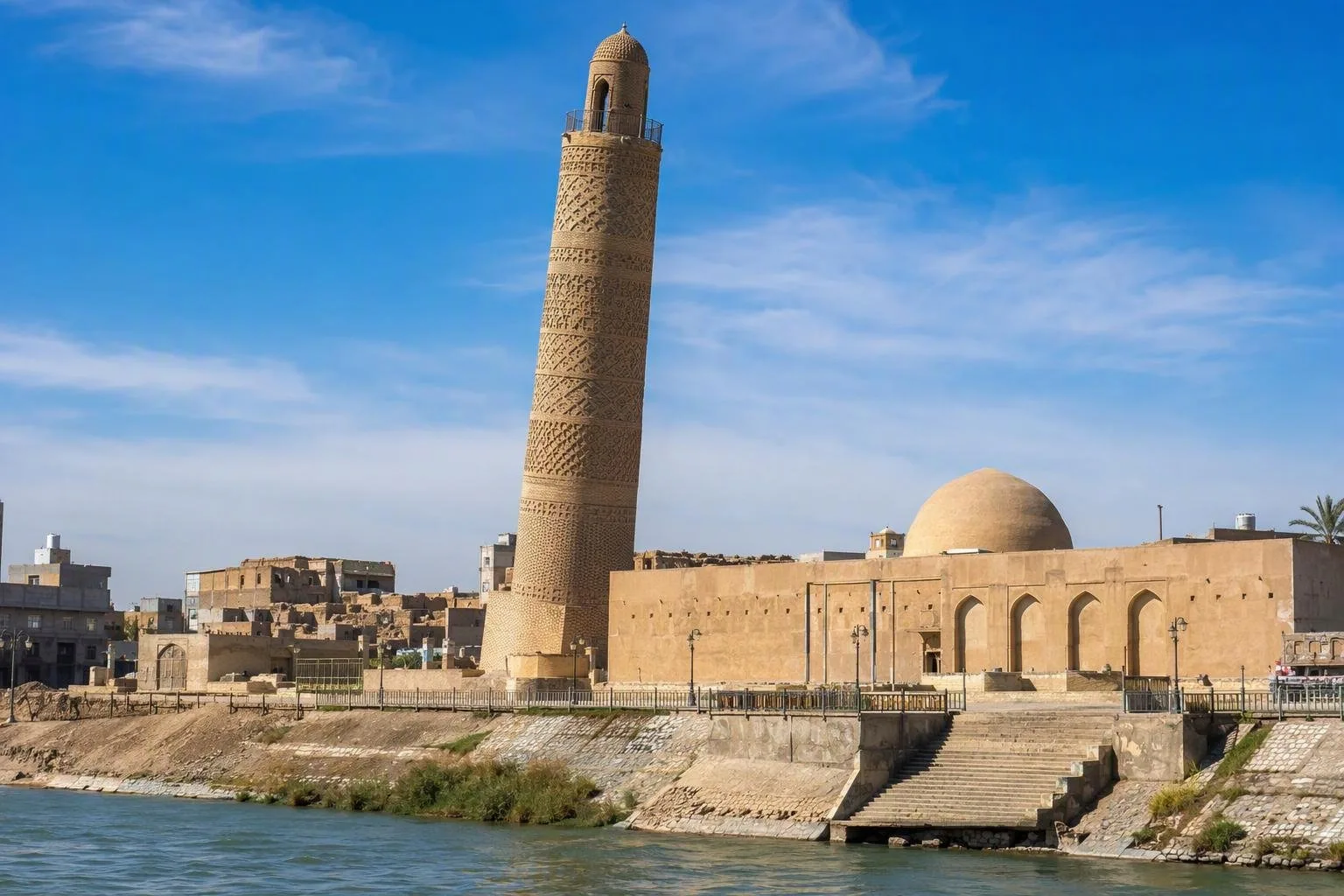
Al-Nouri Mosque and Al-Hadba Minaret are the essential reference point. The original 12th-century minaret, famous for its pronounced lean and ornamental brickwork, was destroyed in 2017. It has since been rebuilt in brick, retaining its characteristic inclination; the mosque complex reopened in 2025.
Also note the restored Christian monuments of the Old City:
- Al-Saa’a Convent (Our Lady of the Hour): a 19th-century Dominican complex with a clock tower.
- Al-Tahera Church: a Syriac Catholic church in the historic centre, restored after severe damage.
These sites show why Mosul’s built heritage cannot be reduced to one tradition or period.
Visiting conditions and safety
Mosul remains a working Iraqi city recovering from recent conflict. Restoration has revived major landmarks and historic homes, but some streets and sites may still be affected by works or controlled access. Dress conservatively at religious sites and do not enter areas that are closed, damaged or cordoned off.
Important: security conditions can change rapidly. Several foreign governments advise against travel to Nineveh Governorate. Obtain current official travel and security advice before making plans, use authorised local arrangements, and follow instructions from local authorities and site staff.
A useful approach
Allow time for the Old City rather than attempting to tick off distant sites. The strongest experience is architectural: the Tigris setting, the rebuilt minaret, the clock tower, churches, domestic stonework and the close grain of the lanes. Mosul is best understood as a living city whose historic centre is being rebuilt while remaining central to daily urban life.
From the magazine
Stories about Mosul
Editorial stories linked directly to Mosul.
No stories about Mosul have been published yet.
Routes from our editors
Travel through Mosul
Editorial routes connecting Mosul with other countries, cities and hotspots.
No routes through Mosul have been published yet.
More in Iraq
Related hotspots
Other cities, nature areas and places within Iraq.
Baghdad
2 linked stories and routes
Al-Karkh, Baghdad
2 linked stories and routes
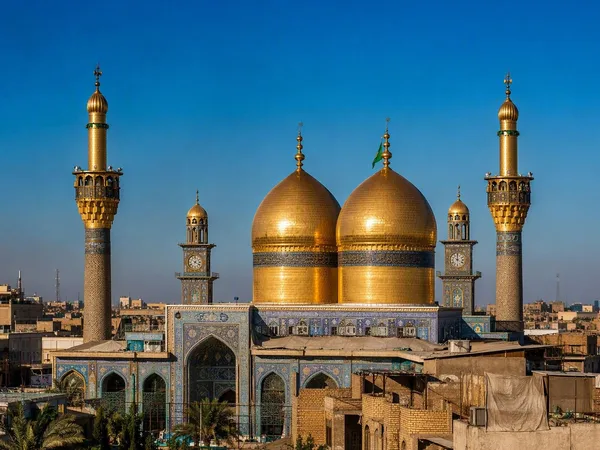
Kadhimiya, Baghdad
2 linked stories and routes
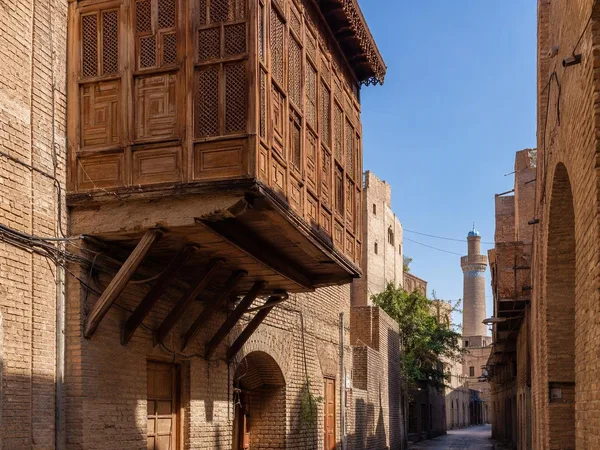
Old Rusafa
2 linked stories and routes
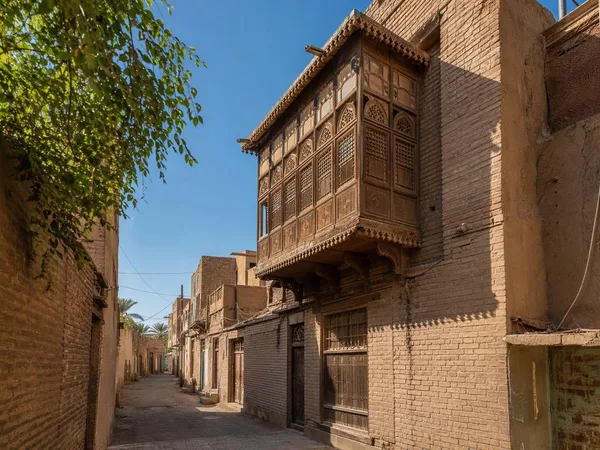
al-Azamiyya
1 linked stories and routes
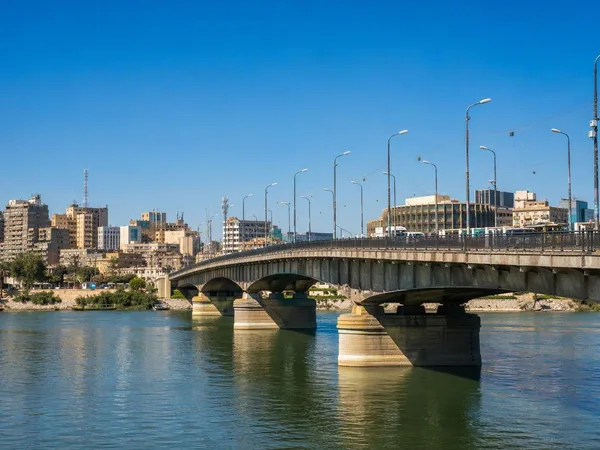
al-Sinek, Baghdad
1 linked stories and routes
Kirkuk
0 linked stories and routes