
Neighbourhood · Iraq
Al-Karkh, Baghdad
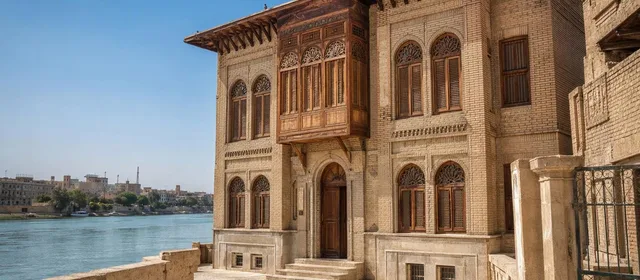
Al-Karkh is Baghdad’s historic west-bank quarter on the Tigris, opposite Rusafa. It developed as a commercial district outside the Abbasid Round City and still holds fragments of traditional domestic architecture.
Orientation
Al-Karkh is both a historic name for Baghdad’s western side of the Tigris and a more specific central-western district. For a heritage-focused walk, keep the scope tight: the older streets and river-facing quarters rather than the entire modern west bank.
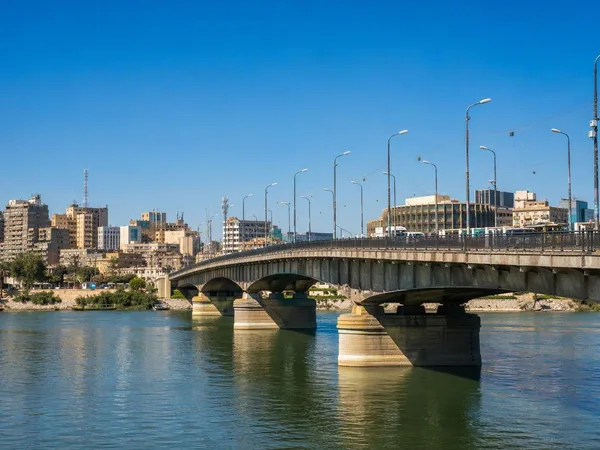
The Tigris is the essential bearing. Rusafa lies across the water; bridges join the two sides. Al-Karkh’s urban fabric shifts quickly from broad roads and institutions to dense lanes, older houses and small local streets.
Why it matters
Baghdad’s early Abbasid markets were moved outside the Round City to Al-Karkh, making this side of the river a working district for merchants and craftspeople. The quarter later became an important centre of Imami Shi'a scholarship and religious life.
That long urban history was repeatedly interrupted by fire, flooding and conflict. Do not expect an intact historic precinct. Al-Karkh is best read as a lived-in city district where surviving fragments carry the story.
Traditional houses
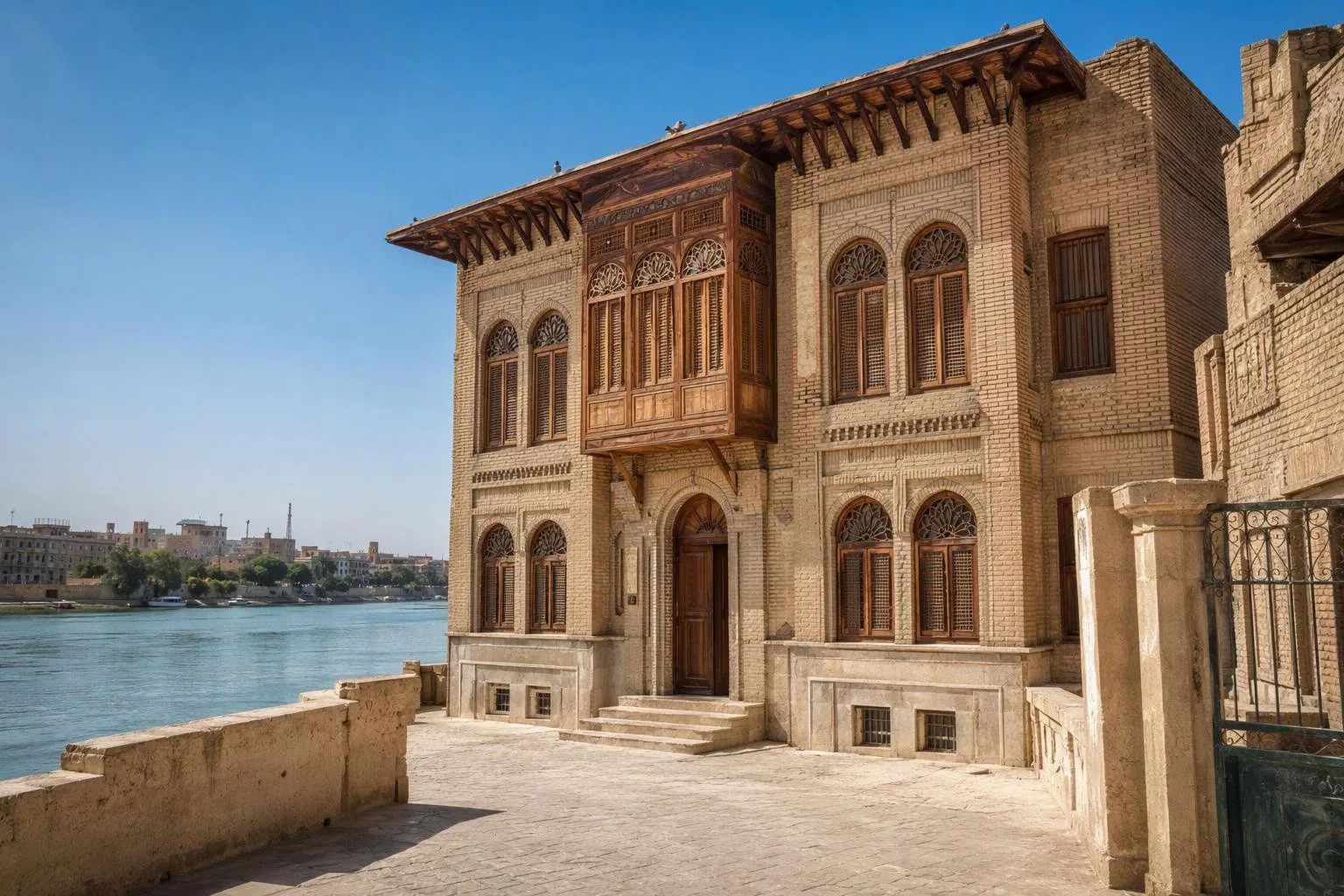
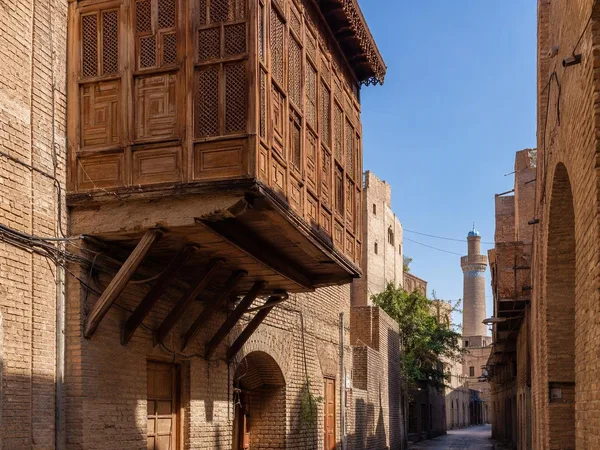
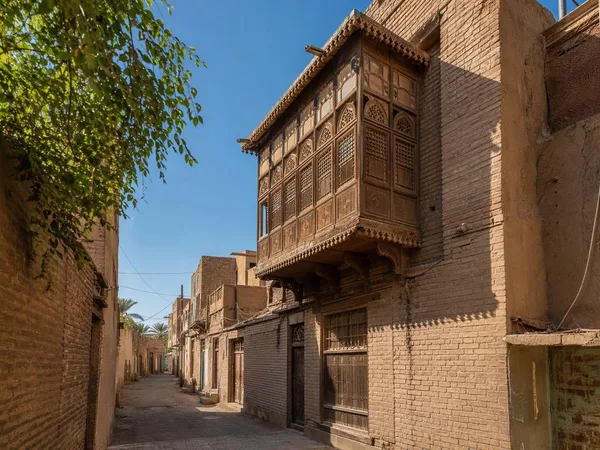
Look for the practical grammar of the Baghdadi house: brick walls, limited street openings, upper timber screens and rooms organized around an internal courtyard. A courtyard, rather than a showy street façade, was the house’s centre; shade and inward-facing rooms helped manage Baghdad’s heat.
A few late Ottoman examples survive in Al-Karkh. Their condition varies: restored fronts and preserved timber can stand close to altered buildings, vacant plots and weathered masonry. The Al-Watar House in Al-Shawaka, built in 1917, is one documented survivor of this domestic tradition.
How to explore
Walk slowly and treat the district as residential heritage, not an open-air museum.
- Start with the river side to understand the west-bank setting.
- Use streets and public edges to study brickwork, timber bays and courtyard-house proportions.
- Keep addresses precise. “Al-Karkh” can mean a broad area, so navigate to a named street or building rather than relying on the district name alone.
- Photograph with restraint. Many surviving houses are private homes or premises.
Access and limits
Al-Karkh connects to central Baghdad across the Tigris bridges; road traffic can make short distances slow. Use a car or taxi for the approach, then cover compact older blocks on foot where conditions allow.
Part of the wider district includes the International Zone and government premises. These are not sightseeing areas: barriers, checkpoints and access rules can change movement. Do not attempt to enter restricted streets or photograph security infrastructure.
From the magazine
Stories about Al-Karkh, Baghdad
Editorial stories linked directly to Al-Karkh, Baghdad.
No stories about Al-Karkh, Baghdad have been published yet.
Routes from our editors
Travel through Al-Karkh, Baghdad
Editorial routes connecting Al-Karkh, Baghdad with other countries, cities and hotspots.
No routes through Al-Karkh, Baghdad have been published yet.
More in Iraq
Related hotspots
Other cities, nature areas and places within Iraq.
Baghdad
2 linked stories and routes
Kadhimiya, Baghdad
2 linked stories and routes
Old Rusafa
2 linked stories and routes
al-Azamiyya
1 linked stories and routes
al-Sinek, Baghdad
1 linked stories and routes
Kirkuk
0 linked stories and routes
Mosul
0 linked stories and routes