
Neighbourhood · Iraq
Kadhimiya, Baghdad
Kadhimiya is a historic neighbourhood on Baghdad’s west bank, centred on the Al-Kadhimayn Shrine and its surrounding market streets. It combines one of Shia Islam’s major pilgrimage sites with a fragile fabric of traditional courtyard houses.
Orientation
Kadhimiya lies in north-west Baghdad on the west bank of the Tigris, within the Karkh side of the city. Its historic core grew around the Al-Kadhimayn Shrine, the mausoleum of Musa al-Kadhim and Muhammad al-Jawad, the seventh and ninth Imams in Twelver Shia Islam.
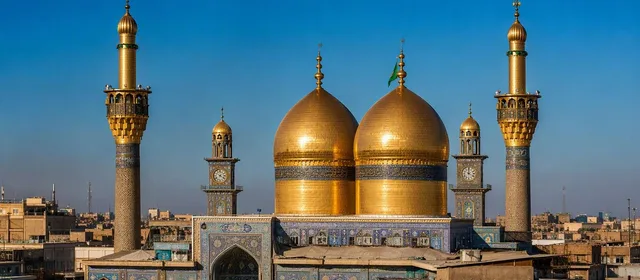
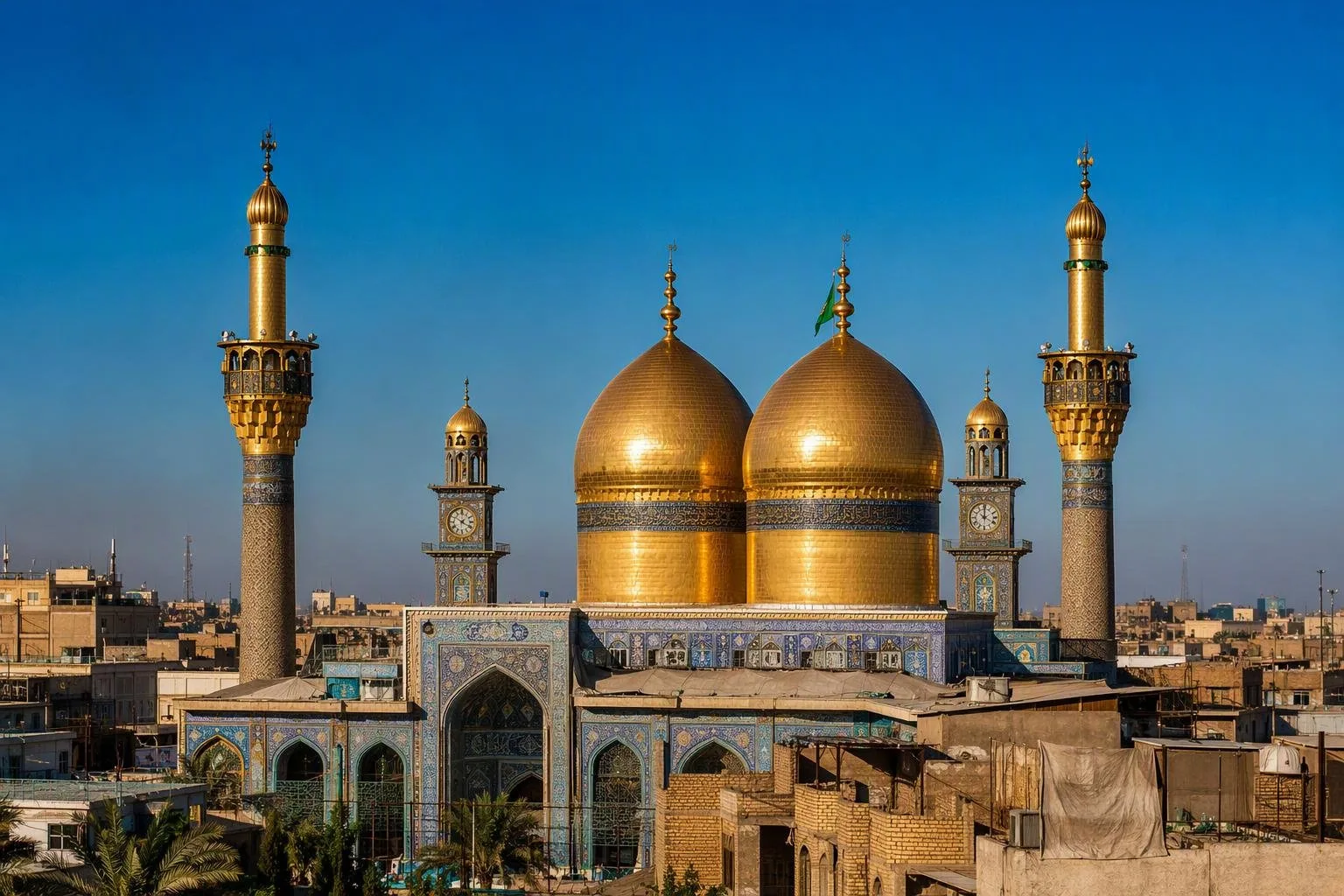
The shrine is the district’s fixed point. Gold-clad domes and minarets rise above a dense network of lanes, shops and religious institutions. The district is also known as Kadhimayn; both names are useful when navigating locally.
The shrine precinct
The current shrine complex reflects centuries of rebuilding. Its present major architectural layers date to Safavid reconstruction in the early 16th century, with later Ottoman additions. Look closely at the exterior composition rather than trying to absorb everything at once:
- Twin gilded domes mark the tombs of the two Imams.
- Minarets, tiled surfaces and gateways give the precinct its vertical skyline.
- Courtyards and porticoes organize the approach to the sanctuary.
This is an active place of worship, not a museum. Dress conservatively, speak quietly and follow directions from security staff and shrine attendants. Photography rules can change by area; do not assume that cameras or phones will be permitted beyond checkpoints.
Historic streets and houses
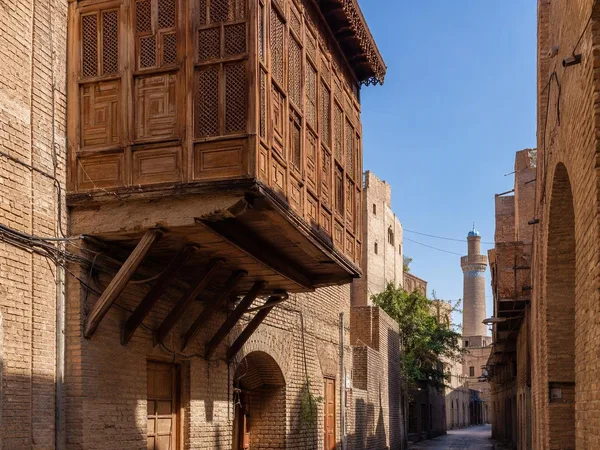
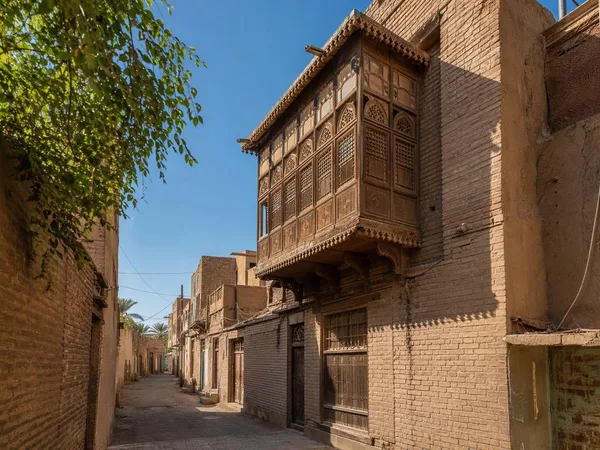
Beyond the shrine precinct, Kadhimiya retains parts of Baghdad’s traditional residential pattern: tight lanes, inward-looking courtyard houses and occasional timber shanasheel—projecting screened wooden bays. The houses were designed around private internal courtyards, with rooms, corridors and service spaces opening inward.
These are residential buildings, not a curated open-air quarter. Do not enter courtyards or photograph homes without permission. Conditions vary markedly: some façades and timber details survive, while other houses have been altered, closed or deteriorated. The older lanes reward slow walking, but there is no single heritage-house route or public interior circuit.
Markets and movement
The streets around the shrine are Kadhimiya’s most public spaces. Market activity clusters close to the precinct, where shops serve worshippers and local residents. Walk rather than expect door-to-door vehicle access in the older fabric; narrow lanes and security controls shape how the district works.
A taxi is the practical approach from elsewhere in Baghdad, but vehicles may be stopped well before the shrine during busy periods. Carry little, allow time for screening and agree a meeting point if travelling with others.
Timing and crowd awareness
Religious commemorations can transform Kadhimiya into a major pedestrian pilgrimage zone, with dense crowds, road restrictions and longer security procedures. For a quieter architectural visit, choose a weekday morning outside major observances.
The district’s heritage is uneven and vulnerable. Treat worn timber, damaged façades and closed properties as part of a living neighbourhood’s reality, not as sites to climb on or inspect closely.
From the magazine
Stories about Kadhimiya, Baghdad
Editorial stories linked directly to Kadhimiya, Baghdad.
No stories about Kadhimiya, Baghdad have been published yet.
Routes from our editors
Travel through Kadhimiya, Baghdad
Editorial routes connecting Kadhimiya, Baghdad with other countries, cities and hotspots.
No routes through Kadhimiya, Baghdad have been published yet.
More in Iraq
Related hotspots
Other cities, nature areas and places within Iraq.
Baghdad
2 linked stories and routes
Al-Karkh, Baghdad
2 linked stories and routes
Old Rusafa
2 linked stories and routes
al-Azamiyya
1 linked stories and routes
al-Sinek, Baghdad
1 linked stories and routes
Kirkuk
0 linked stories and routes
Mosul
0 linked stories and routes