
Sight · Albania
Skanderbeg Square
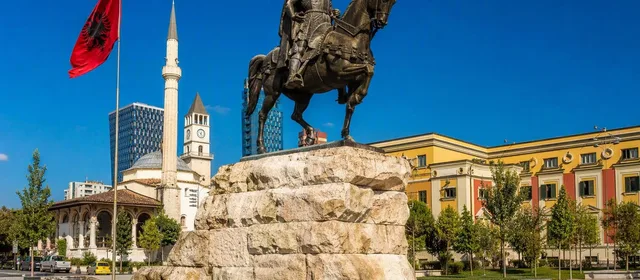
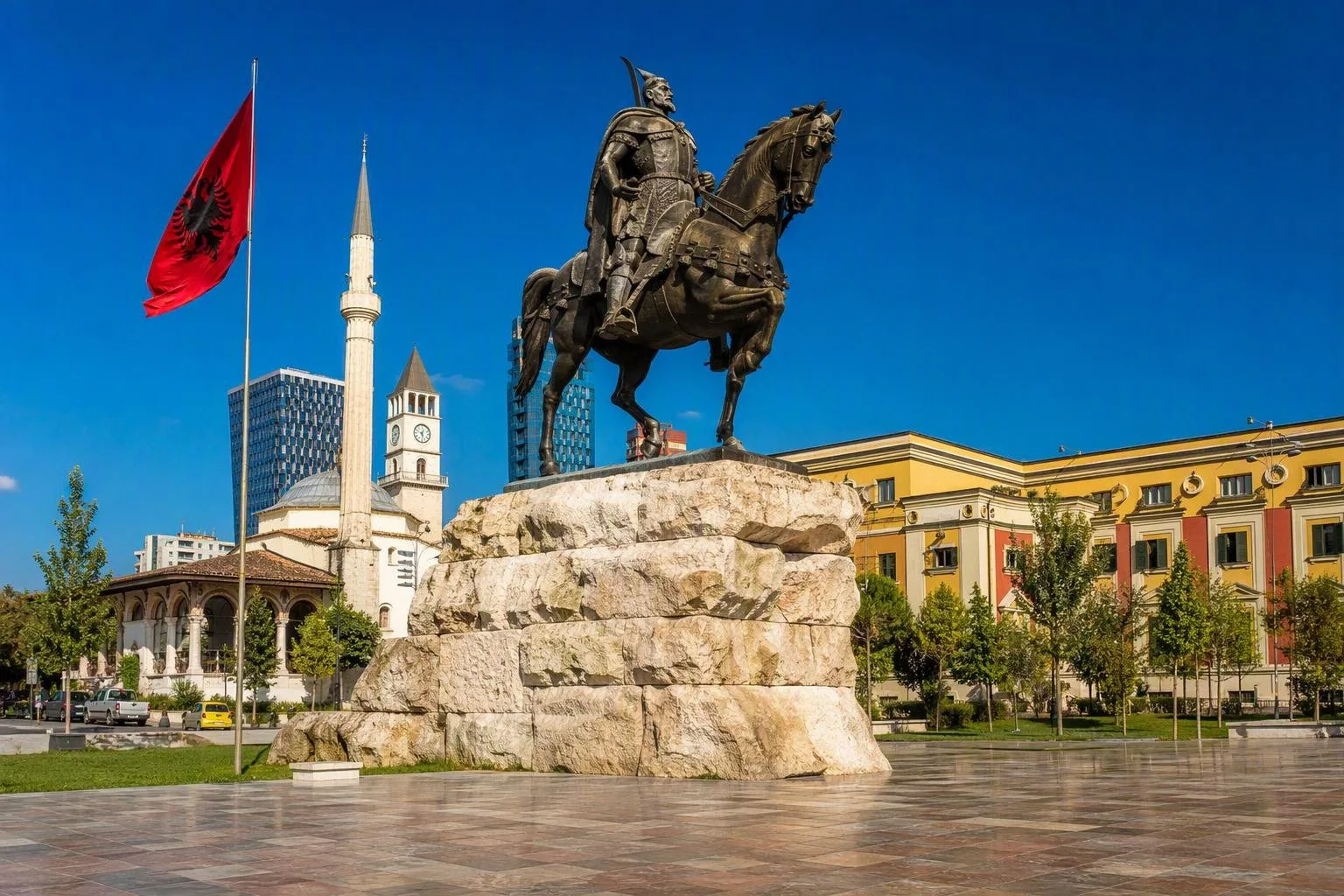
Skanderbeg Square, or Sheshi Skënderbej, is Tirana’s central pedestrian square. Its broad stone surface and the equestrian monument to Albania’s national hero anchor a compact ring of Ottoman, socialist-era and contemporary civic landmarks.
The capital’s reference point
Skanderbeg Square is the practical centre of Tirana: a large, pedestrian-only public space where the city’s main routes meet. It takes its name from Gjergj Kastrioti Skanderbeg, the 15th-century Albanian leader commemorated by the bronze equestrian monument at its centre.
The present square is not an old historic piazza preserved intact. Its setting has been repeatedly remade: Italian-era planning shaped the monumental centre in the 1930s, the communist state used it for civic display, and the current public realm opened in 2017. Read it as Tirana’s most concentrated architectural timeline rather than a single-period ensemble.
Read the square from the edges
Cross the open paving, then make a full circuit. The changing façades are the point.
- Skanderbeg Monument: installed in 1968, replacing a Stalin statue. The horse-and-rider figure is the square’s clearest meeting and orientation marker.
- Et’hem Bey Mosque and Clock Tower: the Ottoman-era pair at the edge of the square provides the sharpest contrast with the larger state buildings. Enter the mosque outside prayer times with shoulders and knees covered; remove shoes before going into the prayer space.
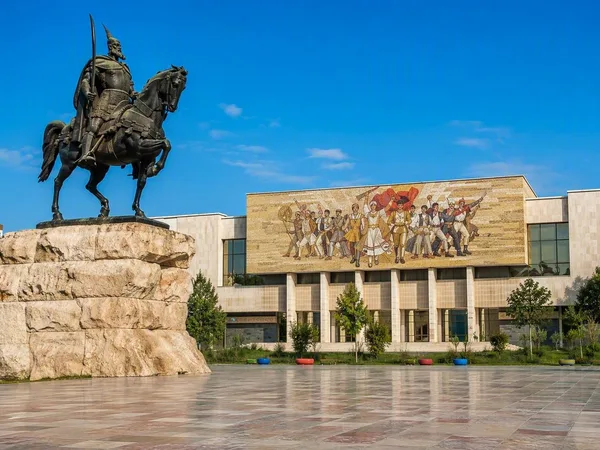
- National Historical Museum: its vast frontage faces the square and makes a useful northern reference point.
- Palace of Culture: on the eastern side, this socialist-era complex contains the National Theatre of Opera, Ballet and Folk Ensemble.
The ministries, bank and other civic buildings around the perimeter complete the sequence. A slow lap makes more sense than treating each façade as an isolated stop.
The 2017 redesign
The redesign replaced through-traffic with a broad, subtly sloping pedestrian surface. Stone from across Albania was used in the paving, while planted gardens and water features soften the perimeter. Rainwater collected within the square runs across the stone surface in sunny conditions.
The central expanse is intentionally open, so shade is limited. In summer, walk the perimeter gardens first and leave the middle for a short crossing. The gentle incline is easy to miss from ground level but becomes evident when you look across the plaza.
Use it as a walking hub
There is no admission charge for the square itself. It is open public space, with separate access rules and hours for the mosque, tower, museum and theatre.
Most central Tirana sights are best reached on foot from here. Buses and taxis stop on surrounding streets, not in the pedestrian core. If arranging a pickup, name a specific street edge or landmark rather than the middle of the square.
Allow 20–30 minutes to cross and circle the square, or longer if entering its institutions. Early morning gives clear sightlines for architecture; later afternoon and evening are better for seeing the square used as a public meeting place. Large civic events can temporarily block routes and views.
From the magazine
Stories about Skanderbeg Square
Editorial stories linked directly to Skanderbeg Square.
No stories about Skanderbeg Square have been published yet.
Routes from our editors
Travel through Skanderbeg Square
Editorial routes connecting Skanderbeg Square with other countries, cities and hotspots.
No routes through Skanderbeg Square have been published yet.
More in Albania
Related hotspots
Other cities, nature areas and places within Albania.
Tirana
3 linked stories and routes

Pazari i Ri (New Bazaar)
3 linked stories and routes
Berat
1 linked stories and routes
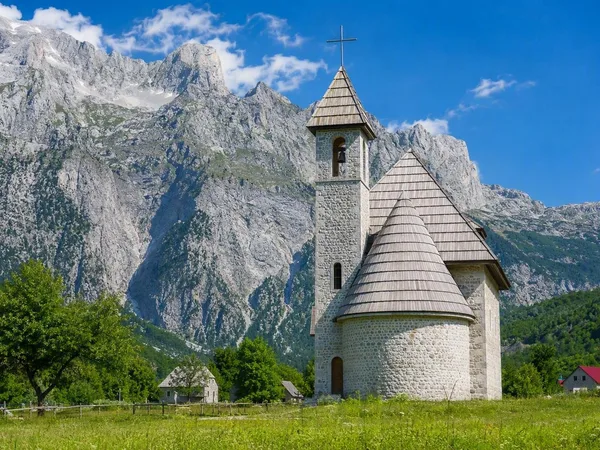
Theth
1 linked stories and routes
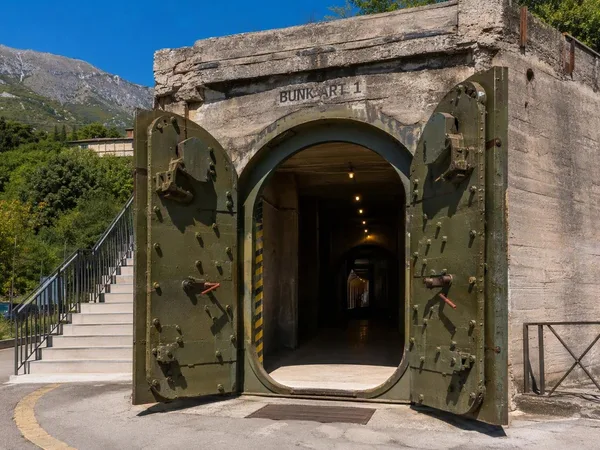
Bunk’Art 1
1 linked stories and routes
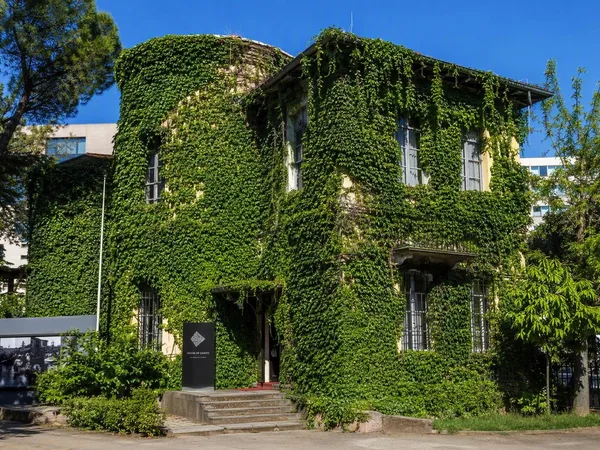
House of Leaves
1 linked stories and routes
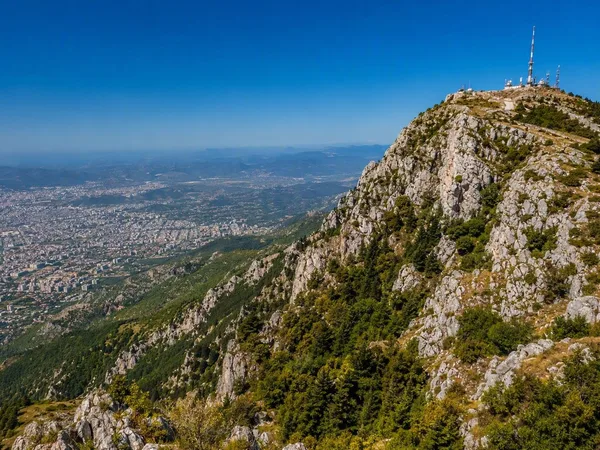
Mount Dajti
1 linked stories and routes
Bunk’Art 2
1 linked stories and routes
Tanners’ Bridge
1 linked stories and routes
Avni Rustemi Square
1 linked stories and routes