Sight · Turkmenistan
Old Nisa
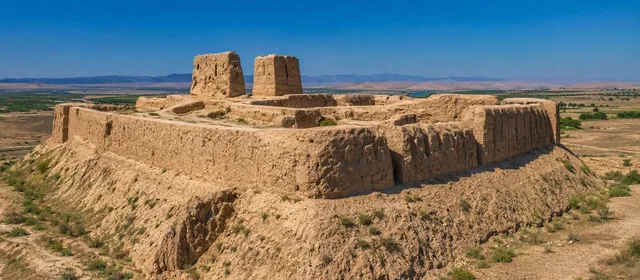
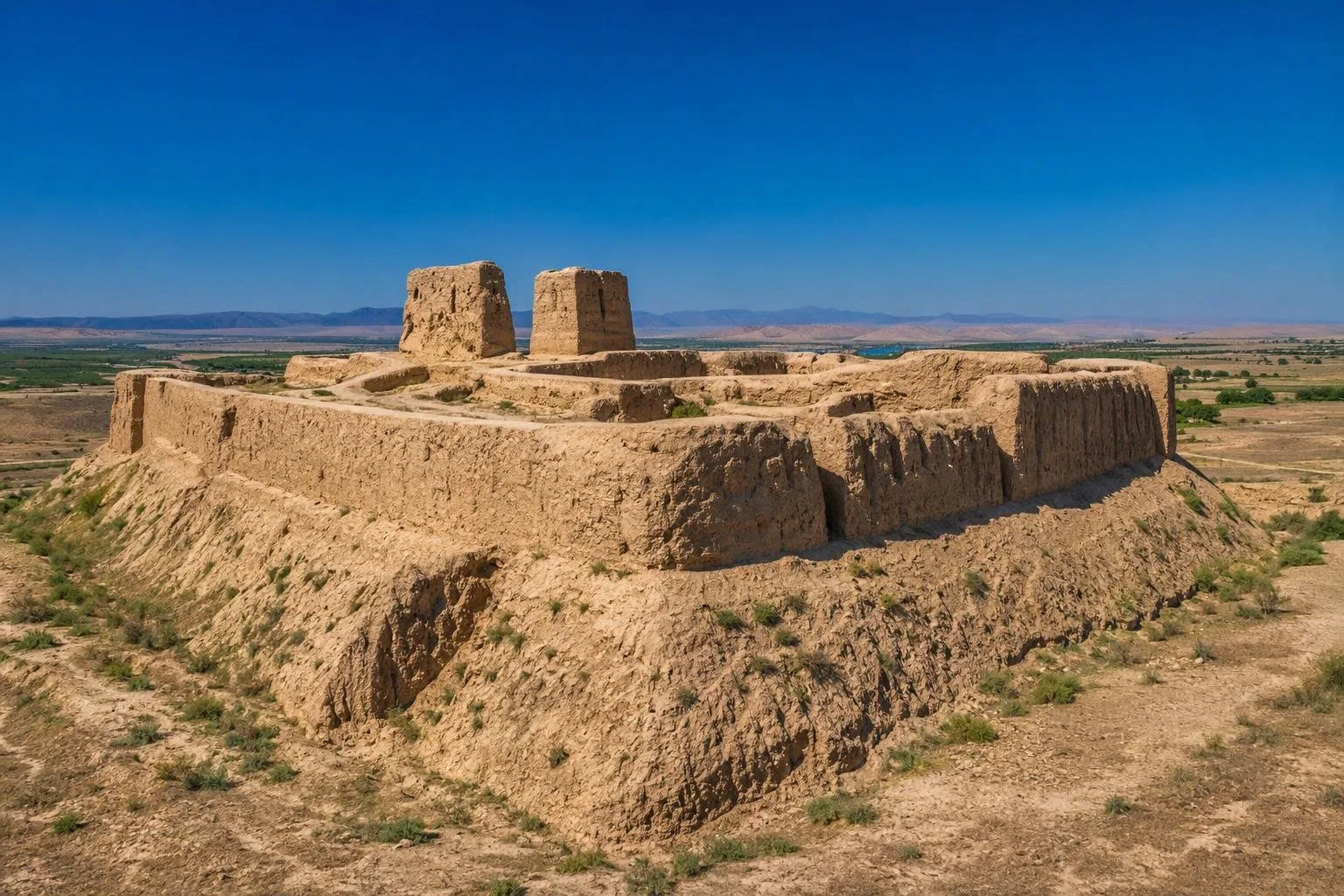
Old Nisa is the fortified royal citadel of ancient Nisa near Bagyr, west of Ashgabat. Its eroded earthen walls mark a ceremonial Arsacid centre within the Parthian Fortresses of Nisa World Heritage site.
Read the site correctly
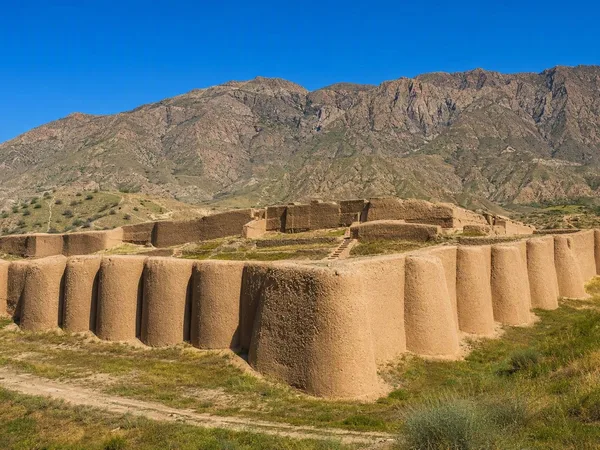
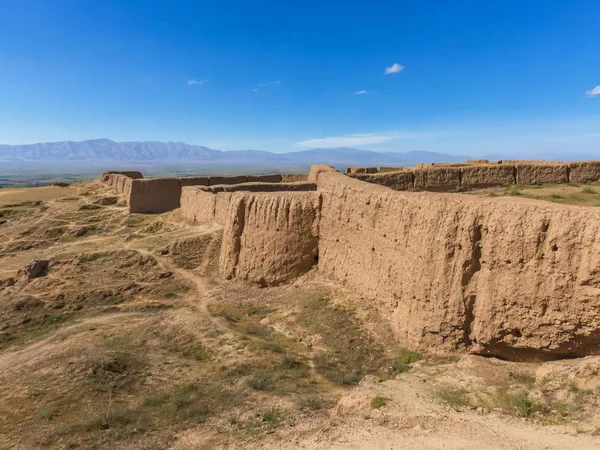
Old Nisa is not a rebuilt palace or a city of standing marble columns. It is a raised, irregularly pentagonal citadel of packed earth and mud brick: the royal precinct of the Parthian-era settlement of Nisa. Much of the architecture remains underground, while erosion has softened the exposed walls into broad, sloping earthworks.
The citadel was known as Mithradatkert, meaning “fortress of Mithradates”. It developed in the mid-3rd century BCE as the Arsacid dynasty established Parthian power. Nisa later stood at a major junction between Central Asia and the Mediterranean world; its remains show how local traditions met Hellenistic influences.
The royal enclosure
Old Nisa occupies a natural hill whose summit was levelled for construction. A high defensive rampart surrounds roughly 14 hectares, reinforced by more than 40 rectangular towers and strong corner bastions. The mass of the perimeter is the clearest feature to follow on foot.
Inside were two main building zones.
- Northern Complex: the Large Square Building contained a royal treasury, wine stores and service rooms.
- Central Complex: excavations identified the Square Hall, Round Hall, Columned Hall, tower-like building and north-eastern building.
The Round Hall, 17 metres across, had a clearly cult-related function, although its precise role remains unresolved. The Columned Hall appears ceremonial. Read these as fragments of a court complex, not as intact rooms: foundations, wall stubs and excavation lines are the evidence.
Finds beyond the ramparts
Old Nisa yielded marble sculpture, fragments of royal furniture, seals and about 2,700 inscribed pottery sherds, or ostraca. The records document the management of a royal estate. Carved ivory rhytons—ceremonial drinking vessels—are among the site’s best-known finds; their Greek mythological imagery is a sharp example of the cultural mixing visible at Nisa.
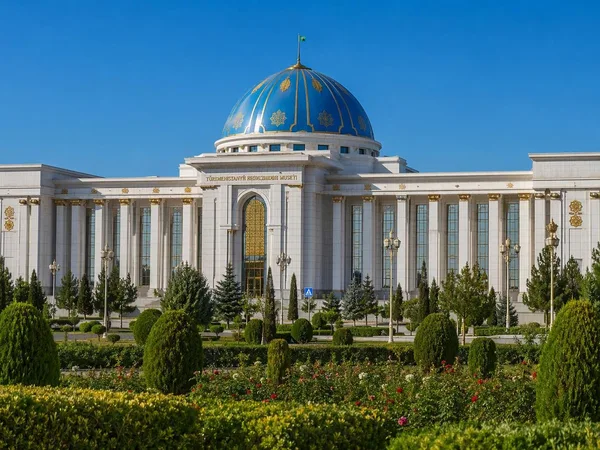
The major objects are in Ashgabat’s National Museum of Turkmenistan, not displayed among the ruins. Pairing the museum with the citadel makes the subdued earth architecture much easier to interpret.
Old Nisa and New Nisa
Keep the two components distinct. Old Nisa is the elevated royal citadel. New Nisa, about 1.5 kilometres to the northwest, was the adjacent fortified town, divided into an upper citadel and lower urban area. It remained occupied long after the Arsacids, so its layers tell a broader and later story.
The contrast is the essential geography of Nisa: court and ceremony above; town below.
Visiting the citadel
Old Nisa is near Bagyr on the western side of Ashgabat and is usually visited by car as a short excursion from the capital. Allow time to walk the enclosure rather than treating it as a roadside photo stop.
The ground is uneven and largely without shade. Wear shoes with grip, carry water and protect against sun and wind. A knowledgeable guide is particularly useful here: on-site remains are low and their functions are not always obvious. Stay on designated paths and do not climb the fragile earthen walls.
From the magazine
Stories about Old Nisa
Editorial stories linked directly to Old Nisa.
No stories about Old Nisa have been published yet.
Routes from our editors
Travel through Old Nisa
Editorial routes connecting Old Nisa with other countries, cities and hotspots.
No routes through Old Nisa have been published yet.
More in Turkmenistan
Related hotspots
Other cities, nature areas and places within Turkmenistan.