Sight · Turkmenistan
National Museum of Turkmenistan
Ashgabat’s National Museum of Turkmenistan is the country’s principal historical collection, on Archabil Avenue. Its Parthia galleries hold key finds from Old and New Nisa, including celebrated ivory rhyta.
Orientation
The National Museum of Turkmenistan stands on Archabil Avenue in Ashgabat, near the capital’s monumental flagpole. Founded in 1998 as the National Museum, it is now formally part of the State Cultural Center. The complex brings archaeology, ethnography, carpets, natural history and modern state history under one roof.
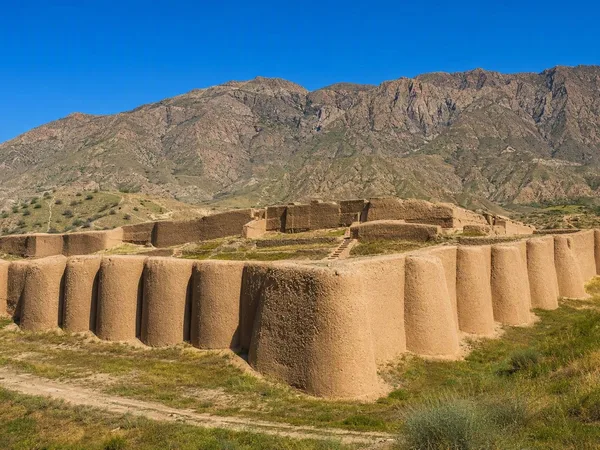
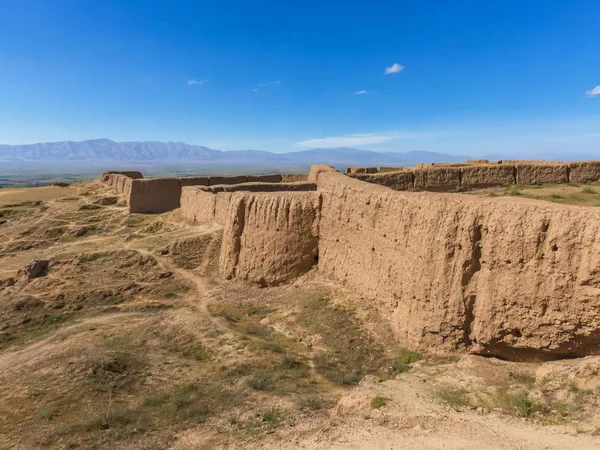
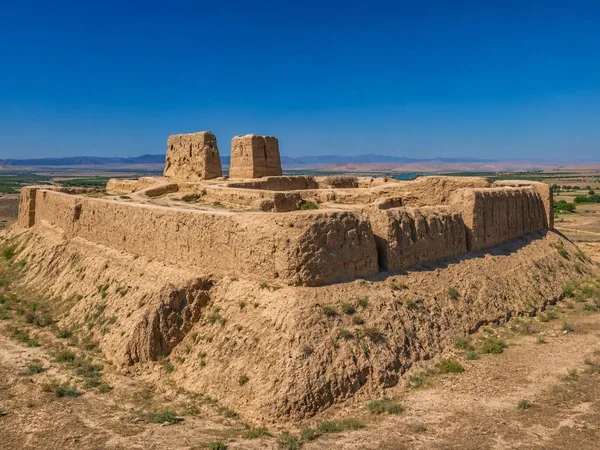
Treat it as a context stop before visiting archaeological sites. The galleries put excavated objects in front of you; at places such as Nisa, the surviving evidence is chiefly mud-brick walls, foundations and terrain.
Start with antiquity
Go first to the upper-floor sequence of Ancient History, Margush, Parthia and medieval history. The Parthia hall is the essential room for visitors interested in Nisa: it assembles finds from the fortresses of Old and New Nisa, early centres of the Parthian world.
Look closely for:
- Ivory rhyta: finely carved horn-shaped drinking and pouring vessels associated with the Arsacid court.
- Marble sculpture and inscribed pottery fragments: compact evidence for the artistic and administrative life behind Nisa’s eroded ramparts.
- Objects from Margush, Merv and medieval sites: useful markers for the long chronology that follows Parthia in what is now Turkmenistan.
The rhyta are especially revealing. Their Greek mythological imagery shows the cosmopolitan visual language circulating at a Parthian royal centre, rather than a sealed-off local tradition.
Beyond the archaeological halls
The main building also has an Independence section, a Turkmen carpet section and space for temporary exhibitions. The wider complex includes ethnography and local-history displays, where carpets, dress, jewellery, domestic objects and craft traditions broaden the story beyond dynasties and excavations.
Do not expect every gallery to be archaeological. The museum deliberately ranges from ancient material to national culture and the modern state. If time is limited, concentrate on Ancient History, Margush, Parthia and the medieval halls; then choose either carpets or ethnography according to your interest.
Building and setting
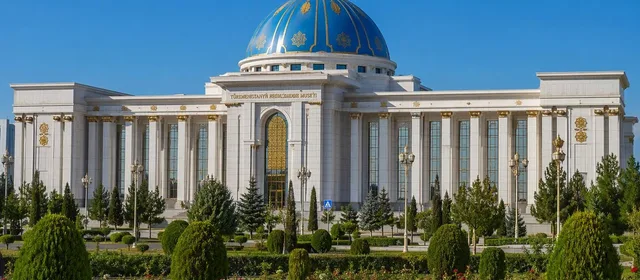
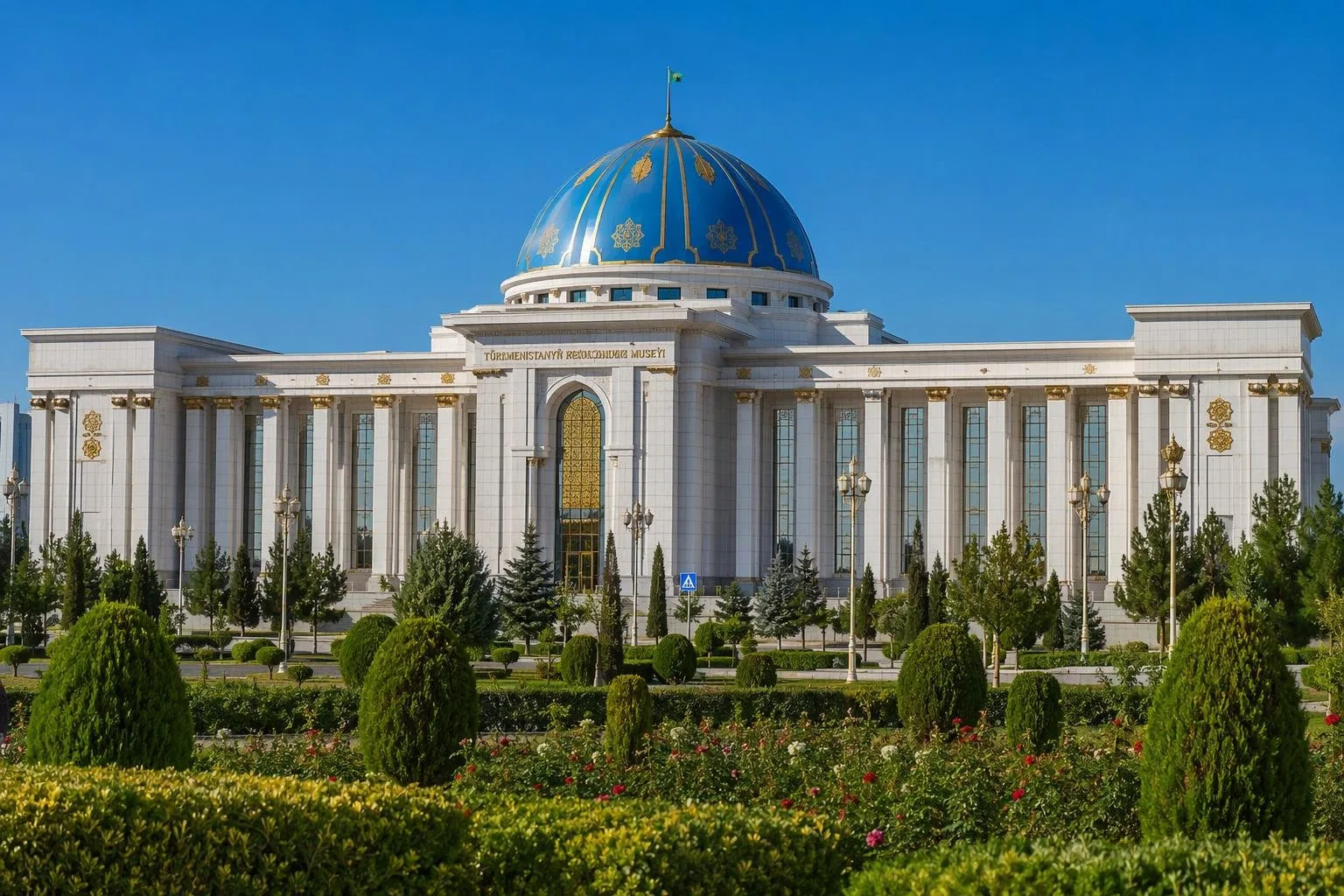
The museum is a large formal complex, recognisable by its central blue dome and colonnaded frontage. Its scale and state architecture are part of the Ashgabat experience, but the principal reason to enter is the Parthian material.
Outside, the national flagpole is immediately nearby. Keep the museum and flagpole as separate sights: the museum’s value lies inside its galleries, while the flagpole is a landmark in the surrounding civic landscape.
Visiting practicalities
The museum is listed as open 09:00–18:00 Monday and Wednesday to Sunday, and closed on Tuesday. Allow at least two hours for a focused archaeological visit; a full circuit of the complex takes longer.
Use a car or arranged driver from central Ashgabat, particularly if combining the museum with Nisa. The route to the museum follows the city’s broad southern avenues; it is not a walkable continuation of the Nisa ruins.
From the magazine
Stories about National Museum of Turkmenistan
Editorial stories linked directly to National Museum of Turkmenistan.
No stories about National Museum of Turkmenistan have been published yet.
Routes from our editors
Travel through National Museum of Turkmenistan
Editorial routes connecting National Museum of Turkmenistan with other countries, cities and hotspots.
No routes through National Museum of Turkmenistan have been published yet.
More in Turkmenistan
Related hotspots
Other cities, nature areas and places within Turkmenistan.