Sight · Turkmenistan
Nisa
Nisa is the archaeological site of a Parthian royal fortress and ancient town near Bagyr, about 18 km west of Ashgabat. Its Old and New Nisa tells preserve the core of one of the Parthian Empire’s earliest and most important cities.
What Nisa is
Nisa is a paired archaeological landscape at the foot of the Kopet-Dag: Old Nisa, the royal citadel on a raised hill, and New Nisa, the former town in the valley. Together they form the Parthian Fortresses of Nisa, inscribed as a World Heritage Site in 2007.
The site matters because Nisa was a Parthian capital and a strategic trading and communications centre between east and west, north and south. The Parthian Empire dominated this part of Central Asia from the mid-3rd century BCE to the early 3rd century CE and checked Roman expansion eastward.
Read the landscape
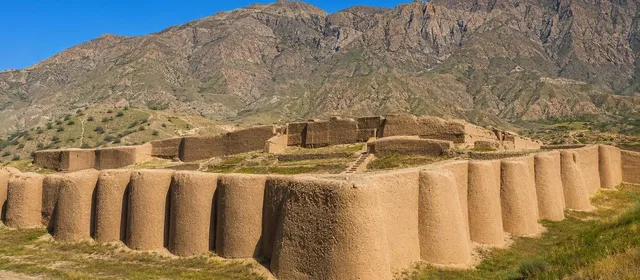
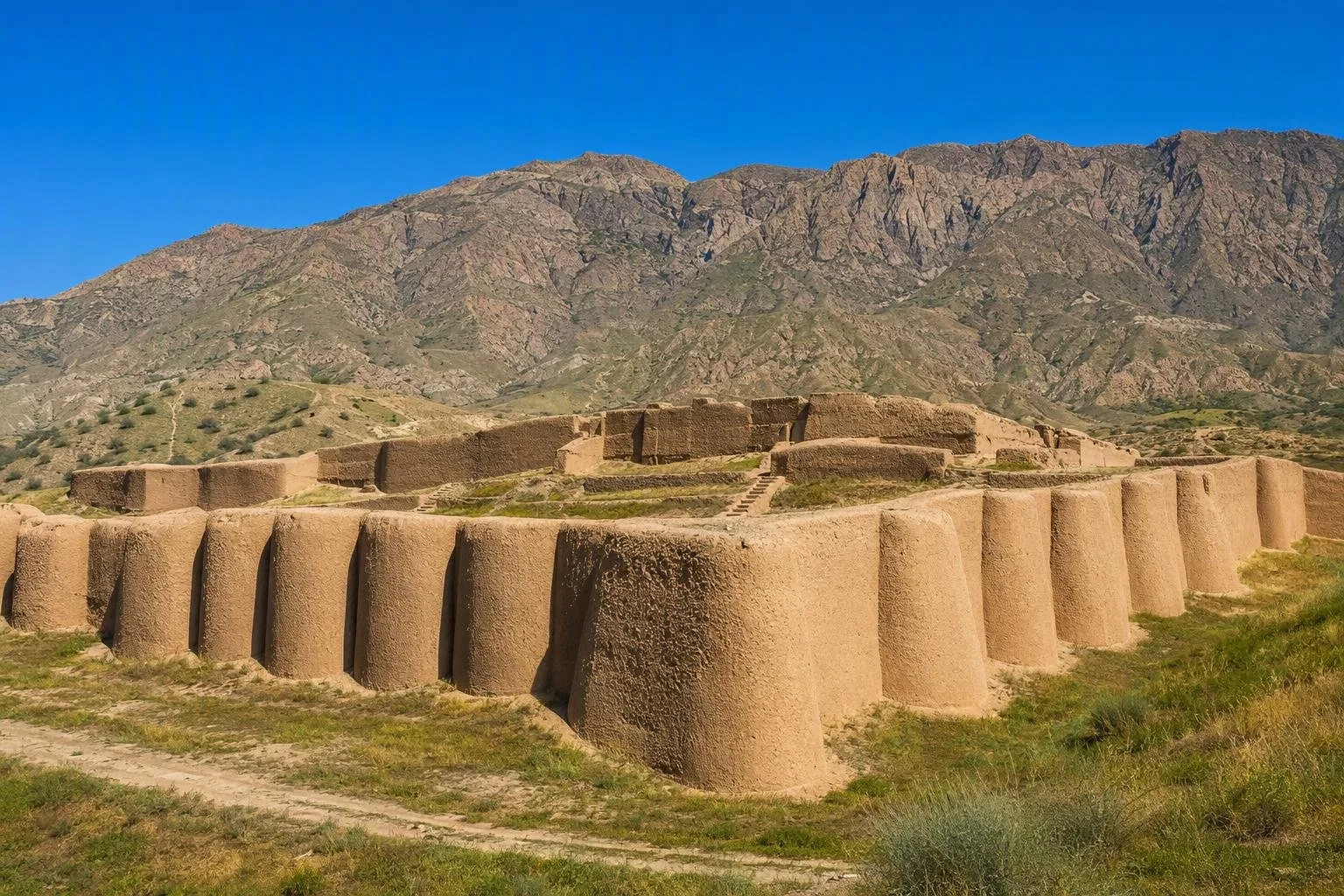
Do not expect reconstructed palaces. Nisa is primarily an earthen archaeological site: shaped tells, mud-brick walls, excavated rooms and broad defensive lines. Its power lies in the scale of the setting and in what the low, weathered architecture reveals about an imperial centre.
Start at Old Nisa. Its irregular pentagonal citadel is enclosed by a high defensive rampart with more than 40 rectangular towers. The visible complex includes the remains of ceremonial, administrative and religious buildings.
New Nisa lies about 1.5 km to the northwest. This was the ancient town, enclosed by substantial walls that survive up to 9 m high in places. It continued as an occupied settlement long after the Arsacid dynasty fell.
Key remains and discoveries
At Old Nisa, look for the monumental compounds identified by archaeologists:
- Square Hall, a major formal building in the central complex.
- Round Hall, a circular, plastered chamber with a likely cult-related function.
- Square House, associated with the royal treasury.
- Tower-like Building, with corridors, surviving upper sections and traces of decoration.
Excavations uncovered richly decorated architecture, wall paintings, marble sculpture, ivory rhytons and thousands of inscribed pottery fragments recording Parthian administration. These finds make the site a clear record of Central Asian traditions meeting Hellenistic and Roman influences.
Getting there and visiting well
Nisa lies near Bagyr, roughly 18 km west of Ashgabat, and works as a focused half-day archaeological excursion from the capital. Arrange transport that can take you to both Old and New Nisa; they are separate components, not two names for the same ruin.
The terrain is open and the remains are fragile. Wear firm footwear, bring water and sun protection, and stay on permitted routes. The site is a protected historical and cultural park: do not climb earthen walls, enter closed excavation areas or remove anything from the ground.
Best approach
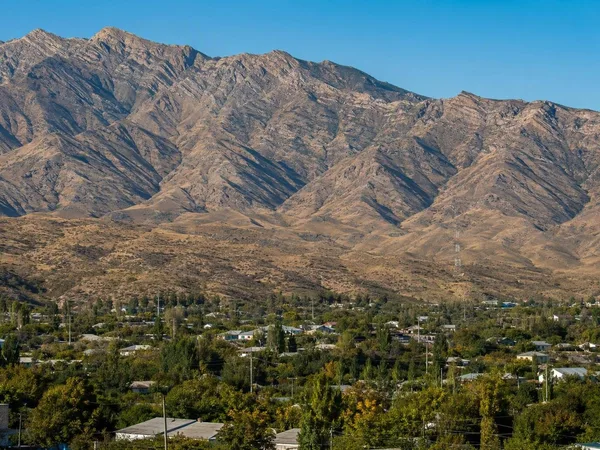
Visit in the cooler part of the day. Begin with Old Nisa to understand the royal and ceremonial core, then use New Nisa to grasp the wider urban settlement. The Kopet-Dag backdrop is integral to the place: Nisa was deliberately sited at the mountains’ foot, not in isolation from its landscape.
From the magazine
Stories about Nisa
Editorial stories linked directly to Nisa.
No stories about Nisa have been published yet.
Routes from our editors
Travel through Nisa
Editorial routes connecting Nisa with other countries, cities and hotspots.
No routes through Nisa have been published yet.
More in Turkmenistan
Related hotspots
Other cities, nature areas and places within Turkmenistan.