
Turkmenistan

Desert cities and Silk Road walls

Turkmenistan

Turkmenistan brings together the Karakum Desert, the ancient cities of the Silk Road and Ashgabat’s white marble streets.

Look beyond Ashgabat’s marble facades and Turkmenistan shows its long history in earth, stone and water. Much of the country lies in the Karakum Desert, where towns and farming communities depend on oases and irrigation. In the south, Ashgabat spreads along broad avenues with formal parks and white marble public buildings. East of the capital, the ancient city of Merv stands on a dry plain, its mud-brick walls and domes marking a settlement that grew and shifted over many centuries.

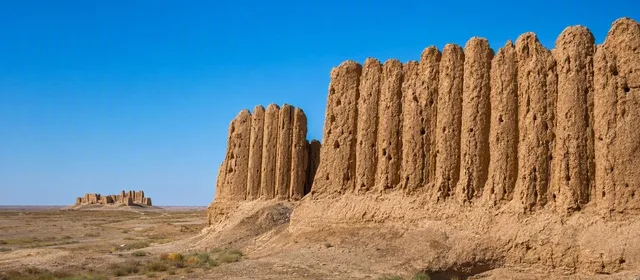
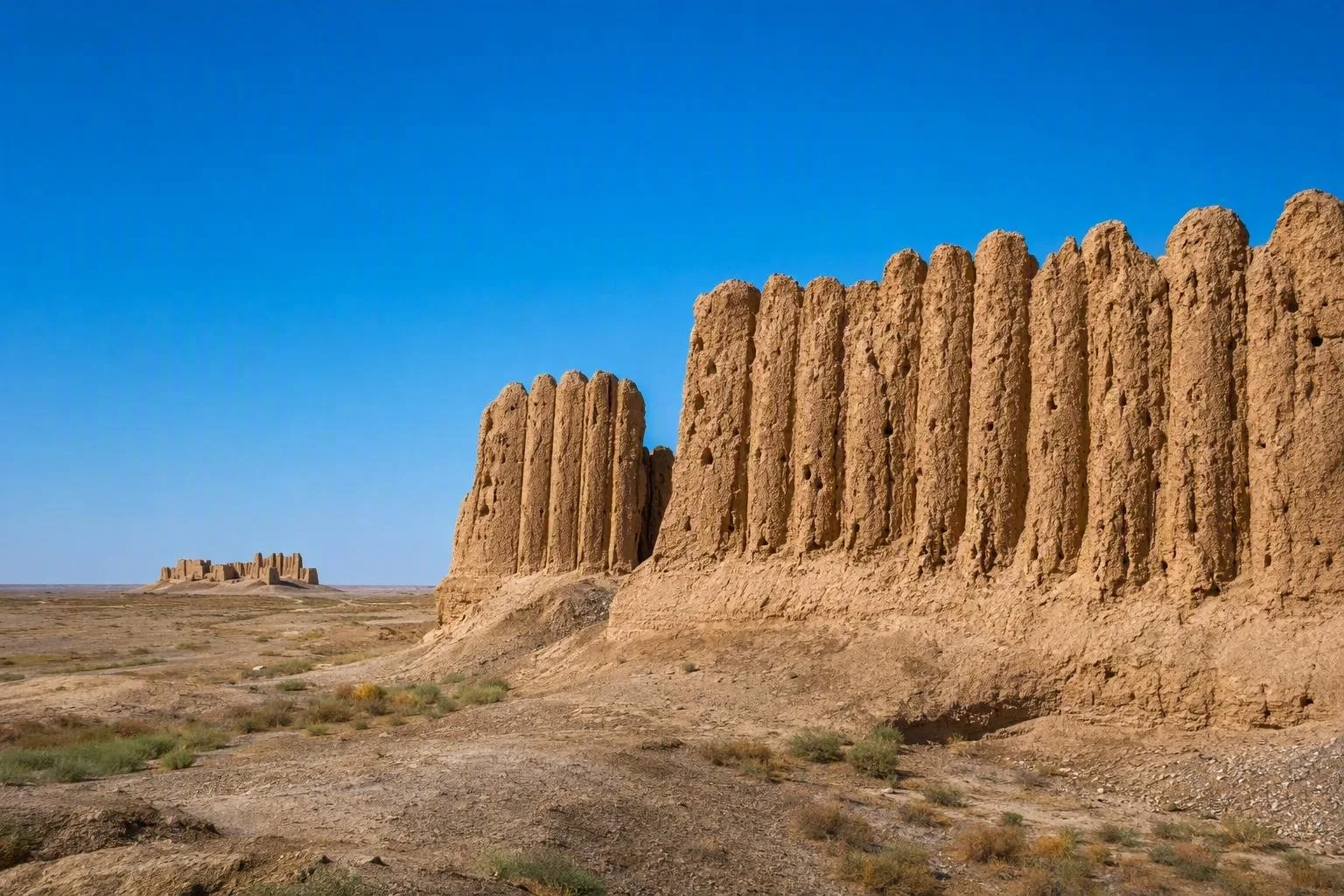
Merv repays unhurried time. Its archaeological area covers the remains of several walled cities, built around the oasis at different periods. Greater Kyz Qala has tall, deeply ribbed mud-brick walls. The mausoleum of Sultan Sanjar, with its large brick dome, recalls the city’s place in the Seljuk world. Traders, scholars and craftspeople once passed through this part of Central Asia, supported by the water channels that fed the oasis.

The west offers a different landscape. Yangykala’s striped cliffs and dry canyons lead towards the Caspian coast. In homes and workshops, people continue to make patterned carpets and textiles whose designs often reflect regional and family traditions. Akhal-Teke horses remain another strong marker of Turkmen culture. At the table, plov, grilled meat, flatbread and dograma—a broth with torn bread and meat—appear often. Come with time to look past the capital’s formal boulevards, and Turkmenistan gives you old walls, open desert and generous meals to remember.

When to go

Best time to travel

The monthly values are indicative average maximum temperatures for Ashgabat. Conditions vary substantially between the Karakum Desert, the Caspian coast and the mountains along the southern border. The monthly values are indicative average maximum temperatures for Ashgabat. Conditions vary substantially between the Karakum Desert, the Caspian coast and the mountains along the southern border.

jan8°C feb10°C mar16°C apr24°C may30°C jun36°C jul38°C aug37°C sep32°C oct23°C nov16°C dec10°C

Weather in the capital

Practical Turkmenistan

On every country page we show the current weather for the capital.

Ashgabat
Morning19°Cclear
Afternoon31°Cclear
Evening28°Cclear
today31°C / 19°Chigh and low

Current forecast by Open-Meteo

Getting around

Domestic flights cover long distances, while trains and buses link major cities. Taxis are common in urban areas, and arranged vehicles are often used for remote sites.

Money

The manat is the official currency. Cash is widely used, while international card acceptance and access to cash machines can be limited.

Accommodation

Ashgabat and regional centres have the widest choice of hotels. Accommodation near archaeological sites and in smaller towns is simpler and more limited, so many visitors arrange stays in advance.

Before you leave

Worth knowing

A practical starting point for your trip. Check current conditions and local information before you leave.

01

Language

Turkmen is the official language. Russian remains useful in cities and in communication between different language groups.

02

Calling code

Turkmenistan’s international calling code is +993.

03

Mobile connectivity

Mobile coverage is strongest in cities and larger towns. Internet access can be slow, and many international websites and online services are unavailable.

04

Driving side

Traffic drives on the right, and vehicles have the steering wheel on the left.

05

Taxis

Meters are uncommon. Agree on the fare before departure, or ask your hotel or local contact to arrange a car.

06

Paying for purchases

Cash is the usual form of payment. International cards are accepted at only a limited number of larger hotels and businesses.

07

Tipping

Tipping is not firmly established. A small extra amount is appropriate for good restaurant or driver service when no service charge is included.

08

Dining customs

Tea and bread often appear first at a shared meal. Treat bread with respect and wait for the host to indicate where guests should sit.

09

Meal times

Breakfast is usually simple, while lunch and dinner feature the main cooked dishes. City restaurants commonly serve dinner into the evening.

10

Business hours

Many offices work from about 09:00 to 18:00 on weekdays. Some shops and markets open on Saturdays, and market trading often starts early.

11

Visiting a home

Guests normally remove their shoes before entering living areas. Follow the host’s lead and dress neatly for a private visit.

12

Measurements

Turkmenistan uses the metric system, with distances in kilometres and weights in kilograms.