Sight · Turkmenistan
New Nisa
New Nisa is the lower, fortified settlement of the Nisa archaeological complex near Bagyr, Turkmenistan. Its large earthen enclosure shows the town that stood beside the Arsacid royal citadel at Old Nisa.
What New Nisa is
New Nisa is a separate archaeological component of Nisa, northwest of Old Nisa. Where Old Nisa occupied a higher royal and ceremonial stronghold, New Nisa was the fortified town below it. Together, the two tells mark a major Parthian centre at the foot of the Kopet Dag.
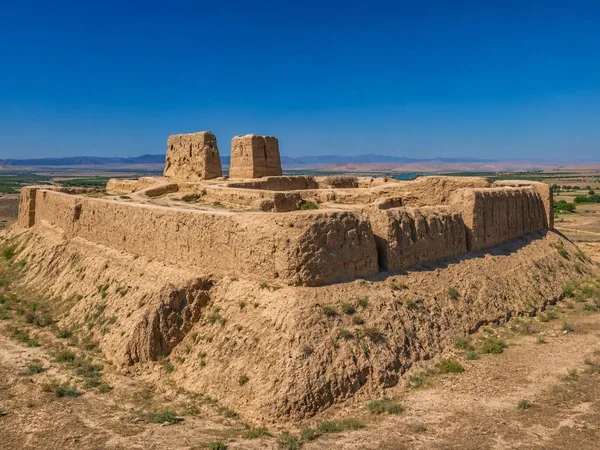
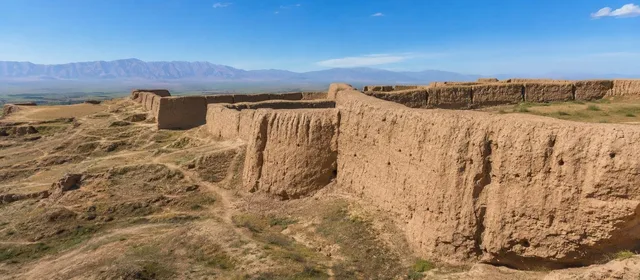
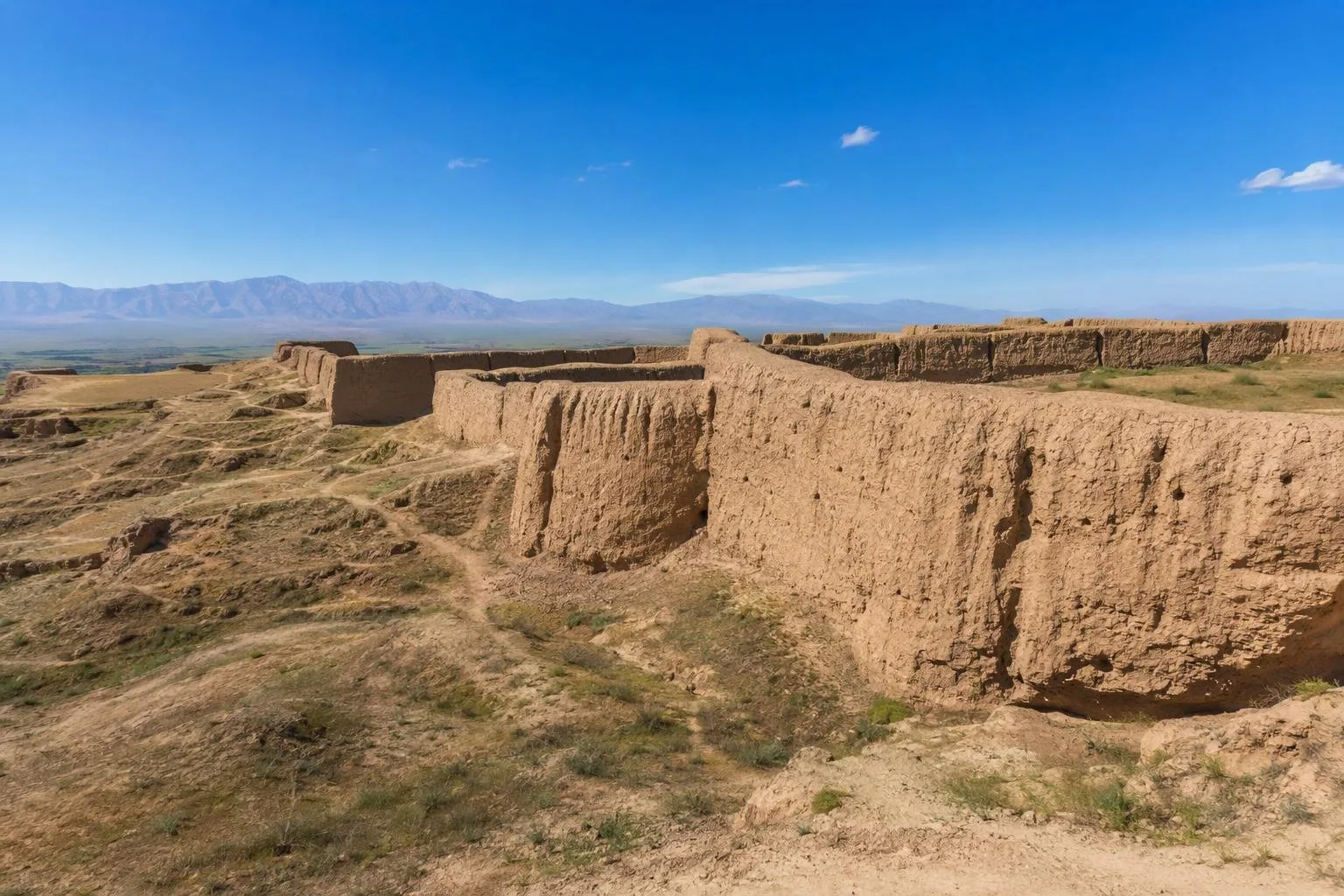
This is not a site of standing colonnades or reconstructed rooms. It is an extensive earthwork: an accumulated settlement mound whose buried remains and eroded perimeter preserve the outline of an ancient city.
Read the layout
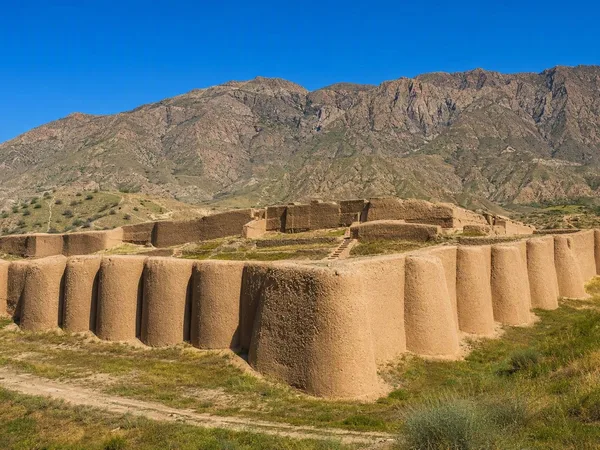
The New Nisa tell covers about 25 hectares within a larger protected component of 42.671 hectares. Powerful earthen walls once rose to about nine metres and enclosed the settlement; two entrances pierced the circuit, one on the Bagyr side and one to the northwest.
Look for the town's clear division into two levels:
- Ark: the higher citadel area.
- Shakhristan: the lower town, where dense building traces represent the inhabited settlement.
Archaeology has identified fortifications, storage spaces and burial structures here. The value of the site lies in this legible urban plan rather than in a single showpiece building.
A city with long occupation
The Parthian period gave New Nisa its visible two-part form. It functioned beside the Arsacid royal complex as part of a city that stood at a strategic crossroads between Central Asia and the Mediterranean world.
Unlike Old Nisa, New Nisa remained occupied for centuries after the Arsacid Empire fell. Its mound therefore contains successive layers of settlement and later rebuilding, including medieval occupation. Avoid reading every visible contour as belonging to one date or one Parthian plan.
Visiting the lower settlement
Approach New Nisa as its own stop, not merely an extension of the more excavated royal citadel. The main visual reward is the scale of the enclosure: follow the line of the ramparts and compare the low town setting with Old Nisa's elevated position.
Allow time to understand the terrain. The archaeological remains are largely buried, so the experience depends on walking the perimeter and reading the relationship between wall, mound and valley. Wear footwear suitable for uneven, exposed ground and carry water in hot conditions.
Protected-site rules
New Nisa forms part of the World Heritage-listed Parthian Fortresses of Nisa. The fragile mud-brick archaeology is vulnerable to erosion. Do not climb unstable earthworks, remove material or enter excavation areas. Guiding, excavating and other research activity require authorization from the park administration.
From the magazine
Stories about New Nisa
Editorial stories linked directly to New Nisa.
No stories about New Nisa have been published yet.
Routes from our editors
Travel through New Nisa
Editorial routes connecting New Nisa with other countries, cities and hotspots.
No routes through New Nisa have been published yet.
More in Turkmenistan
Related hotspots
Other cities, nature areas and places within Turkmenistan.