
Mountain · North Korea
Moranbong
Moranbong, or Peony Hill, is a 95-metre wooded hill and park beside the Taedong River in central Pyongyang. It combines old Pyongyang fortress remains, traditional pavilions and modern state monuments.
Orientation
Moranbong rises on the north side of central Pyongyang, above the Taedong River. The name means “Peony Hill.” It is both a hill and the landscaped recreation ground spread across its slopes, so treat it as a walkable historic landscape rather than a single monument.
The hill’s height is modest, but its position makes it a useful vantage point over the river, the city centre and major landmarks nearby. Paths climb through trees, with pavilions, gates and fortification fragments appearing at different levels.
What to see
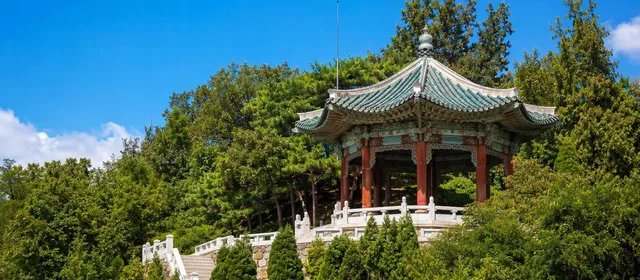
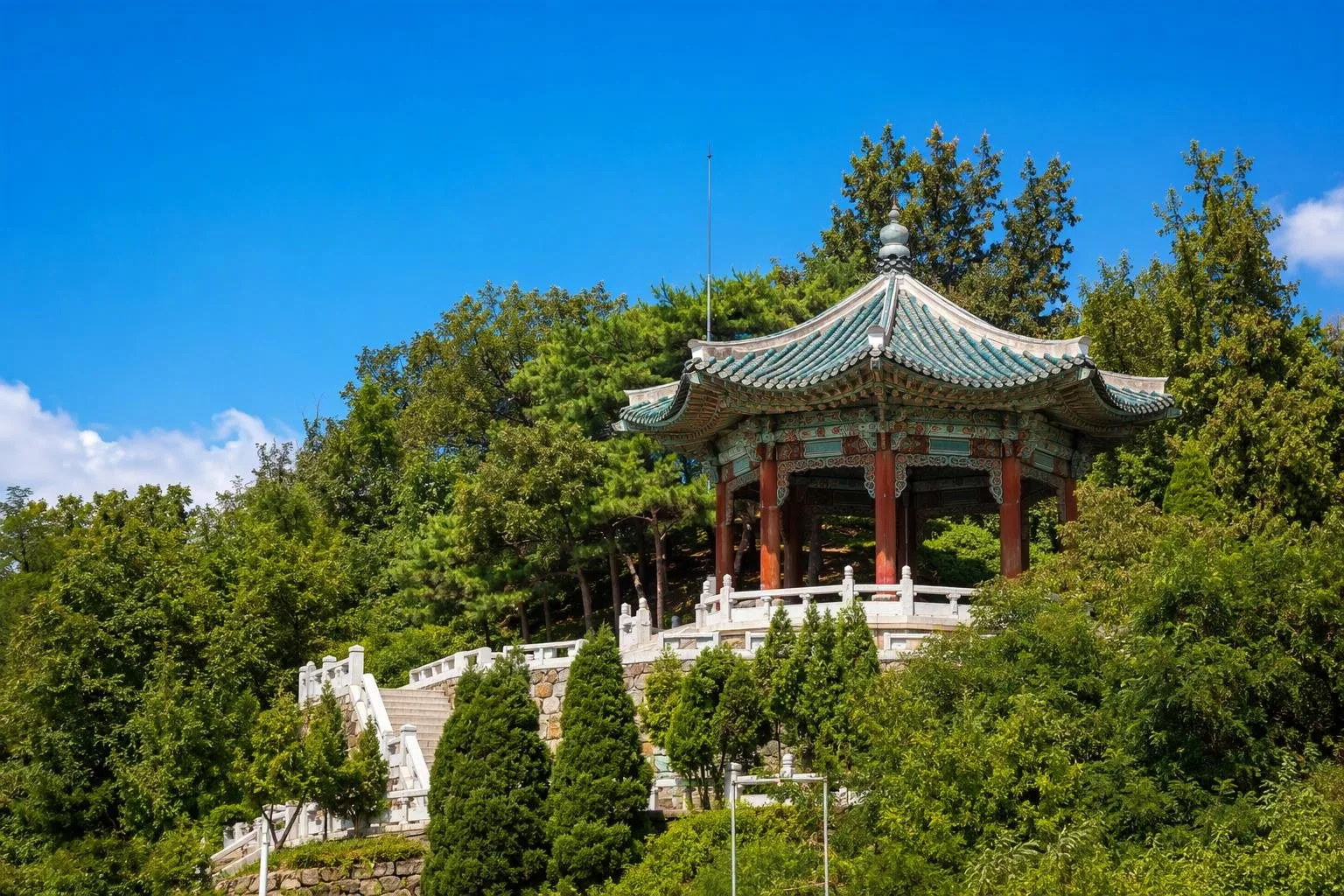
Ulmil Pavilion is the key stop: a traditional pavilion on the hill with wide views over Pyongyang and the Taedong. It stands in the former defensive landscape of Pyongyang Castle.
Look out for other surviving or reconstructed historic features:
- Choesung Pavilion, on the higher ground of Moranbong.
- Pubyok Pavilion, set above the river-facing side of the hill.
- Chilsong Gate and Hyonmu Gate, remnants of the old city’s northern defences.
- The Moranbong fossil tree, a protected petrified tree on the hill’s Cheongnyu cliffs.
These older structures are the point of Moranbong. The modern landmarks around its edges—such as the Arch of Triumph, Kim Il Sung Stadium, Moranbong Theatre and the Pyongyang TV Tower—help place the hill within the capital’s monumental cityscape but are distinct sites.
Walking the hill
Use the paths to connect the pavilions rather than rushing between named sights. Expect slopes and steps; shoes with decent grip are more useful than formal footwear. The river-facing side offers the strongest outlooks, while the wooded interior gives a clearer sense of the park’s scale.
Moranbong works well paired with the Arch of Triumph and the stadium at the western foot of the hill. Keep the visit focused: the park is extensive, and a guided stop may cover only selected paths and pavilions.
Access and visiting conditions
Foreign travel in Pyongyang is organised through approved tour arrangements, and Moranbong is generally visited as part of a guided city itinerary. Follow the route and photography directions set for the day, especially around monuments and politically significant sites.
Spring and autumn are the clearest seasons for a hill walk and river views. Summer brings dense foliage and humidity; winter leaves the slopes exposed and cold. Public holidays and weekends can bring local leisure gatherings in the park, but do not assume access to any particular pavilion, event or facility.
From the magazine
Stories about Moranbong
Editorial stories linked directly to Moranbong.
No stories about Moranbong have been published yet.
Routes from our editors
Travel through Moranbong
Editorial routes connecting Moranbong with other countries, cities and hotspots.
No routes through Moranbong have been published yet.
More in North Korea
Related hotspots
Other cities, nature areas and places within North Korea.
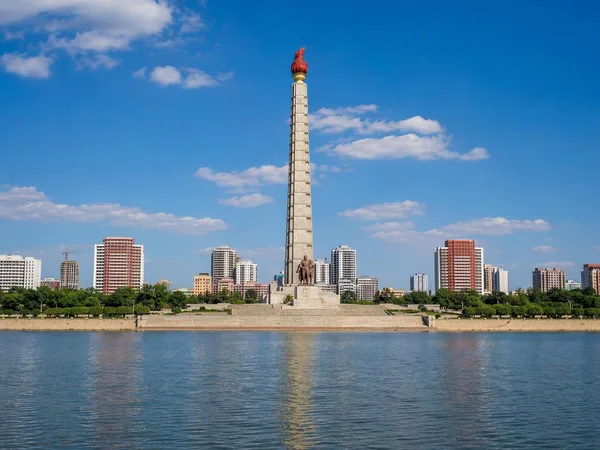
Pyongyang
2 linked stories and routes
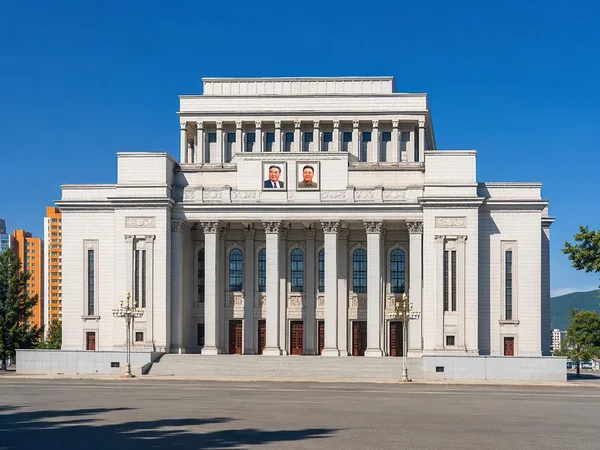
Hamhung
1 linked stories and routes

Hamgyŏng
1 linked stories and routes
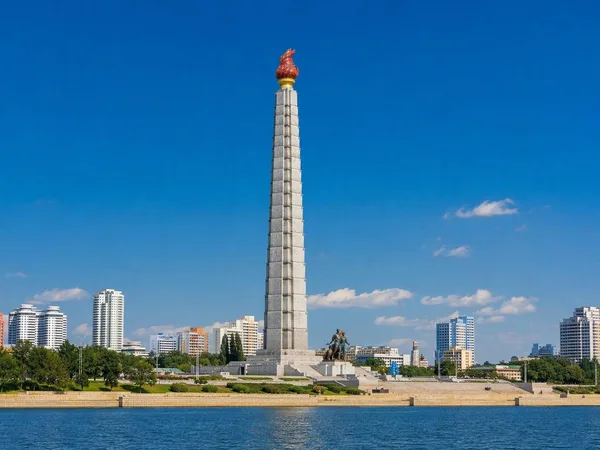
Juche Tower
1 linked stories and routes
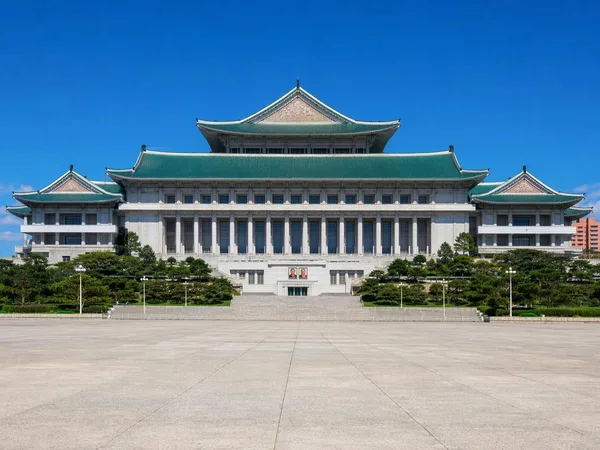
Grand People’s Study House
1 linked stories and routes
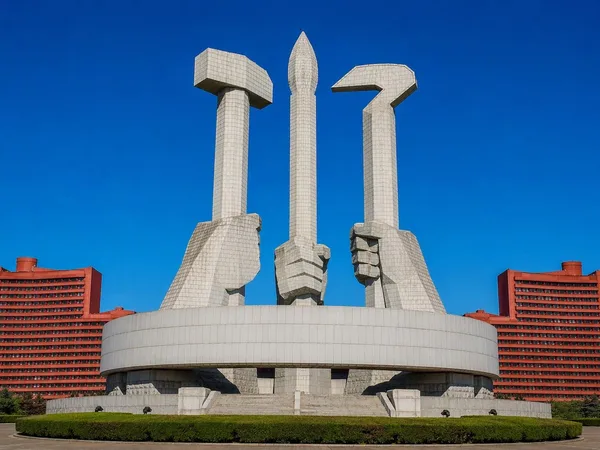
Monument to the Founding of the Workers’ Party
1 linked stories and routes
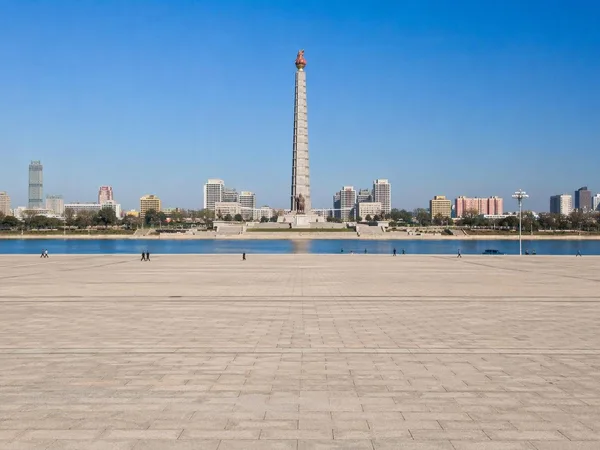
Kim Il Sung Square
1 linked stories and routes