
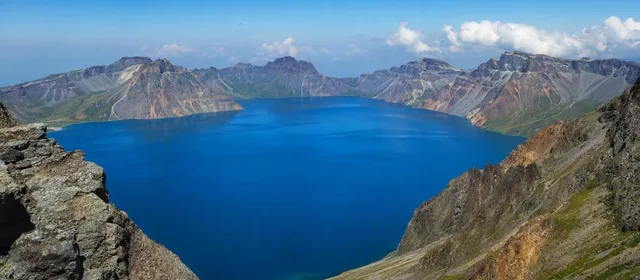
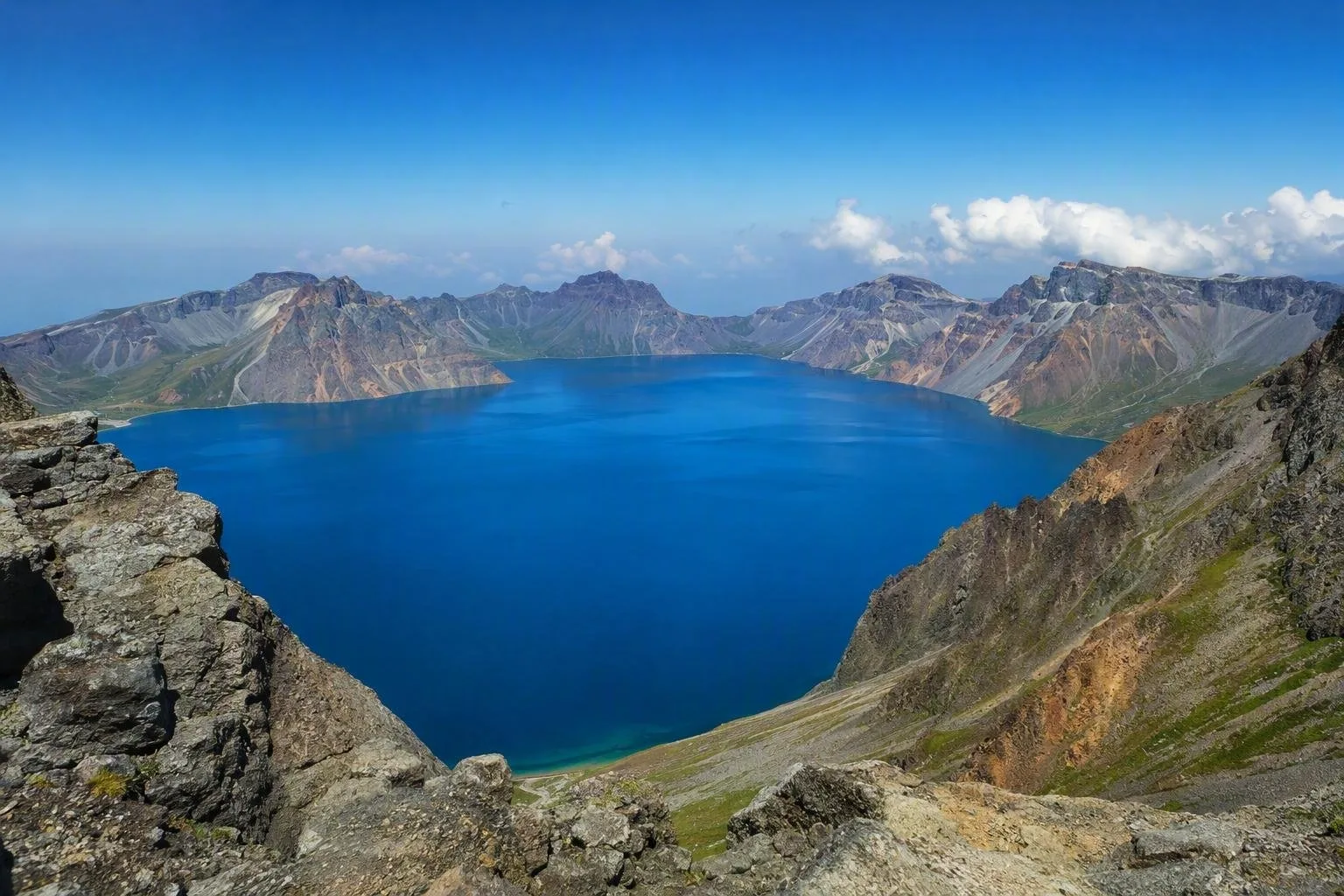
North Korea is worth looking at for the distance between its public stage and its physical landscape. Pyongyang puts that stage in plain view: broad roads run past high-rise blocks, Kim Il Sung Square, the Arch of Triumph and the Mansudae Grand Monument. The Taedong River cuts through the capital, where commuters use deep metro stations decorated with mosaics and chandeliers. Outside the city, the ground changes quickly. Fields occupy narrow valleys beneath forested ridges, and Mount Paektu holds a crater lake inside its volcanic rim.
The country’s history appears in these places without needing much explanation. Korean tradition links Mount Paektu to the origins of the Korean people; the state also places the mountain at the centre of its revolutionary history. In Kaesong, low houses with tiled roofs stand near sites from the Koryo dynasty, when the peninsula was ruled from the city. South of Kaesong, the demilitarized zone traces the division left by the Korean War.
Foreign travel takes place on organised programmes, with guides and set transport shaping each day. That structure limits where people go, but it also brings visitors to places rarely seen independently: a Pyongyang restaurant serving cold naengmyeon in brass bowls, a station platform below the city, or the wind off the rim of Mount Paektu. Those moments give a closer view of a country often reduced to its politics. Travel here requires planning and patience, but the mountains, streets and older towns repay careful attention.


