
Sight · North Korea
Monument to the Founding of the Workers’ Party
A 50-metre political monument on Munsu Street in Pyongyang’s Taedonggang District, beside the Taedong River. Its hammer, sickle and calligraphy brush turn the emblem of the Workers’ Party of Korea into a monumental sculpture.
Orientation
The Monument to the Founding of the Workers’ Party stands on the east bank of the Taedong River in Pyongyang, on Munsu Street. Completed on 10 October 1995, it marked the 50th anniversary of the Workers’ Party of Korea.
This is a purpose-built monumental complex rather than a museum or a viewpoint. Its scale and formal symmetry are the point: approach from the open square to take in the complete composition.
Read the central sculpture
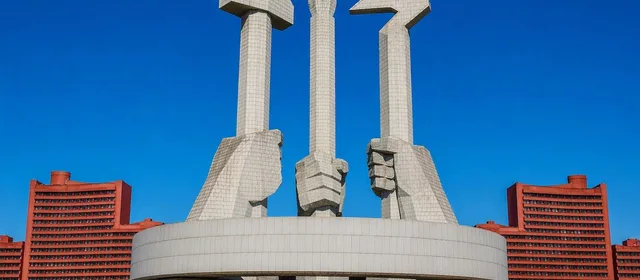
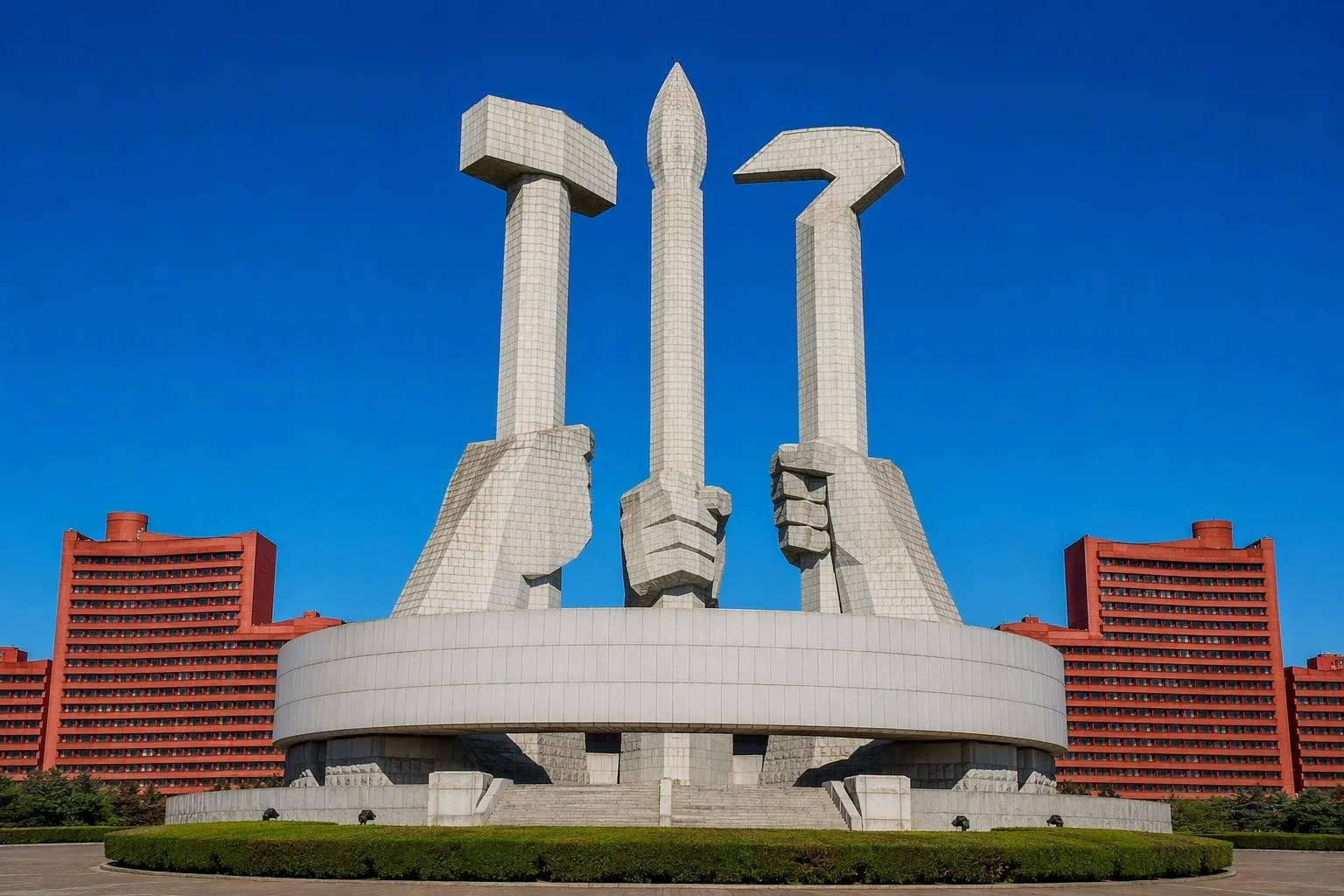
Three enormous clenched hands rise to hold a hammer, sickle and calligraphy brush. The tools represent workers, farmers and intellectuals respectively, following the party emblem. The sculpture reaches 50 metres, a deliberate reference to the anniversary it commemorates.
A circular granite belt encloses the hands. Look inside it for three bronze relief panels presenting the official narrative of the party’s origins, unity and future. The belt is 50 metres across on its outer edge and 42 metres across inside; it is assembled from 216 blocks. These numerical details are part of the monument’s tightly programmed symbolism.
The planned setting
The monument occupies a formal riverside precinct with lawns, fountain basins and a large paved square used for organised public events. Two red, flag-shaped residential buildings stand symmetrically behind it, extending the stage-set effect of the site.
Across the Taedong River lies the Mansu Hill monumental area. The Party Founding Monument was laid out on a ceremonial axis with that opposite bank, so the riverfront setting matters as much as the sculpture itself. Keep the three hands, enclosing ring and paired red buildings in one frame for the clearest reading of the design.
Visiting practicalities
Visits are normally made as part of a guided Pyongyang itinerary; a site guide may explain the symbolism. The open square allows a clear front-facing photograph, while the ring and bronze reliefs reward a closer walk around the base.
Respect the setting: this is an active political and ceremonial space, not an informal park. Stay with your authorised group and follow instructions on movement and photography. Avoid obstructing organised activity in the square.
What to notice
- Materials: granite forms the main monument; the narrative panels are bronze.
- Composition: three separate hands make one emblem, locked together by the circular belt.
- Backdrop: the paired red apartment blocks are designed as waving flags, not merely adjacent buildings.
- Best subject: photograph the sculpture as architecture and political iconography, rather than treating the surrounding square as the attraction.
From the magazine
Stories about Monument to the Founding of the Workers’ Party
Editorial stories linked directly to Monument to the Founding of the Workers’ Party.
No stories about Monument to the Founding of the Workers’ Party have been published yet.
Routes from our editors
Travel through Monument to the Founding of the Workers’ Party
Editorial routes connecting Monument to the Founding of the Workers’ Party with other countries, cities and hotspots.
No routes through Monument to the Founding of the Workers’ Party have been published yet.
More in North Korea
Related hotspots
Other cities, nature areas and places within North Korea.
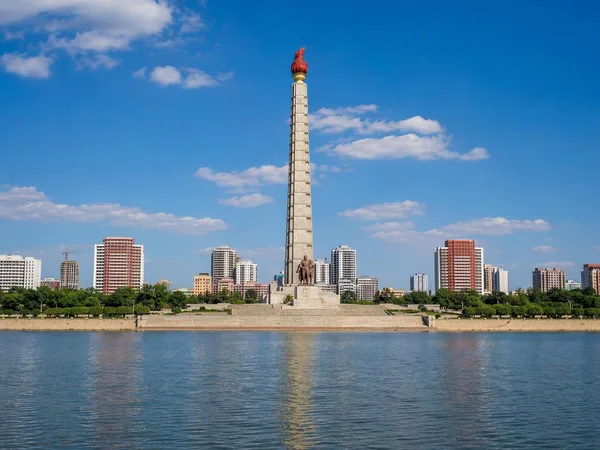
Pyongyang
2 linked stories and routes
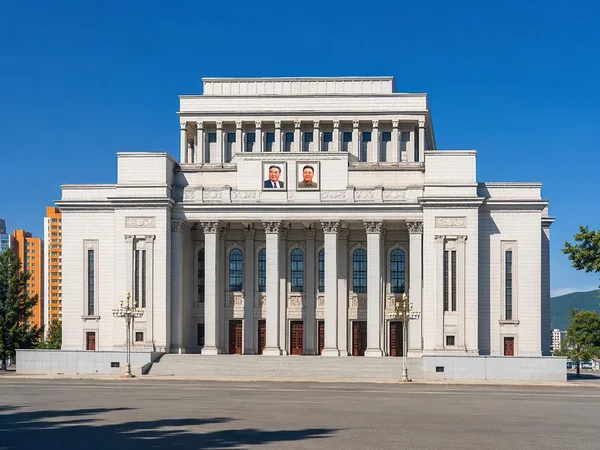
Hamhung
1 linked stories and routes

Hamgyŏng
1 linked stories and routes
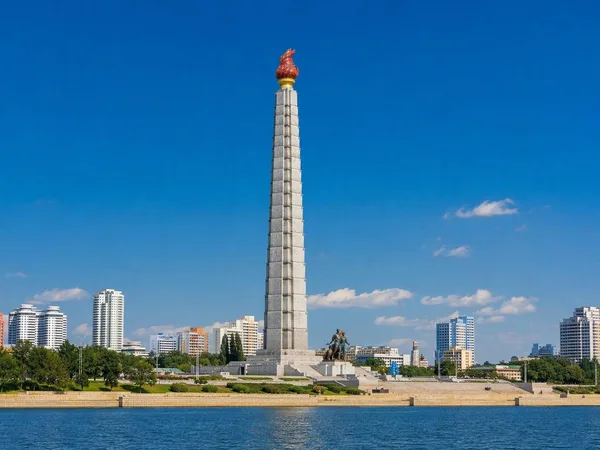
Juche Tower
1 linked stories and routes
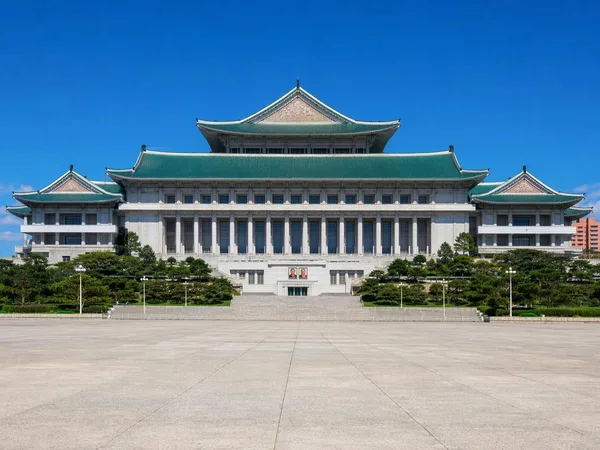
Grand People’s Study House
1 linked stories and routes
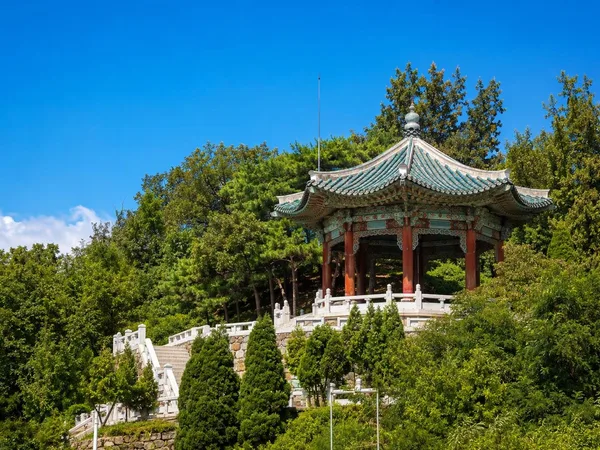
Moranbong
1 linked stories and routes
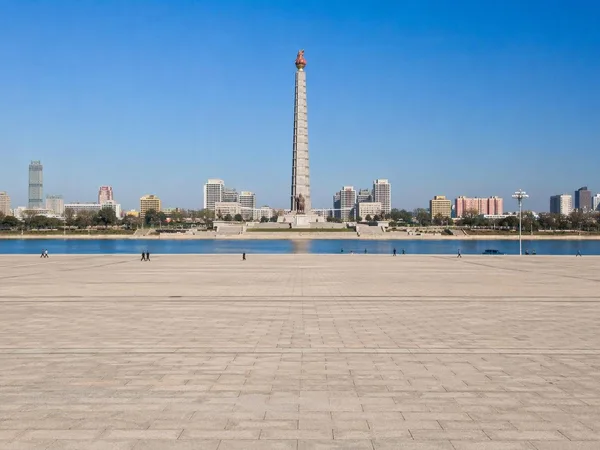
Kim Il Sung Square
1 linked stories and routes