City · China
Chengdu
Chengdu is the capital of Sichuan in southwest China, set on the Chengdu Plain. It is a major city for Sichuan food, tea-house culture, giant pandas and the history of the Shu kingdoms.
Get oriented
Chengdu is a large, flat city on the Chengdu Plain. Tianfu Square is a useful central reference point; People’s Park and the Kuanzhai Alleys lie to its west, while the Wuhou Shrine and Jinli are southwest of the centre.
The city has kept its name for more than two millennia and has repeatedly served as a regional capital, including for Shu Han during the Three Kingdoms period. That depth is best approached through distinct stops rather than a rushed checklist.
Start with tea in People’s Park
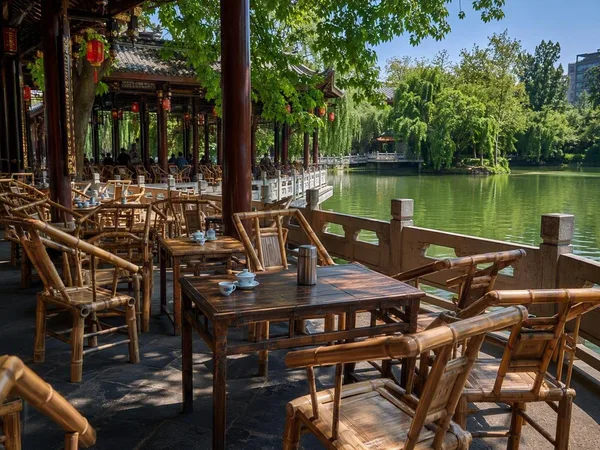
People’s Park began as Shaocheng Park in 1911 and stands in the former Manchu quarter. It remains the clearest introduction to Chengdu’s public tea-house life.
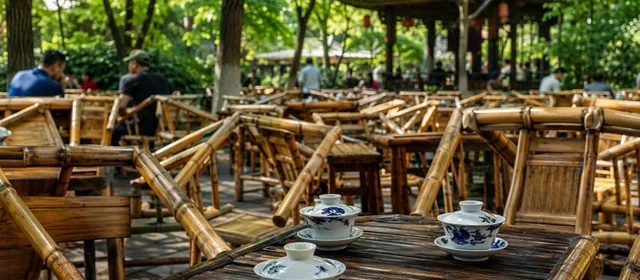
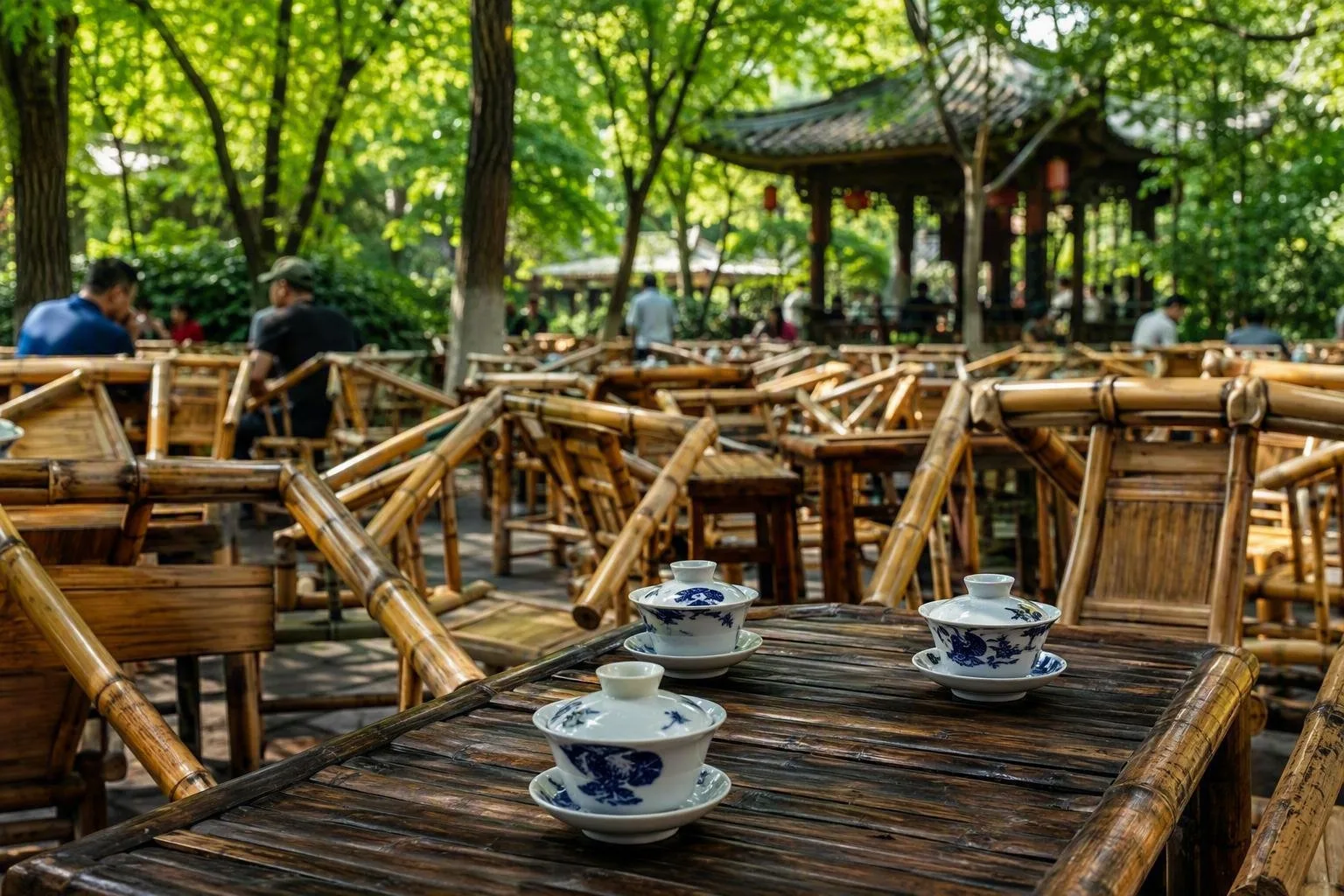
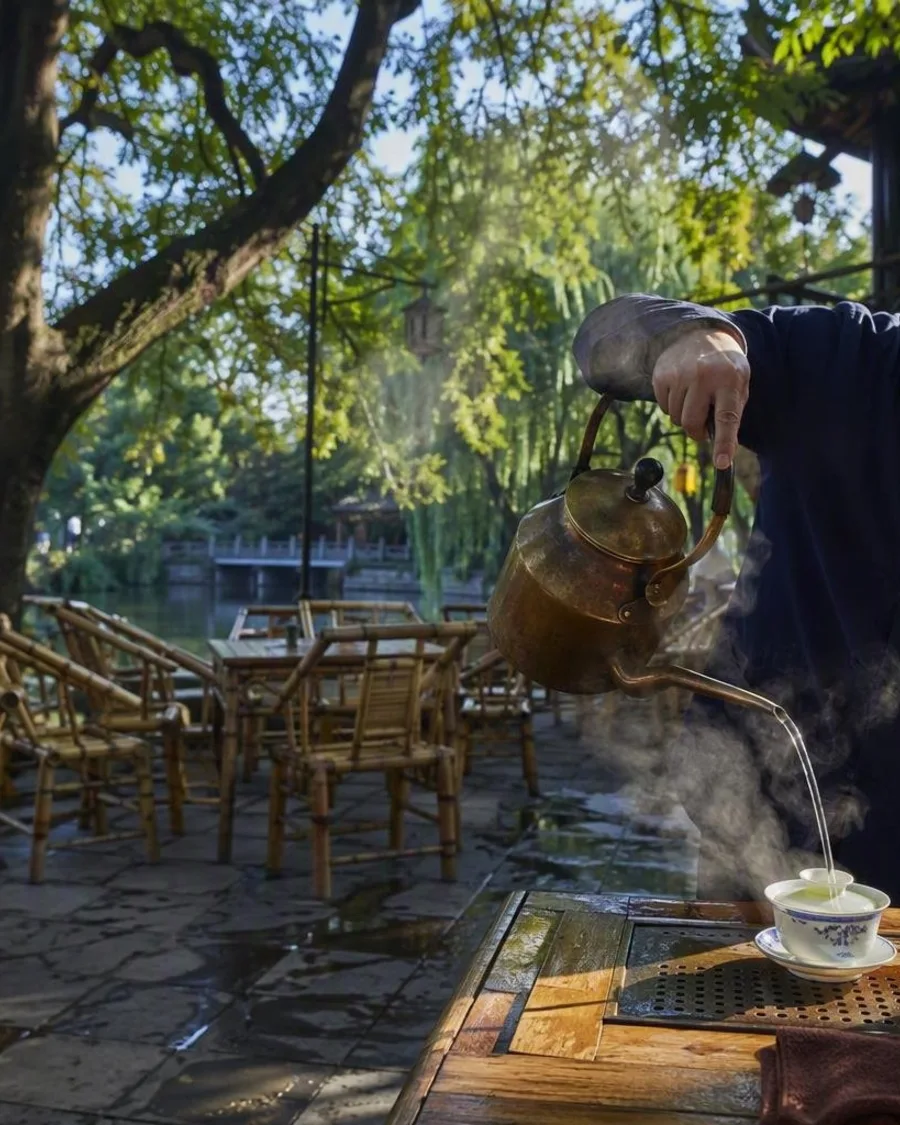
At Heming Teahouse, take a bamboo chair and order a covered bowl, or gaiwan, of tea. The point is to stay: conversation, cards and mahjong are part of the setting. The teahouse retains the traditional three-piece tea set—saucer, bowl and lid—and copper-kettle refills.
Also look for the Railway Protection Movement Monument, built to commemorate those killed in the 1911 Sichuan movement. The park is free; tea and optional services are charged separately.
Build a city day around history
For the Three Kingdoms, visit Wuhou Shrine, where Liu Bei’s mausoleum and the shrine to Zhuge Liang sit in one complex. Allow time for the halls, memorial tablets and cypress-lined grounds, then continue directly into Jinli, the adjacent pedestrian lane. Jinli is best treated as a short walk for its lanterns, snacks and craft stalls rather than as a history museum.
For a second historic quarter, walk the three restored lanes of Kuanzhai Alley. The old courtyard scale and tea gardens are the draw; side lanes are quieter than the main thoroughfare.
Eat with a plan
Chengdu has been part of UNESCO’s Creative Cities Network for gastronomy since 2010. Sichuan cooking is broader than heat alone, but chilli and Sichuan pepper are central to many dishes.
- Hot pot: Choose a divided yuanyang pot if you want both spicy and mild broth.
- Small dishes: Try dan dan noodles, Zhong dumplings, liangfen noodles or sweet-water noodles.
- Classic plates: Mapo tofu and tea-smoked duck give a useful contrast between fiery and gentler flavours.
Ask for wei la (mild spice) or shao la (less spice), but expect even a mild red broth to have some heat.
Pandas and practical movement
The Chengdu Research Base of Giant Panda Breeding is north of the centre. Go in the morning, when pandas are more active, and reserve timed entry before travel. Keep it as a dedicated half-day rather than pairing it with a central museum.
For central Chengdu, use the metro and walk between nearby clusters. People’s Park has its own Line 2 station. A taxi or ride-hail is often simpler between People’s Park and Wuhou Shrine. Carry the Chinese names of destinations in a map app, and expect mobile payment to be common for tea, snacks and local transport.
From the magazine
Stories about Chengdu
Editorial stories linked directly to Chengdu.
Routes from our editors
Travel through Chengdu
Editorial routes connecting Chengdu with other countries, cities and hotspots.
No routes through Chengdu have been published yet.
More in China
Related hotspots
Other cities, nature areas and places within China.