Where Lyon’s silk looms still move
On Croix-Rousse, Lyon’s silk trade still shows in tall windows, stone passages and a former family workshop where preserved looms run during demonstrations. At 12 bis montée Justin-Godart, Soierie Vivante keeps the rooms, machinery and working knowledge together.
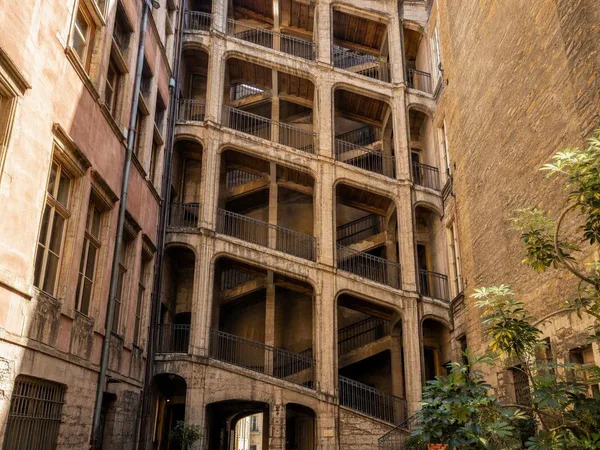
The Cour des Voraces opens off the lower slopes of Croix-Rousse. Its monumental stone staircase climbs through a building completed in 1840, where a canut workshop once stood at street level; the courtyard also recalls the Devoir mutuel, a mutual-aid society of Lyon silk workers.
More than 160 traboules cut through these slopes. Canuts used the covered passages to carry silk on their backs towards the merchants below, linking the workshops on the hill with the trading quarter around Terreaux. A route through a courtyard could save a long turn down the street. That practical shortcut still explains why Croix-Rousse feels built in layers: doorways, staircases and passages sit between one level of the hill and the next.
The hill that filled with workshops
At the start of the 19th century, much of the Croix-Rousse plateau was gardens, vineyards and fields, with buildings concentrated along the Grande-Rue. The revival of Lyon’s silk production changed the use of that open ground. The hill lay close to the merchants around Terreaux, and landowners laid out streets and plots for new construction.
Homes and workshops covered the plateau within a few decades. Croix-Rousse remained an independent municipality until Lyon absorbed it in 1852.
The Jacquard mechanism changed both production and the shape of the rooms. It mechanically took over the work of the tireur de lacs, who lifted warp threads, and it made patterned weaving easier to organise. Cards controlled part of that process.
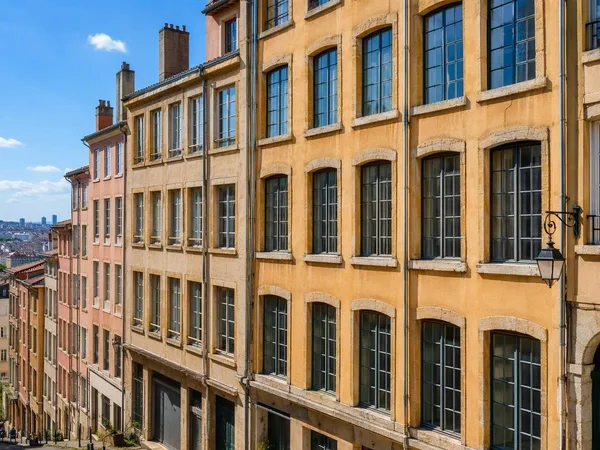
Builders answered with the immeuble-atelier, a plain stone building designed for living and weaving. Tall, regular windows gave daylight to looms placed by the façade, while a sleeping platform could sit above the domestic part of the room. Broad entrances allowed looms and mechanisms to pass inside. The repeated high windows on the hill are not a later fondness for lofts. They belong to a building type sized around a loom.
Lyon’s Fabrique was not one giant mill. Merchants distributed orders among many small workshops, and canuts, both workshop heads and their employees, depended on the prices and commissions those merchants set. In October 1831, a negotiated tariff agreement was not implemented. Workshop heads called a general strike and an uprising followed; another strike and revolt came in 1834. The canut story holds skilled work and household production, but also hard bargaining and collective resistance.
A family workshop on montée Justin-Godart
Soierie Vivante’s Atelier municipal de tissage stands at 12 bis montée Justin-Godart, in a preserved late-19th-century home and workplace used by the Rochard, Ressicaud and Fighiera families. This is Croix-Rousse at its most legible scale. The room keeps household life and the trade in the same frame.
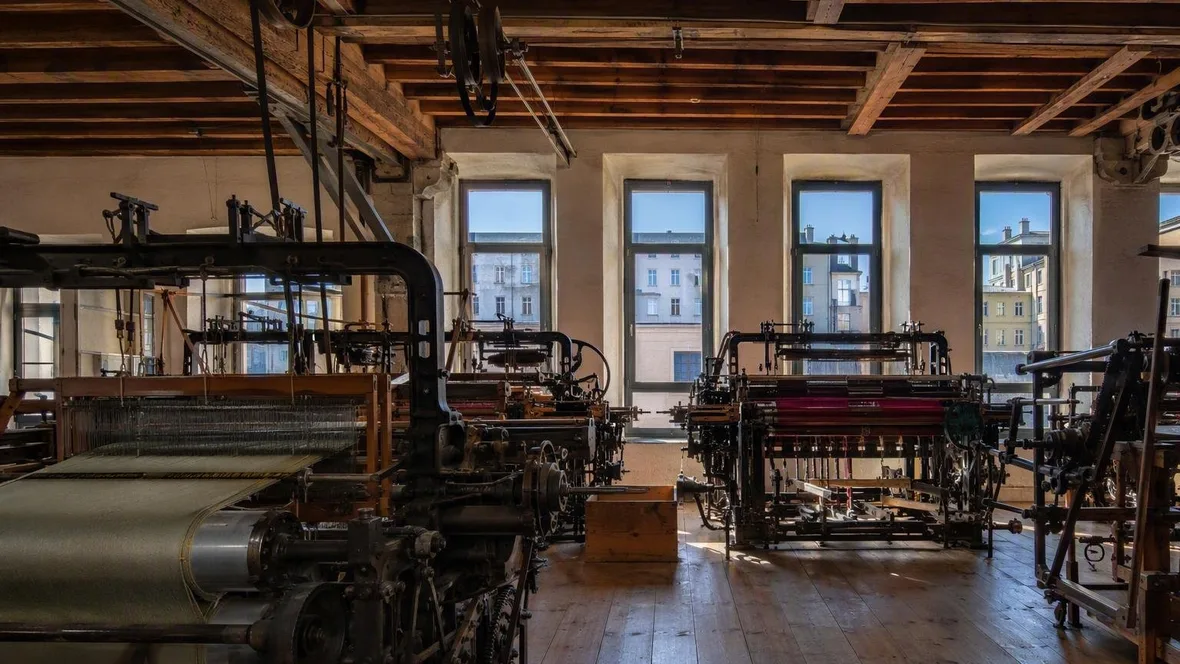
Five large windows light a ceiling more than 4.20 metres high. Closely spaced oak beams carried the weight of four looms. A kitchen, a small sleeping mezzanine, weaving equipment and an electric bobbin-winding machine remain in place. The layout records a blunt fact of the canuts’ working world: cooking, sleep and production occupied the same room.
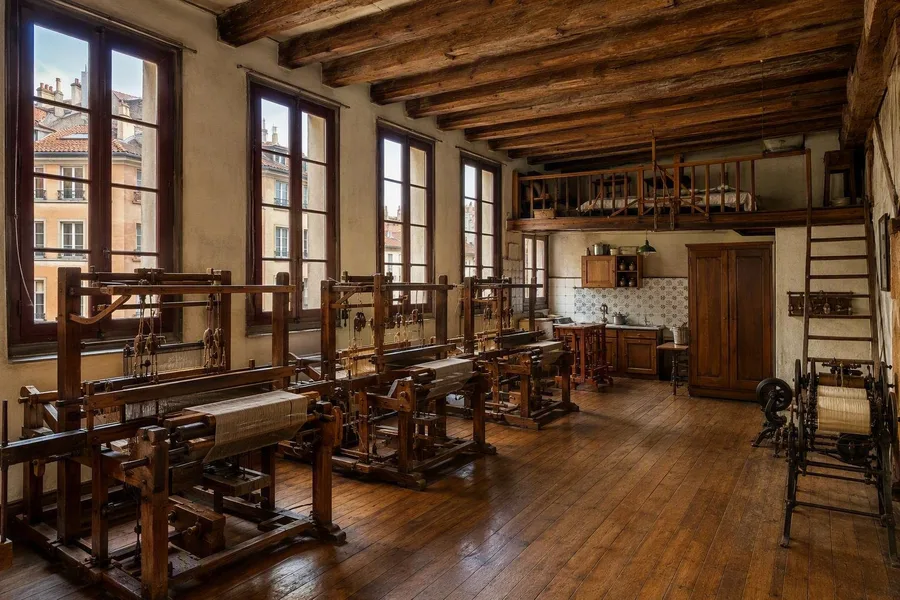 Four looms stand beneath five windows in Soierie Vivante’s preserved Croix-Rousse workshop.
Around the turn of the 20th century, a family lived and worked here. From 1926, the premises served only as a production workshop. The Fighiera business made dress fabrics, crêpe de chine and lamé cloth in gold and silver tones.
The workshop holds a 19th-century handloom with a Jacquard mechanism as well as electrically powered mechanical looms. The mechanical looms continued to make fabric until 1990; Soierie Vivante now operates them in demonstrations that explain weaving. The Jacquard mechanism separates selected warp threads, allowing the shuttle carrying the weft to pass through. Here, the documented word bistanclaque-pan names the sound of a handloom at work.
This is not a reconstructed canut room. Its high windows, heavy beams and surviving equipment show why the architecture took this form, while the running looms show the work that filled it.
Keeping the looms in use
After 1983, the Fighiera business risked being broken up and its looms faced sale as scrap metal. Soierie Vivante rented the workshop in 2001, preserved the interior and opened it to visitors. Lyon bought the workshop in 2013 and entrusted its public presentation to the association.
Soierie Vivante now preserves machines, documents, techniques and knowledge connected with the canut trade. School visits use working looms and Jacquard material. Children and adults also work on small looms, mainly at the association’s nearby passementerie workshop on rue Richan. In 2026, the association launched a fundraising campaign to return a loom for woven images to working order.
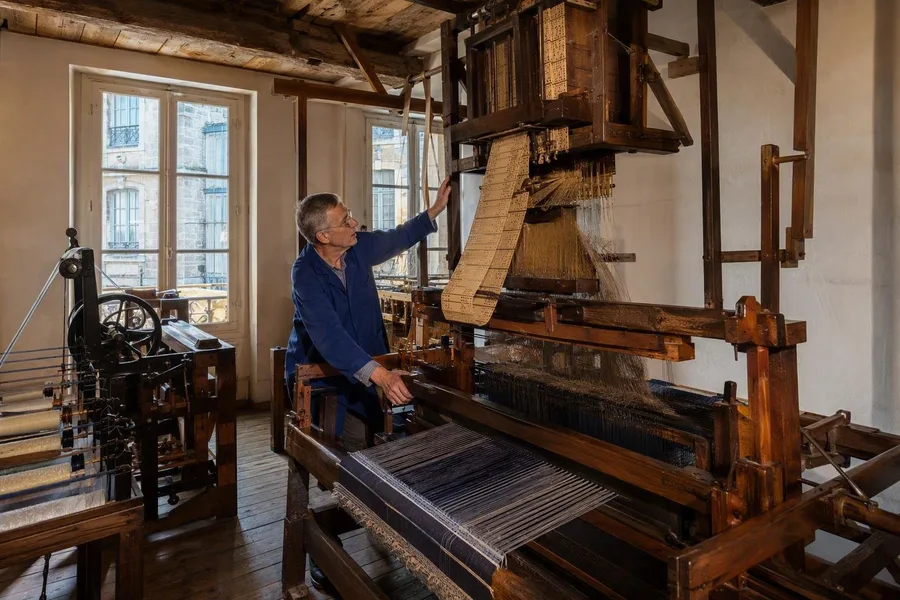 A guide operates a Jacquard handloom at Soierie Vivante’s workshop on montée Justin-Godart.
That work matters because the workshop does not pretend that weaving ended when the last commercial production stopped. The association uses the saved machinery to demonstrate the process and pass on its materials and methods.
Practical details: Individual visitors can join a guided visit of the municipal weaving workshop without booking from Tuesday to Saturday at 3pm and 5pm, except public holidays. Visits last about 40 minutes; groups book ahead.
The last rise to the plateau
Outside the workshop, former silk buildings serve an ordinary city life. Most former ateliers are now homes, though their broad windows and high rooms still show what they once held. Shops, cafés, artists and young makers occupy parts of the slopes, and Passage Thiaffait houses designers.
The silk heritage survives here through more than façades. Soierie Vivante runs its looms and teaches with them, while residents and businesses use houses and passages shaped by the older trade.
The montée Justin-Godart leads up to the plateau. Above the last stretch of slope, sober stone façades stand in rows, their tall, even windows marking rooms built high enough for the looms that once filled them.
Keep exploring