
Neighbourhood · Argentina
Caballito
Caballito is the central Buenos Aires neighbourhood that occupies Comuna 6. Its everyday streets combine Rivadavia Avenue’s commercial spine with parks, a historic market and a working heritage tramway.
Orientation
Caballito sits near the geographical centre of Buenos Aires. It is a proper neighbourhood rather than a sightseeing precinct: come for its public spaces, local institutions and transport history, then explore on foot.
Its boundaries run along Río de Janeiro, Rivadavia, La Plata, Directorio, Curapaligüe, Donato Álvarez, Juan B. Justo, San Martín, Gaona and Ángel Gallardo. Avenida Rivadavia is the main east–west axis; the Acoyte area and Plaza Primera Junta make practical starting points.
Start at Primera Junta
Plaza Primera Junta is the historical core. The neighbourhood takes its name from the horse-shaped weather vane that marked an early 19th-century pulpería at the corner of today’s Rivadavia and Emilio Mitre. Look for the replica vane in the plaza, installed on a flagpole in 1969.
Across from the square, Mercado del Progreso has operated since 1889. It remains a food market rather than a museum piece, with street-facing shops and indoor stalls. Use it to see a working neighbourhood institution before continuing along Rivadavia.
Parks and collections
Two major green spaces structure a walk through Caballito.
- Parque Rivadavia: opened in 1928 on the former Lezica estate. Its six hectares contain mature trees, an artificial lake, amphitheatre, sculpture and the surviving estate waterwheel, now used as a fountain. The daily used-book, magazine and record fair is a defining feature.
- Parque Centenario: a large public park at the northern side of the neighbourhood, paired with the Bernardino Rivadavia Natural Sciences Museum and the city’s astronomy association.
For sculpture rather than specimens, the Luis Perlotti Sculpture Museum occupies the artist’s former home and workshop in Caballito.
Ride the historic tram
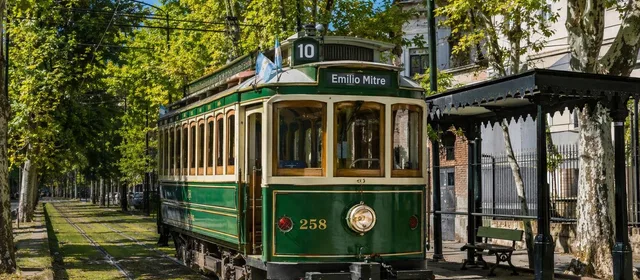
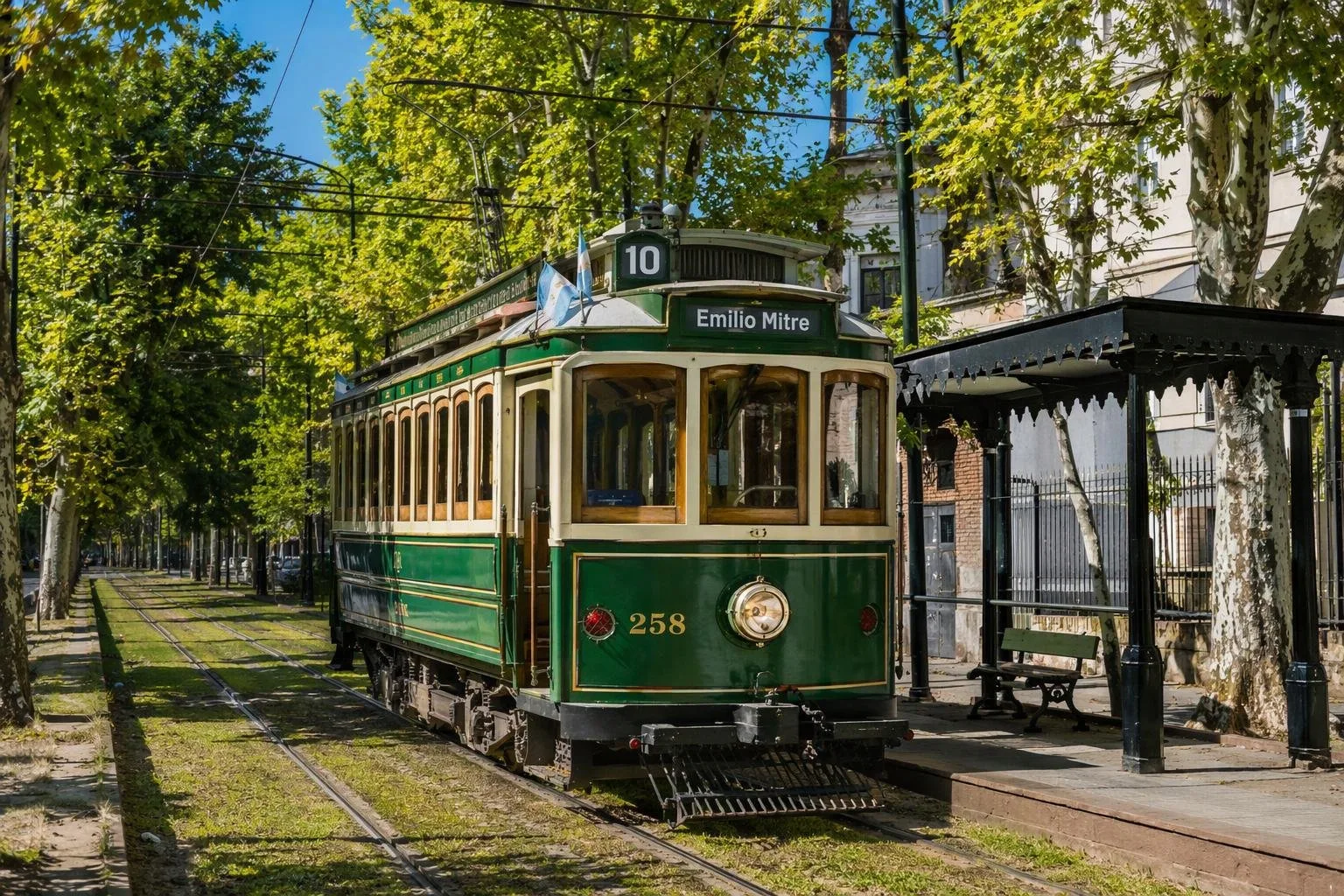
The Tranvía Histórico de Caballito uses restored original vehicles on a short circuit from Emilio Mitre 500. The route lasts about 20 minutes and preserves the form of transport that shaped the neighbourhood before Buenos Aires trams ceased operating in 1963. The service is free, generally runs on weekends and public holidays, and is suspended in rain.
Near the tram terminus, the low-rise Barrio Inglés is worth a short detour for its protected early-20th-century houses.
Getting around
Caballito is well suited to linking stops on foot. Subte Line A serves Río de Janeiro, Acoyte, Primera Junta and Puán; Avenida Rivadavia also concentrates bus connections. Caballito station on the Sarmiento rail line is close to Primera Junta.
Allow separate time for the parks and museum rather than treating the neighbourhood as a quick stop between central-city sights.
From the magazine
Stories about Caballito
Editorial stories linked directly to Caballito.
No stories about Caballito have been published yet.
Routes from our editors
Travel through Caballito
Editorial routes connecting Caballito with other countries, cities and hotspots.
No routes through Caballito have been published yet.
More in Argentina
Related hotspots
Other cities, nature areas and places within Argentina.
Buenos Aires
5 linked stories and routes
Mendoza
1 linked stories and routes
Iguazú Falls
1 linked stories and routes

Paraná Delta
1 linked stories and routes
El Doradillo
1 linked stories and routes
Abasto
1 linked stories and routes
La Boca
1 linked stories and routes
San Telmo
1 linked stories and routes
Paseo del Filete, Abasto
1 linked stories and routes