Sight · Argentina
Iguazú Falls
Iguazú Falls is a vast system of cascades on the Iguazú River, straddling Misiones in northeastern Argentina and Paraná in Brazil. The Argentine side, reached from Puerto Iguazú, puts you on walkways among the falls.
The falls at a glance
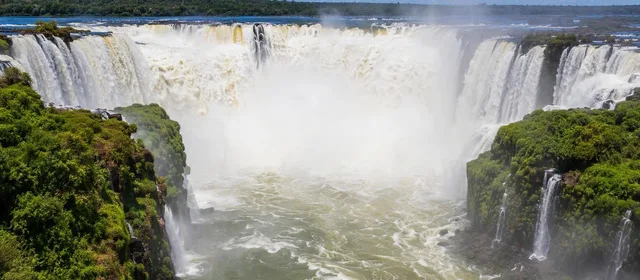
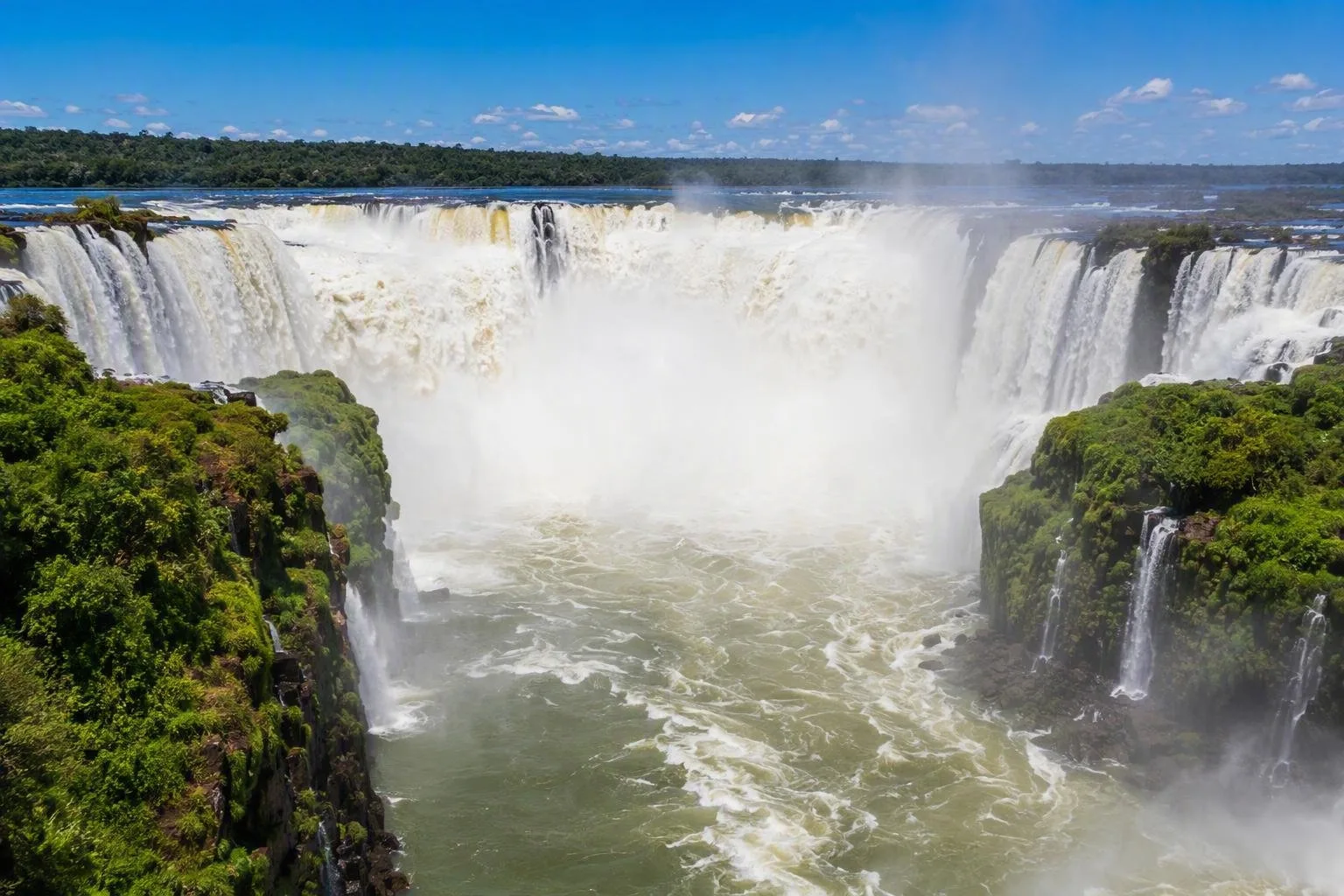
Iguazú Falls spreads across roughly 2.7 km of the Argentina–Brazil border. The river breaks over a basalt escarpment in a broad horseshoe of cataracts, with drops reaching about 80 metres. The surrounding subtropical Atlantic Forest is part of the experience: spray keeps the river islands and forest margins intensely humid.
The central feature is Garganta del Diablo (Devil’s Throat), where a major share of the river funnels into a deep gorge. It is the most forceful close-up view on the Argentine side.
Use the Argentine side well
Enter through Iguazú National Park, about 18 km from Puerto Iguazú. Its visitor infrastructure is arranged around three principal routes:
- Garganta del Diablo: take the ecological train and continue on the footbridge to the main viewing platform. Expect heavy spray.
- Upper Circuit: elevated walkways look down over the lips of individual falls.
- Lower Circuit: a more varied, lower-level route with frontal views of cascades and wetter conditions.
Allow a full day if you intend to walk all three rather than treating the park as a quick stop. Trail and train operations can change when river conditions are high, so choose your route after checking the day’s park information.
Add the Brazilian perspective
The falls are one destination but two separate national-park visits. Brazil’s Iguaçu National Park, accessed from Foz do Iguaçu, gives the broad, face-on panorama of the Argentine cascades. Its main Falls Trail is about 1.5 km and ends at a walkway facing Devil’s Throat.
Do not assume one park ticket covers the other. Crossing from Argentina to Brazil means passing immigration in both directions; carry the travel documents and any visa required for your nationality. Visiting each side on separate days is the efficient arrangement.
Timing, weather and essentials
This is humid subtropical forest, with rain possible throughout the year. Summer brings hotter, more humid conditions and typically higher water; cooler months make the walking easier. Early arrival gives the longest window for the Argentine circuits.
Wear shoes that cope with wet decking and steps, protect cameras and phones from spray, and carry water. Keep food secured and do not feed coatis or other wildlife around the visitor areas. The animals are wild, even when they approach closely.
Getting there
Puerto Iguazú is the practical Argentine base. The park lies southeast of town; road transfers and public transport connect the two. Iguazú Falls International Airport (IGR) is closer to the park than to central Puerto Iguazú, making it useful for direct arrivals.
The destination is not a single overlook. Plan transport around the park entrance, then use the internal train and signed circuits to move through the Argentine falls system.
From the magazine
Stories about Iguazú Falls
Editorial stories linked directly to Iguazú Falls.
Routes from our editors
Travel through Iguazú Falls
Editorial routes connecting Iguazú Falls with other countries, cities and hotspots.
No routes through Iguazú Falls have been published yet.
More in Argentina
Related hotspots
Other cities, nature areas and places within Argentina.