City · Argentina
Buenos Aires
Argentina’s federal capital sits on the Río de la Plata, combining a monumental historic centre with distinct neighbourhoods for tango, museums, parks, football and late dining.
Start with the city centre
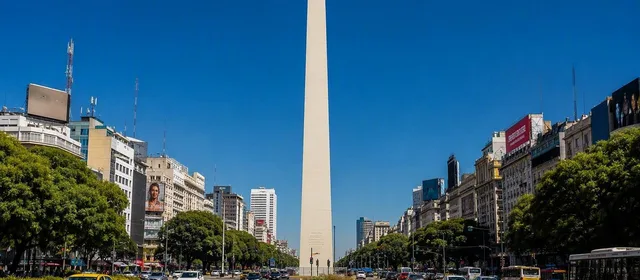
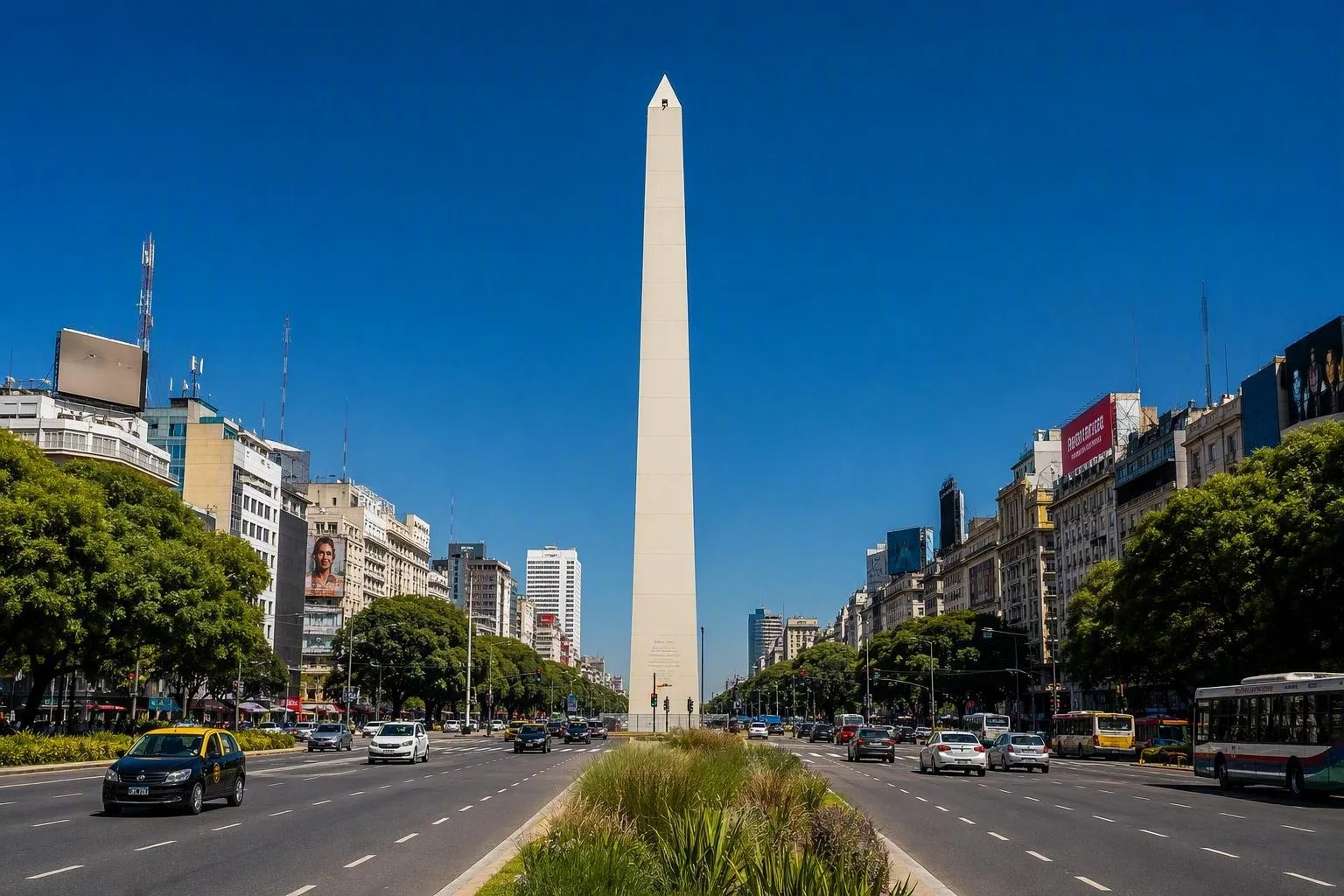
Buenos Aires is best understood by its barrios, not by a single downtown. Begin in Monserrat and San Nicolás, the political, financial and theatrical core. Plaza de Mayo, Casa Rosada and the Cabildo form the historic cluster; Avenida de Mayo runs west towards Congress. Nearby, the Obelisk stands on Avenida 9 de Julio, while Teatro Colón is the major opera landmark.
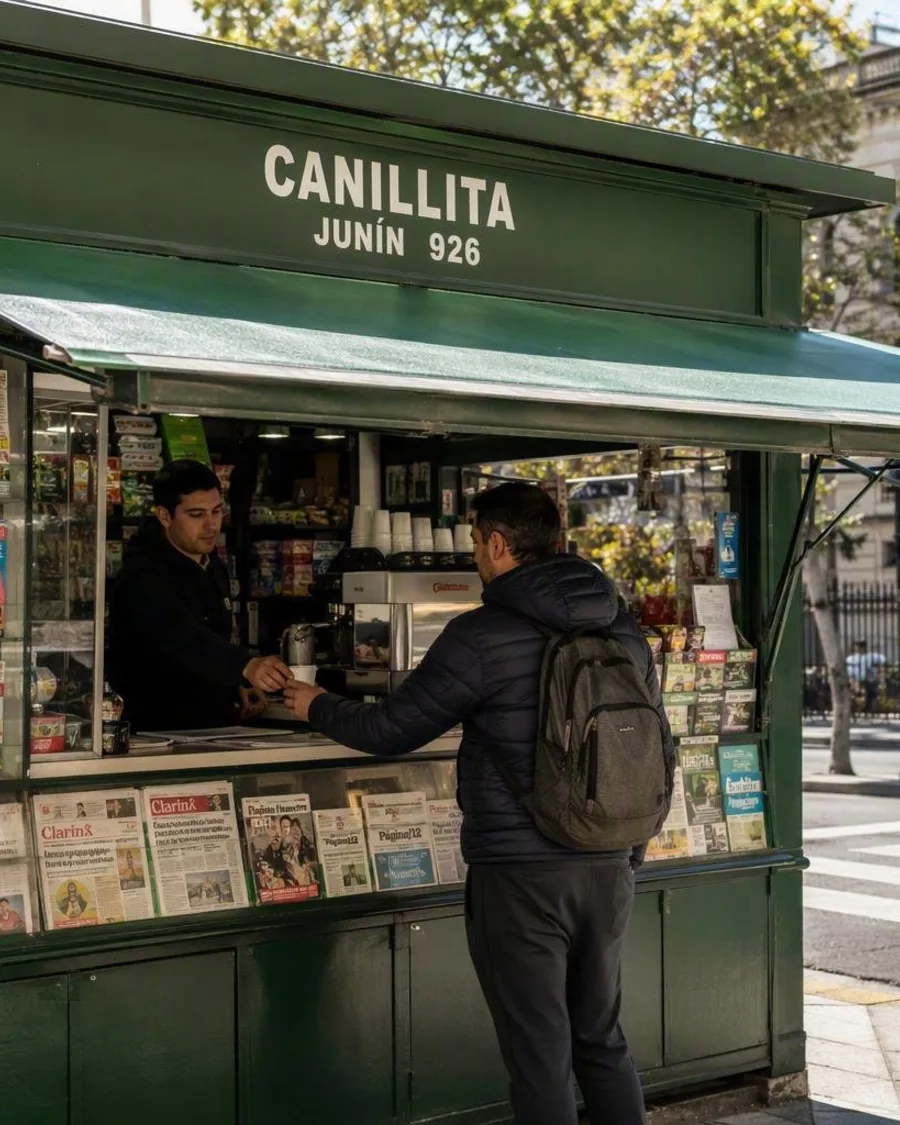
Avenida Corrientes is the after-dark axis for theatres, pizza and bookshops. Notice the small kioscos de diarios along major streets: newspaper kiosks remain part of the pavement scene, though many now also serve coffee, snacks and everyday essentials.
Choose neighbourhoods by character
Do not try to cross the entire city for every sight. Give each area its own block of time.
- San Telmo: cobbled streets, antiques, old cafés and Plaza Dorrego. Sunday brings the district’s street fair.
- La Boca: visit Caminito’s painted corrugated-metal houses and La Bombonera, Boca Juniors’ stadium. Keep the visit to the tourist area and daylight hours.
- Recoleta: mausoleums at Recoleta Cemetery, the Museo Nacional de Bellas Artes and formal avenues.
- Palermo: the city’s largest barrio, with the parks of Tres de Febrero, the rose garden, museums, shops and dining districts.
- Puerto Madero: regenerated docklands, converted warehouses and the Puente de la Mujer footbridge beside the Río de la Plata.
Build a practical day
Pair close areas rather than zigzagging. The centre, Puerto Madero and San Telmo make a logical southern route; Recoleta and Palermo work well together. La Boca is best treated as a focused daytime stop, rather than a link in a long walk.
For an introduction, use a central morning for Plaza de Mayo, the Obelisk and Teatro Colón; take the afternoon in one neighbourhood; reserve the evening for a café, theatre, parrilla or tango venue. Dining and nightlife commonly start late, so avoid scheduling an early finish after dinner.
Getting around
The Subte is usually the fastest way across the central avenues. Its six lines connect downtown with major stations and corridors; buses, known as colectivos, cover the rest of the city and run around the clock. A rechargeable SUBE card is the standard fare card for buses and the Subte, and is sold at stations and many kiosks.
Walk within a barrio, then switch to public transport or a licensed black-and-yellow taxi for longer hops. State your destination with the nearest cross street; this is the usual local shorthand. The airport at Ezeiza handles most long-haul international flights and lies outside the city; Aeroparque is in Palermo and principally serves domestic and regional routes.
Timing and street sense
Warm summers and cool winters make spring and autumn comfortable for long walks, but the city operates year-round. Museums, theatres, stadiums and tango venues each keep their own schedules.
In crowded markets, transport and central streets, keep valuables secure and avoid displaying phones or cash. In La Boca, remain in the established visitor zone and do not wander the surrounding streets after dark.
From the magazine
Stories about Buenos Aires
Editorial stories linked directly to Buenos Aires.
Routes from our editors
Travel through Buenos Aires
Editorial routes connecting Buenos Aires with other countries, cities and hotspots.
No routes through Buenos Aires have been published yet.
More in Argentina
Related hotspots
Other cities, nature areas and places within Argentina.