The world’s 10 best accessible waterfalls, ranked
A great waterfall needs more than height or brute force. It needs a public route that lets people grasp its scale, whether from the bank, a platform, behind the water or across a gorge. This ranking weighs practical access alongside the force of the river and the landscape around it.
This is not a list of the world’s tallest waterfalls. Every entry has public viewpoints and a marked or built route. We rank them by three things: the scale of the water, the landscape that frames it and the range of ways a visitor can experience it. A short path counts. So does a hard climb, when it earns a very different view.
10. Rhine Falls, Switzerland
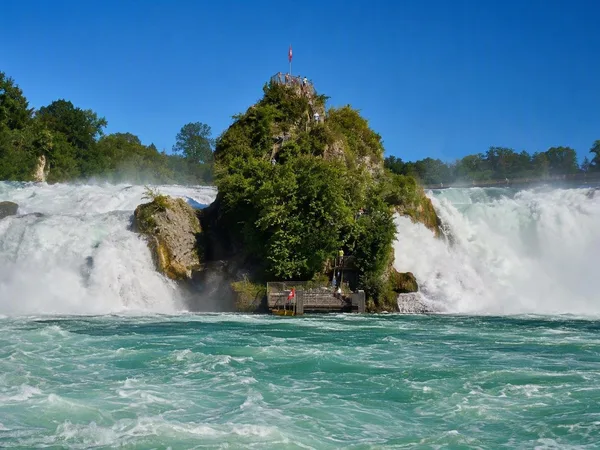
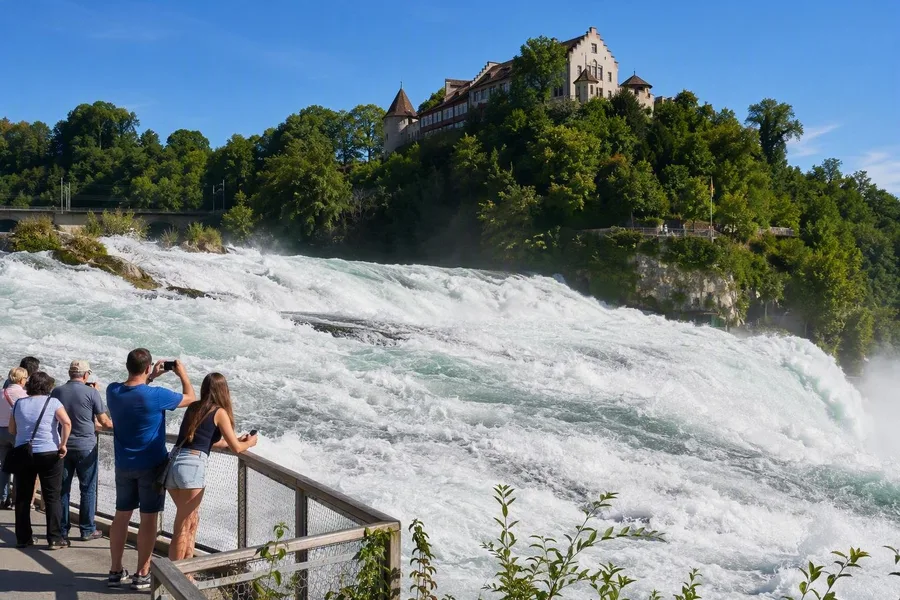 Visitors watch Rhine Falls from a lower south-bank platform beneath Schloss Laufen.
The Rhine Falls do not rely on height. The river drops about 19–23 metres over an average width of roughly 122 metres, creating a broad, dependable sheet of white water rather than a deep-cliff plunge.
Schloss Laufen stands above the south bank. A lift and step-free panoramic route reach Belvedere, while lower platforms sit close to the spray; boats cross to the central rock, where passengers climb to a viewing platform. It ranks tenth because the setting is built-up and the drop is modest, but very few major falls offer such a choice of close views.
9. Krimmler Wasserfälle, Austria
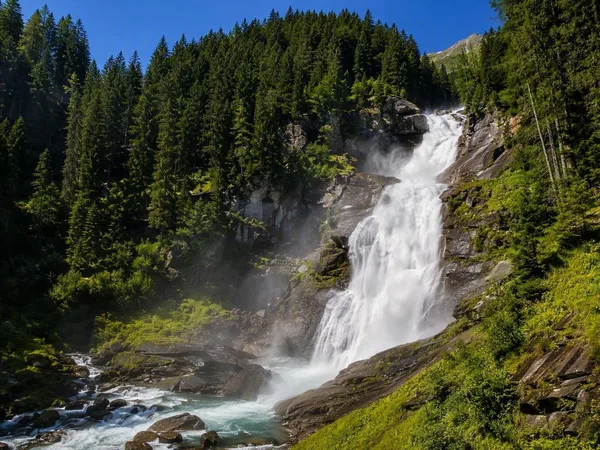
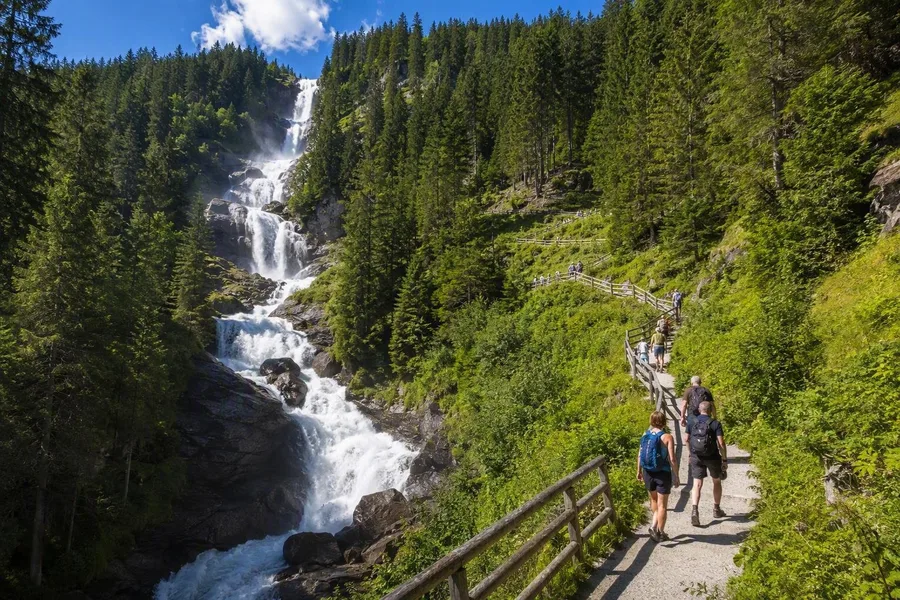 Visitors climb the hairpin path beside Krimmler Wasserfälle’s three forested stages in Austria.
Krimml spreads its drama over a mountain slope. The Krimmler Ache drops 380 metres in three stages from a high glacial valley, with wooded slopes below and the broad U-shape of the upper valley still visible.
The waterfall path climbs beside the three falls in long hairpins. The lower section gives the easiest look; the full route is a long, steep walk. Average flow is only 5.6 cubic metres per second, but June and July can carry 30 to 40 times February’s flow. Krimml earns its place through height and the changing perspective of the climb, not constant mass.
8. Seljalandsfoss, Iceland
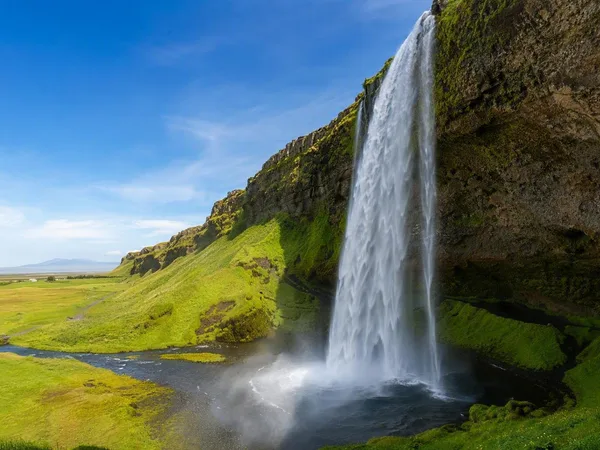
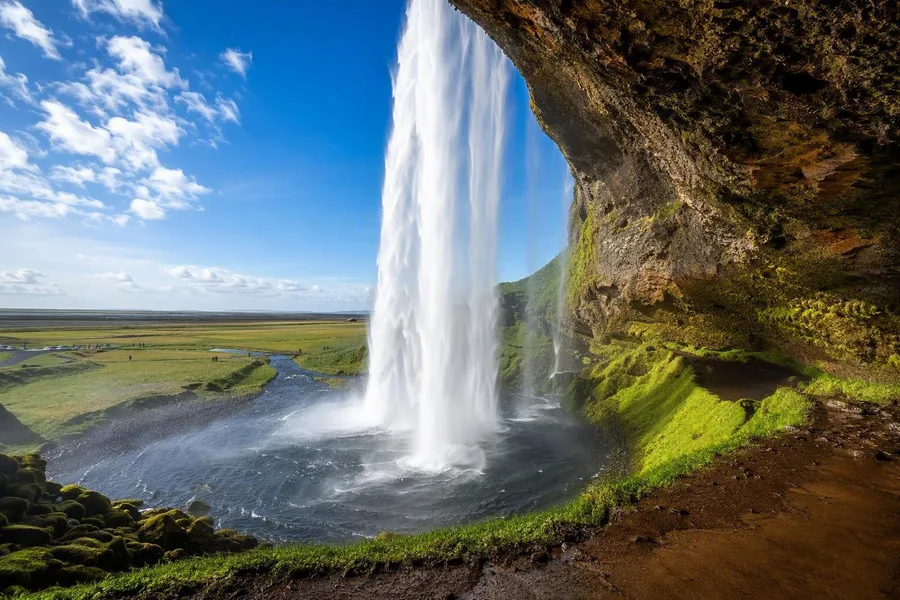 Seljalandsfoss seen from the wet path behind its falling water curtain in Iceland.
Seljalandsfoss drops about 60 metres from an old sea cliff onto Iceland’s southern lowland. Lava tops layers of palagonite tuff and breccia, left exposed after the coastline shifted following the last ice age.
A short, level approach reaches the frontal view. Its real advantage is the wet path behind the falling curtain, where the hollow in the cliff turns a roadside stop into a full circuit around the water. Ice can close that path in winter. The stream is narrow, but no other fall on this list changes the viewpoint so completely with so little walking.
7. Gullfoss, Iceland
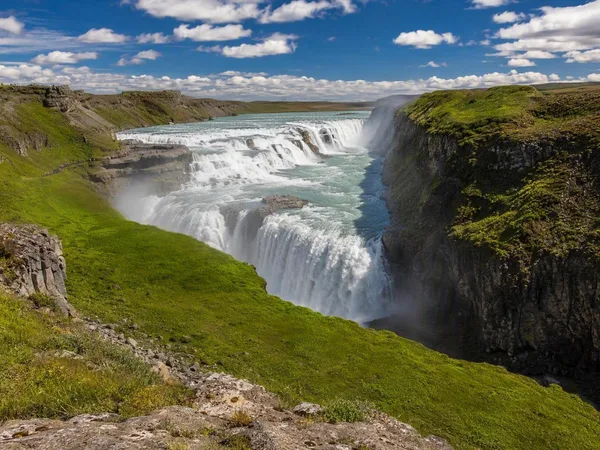
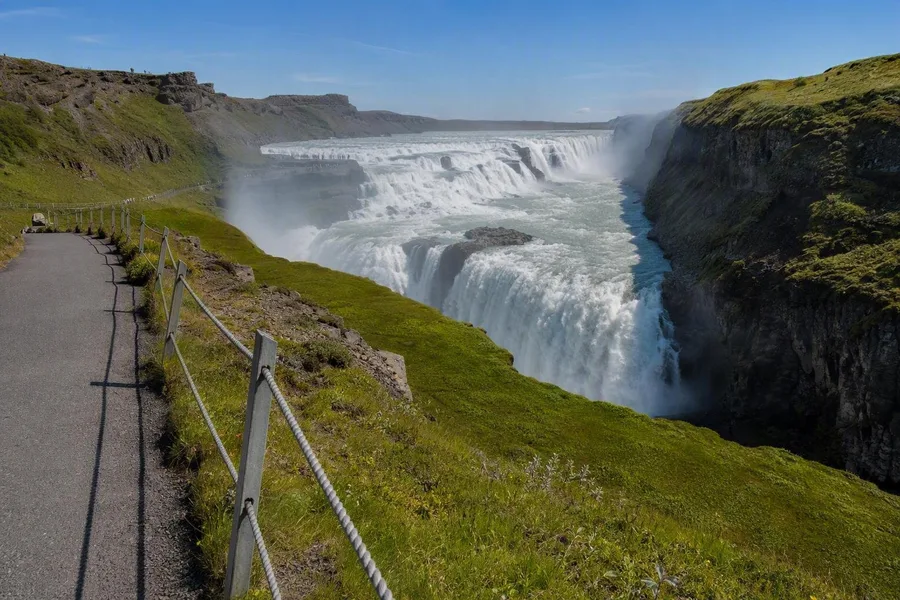 Gullfoss’s upper route overlooks the Hvítá’s two drops and narrow gorge.
The glacial Hvítá falls 11 metres, turns, then drops another 21 metres into a narrow gorge. Dark dolerite caps softer sediment in the walls; the river strips away the weaker material and gradually deepens the cleft.
A paved upper route shows both drops and the gorge in one view. A lower path reaches the spray, although its stairs can close in icy weather. Summer flow averages around 140 cubic metres per second, while winter flow stays around 80–109 cubic metres per second. That weight of water puts Gullfoss ahead of the smaller Icelandic fall.
6. Plitvice Lakes, Croatia
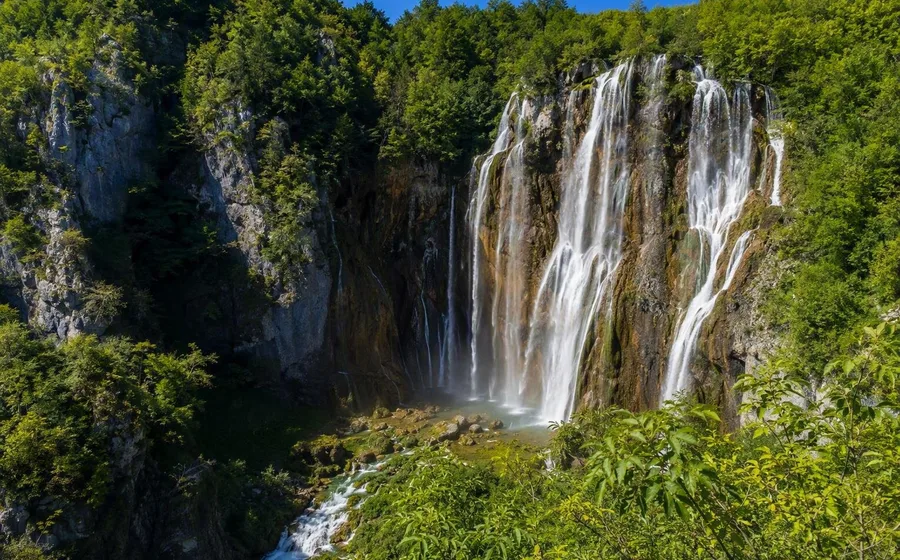
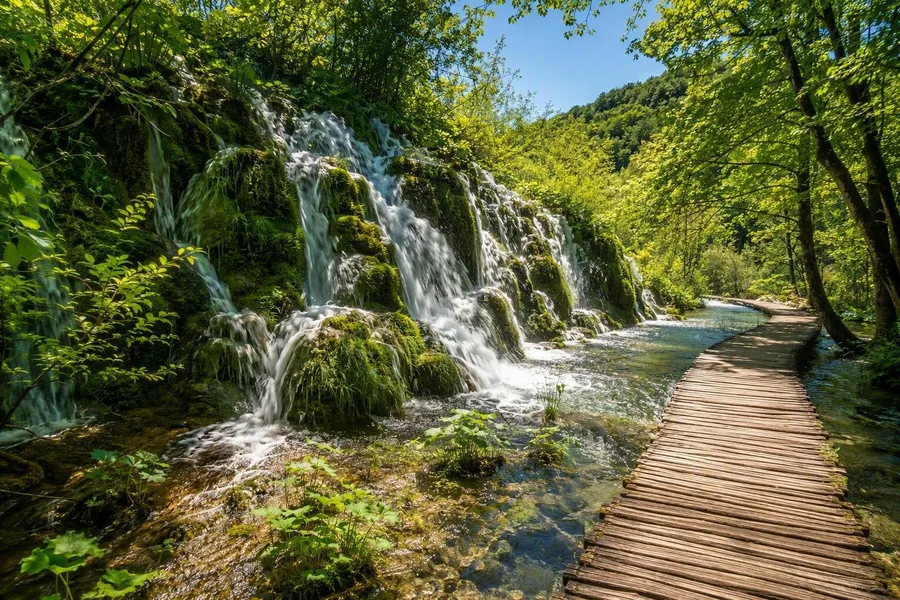 A wooden boardwalk follows cascades over tufa barriers at Plitvice Lakes National Park.
Plitvice is a water landscape, not one single great fall. Sixteen named lakes descend through the park behind pale, porous tufa barriers. Calcium carbonate settles on mosses, algae and bacterial films, slowly building dams that hold back pools and release water in cascades.
The upper lakes lie in gentler dolomite country. The lower lakes cut through a steeper limestone gorge. Boardwalks, marked routes, an electric boat across Kozjak and panoramic vehicles connect the system. Plitvice takes sixth because water keeps changing shape: lake, barrier, fall, forest, then another lake.
5. Yosemite Falls, United States
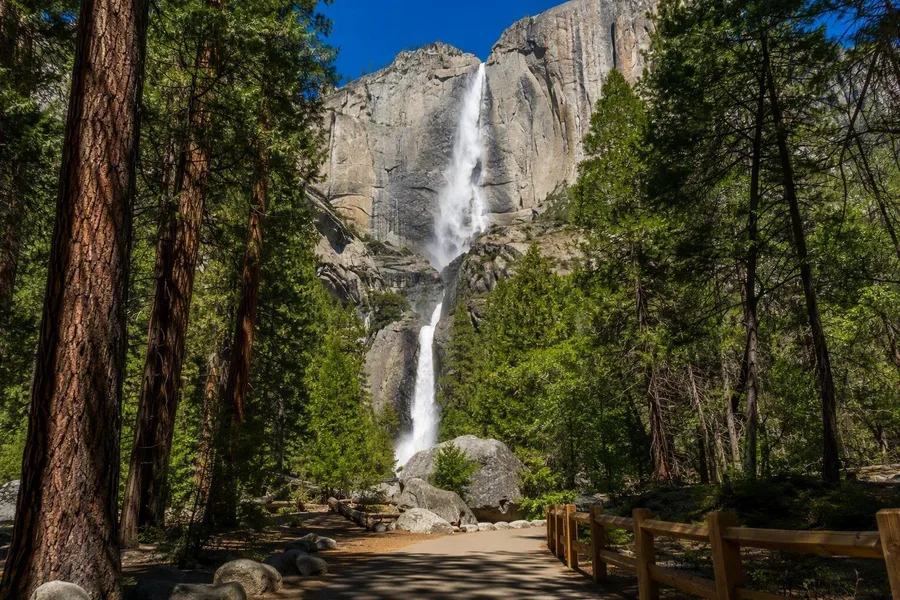 Yosemite Falls descends a granite wall above Yosemite Valley near the Lower Yosemite Fall loop.
Yosemite Falls drops 740 metres in three main sections down a granite wall above Yosemite Valley. Glaciers carved the valley’s broad U-shape, and a moraine later diverted Yosemite Creek towards the cliff.
The short Lower Yosemite Fall loop brings the base within easy reach. The paved route is partly wheelchair accessible and connects with the free Valley Shuttle. Snowmelt drives the falls in spring and early summer, but flow often dwindles or stops by late July or August. Its height is extraordinary; its seasonal rhythm keeps it out of the top four.
4. Niagara Falls, Canada and the United States
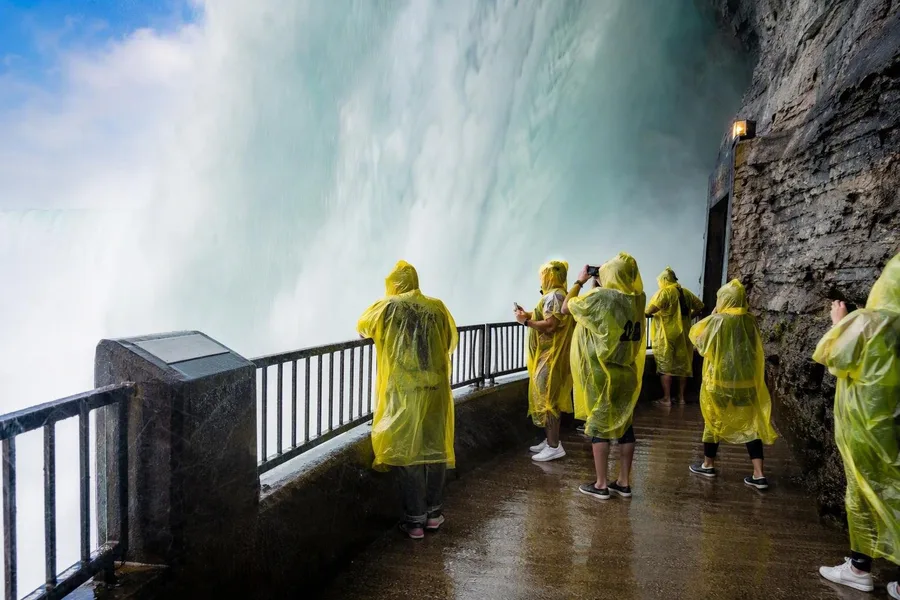 Visitors stand on the low deck beside Horseshoe Falls at Journey Behind the Falls.
Niagara is three falls on the river between Lake Erie and Lake Ontario: Horseshoe, American and Bridal Veil. Horseshoe Falls alone has a 57-metre free fall and a crest around 670 metres wide; peak flow can exceed 168,000 cubic metres per minute.
Flat promenades, lifts, accessible buses and viewing areas make this the most comprehensively designed water experience in the ranking. At Journey Behind the Falls, lifts descend to old tunnels, openings behind the water and a low deck near the base. Niagara’s setting is more managed than wild, but the river’s scale remains overwhelming.
3. Dettifoss, Iceland
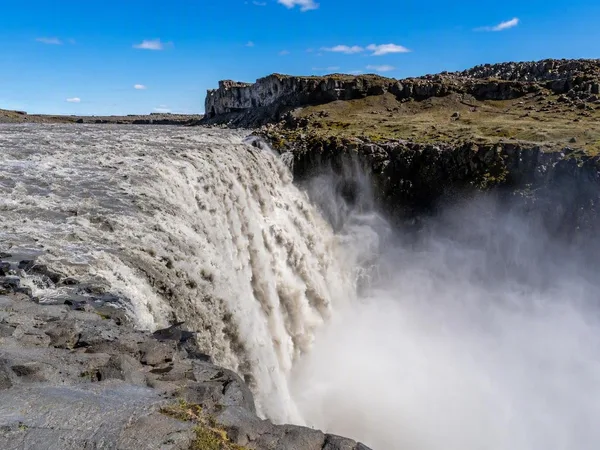
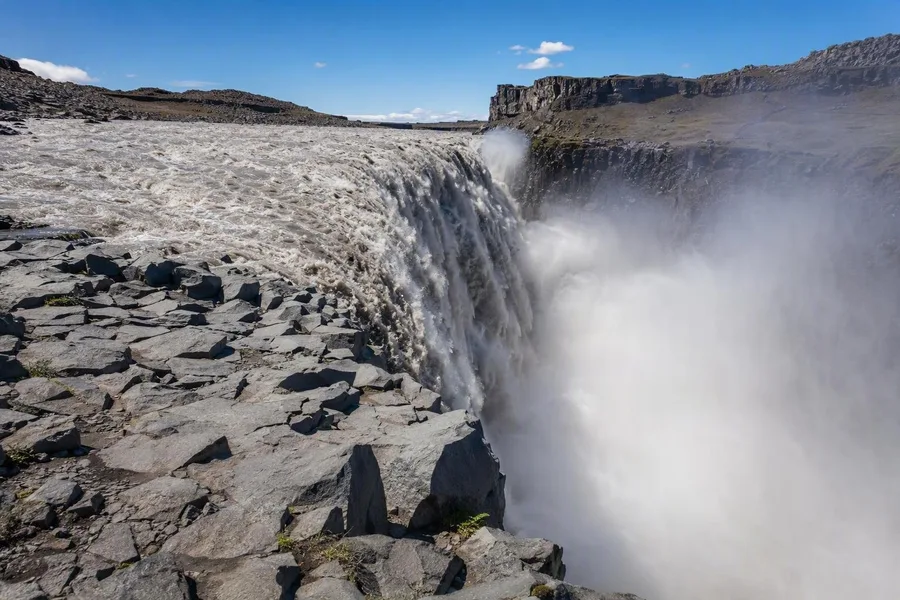 Brown-grey water plunges over Dettifoss’s basalt lip into Jökulsárgljúfur canyon.
Dettifoss keeps the built work to a minimum. A marked path from the western car park reaches the edge, but spray, wet rock and winter snow can make the final stretch demanding.
The sediment-heavy Jökulsá á Fjöllum drops 44 metres over a 100-metre basalt lip into Jökulsárgljúfur canyon. Its average flow is about 193 cubic metres per second and can rise to around 500 in spring and summer. Repeated glacial outburst floods helped cut the canyon, and the river still eats back the rim. Bare basalt and brown-grey water give Dettifoss a raw force that needs no tunnel or platform.
2. Iguazú Falls, Argentina and Brazil
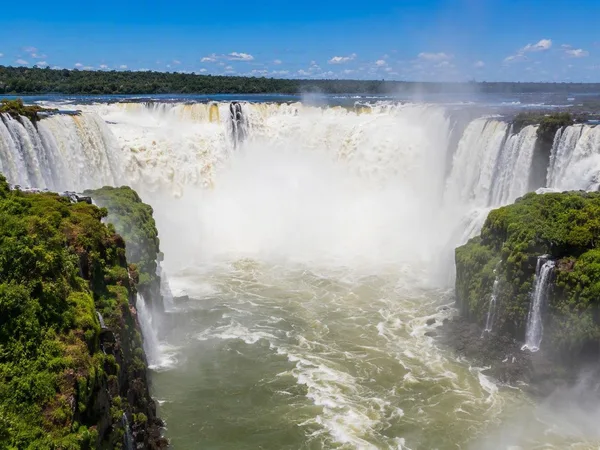
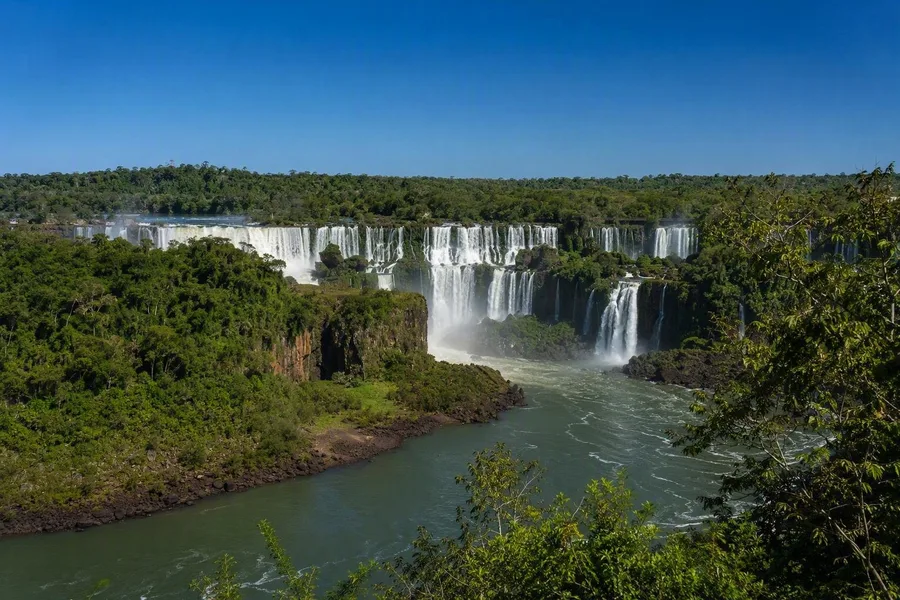 Multiple Iguazú cataracts span the river as seen from Brazil’s panoramic path.
Iguazú covers almost three kilometres of the Argentina–Brazil border in about 275 separate falls, usually 60–82 metres high. Basalt islands split the river into channels before much of the water gathers in the curved chasm of Garganta del Diablo.
Argentina uses several routes through subtropical forest, with views above, between and below individual cataracts. Brazil faces the full sweep from across the river. On the Argentine side, the Ecological Jungle Train and a step-free walkway normally reach Garganta del Diablo, though high water can close the bridge. The scale stretches across the landscape rather than sitting in one frame.
Practical notes
Rhine Falls and Niagara can be seen from public promenades; boats and close-up attractions cost extra, and Niagara boat trips run seasonally. Krimml charges for the waterfall path during the walking season. Icelandic winter weather can affect roads and close Seljalandsfoss’s walk-behind path; Dettifoss’s eastern gravel road closes in autumn and winter. Plitvice uses timed online tickets and selected entrances. Yosemite requires a park fee but no entry reservation in 2026. Argentina and Brazil sell separate Iguazú tickets, while Victoria Falls charges separately on the Zimbabwean and Zambian sides.
1. Victoria Falls, Zambia and Zimbabwe
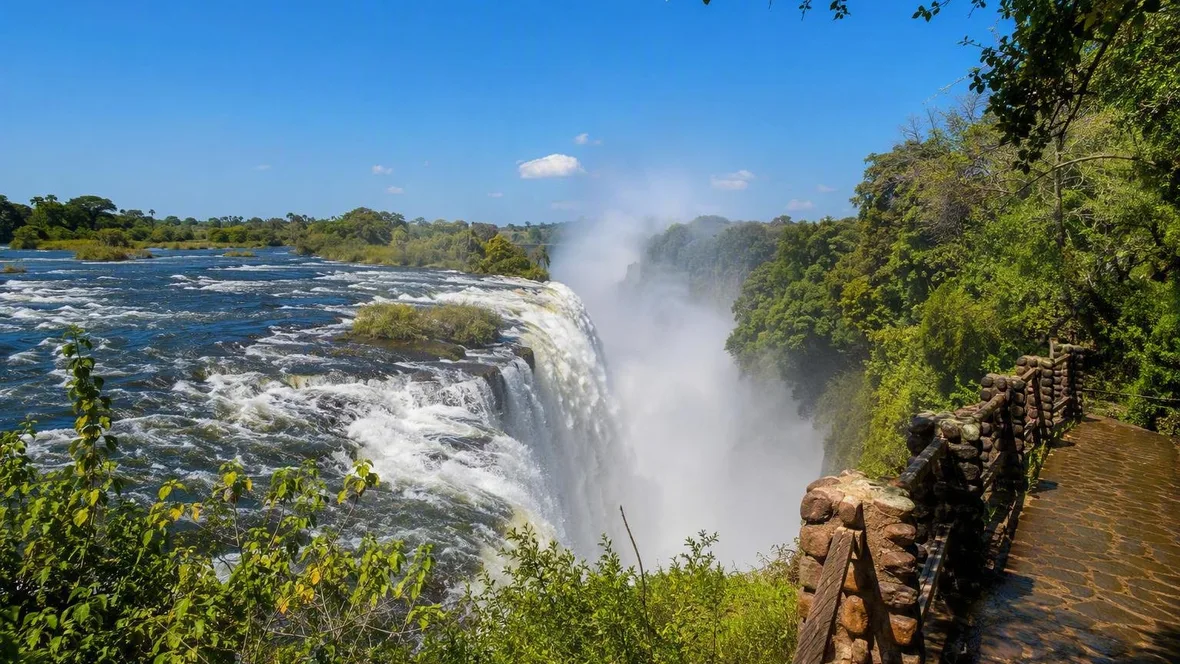
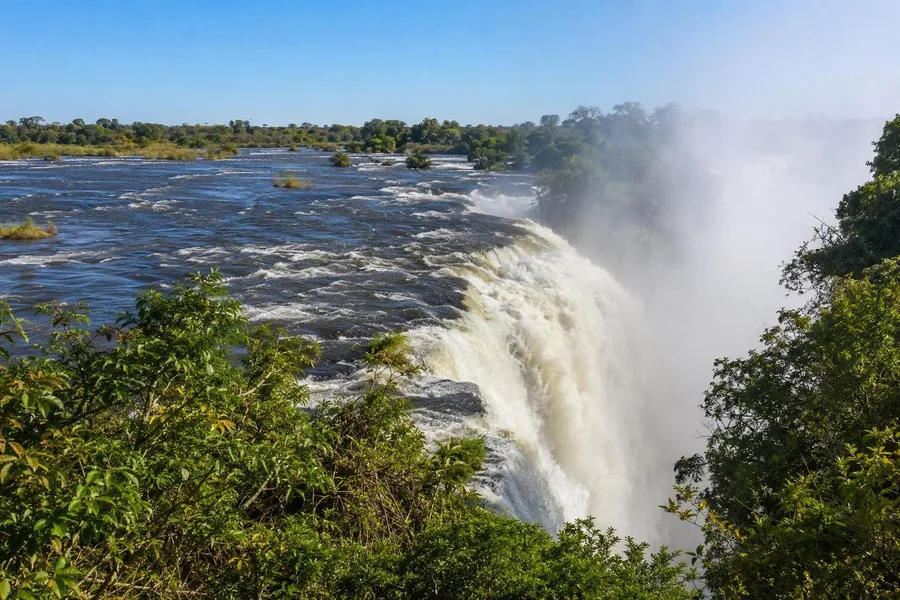 The Zambezi drops over the basalt edge at Victoria Falls, sending spray through Zimbabwe’s forest.
The Zambezi reaches a basalt edge 1,708 metres wide and drops as much as 108 metres into a chain of narrow gorges. At high flow, up to 500 million litres can fall each minute. Spray feeds a dense strip of rainforest beside the gorge, with ferns, palms, lianas and mahogany.
Zimbabwe provides sixteen connected viewpoints through that wet forest. Zambia has fewer viewpoints, but brings people closer to the rim and spray. High water forms the fullest curtain; at lower water, islands and rock ribs split the fall into distinct streams.
At the Zimbabwean gorge edge, the broad Zambezi reaches the basalt lip, drops out of sight and sends white spray back through the trees.
Keep exploring
Places in this story
Europe
10 landen en gebieden
North America
Rhine Falls
Krimml Waterfalls
Seljalandsfoss
Gullfoss
Plitvice Lakes
Plitvice Lakes is a national park in mountainous central Croatia, where 16 named lakes cascade through forest and limestone canyons. Its tufa barriers and waterfalls form a UNESCO World Heritage landscape.
Dettifoss