
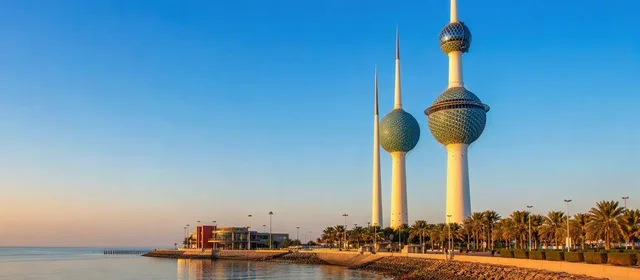
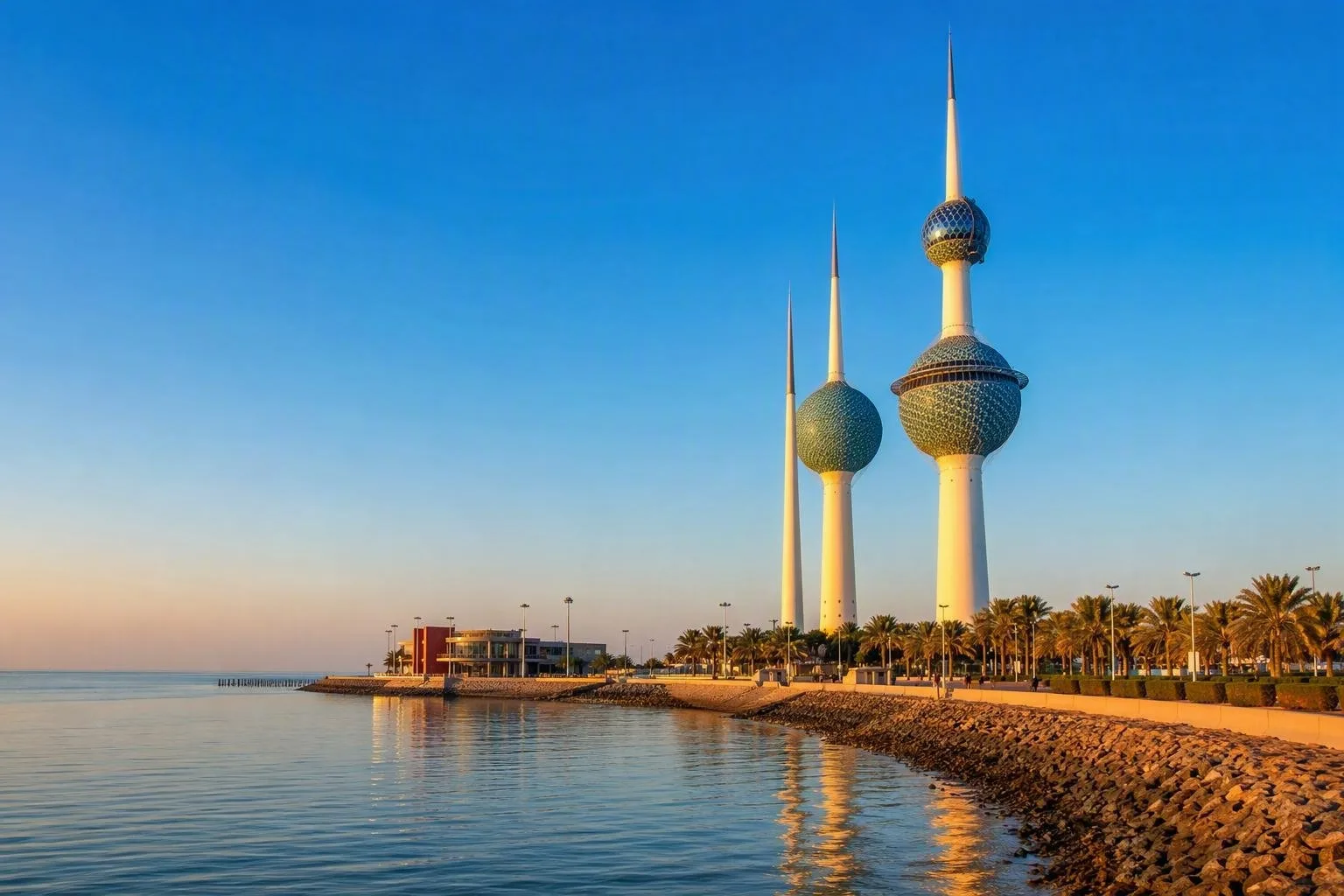
Look past Kuwait City’s glass towers and wide highways, and the older port comes into view. The Kuwait Towers stand on the Gulf waterfront, while Souq Al-Mubarakiya still fills its lanes with spices, dates, perfume and the sound of busy cafés. For generations before oil, Kuwaiti merchants, pearl divers and dhow crews crossed the Gulf and sailed to India and East Africa. Their trade brought goods, recipes and ideas back to this small coastal state.
At Sadu House, woven rugs and tent panels show the bold geometric patterns made by Bedouin women. The Grand Mosque uses carved wood, stone and Islamic decoration on a much larger scale. Restaurants around the capital serve machboos, a rice dish seasoned with spices and prepared with meat or fish; it sits naturally beside grilled seafood and Gulf sweets.
The waterfront traces a different Kuwait City, from the marinas at Salmiya to the beaches and cafés along the corniche. Boats also run to Failaka Island, where Bronze Age and Hellenistic archaeological sites stand alongside buildings marked by the Iraqi occupation of 1990–91. Drive inland and the dense city gives way quickly to gravel desert and a low, open horizon. Kuwait is not a place to rush through. Set aside time for the souq, the museums, a long meal and an evening by the Gulf, then see how the port, the desert and the oil-era city sit side by side.


