
City · Kuwait
Kuwait City
Kuwait City is Kuwait’s capital on the south shore of Kuwait Bay. Its old market, civic landmarks and Gulf waterfront show the links between a historic trading port and a modern capital.
Get oriented
Kuwait City sits on the southern edge of Kuwait Bay. The historic centre around Souq Al-Mubarakiya, the Grand Mosque and Seif Palace is compact enough to tackle in one outing; the Kuwait Towers stand farther east on the Arabian Gulf Street waterfront. The city beyond these clusters is car-oriented, so do not plan to cover it all on foot.
Start in the old centre
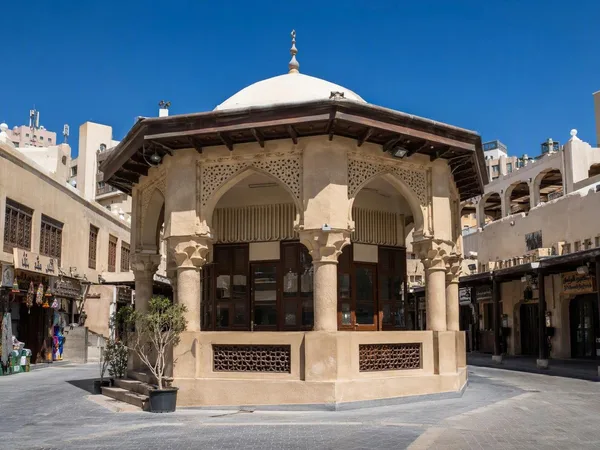
Souq Al-Mubarakiya is the practical starting point for Kuwait’s pre-oil commercial story. Its lanes bring together spice, date, perfume, textile and gold traders alongside cafés and small restaurants. Browse for loomi—dried black lime—cardamom, saffron and rice, then order machboos, the spiced rice dish commonly served with chicken, meat or fish.
The market reflects a port city shaped by fishing, pearling and trade across the Gulf and Indian Ocean. It remains a working market, not a museum. Individual shops keep their own hours; late afternoon and evening are the most useful times to combine browsing and dinner.
Waterfront landmarks
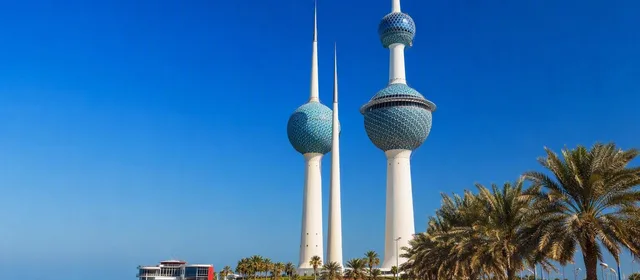
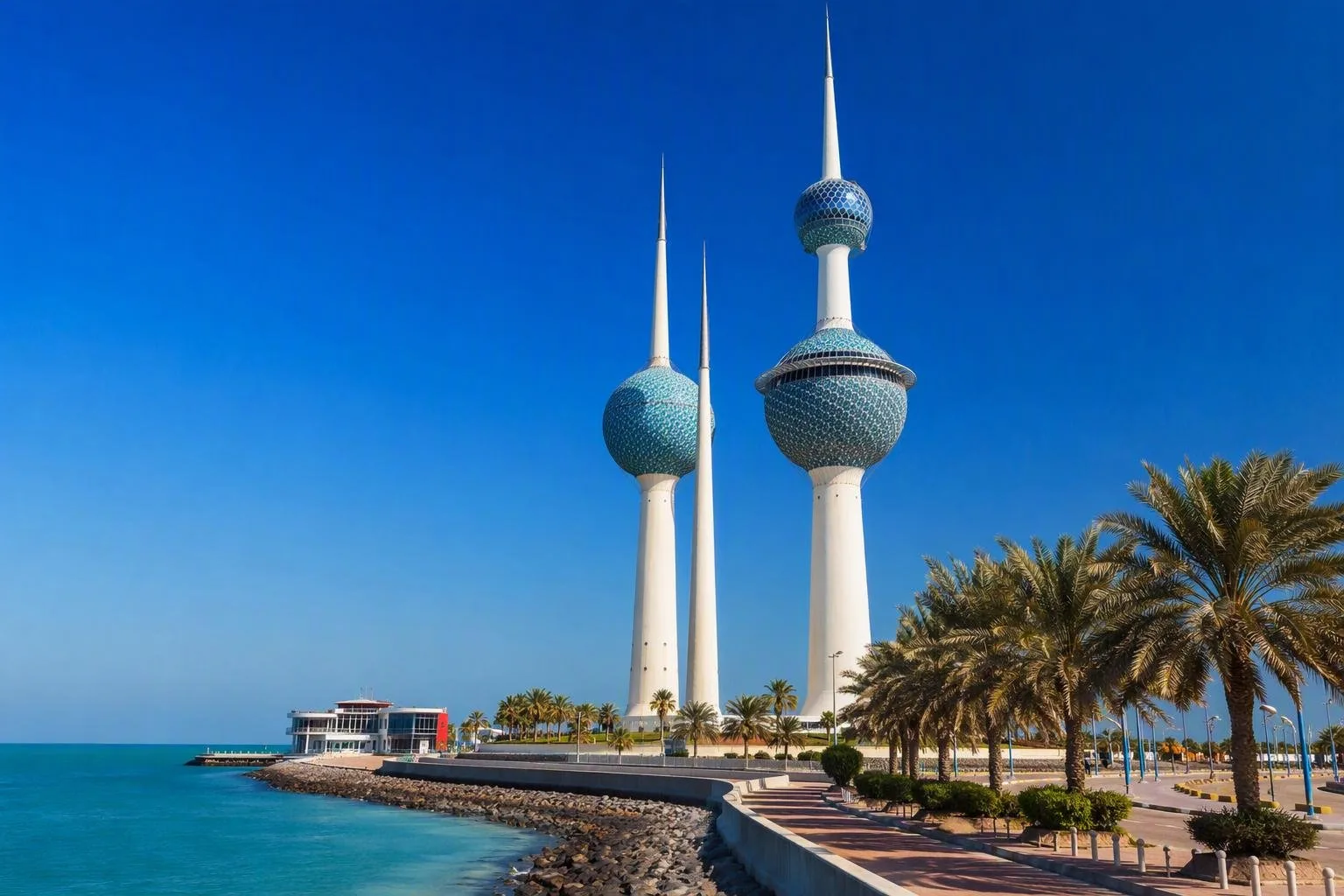
The three Kuwait Towers are the city’s defining silhouette. Opened in 1979, the tallest rises 187 metres; their spheres are both a landmark and part of Kuwait’s water-storage system. Walk the adjacent waterfront for bay views, or use the towers as a visual anchor when moving between the coast and downtown.
Near the old centre, the Grand Mosque is Kuwait’s largest mosque. Its dome and minaret are visible above the civic quarter, while Seif Palace opposite is best treated as an exterior stop: its blue-tiled clock tower is the feature to look for. Museums nearby add context on Kuwait’s maritime, pearling and Bedouin traditions.
Food with maritime roots
For a seafood-led meal, look for mutabbaq samak, fish layered with seasoned rice, or machboos made with fish. Rice, spices and dried lime point directly to the city’s former seaborne trading networks. Finish with Arabic coffee and dates, or karak tea; these are better understood as everyday café staples than as a formal tasting ritual.
Getting around and timing
Use taxis or ride-hailing for journeys between districts; buses exist but are less straightforward for short visitor itineraries. Walk within the souq and immediate civic centre, then take a car to the towers or a museum farther out.
Outdoor sightseeing is most manageable from November to March and in the early morning or after sunset. Summer heat is severe. Dress modestly in public, especially for mosque visits, and note that alcohol is prohibited in Kuwait.
From the magazine
Stories about Kuwait City
Editorial stories linked directly to Kuwait City.
No stories about Kuwait City have been published yet.
Routes from our editors
Travel through Kuwait City
Editorial routes connecting Kuwait City with other countries, cities and hotspots.
No routes through Kuwait City have been published yet.
More in Kuwait
Related hotspots
Other cities, nature areas and places within Kuwait.
Souq Al-Mubarakiya
2 linked stories and routes
Sharq Fish Market
1 linked stories and routes
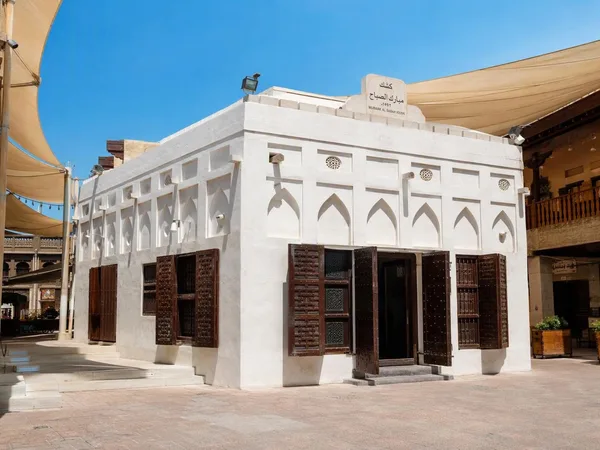
Al-Qibla, Kuwait City
1 linked stories and routes
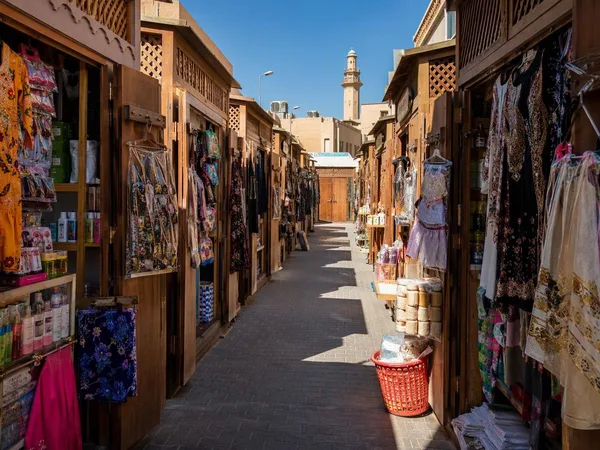
Souq Al-Hareem
1 linked stories and routes
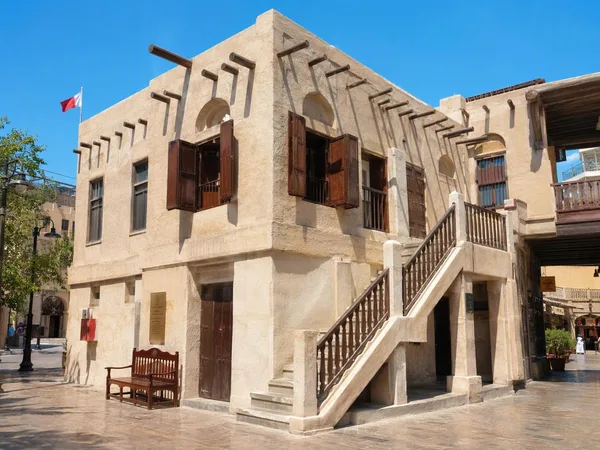
Sheikh Mubarak kiosk
1 linked stories and routes
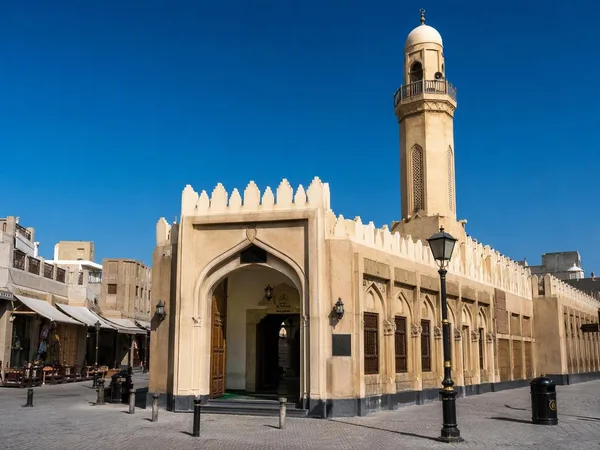
Grand Souq Mosque
1 linked stories and routes