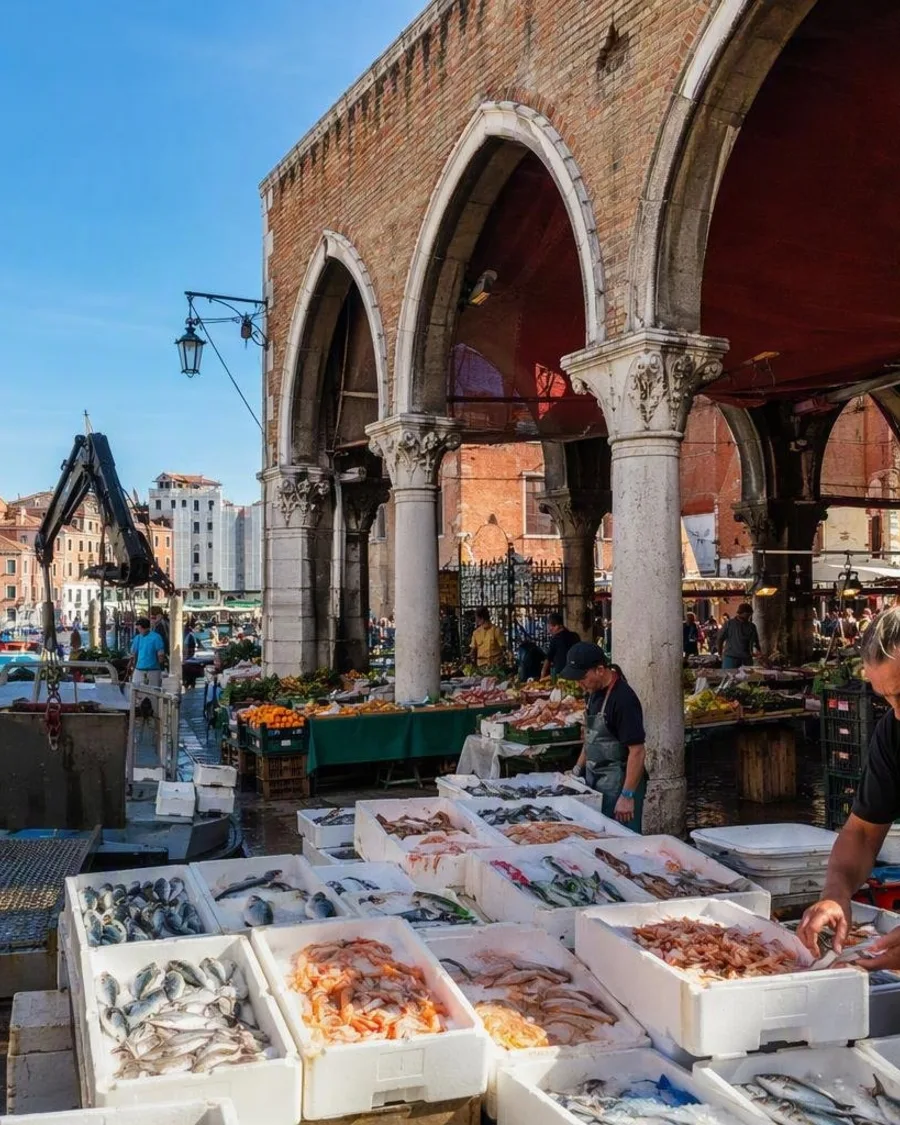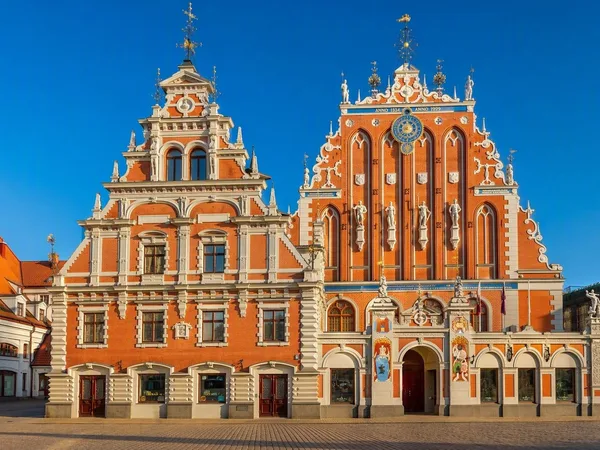
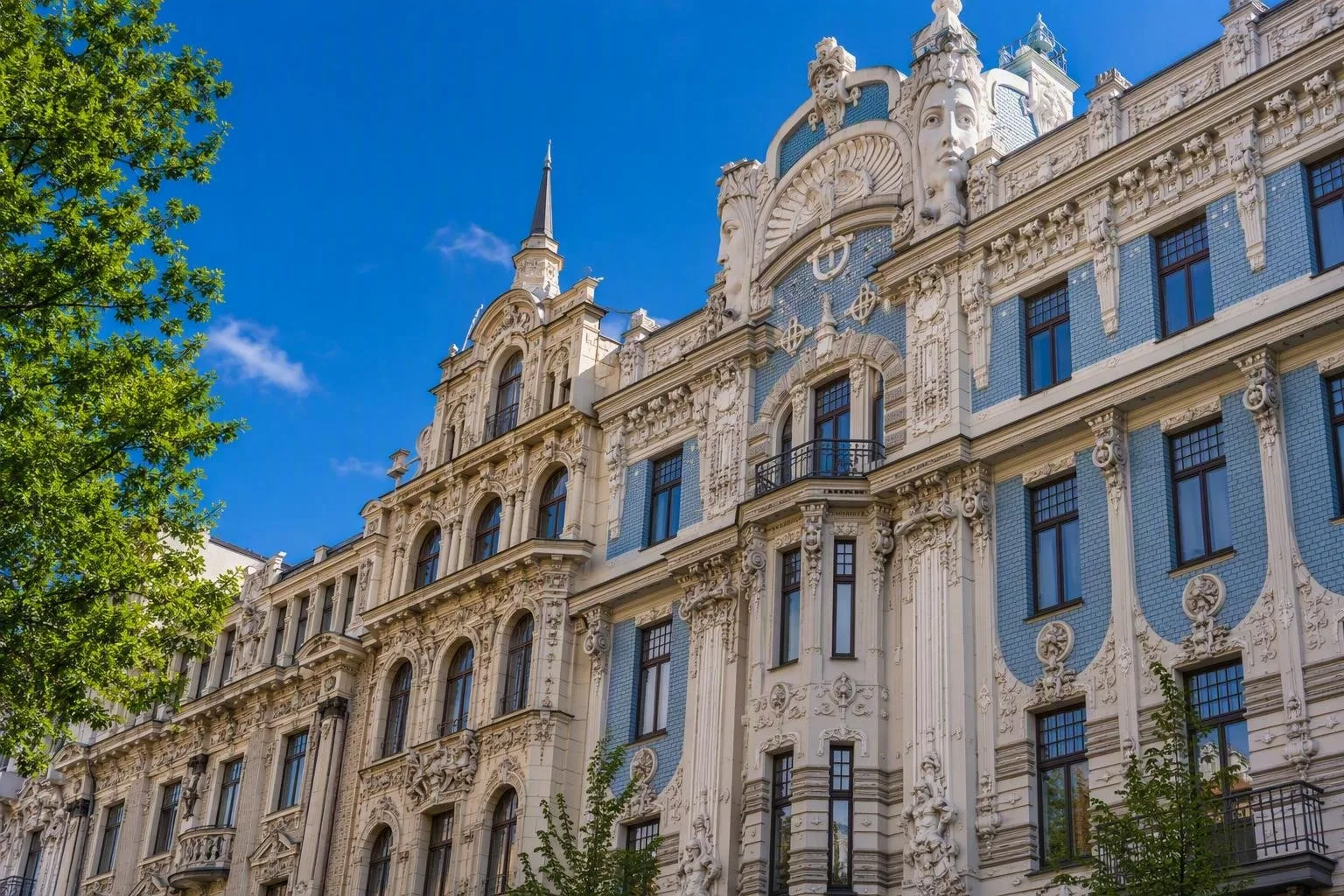
Look beyond Riga’s famous façades and Latvia quickly shows its range. On Alberta iela, stone faces, peacocks and curling plants cover Art Nouveau apartment blocks. Medieval lanes, church towers, guild houses and old warehouses line the streets near the Daugava. German-speaking merchants shaped much of the old city, while the building boom around 1900 left Riga with one of Europe’s largest collections of Art Nouveau architecture. Riga still works as a capital, not as a museum piece. Shoppers move through the Central Market’s former Zeppelin hangars, buying rye bread, smoked fish, pickles and seasonal berries. Trams run past medieval churches and the angular National Library on the far bank of the river.
Jūrmala lies west of Riga, where timber villas stand behind a broad sandy beach. In Gauja National Park, the river cuts below sandstone cliffs near Sigulda, and wooded paths lead past castle ruins around Cēsis. Kuldīga, farther west, keeps low wooden houses, a brick bridge and the wide Venta waterfall.
The Song and Dance Festival began during the Latvian national awakening of the 19th century. Tens of thousands of singers and dancers now take part, while local choirs and folk groups perform between festival years. Latvian tables often feature grey peas with bacon, dark rye bread, freshwater fish and mushrooms gathered from forests. Spend time in Riga, then head for Kuldīga, Cēsis or the Baltic coast. Each makes a good case for staying longer.