
City · Latvia
Riga
Riga is Latvia’s capital on the Daugava River, where a medieval Hanseatic core meets an exceptional concentration of Art Nouveau architecture. Its compact centre combines church spires, merchant history, parks and a working market in former airship hangars.
Why Riga matters
Founded as a port town in 1201, Riga grew rich on trade between central and eastern Europe. That commercial past still gives the city its structure: the Daugava riverfront, dense medieval streets, guild buildings and market halls.
The Historic Centre is a UNESCO World Heritage site. It covers more than Old Town alone: the medieval core, the later boulevard ring and major Art Nouveau districts form one connected urban landscape.
Old Town and the riverfront
Start in Vecrīga, the compact Old Town on the Daugava’s east bank. Its cobbled lanes are best explored on foot, using these landmarks as anchors:
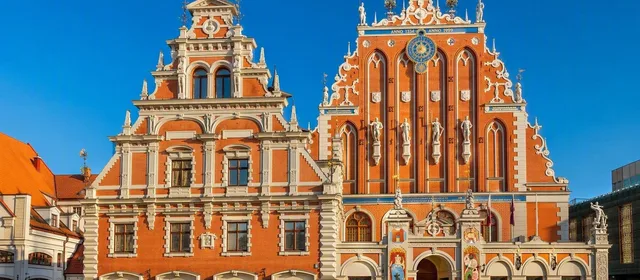
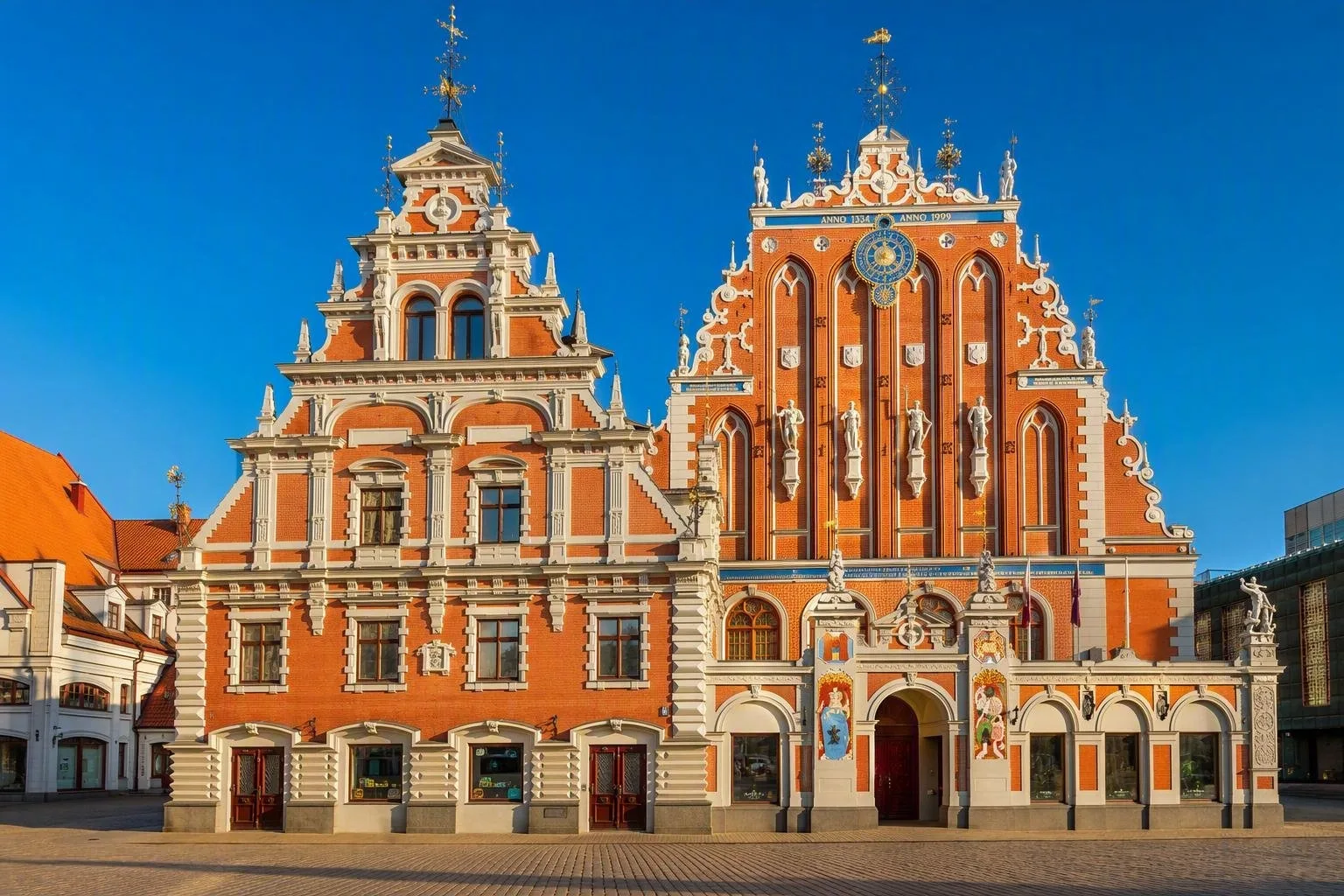
- Town Hall Square and the ornate House of the Black Heads, a direct reminder of Riga’s merchant culture.
- Riga Cathedral and Dome Square for the city’s medieval scale.
- St Peter’s Church for a high viewpoint over the roofs, market pavilions and river.
- The Three Brothers on Mazā Pils iela, a row of historic houses showing successive building periods.
Walk north through the Old Town, then follow the canal parks and boulevards toward the Freedom Monument and the opera area. The river promenade is the right place to understand Riga as a port city rather than only a medieval quarter.
Art Nouveau streets
Riga’s defining visual layer lies north-east of Old Town in the Quiet Centre. The city’s rapid 19th-century expansion produced a remarkable concentration of Jugendstil, or Art Nouveau, buildings.
Make Alberta iela, Elizabetes iela and Strēlnieku iela one deliberate walk. Look up for masks, figures, plant ornament and sharply geometric façades; the architecture is the attraction, so no ticket is needed for the street itself. The Riga Art Nouveau Centre at Alberta iela 12 adds a period apartment interior if you want context beyond the façades.
Market, food and museums
Riga Central Market sits beside the main station and close to the river. Its five large pavilions reuse airship-hangar structures and remain a practical stop for rye bread, smoked fish, dairy produce and seasonal food. Go earlier in the day, when the market is functioning at full pace.
For Latvia’s 20th-century history, allow proper time for the Museum of the Occupation of Latvia near Town Hall Square. For art, choose the Latvian National Museum of Art by Esplanāde. Do not try to stack every church, tower and museum into one day; pair one interior with a substantial walk.
Arrival and getting around
Riga International Airport is outside the centre; bus 22 links the airport with central Riga. The main rail and coach terminals stand beside Central Market, within walking distance of Old Town.
The central sights are walkable, although Old Town’s cobbles can slow the route. Use trams, trolleybuses and buses for outer districts or the left bank. In winter, expect short daylight and potentially icy paving; schedule outdoor viewpoints early and use the market or a museum as an indoor stop.
From the magazine
Stories about Riga
Editorial stories linked directly to Riga.
Routes from our editors
Travel through Riga
Editorial routes connecting Riga with other countries, cities and hotspots.
No routes through Riga have been published yet.
More in Latvia
Related hotspots
Other cities, nature areas and places within Latvia.
There are no other hotspots in Latvia yet.