City · Iceland
Reykjavík
Reykjavík is Iceland’s capital on the southwest coast, where a compact historic centre runs from Hallgrímskirkja down to the old harbour. It combines settlement-era traces, major modern architecture and everyday geothermal bathing.
Get oriented
Central Reykjavík is small enough to cover on foot. The core stretches between Hallgrímskirkja on its hill, Tjörnin pond, the Old Harbour and Harpa on the waterfront. Use the church tower as a visual anchor: downhill leads towards the harbour and Tjörnin; uphill brings you to the church.
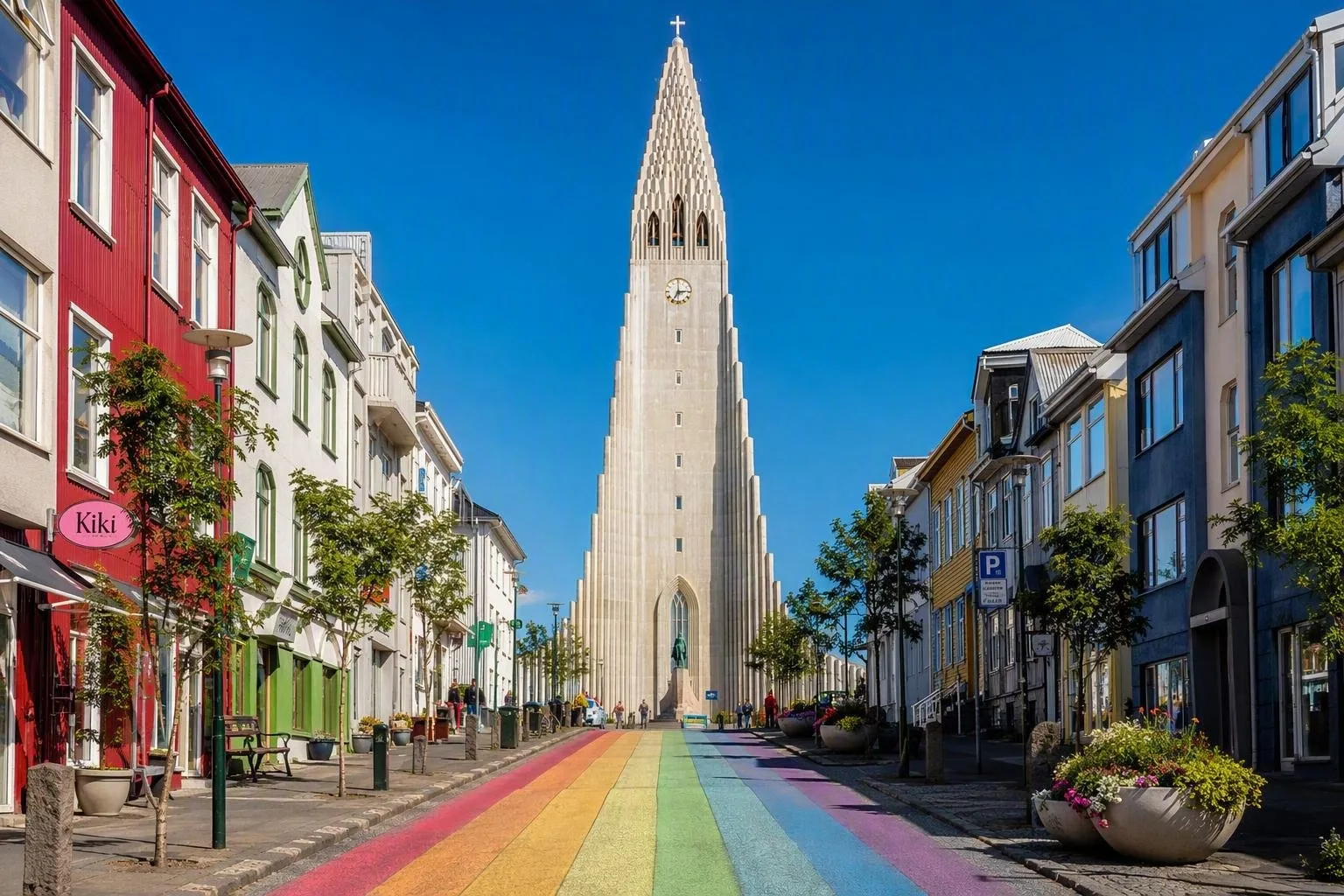
Laugavegur is the principal shopping street, while Skólavörðustígur runs uphill from it to Hallgrímskirkja. Austurstræti leads towards Alþingi and Austurvöllur square. This is a city best handled as connected walks rather than a checklist of isolated sights.
Start with the city’s landmarks
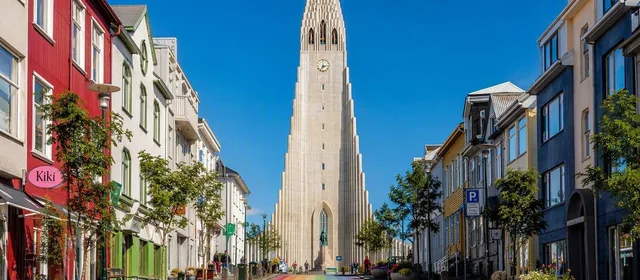
Hallgrímskirkja is Reykjavík’s defining vertical landmark. Its stepped concrete exterior draws on the forms of basalt lava flows; inside, the church is active and houses a major pipe organ. The tower gives the clearest overview of the low-rise centre, bay and surrounding mountains. Church activity can affect access.
From there, walk down Skólavörðustígur, then continue towards the water. Harpa sits on the harbour edge, its geometric glass façade responding to basalt forms and shifting coastal light. It is a working concert hall and conference centre, not simply an exterior photograph.
A short waterfront walk east brings you to Sun Voyager (Sólfar), Jón Gunnar Árnason’s steel sculpture. It resembles a ship but was conceived as a dream boat, facing Faxaflói Bay and Mount Esja across the water.
Read the older centre
The settlement began as farms and gained momentum with wool workshops in the mid-18th century. The harbour drove its later growth. In Kvosin, between Aðalstræti and Tjörnin, the Settlement Exhibition preserves remains of a Viking-age longhouse beneath modern streets.
Keep walking through Grjótaþorpið, the old west-town quarter, for small timber houses clad in corrugated iron. It contrasts sharply with the large public buildings around the pond and harbour. At Reykjavík City Hall beside Tjörnin, a large relief model of Iceland is normally accessible during public opening hours.
Make geothermal water part of the day
Public swimming pools are a practical Reykjavík institution, with geothermal water, lap pools and hot tubs. Sundhöll Reykjavíkur, behind Hallgrímskirkja, is the central option when you want a swim without leaving downtown.
Pool rule: shower thoroughly without swimwear before entering the water. Bring a swimsuit in every season; outdoor pools remain part of city life in cold weather.
Weather and timing
Reykjavík’s maritime weather changes quickly, and wind can make the waterfront markedly colder than central streets. Carry a windproof, waterproof outer layer and footwear with grip; winter pavements may be icy.
Daylight is the real seasonal difference. Around the winter solstice Reykjavík has just over four hours between sunrise and sunset; around the summer solstice it has more than 21 hours. Plan outdoor viewpoints for clear spells, but use museums, Harpa and pools as reliable bad-weather stops.
From the magazine
Stories about Reykjavík
Editorial stories linked directly to Reykjavík.
Routes from our editors
Travel through Reykjavík
Editorial routes connecting Reykjavík with other countries, cities and hotspots.
No routes through Reykjavík have been published yet.
More in Iceland
Related hotspots
Other cities, nature areas and places within Iceland.