
Island · Iceland
Grótta
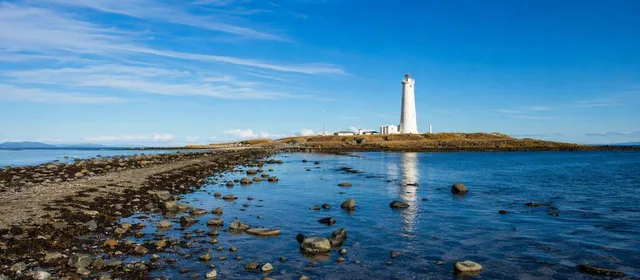
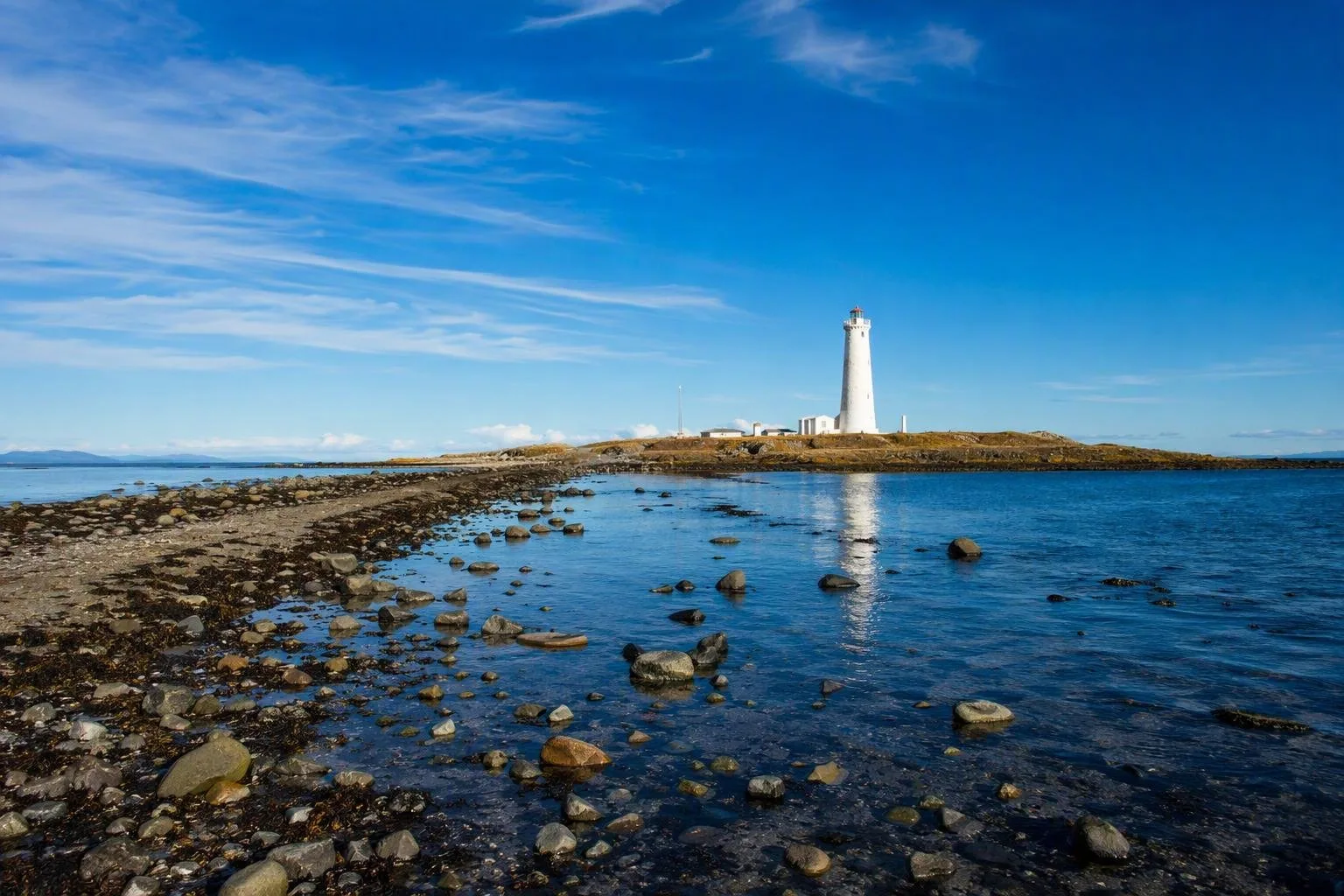
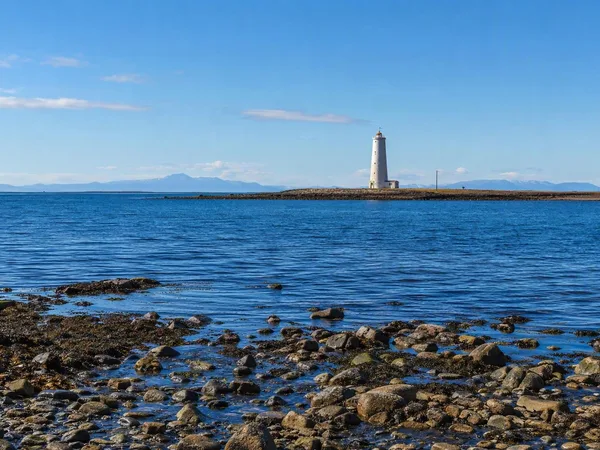
Grótta is a tidal island and bird reserve at the western tip of Seltjarnarnes, just beyond Reykjavík. Its white lighthouse stands across a causeway that disappears under the sea at high tide.
Orientation
Grótta sits at the outer end of the Seltjarnarnes peninsula, facing Faxaflói Bay. It is a low, vegetated island linked to the mainland by a narrow sand-and-stone spit. At high tide that link is submerged, so the island becomes genuinely separate.
The landmark is the working white lighthouse. A light was first built here in 1897; the present tower was lit in 1947. It remains a navigation mark for the bay, not a visitor attraction with interior access.
The shoreline and birds
This is a protected nature reserve, established in 1974, where rocky shore, boulders, tidal water and coastal grass support a concentrated birdlife. Arctic terns are the defining summer species; eiders, oystercatchers, fulmars and purple sandpipers also occur around the island and shore.
Keep to established paths and give birds space. The coast is particularly useful for watching rather than approaching wildlife: birds feed along the waterline and nest in the grass and stony ground.
Tides and seasonal closure
The causeway is the key practical constraint. Cross only around low tide, having checked both the outgoing and return window. Water covers the route as the tide rises, and there is no alternative land route back.
Important: access to the island is prohibited from 1 May to 31 July to protect nesting birds. The lighthouse is still clearly visible from the mainland during the closure. Dogs must be on a lead in the reserve; seasonal restrictions may be tighter in the western area.
Getting there and moving around
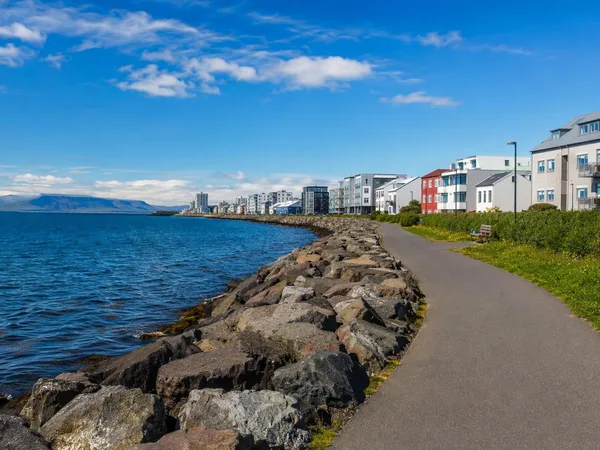
A coastal walking and cycling route reaches Grótta from Reykjavík and continues around Seltjarnarnes. The approach is mostly level and makes a practical short outing by foot, bicycle or car; parking and benches are near the shore.
From the mainland, walk the coast for views of the tidal flats and lighthouse. Only add the island crossing when the tide and seasonal access rules permit it. The ground beyond the paved approach can be wet, uneven and slippery with seaweed, so use shoes with grip.
When to go
Summer brings long light and active birdlife, but the island closure covers the core nesting period. Late summer and autumn are better for a low-tide crossing without that restriction. In winter, the open northern horizon and lower surrounding light make Grótta a popular place to watch for aurora on a clear night.
The exposure is constant in every season. Windproof layers matter more here than a long itinerary: conditions on the shore can turn cold quickly.
From the magazine
Stories about Grótta
Editorial stories linked directly to Grótta.
No stories about Grótta have been published yet.
Routes from our editors
Travel through Grótta
Editorial routes connecting Grótta with other countries, cities and hotspots.
No routes through Grótta have been published yet.
More in Iceland
Related hotspots
Other cities, nature areas and places within Iceland.
Reykjavík
2 linked stories and routes
Seljalandsfoss
1 linked stories and routes
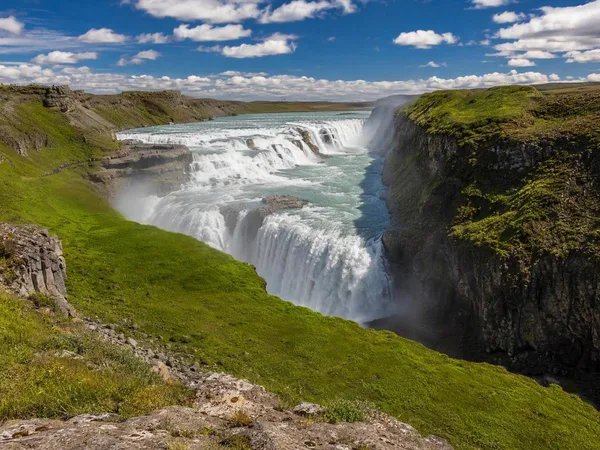
Gullfoss
1 linked stories and routes
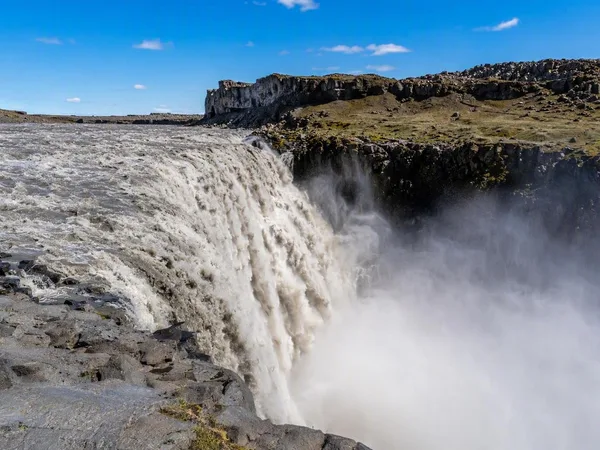
Dettifoss
1 linked stories and routes
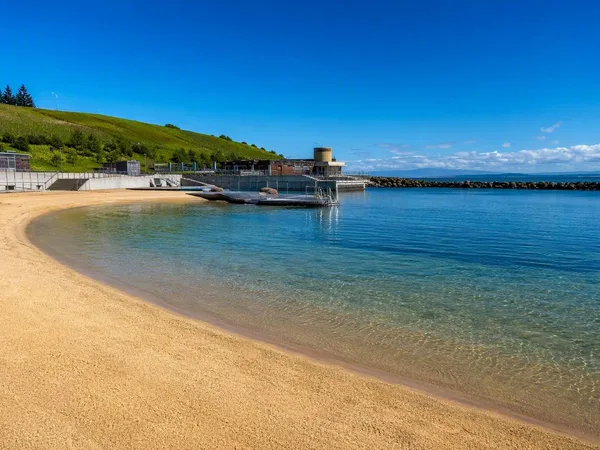
Nauthólsvík Geothermal Beach
1 linked stories and routes
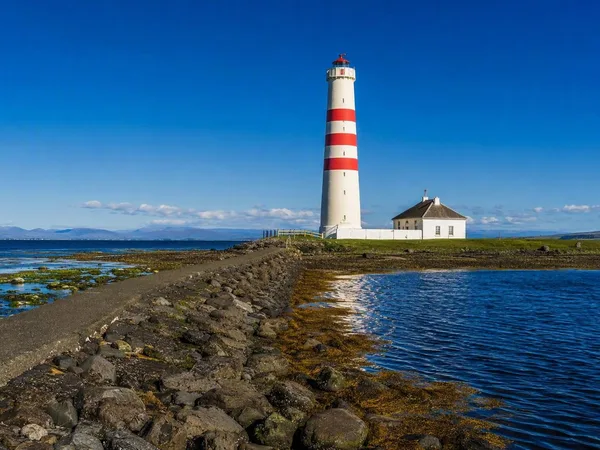
Seltjarnarnes
1 linked stories and routes
Vesturbær
1 linked stories and routes
Ægisíða Coastal Path
1 linked stories and routes
Kvika
1 linked stories and routes
Faxaflói Bay
1 linked stories and routes