Neighbourhood · Greece
Plaka
Plaka is Athens’ historic neighbourhood at the foot of the Acropolis, running between Filomousson Square and Monastiraki. Its tight lanes combine neoclassical houses, Byzantine churches, ancient monuments, cafés and shops.
Get your bearings
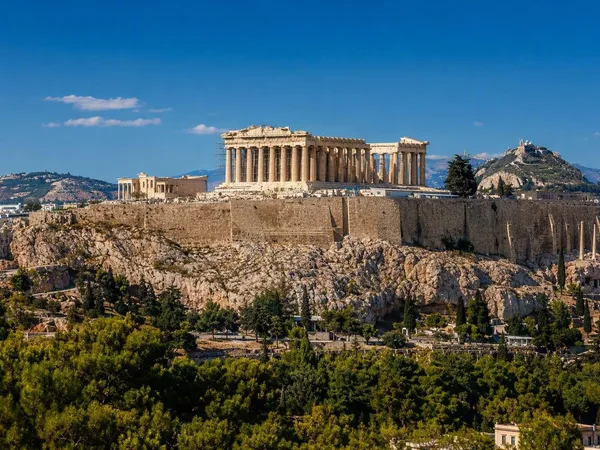
Plaka is a compact, walkable quarter on the north and east side of the Acropolis. Filomousson Square, near the meeting of Kydathinaion and Adrianou streets, is a useful central reference point; Monastiraki forms the western end.
The neighbourhood is not a single monument district. It is a working street network where ancient remnants, churches and 19th-century houses sit among cafés, tavernas and souvenir shops. Keep the Acropolis as your visual reference: uphill leads toward upper Plaka; downhill and west lead toward Monastiraki.
Streets and monuments
Start around Adrianou and the Roman Agora side of the quarter, then turn into the smaller lanes rather than treating the main shopping streets as the whole visit. Kydathinaion is another useful spine, linking shops, cafés and quieter residential corners.
Make time for these fixed landmarks:
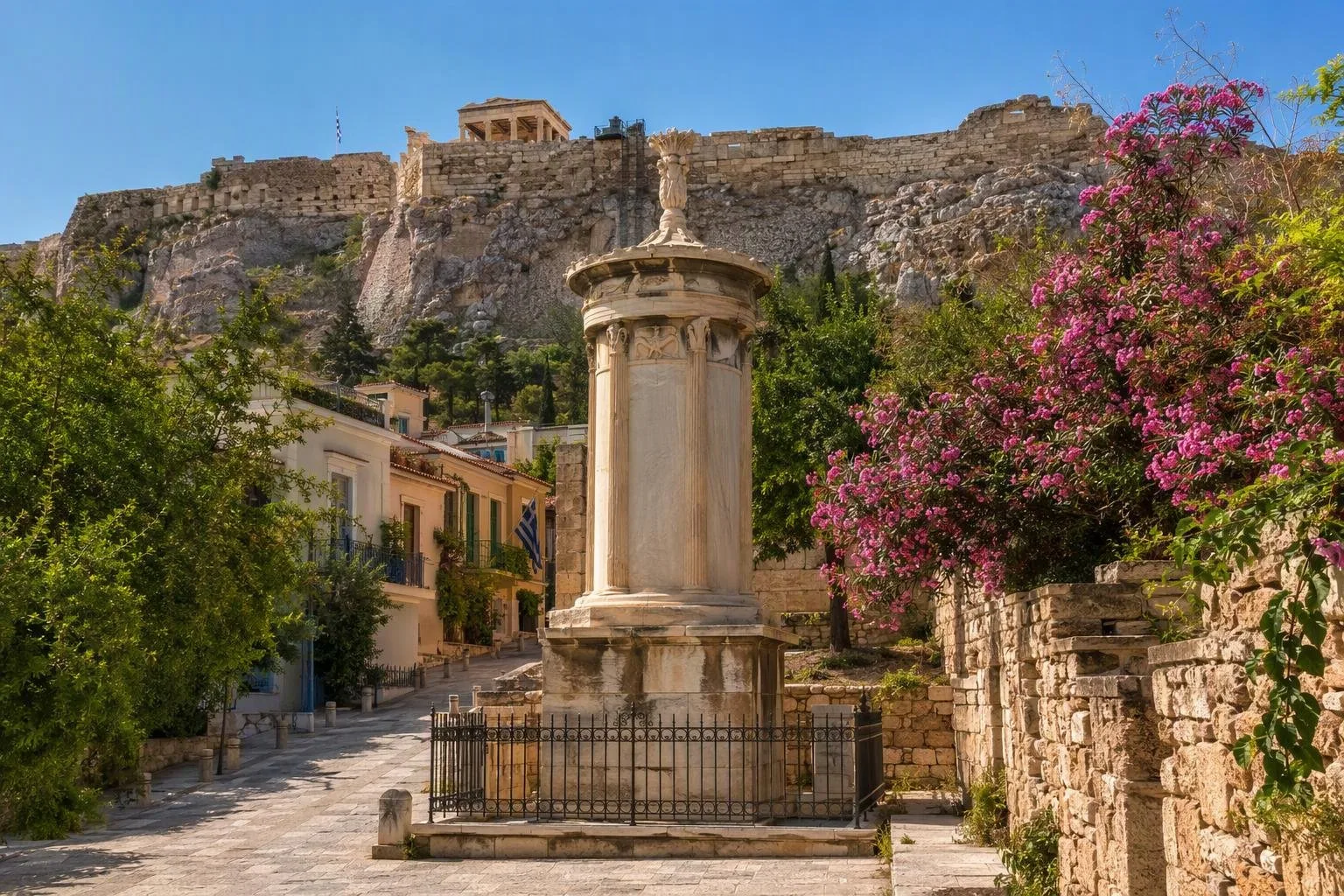
- Monument of Lysicrates: a marble choragic monument on Tripodon Street, standing in a small excavated square below the Acropolis cliff.
- Agios Nikolaos Ragavas: a small domed Byzantine church at Prytaniou and the Epicharmou steps, with the Acropolis rising behind it.
- Benizelos Mansion: the city’s oldest surviving house, at 96 Adrianou; its stone ground floor and enclosed courtyard show a pre-neoclassical side of Athens.
Plaka also has small specialist museums, including collections of Greek folk culture, folk instruments, art and antiquities. They are useful counterweights to the major archaeological sites nearby.
Climb to Anafiotika
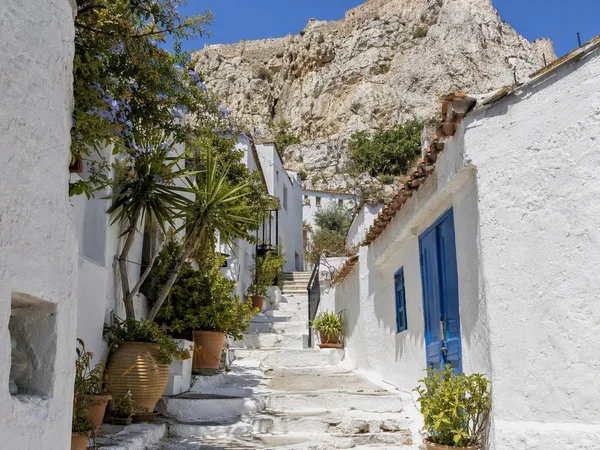
At Plaka’s upper edge, the streets tighten into Anafiotika, a small residential quarter on the Acropolis slope. Builders from the Cycladic island of Anafi founded it, and its low whitewashed houses, narrow passages and steps retain an island-village character.
The two clearest markers are Agios Georgios tou Vrachou at the eastern end and Agios Symeon at the western end. This is a short detour, not a museum circuit: walk the public lanes, look for the view toward Lycabettus Hill, then return to Plaka’s streets.
Important: Anafiotika is residential. Do not enter courtyards, terraces or gated passages, and keep voices low in the narrow lanes.
A practical walk
Allow two to three hours for Plaka alone, longer if you enter museums or pair it with the Acropolis. A simple route is Monastiraki to Adrianou, through the lanes toward the Monument of Lysicrates and Filomousson Square, then uphill via Prytaniou toward Agios Nikolaos Ragavas and Anafiotika.
The upper quarter has steep, uneven stone steps; wear shoes with grip. Visit earlier in the day for clearer lanes and a less crowded climb. Metro stations at Monastiraki, Syntagma and Akropoli all sit within walking distance of different edges of Plaka.
From the magazine
Stories about Plaka
Editorial stories linked directly to Plaka.
No stories about Plaka have been published yet.
Routes from our editors
Travel through Plaka
Editorial routes connecting Plaka with other countries, cities and hotspots.
No routes through Plaka have been published yet.
More in Greece
Related hotspots
Other cities, nature areas and places within Greece.