City · Greece
Athens
Athens is Greece’s capital in Attica, built around the Acropolis and its archaeological landscape. Its compact historic centre combines classical sites, museums and lived-in neighbourhoods.
Start with the ancient centre
Athens is a large modern capital, but its principal archaeological sites sit in a walkable central arc. Use the Acropolis as your anchor: Plaka lies to its northeast, the Ancient Agora and Monastiraki to the northwest, and Koukaki and the Acropolis Museum on the south side.
Syntagma is the practical central square for metro connections and the National Garden. From there, walk through Plaka rather than treating it as a destination in isolation; its narrow streets make more sense as part of a route between the hill, Agora and Monastiraki.
The Acropolis and its setting
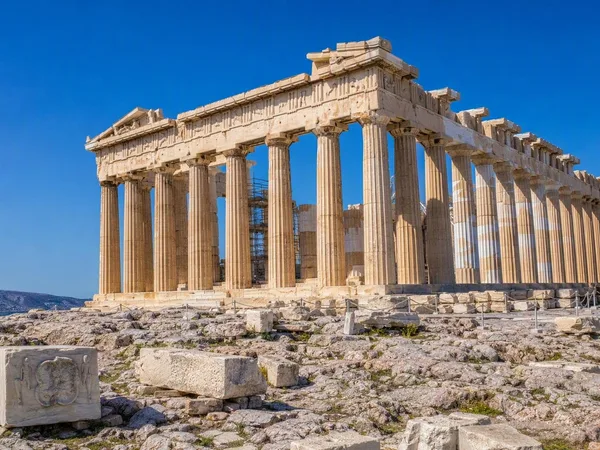
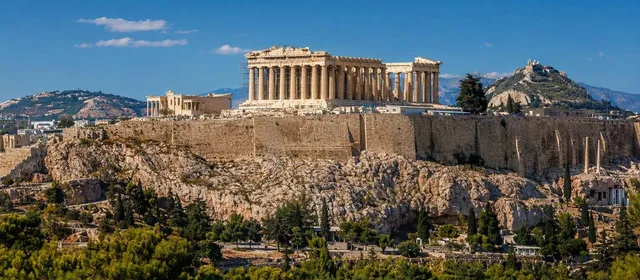
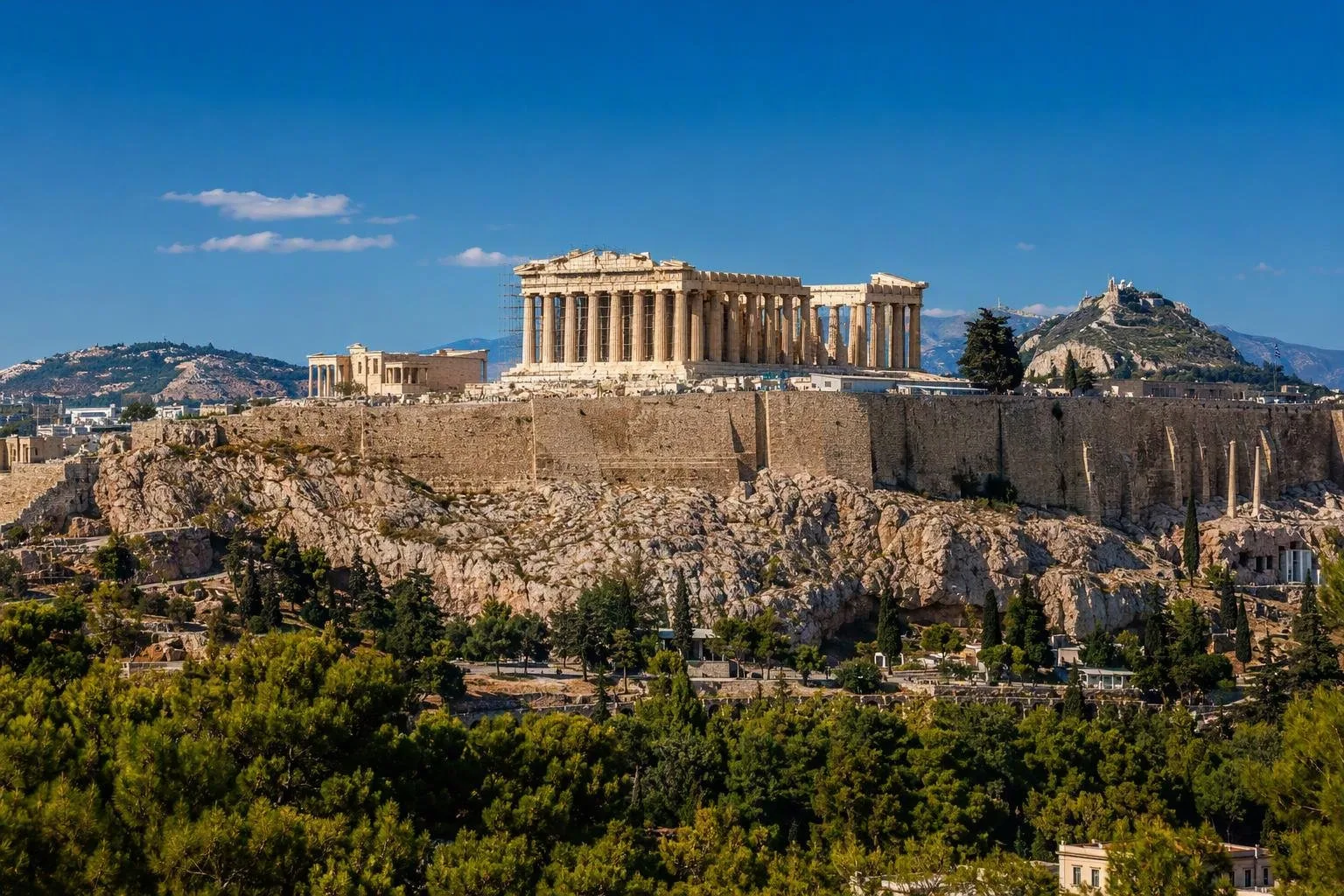
The Acropolis is the essential first visit. The rocky hill holds the Parthenon, Propylaea, Erechtheion and Temple of Athena Nike, the major monuments of the fifth century BC building programme. It is a steep archaeological site with exposed marble underfoot.
- Plan: reserve a timed entry before arriving in the busy season.
- Route: approach from the south side on Dionysiou Areopagitou for the theatre slopes and the pedestrian archaeological walk.
- Footwear: use shoes with reliable grip; polished marble can be slippery.
Follow the visit with the Acropolis Museum, below the south slope. Its galleries provide the architectural and sculptural context that is hard to grasp on the hill alone.
Add an agora, a museum and a neighbourhood
The Ancient Agora, below the Acropolis, was the civic and commercial heart of ancient Athens. Its Temple of Hephaestus is one of the best-preserved Greek Doric temples. Allow time for the site rather than merely viewing it from above.
For a wider chronological range, choose the National Archaeological Museum. Its collections include Mycenaean gold and the Antikythera mechanism. The all-marble Panathenaic Stadium, rebuilt for the first modern Olympic Games in 1896, makes a useful stop between the museum districts and Plaka.
Monastiraki is the transport interchange and market quarter; Psyrri, immediately north, is better for evening food and music. Koukaki works well after the Acropolis, while Kolonaki is the base for Lycabettus Hill.
Getting around efficiently
Walk the historic core, then use the metro for longer jumps. Lines 1, 2 and 3 connect Monastiraki, Syntagma, Acropolis station and Piraeus. The standard urban fare covers transfers across metro, bus, tram and trolleybus for a limited period; the airport requires a separate airport fare.
From Athens International Airport, Metro Line 3 runs to central stations, while airport express buses serve Syntagma and Piraeus. At metro stations, validate on entry and exit; on buses and trams, validate when boarding.
Pace and access
Give the Acropolis an early morning slot, particularly in warm months, then take a museum break before continuing on foot. Two full days cover the Acropolis, Agora, Plaka, Monastiraki and one major museum without rushing.
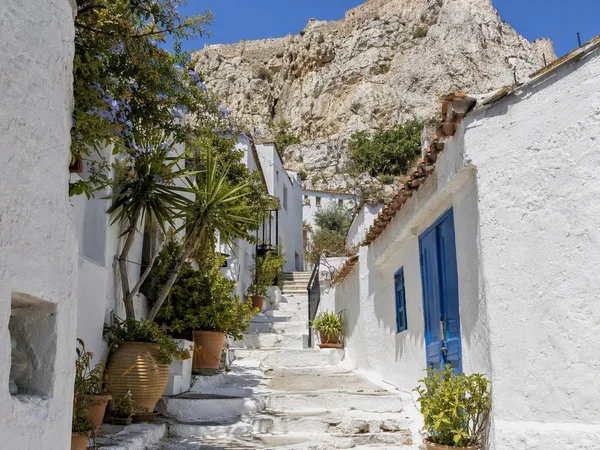
Expect cobbles, steps and uneven pavements in Plaka and around the archaeological slopes. Major newer metro stations have lifts, but the Acropolis itself remains steep and uneven.
From the magazine
Stories about Athens
Editorial stories linked directly to Athens.
No stories about Athens have been published yet.
Routes from our editors
Travel through Athens
Editorial routes connecting Athens with other countries, cities and hotspots.
No routes through Athens have been published yet.
More in Greece
Related hotspots
Other cities, nature areas and places within Greece.