City · Finland
Helsinki
Helsinki is Finland’s capital on the Gulf of Finland, where a compact neoclassical centre meets the Baltic shoreline and an island-filled harbour.
Orientation
Helsinki is a Baltic capital built around water rather than a single monumental core. The main visitor area runs from the Central Railway Station through Esplanadi to Market Square and South Harbour. Senate Square sits just north of the waterfront; Design District streets, museums and restaurants spread west and south from there.
The sea is never far away. Helsinki includes 327 islands, while the city centre’s working harbour places ferries, market stalls and public waterfronts within walking distance of one another.
Start with the centre
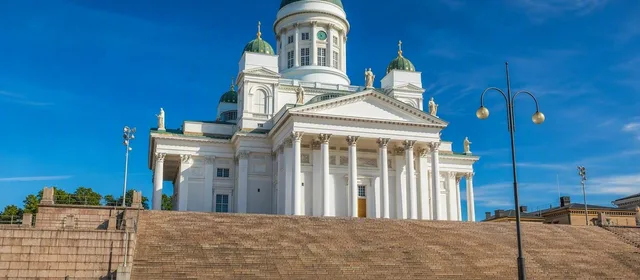
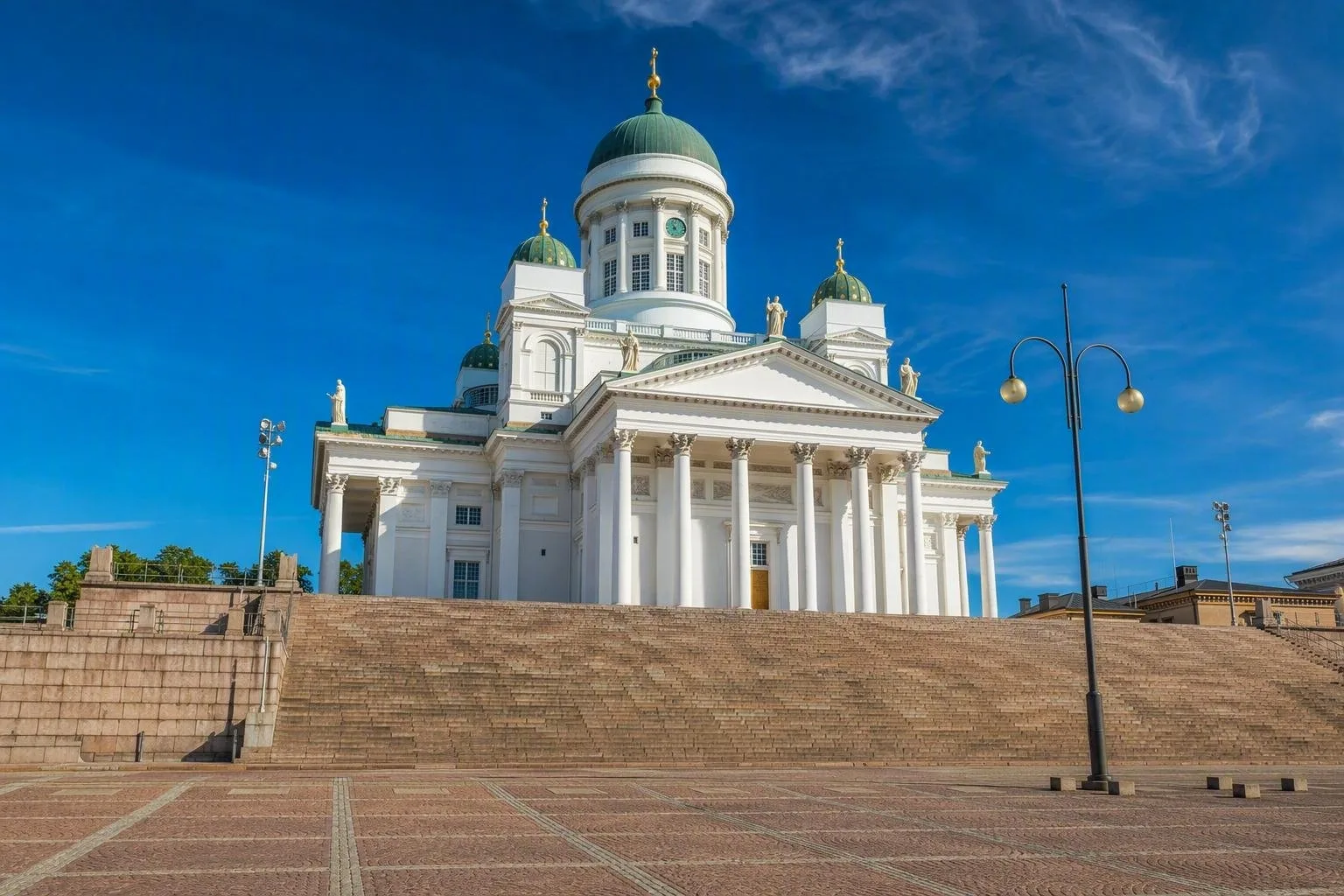
Senate Square is the essential first stop. Helsinki Cathedral crowns its broad granite steps, and the surrounding Empire-style buildings define the historic civic centre. Walk downhill to Market Square beside South Harbour, then follow the waterfront past the Old Market Hall and the Havis Amanda fountain.
Market Square is useful as well as scenic: it is the year-round departure point for the public ferry to Suomenlinna. The square has food, crafts and souvenir stalls; the range is most substantial in the warmer months.
For contemporary Helsinki, head west to Oodi Central Library and the cultural buildings around Kansalaistori, or south into the Design District’s shops, galleries and streetscapes. The city’s extensive Art Nouveau building stock is especially visible in central residential quarters.
Sea, islands and sauna
Take the ferry from Market Square to Suomenlinna, the sea fortress spread across six islands at the harbour entrance. Allow time to walk its defensive walls, rocky shore and historic buildings; it is a lived-in district, not a museum compound.
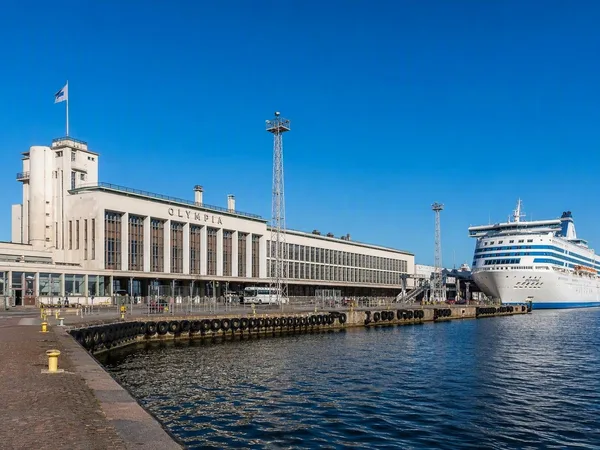
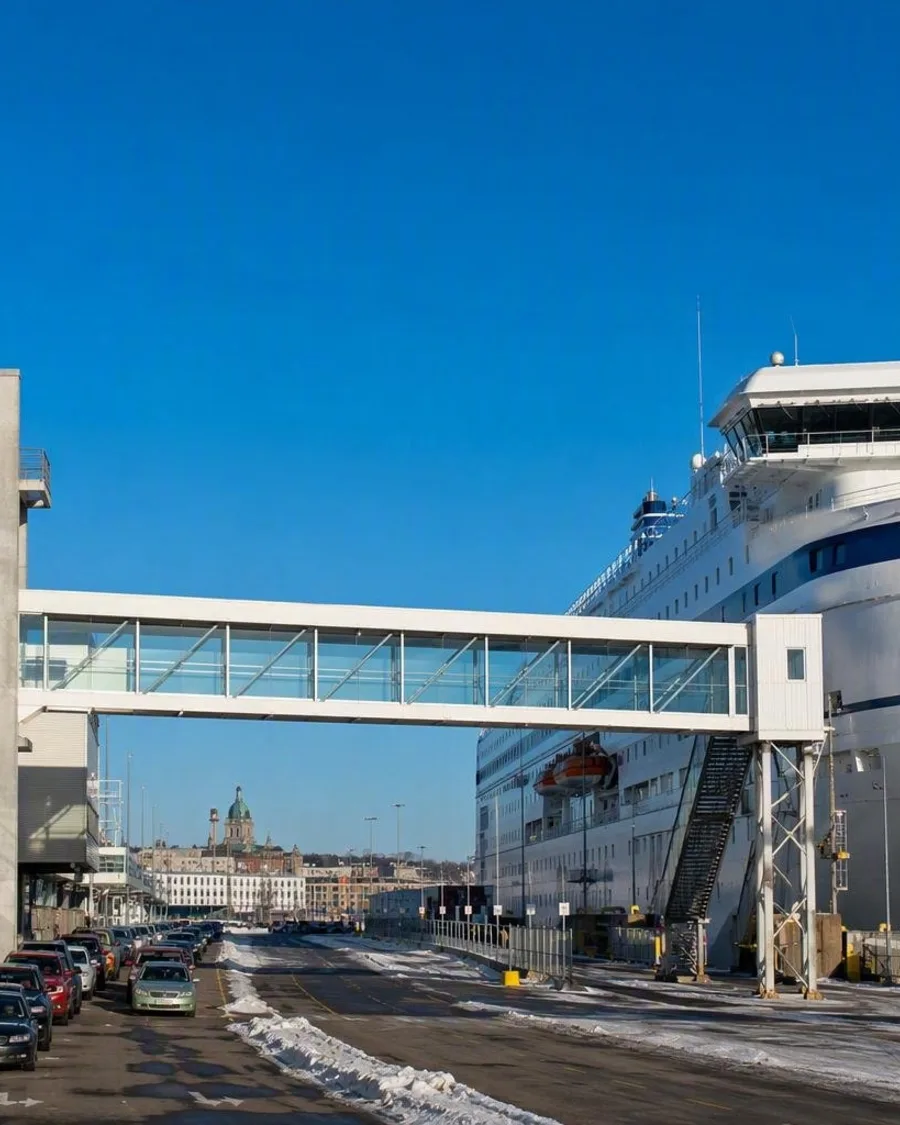
The South Harbour also frames Helsinki’s connection to Stockholm. The Olympia Terminal, south of Market Square near Kaivopuisto, handles overnight ferries; pedestrians and cars use separate routes through the terminal and quay.
A public sauna is a practical way to experience a Finnish institution rather than merely observe it. Shower before entering, follow each venue’s swimwear policy, and keep conversation low-key in the sauna room.
Getting around
The central sights are walkable, but trams make short work of longer cross-town moves. Metro, commuter trains, buses, trams and the Suomenlinna ferry use the same HSL ticket system. Buy a ticket in the HSL app, use contactless payment for an adult single ticket, or use an HSL card.
Helsinki is divided into zones A–E; central city travel is generally in the inner zones. Buy the ticket before boarding or entering a paid area. The airport lies outside the centre, so select a ticket covering the required zones.
Timing and weather
Summer brings long daylight and the fullest island and waterfront schedule. Autumn and spring suit museums, architecture and saunas, with less pressure on outdoor itineraries. Winter daylight is brief and pavement can be icy; use shoes with grip and allow extra time on waterfront routes.
Harbour ferries operate in changing weather, but wind and ice can affect conditions. Dress for the exposed deck even on a short crossing.
From the magazine
Stories about Helsinki
Editorial stories linked directly to Helsinki.
Routes from our editors
Travel through Helsinki
Editorial routes connecting Helsinki with other countries, cities and hotspots.
No routes through Helsinki have been published yet.
More in Finland
Related hotspots
Other cities, nature areas and places within Finland.