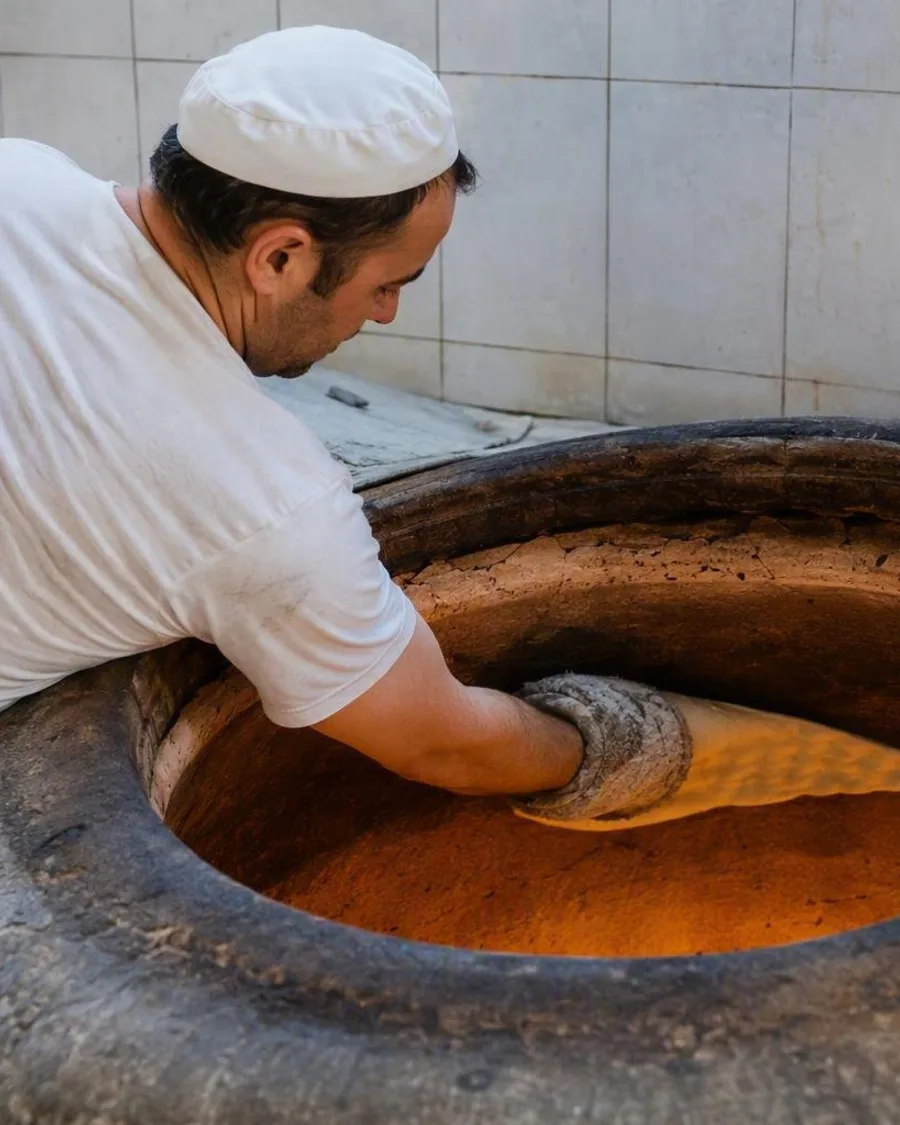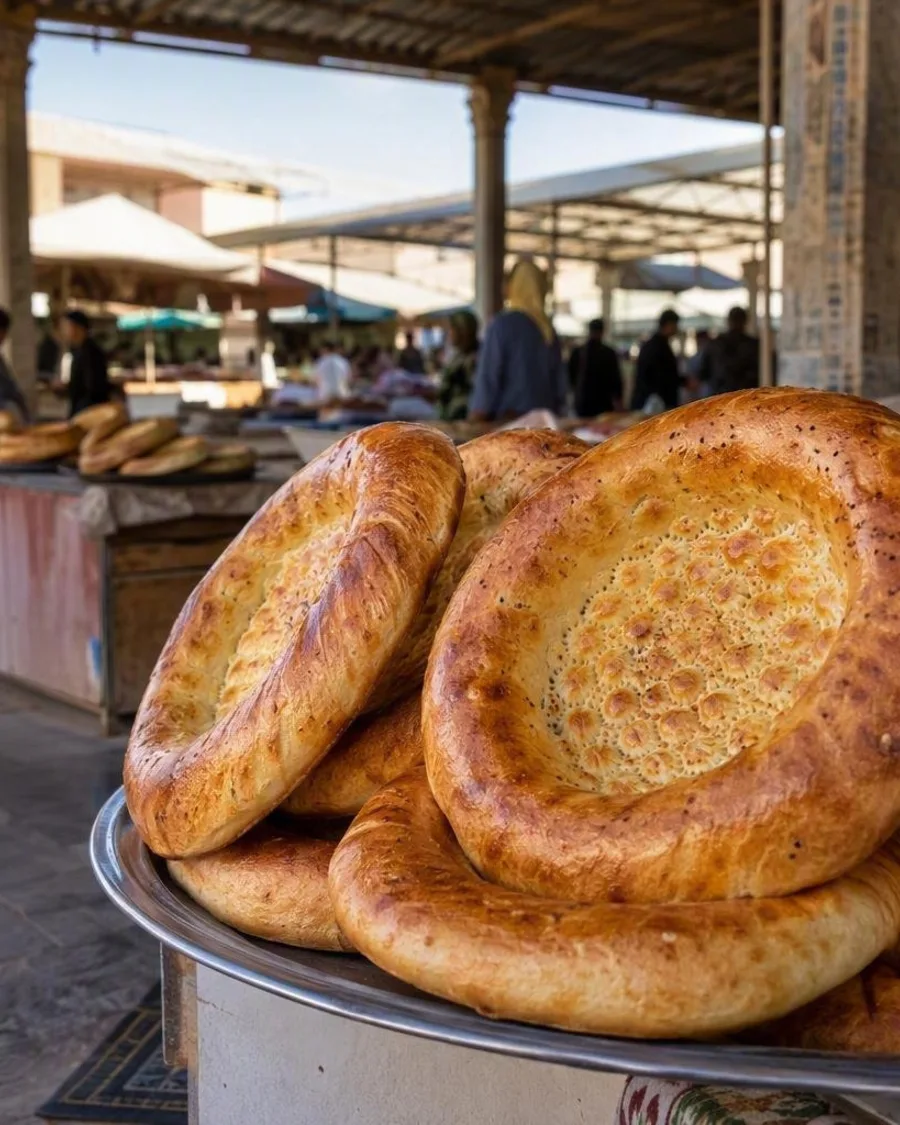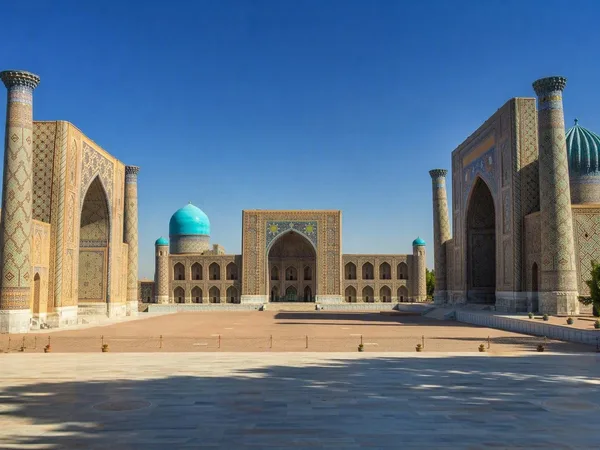
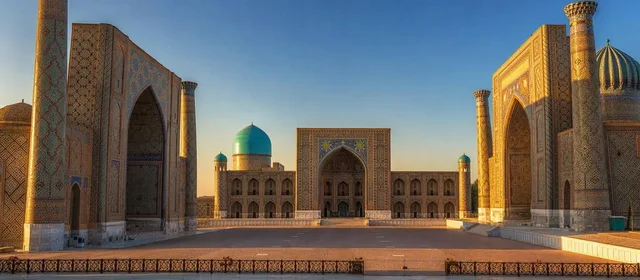
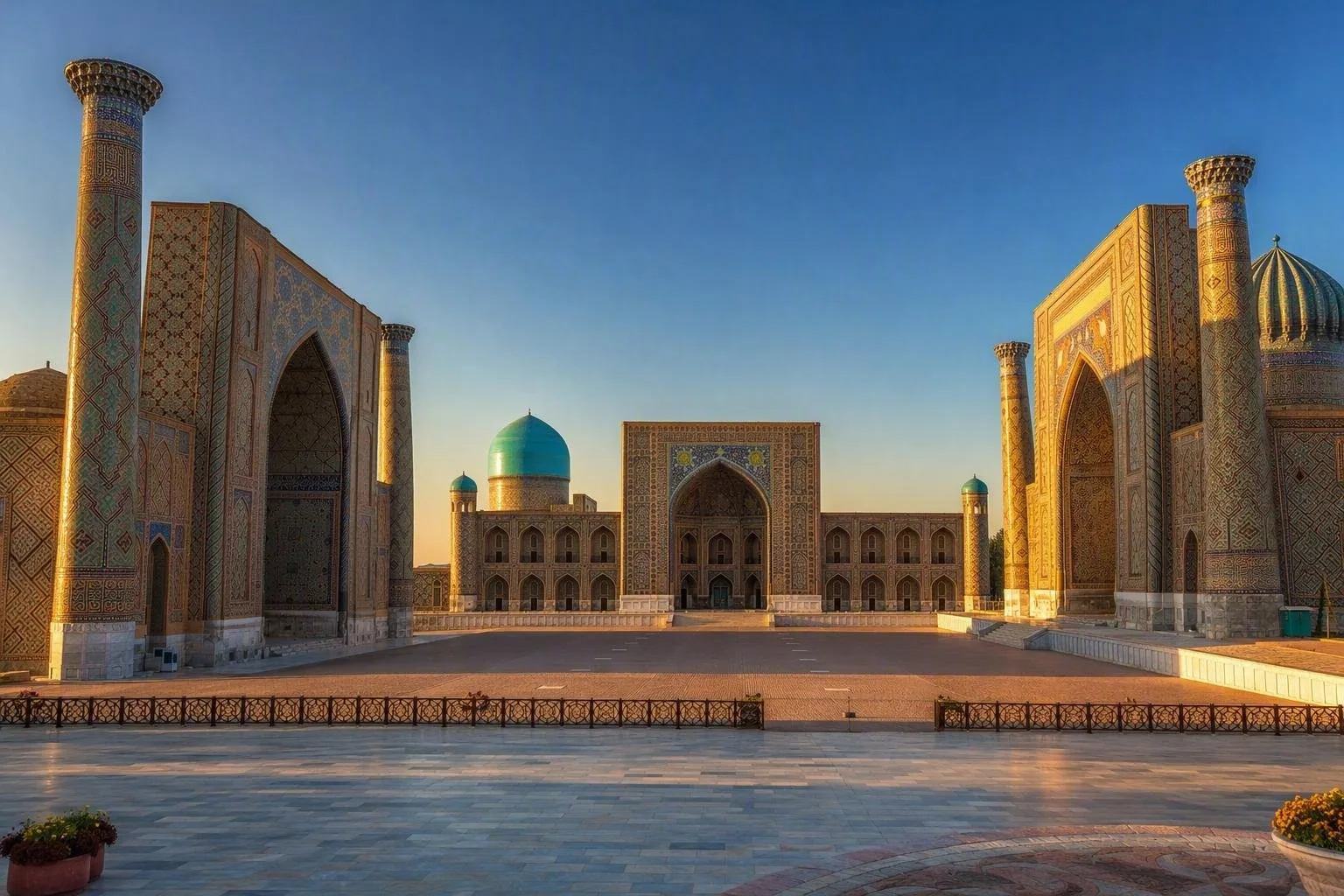
Start with Samarkand’s Registan Square: three blue-tiled madrasas face an open courtyard where merchants once traded and rulers made proclamations. The scale is striking, but the details hold your attention just as long—mosaic panels, carved doors and Quranic inscriptions set against the sound of traffic and market stalls nearby. Bukhara feels smaller and more intimate. Its brick lanes link mosques, caravanserais and old trading domes, while the Kalon Minaret still rises above the low roofs. Bakers sell round loaves of non beside the markets, and local workshops produce ceramics, embroidery and carved wood.
West of Bukhara, the road crosses the Kyzylkum Desert towards Khiva. Inside Itchan Kala’s walls, narrow streets run past carved wooden columns, turquoise minarets and mud-brick houses. Merchants, students and families once used the same compact streets, and people still live and work within the old city.
Tashkent provides a sharp contrast. Broad Soviet-era avenues lead to a richly decorated metro and the crowded Chorsu Bazaar. In the Fergana Valley, Rishtan potters make blue and green ceramics, while Margilan’s silk workshops continue a long local trade. Uzbekistan’s food reflects that mix of regions and histories. Cooks prepare plov with rice, carrots and meat, then change the ingredients and method from one area to the next. Leave time for the streets between the headline sights, sit down for tea and bread, and let the country reveal itself at an unhurried pace.