
City · Uzbekistan
Samarkand
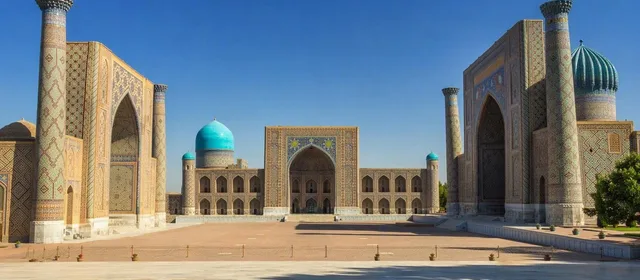
Samarkand is a historic city in northeastern Uzbekistan’s Zerafshan Valley, built in layers from ancient Afrosiab to Timur’s imperial capital. Its tiled Timurid ensembles, especially the Registan, anchor one of Central Asia’s essential urban heritage sites.
Why Samarkand matters
Samarkand’s historic core is a World Heritage site shaped by more than two millennia of settlement and exchange. Ancient Afrosiab lies to the north-east; the monumental Timurid city occupies the ground south of it; later Russian-era streets extend westward. Timur rebuilt the city as his capital in the late 14th century, and its architecture became a reference point across the Islamic world.
Start at the Registan
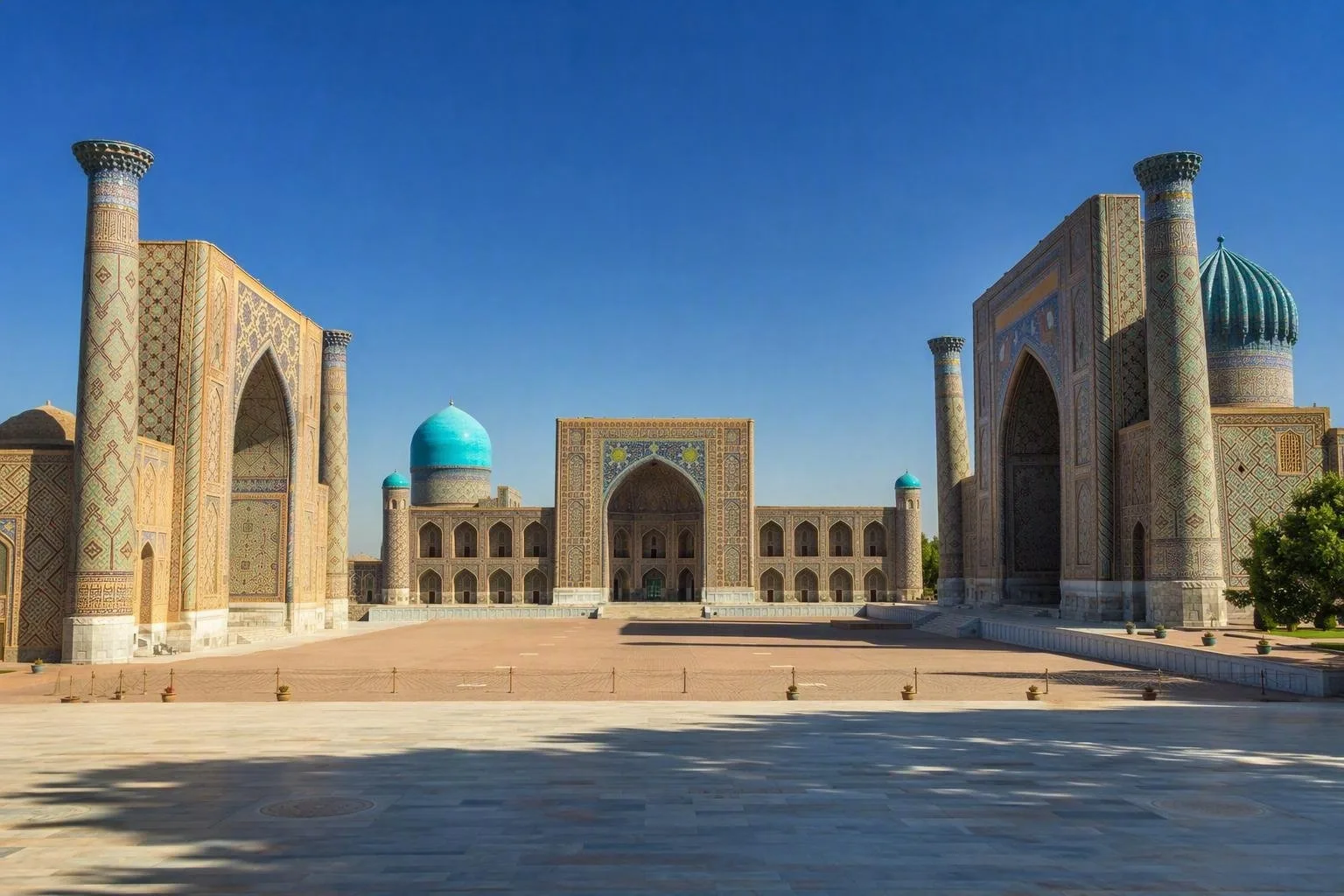
Three madrasas face onto one square: Ulugh Beg, Sher-Dor and Tilya-Kori. Together they are the city’s clearest statement of scale, geometry and glazed tilework. Enter the courtyards rather than treating the square as a photo stop; the portals, minarets and patterned facades read differently at close range.
Give the Registan time twice: once in daylight for architectural detail and again near dusk, when the facade colour softens. It sits in the central historic area and is the logical point from which to orient the rest of a visit.
Follow the Timurid monuments
Build a route around four distinct places rather than trying to see every monument at speed:
- Bibi-Khanym Mosque: a vast mosque ensemble near Siab Bazaar.
- Shah-i-Zinda: a hillside necropolis with a sequence of mausoleums, mosques and madrasas.
- Gur-e-Amir: the dynastic mausoleum ensemble associated with Timur.
- Ulugh Beg Observatory: surviving remains of the 15th-century observatory on the city’s northern side.
Afrosiab, the archaeological reserve, adds the pre-Timurid city to this picture. Its excavated citadel, fortifications, palace remains and craft quarters make clear that Samarkand did not begin with its blue domes.
Eat at Siab Bazaar
Siab Bazaar stands beside Bibi-Khanym Mosque and is the practical stop between monuments. Look for Samarkand non: round, dense bread with a raised rim and stamped centre, baked in clay tandyrs. The market also carries dried fruit, nuts, spices and everyday produce. Go in the morning, when food stalls are fully stocked.
Getting around and timing
The historic monuments are spread over several kilometres, so combine walking around the Registan and Bibi-Khanym with short taxi rides to Shah-i-Zinda, Afrosiab and the observatory. The Afrosiyob fast train links Samarkand with Tashkent in about two hours.
Spring and autumn are the easiest seasons for long walks. Summer heat is severe: begin early, pause through the hottest part of the day, and return late afternoon. Dress modestly at religious sites, particularly Shah-i-Zinda, and keep your voice low in active devotional areas.
From the magazine
Stories about Samarkand
Editorial stories linked directly to Samarkand.
Ten trading cities where the old streets still work
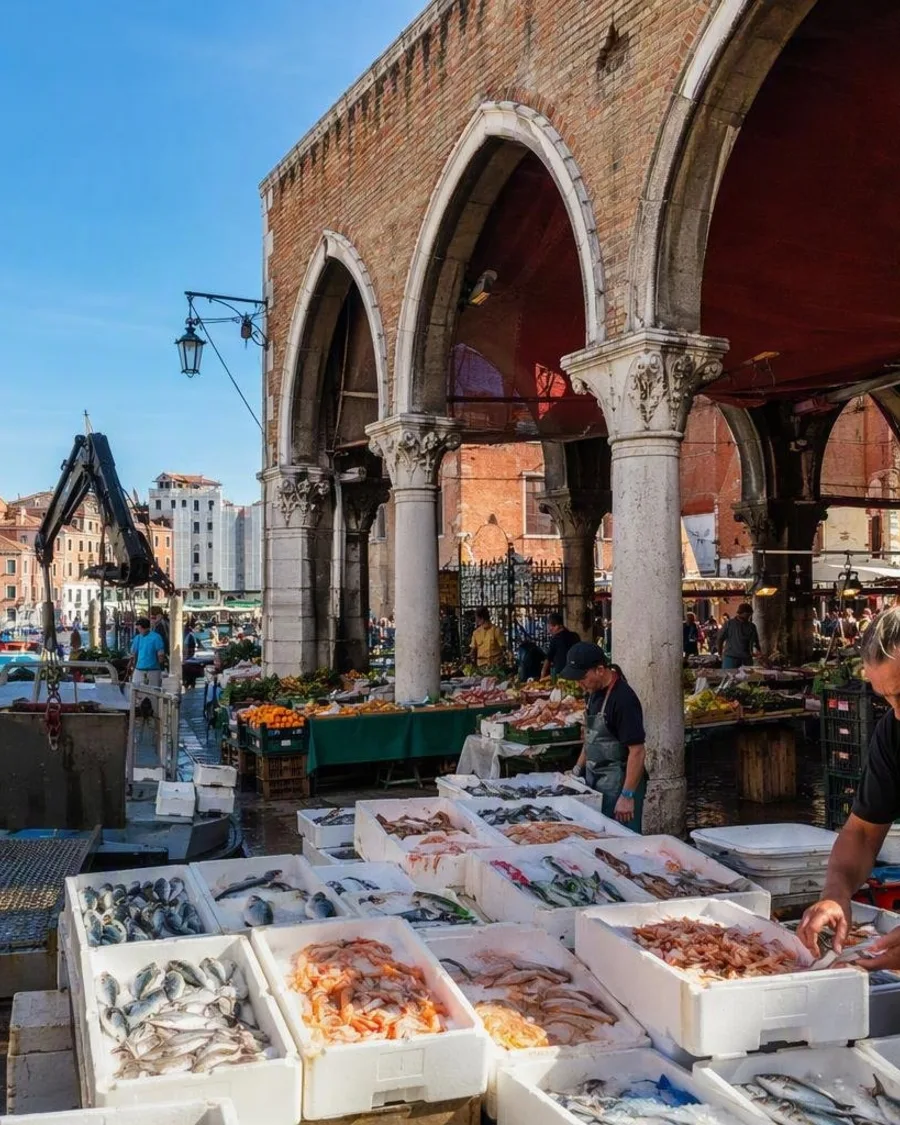
At Venice’s Rialto market, fishers and wholesalers still sell the morning catch beside open-air fruit and vegetable stalls. Across ten old trading cities, quays, lanes, workshops and fortifications still show how goods once moved and how people use these places now.
Ten places where local bread is still made by hand
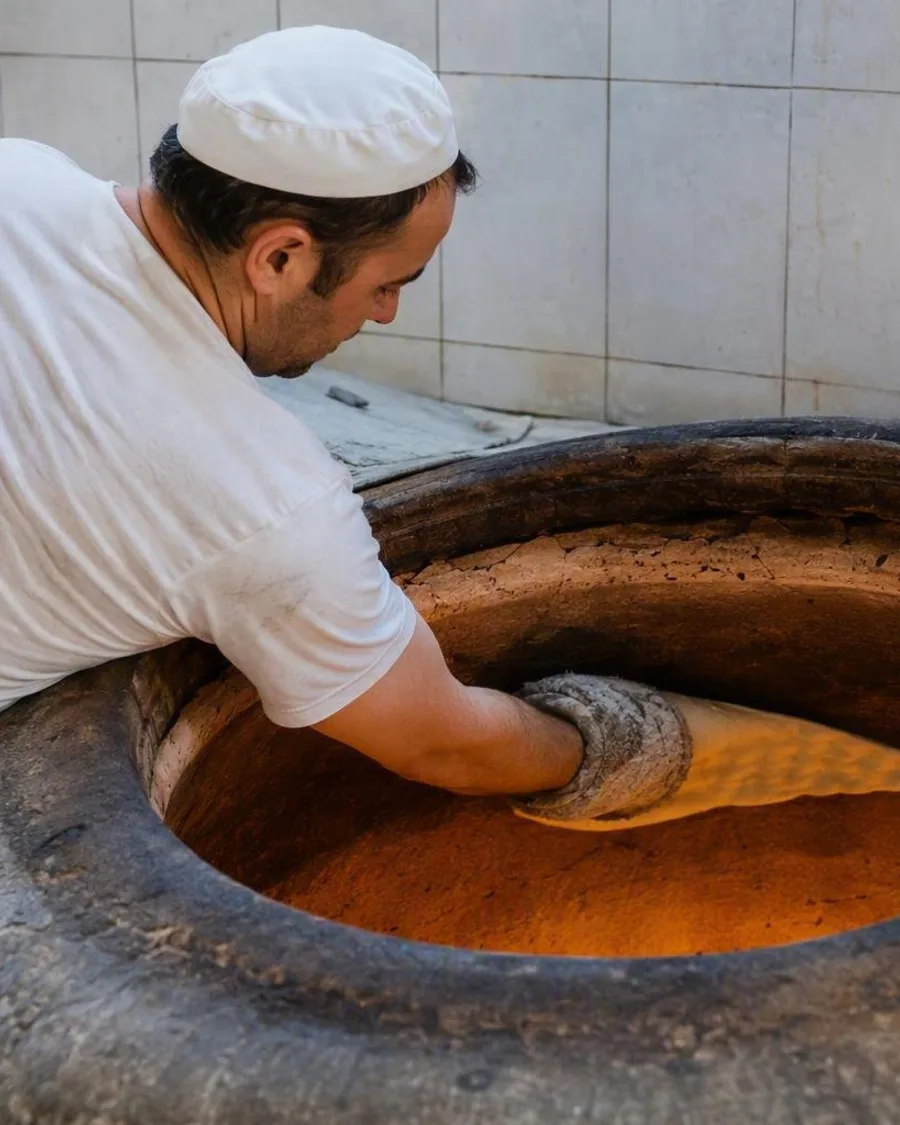
Bread shows the daily work behind a neighbourhood meal: a household’s marked dough at a Marrakesh communal oven, dark rye beside sourdough in Copenhagen, and bolillos from brick ovens in Mexico City. These ten working addresses and market settings sell local bread made through distinct local practices.
Routes from our editors
Travel through Samarkand
Editorial routes connecting Samarkand with other countries, cities and hotspots.
No routes through Samarkand have been published yet.
More in Uzbekistan
Related hotspots
Other cities, nature areas and places within Uzbekistan.
There are no other hotspots in Uzbekistan yet.