
Myanmar

Pagodas, tea shops and river plains

Myanmar

Myanmar brings gilded Buddhist monuments, lively food traditions and many distinct cultures into one complex country.

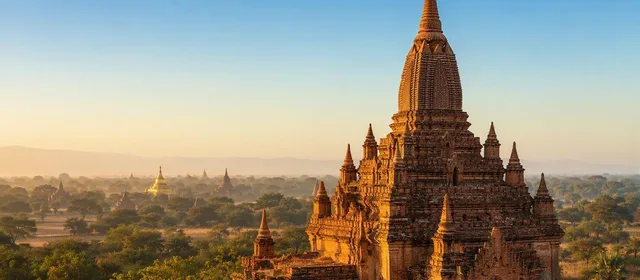
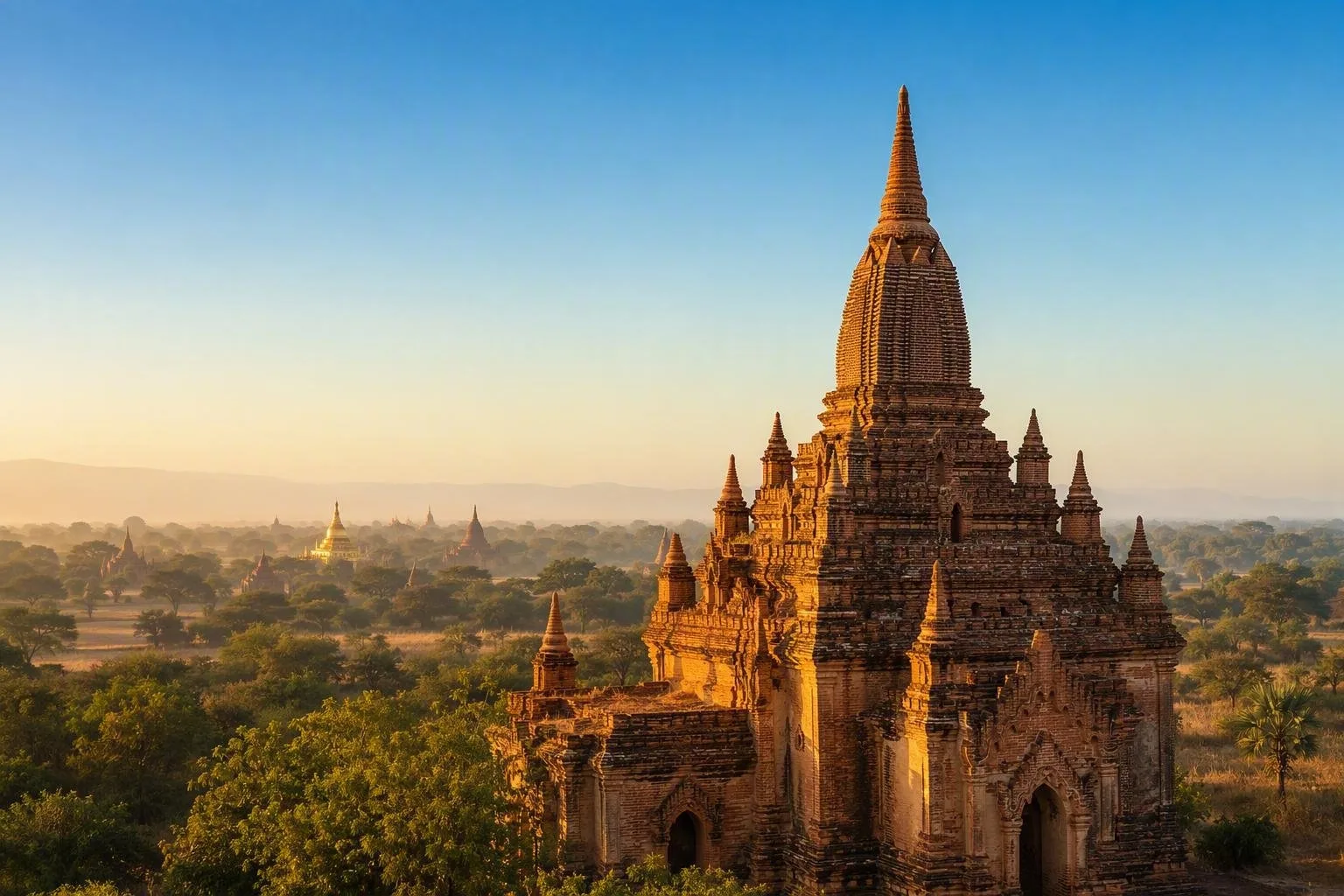
Bagan’s brick temples stretch across a dry plain beside the Ayeyarwady River, their spires catching the first light. In Yangon, worshippers circle the gold-covered Shwedagon Pagoda as tea shops fill with office workers and street vendors serve mohinga for breakfast. Both places centre Buddhist practice, yet they show very different parts of the country. Bagan recalls the scale of an ancient kingdom. Yangon carries colonial-era streets, busy markets and the influences of generations of migrants.

Around Inle Lake, homes and workshops stand on stilts above the water, while farmers grow tomatoes and flowers in floating gardens. Markets in the Shan hills bring together produce, textiles and cooking from different ethnic communities. At the table, rice often comes with small shared dishes: curries, sour soup, vegetables and lahpet thoke, a salad of fermented tea leaves, cabbage, pulses and nuts.

Myanmar’s famous pagodas show only one part of the country. Mon communities shaped religious life and cities in the south. Rakhine kingdoms faced the Bay of Bengal to the west. Trade linked the central plains with India, China and the rest of Southeast Asia. Temple decoration, scripts, market food and local customs still show those connections. Leave time for a tea shop, a market stall and an unhurried walk beyond the headline sights; they offer a closer view of Myanmar’s everyday life.

When to go

Best time to travel

Monthly values are indicative average maximum temperatures for Yangon. Temperatures and rainfall vary meaningfully between the central plains, coast, highlands and northern regions. Monthly values are indicative average maximum temperatures for Yangon. Temperatures and rainfall vary meaningfully between the central plains, coast, highlands and northern regions.

jan32°C feb35°C mar37°C apr38°C may34°C jun31°C jul30°C aug30°C sep31°C oct32°C nov32°C dec31°C

Weather in the capital

Practical Myanmar

On every country page we show the current weather for the capital.

Naypyidaw
Morning27°Cclear
Afternoon33°Cpartly cloudy
Evening28°Cclear
today33°C / 24°Chigh and low

Current forecast by Open-Meteo

Visa and entry

For current entry information, consult Myanmar’s official immigration authority before departure.

Getting around

Long-distance buses connect many cities. Trains are slower and suit travellers with flexible plans. Boats serve selected river and lake routes, while taxis and app-based cars operate in larger cities.

Paying locally

Cash remains important, especially outside major cities. Carry clean kyat notes in several denominations, and check whether a business accepts cards before you buy.

Where to stay

Yangon, Bagan, Mandalay and Inle Lake have the widest choice of hotels and guesthouses. Smaller towns usually have simpler options, so confirm availability in advance.

Before you leave

Worth knowing

A practical starting point for your trip. Check current conditions and local information before you leave.

01

Calling code

Myanmar’s international calling code is +95.

02

Driving side

Traffic keeps to the right, although many vehicles have right-hand drive.

03

Language and script

Burmese is the official language and uses the rounded Burmese script. Many communities also speak their own languages.

04

Personal names

Many Myanmar names do not include a fixed inherited surname. Use a person’s full name unless they indicate otherwise; U and Daw are common honorifics.

05

Tipping

Tipping is not a long-established custom, but staff may appreciate a modest amount for attentive service. Some bills include a service charge.

06

Meals and shared dishes

Rice usually anchors a meal, with curries, soups, salads and vegetables shared at the table. Diners often take small portions from several dishes.

07

Business hours

Banks and government offices generally open Monday to Friday. Shops and restaurants may open daily, with hours and public-holiday closures varying by place.

08

Mobile connections

Prepaid SIM cards are widely used and usually require passport registration. Coverage and data quality vary outside cities and main towns.

09

Weights and measures

Metric units are common, but markets may use traditional units such as the viss, also called peittha, which equals about 1.63 kilograms.

10

Removing footwear

People commonly leave footwear at the door of homes. Remove shoes and socks before entering pagoda platforms and designated monastery areas.

11

At Buddhist sites

Cover shoulders and knees, keep your feet pointed away from Buddha images and monks, and ask before photographing people. Visitors commonly walk clockwise around shrines.

12

River and lake boats

Passenger boats use local jetties, and departure times may change with water levels and demand. Confirm the pier, fare and departure time locally.