Sight · Myanmar
Shwedagon Pagoda
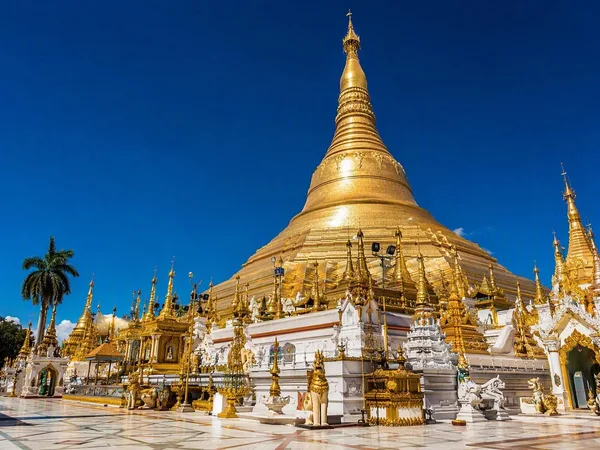
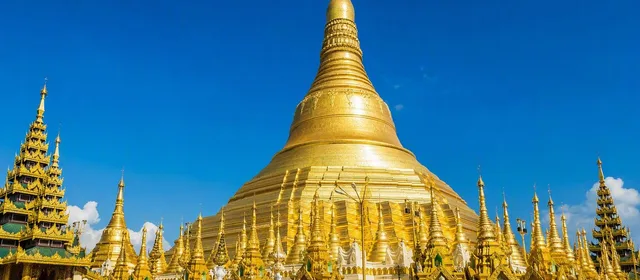
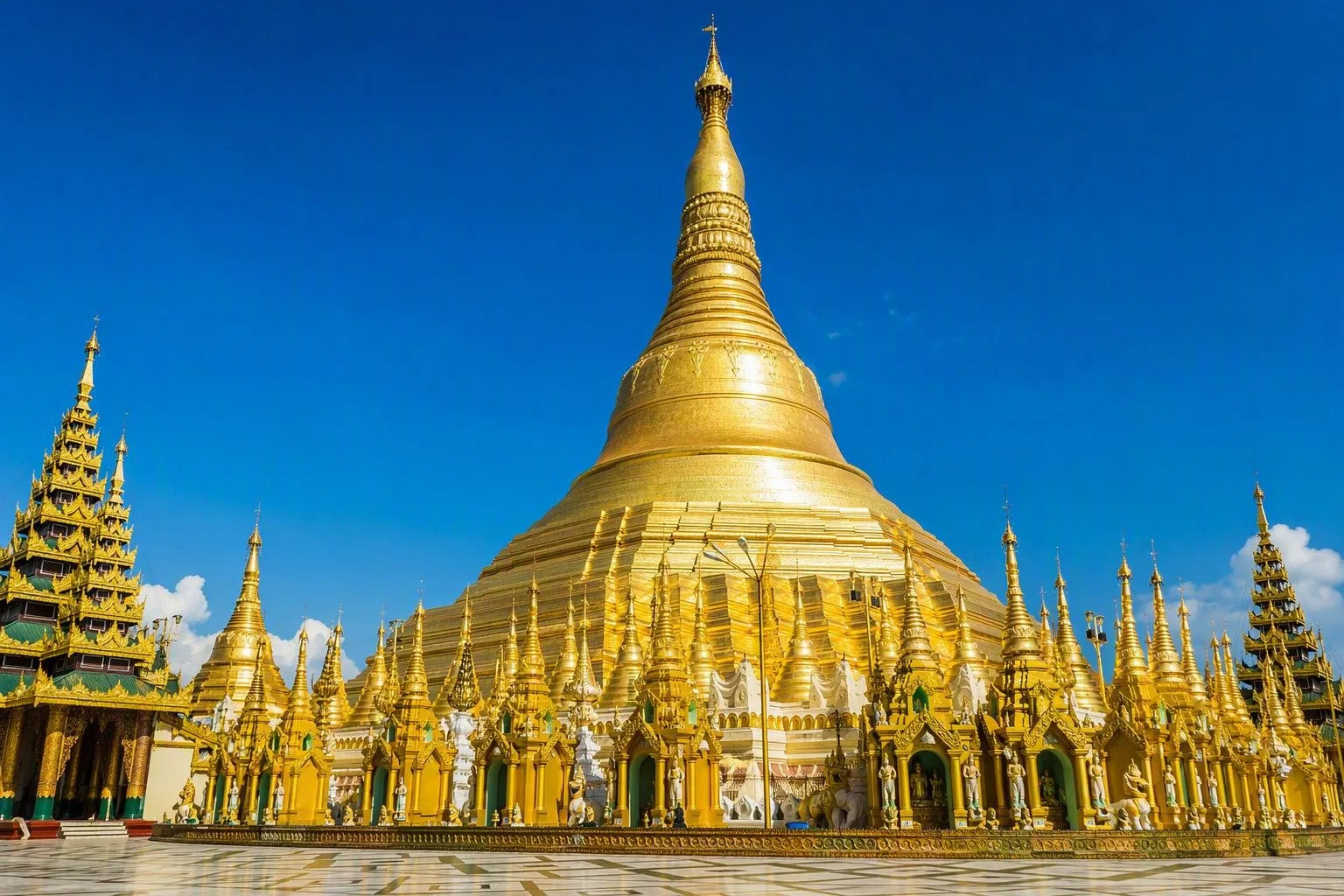
Shwedagon Pagoda is Yangon’s great gold-covered Buddhist stupa, standing on Singuttara Hill in central Yangon. It is Myanmar’s most sacred Buddhist monument and an active place of worship, not a museum.
Orientation
Shwedagon Pagoda—formally Shwedagon Zedi Daw, or “Great Golden Mountain Stupa”—stands on Singuttara Hill in Yangon. The central stupa rises from the upper terrace within a 46.3-hectare sacred precinct of shrines, prayer halls, statuary and bells.
It is believed to enshrine eight hairs of Gautama Buddha, alongside relics associated with three earlier Buddhas: the staff of Kakusandha, the water filter of Konagamana and Kassapa’s robe. That tradition makes it Myanmar’s principal Buddhist pilgrimage site.
The central stupa and its setting
The brick plinth and main stupa are covered in genuine gold plates, while the hti, the ceremonial umbrella crowning the structure, is set with diamonds and other jewels. The pagoda’s present form is the result of successive rebuilding and enlargement: scholarship places its first construction between the 6th and 10th centuries CE, while the monument was substantially raised and terraced in the 15th century.
The main stupa occupies the top platform. Around it, allow time for the dense ring of pavilions, smaller shrines, Buddha images and large bronze bells. This is a working sacred complex, so the most useful approach is a slow circuit rather than a rushed search for a single viewpoint.
How to move through the site
Four covered monumental stairways climb the hill from the north, south, east and west. The approaches pass intermediary terraces with monasteries and prayer halls before reaching the upper platform.
Walk clockwise around the stupa, keeping it on your right. The circuit follows local devotional practice and leads past the directional shrines. Notice the planetary positions around the central structure: they express a Hindu-Buddhist cosmological order rather than serving as simple decoration.
At the eight planetary posts, devotees make offerings and pour water over Buddha images associated with their day of birth. Wednesday is divided into morning and afternoon, creating eight posts rather than seven.
Visiting respectfully
This is a place of prayer throughout the day. Dress modestly, with shoulders and knees covered, and remove both shoes and socks before entering the platform. Keep voices low around worshippers and prayer halls.
The open terrace can be hot underfoot at midday. Early morning is cooler; late afternoon gives softer light on the gold-covered stupa. A taxi or Grab from central Yangon takes roughly 10 minutes in light traffic; Yangon buses also serve the area.
A useful historical distinction
Local tradition dates the pagoda more than 2,600 years ago. Historical and archaeological research instead places its origin between the 6th and 10th centuries CE. Both histories matter here: one explains the site’s religious authority, the other the long sequence of repair, donation and rebuilding visible in the monument today.
From the magazine
Stories about Shwedagon Pagoda
Editorial stories linked directly to Shwedagon Pagoda.
No stories about Shwedagon Pagoda have been published yet.
Routes from our editors
Travel through Shwedagon Pagoda
Editorial routes connecting Shwedagon Pagoda with other countries, cities and hotspots.
No routes through Shwedagon Pagoda have been published yet.
More in Myanmar
Related hotspots
Other cities, nature areas and places within Myanmar.