City · Myanmar
Yangon
Yangon is Myanmar’s largest city and commercial centre, on the east bank of the Yangon River in the south of the country. Its British-planned downtown, active Buddhist sites and lakes make it the country’s most layered urban destination.
Get oriented
Yangon, also known historically as Rangoon, was Myanmar’s capital from independence until 2006, when the national administration moved to Naypyidaw. It remains the capital of Yangon Region and the country’s main commercial city.
The practical visitor map has two cores. Downtown is the flat, gridded former colonial cantonment between the river and Sule Pagoda. Shwedagon and Kandawgyi lie north and east of it, around the city’s defining hilltop shrine and lake. Do not try to cover both on foot in the heat; use a taxi between them.
Start at Shwedagon
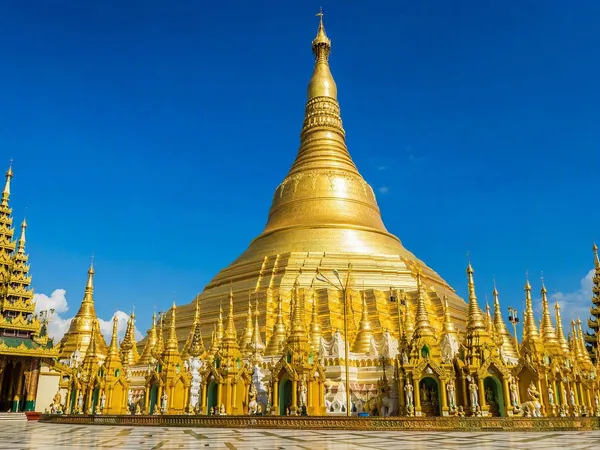
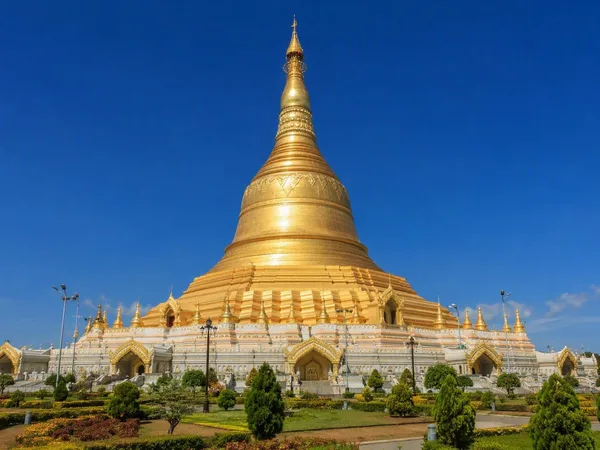
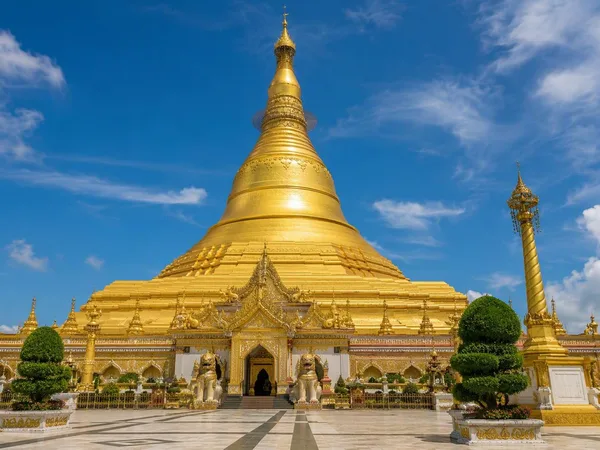
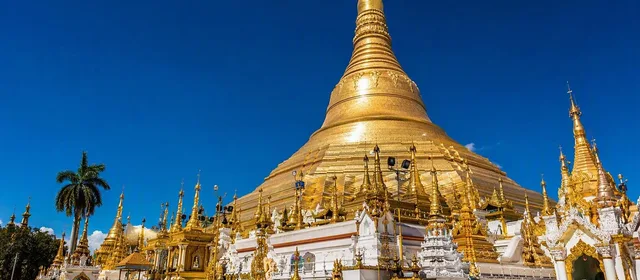
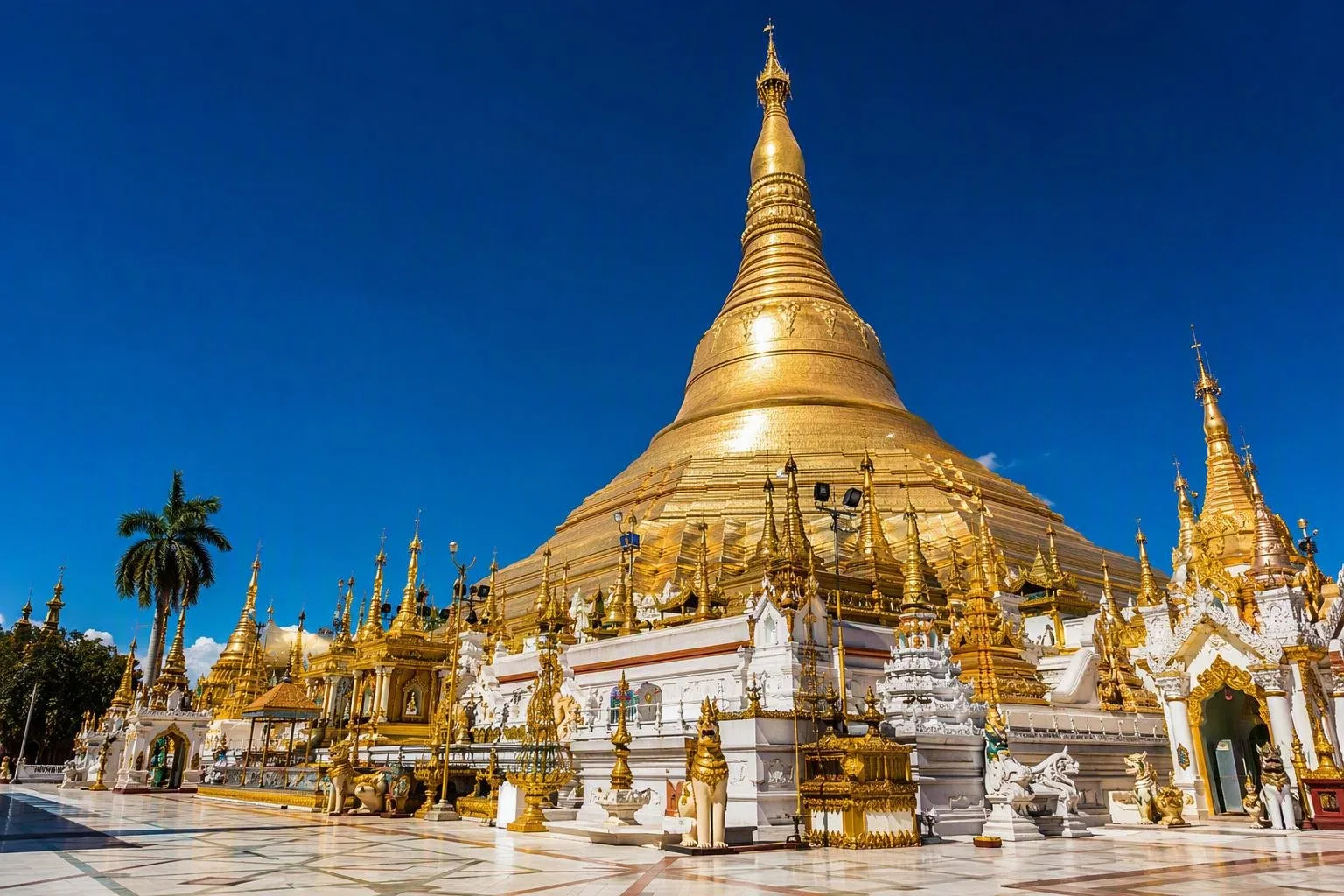
Shwedagon Pagoda on Singuttara Hill is Myanmar’s foremost Buddhist stupa and Yangon’s essential landmark. The gold-covered central stupa stands within a large sacred complex of shrines, pavilions, bells and monasteries. Four covered stairways approach the upper platform from the cardinal directions.
Give it time rather than treating it as a quick photo stop. Walk the marble terrace slowly, notice the planetary posts and smaller shrines, and remember that this is an active place of worship.
- Dress: Cover shoulders and knees.
- At the entrance: Remove shoes and socks.
- Conduct: Keep voices low and do not obstruct worshippers.
Read downtown on foot
Sule Pagoda anchors the colonial street grid. Around it, Maha Bandula Park, Yangon City Hall and the former High Court make a compact first walk. Continue along Pansodan and Strand Road for the commercial architecture that grew from Yangon’s role as the colonial port and administrative centre.
For a different kind of historic building, visit Bogyoke Aung San Market. Its covered lanes hold more than 2,000 shops selling textiles, handicrafts, jewellery and gems. Treat gem purchases cautiously: browse for craft and fabric, but use specialist knowledge for any high-value stone.
Lakes and the slow railway
Kandawgyi Lake sits beside Shwedagon’s eastern side. Its park and waterside paths provide a useful break from the downtown grid, with the pagoda visible across the lake in places.
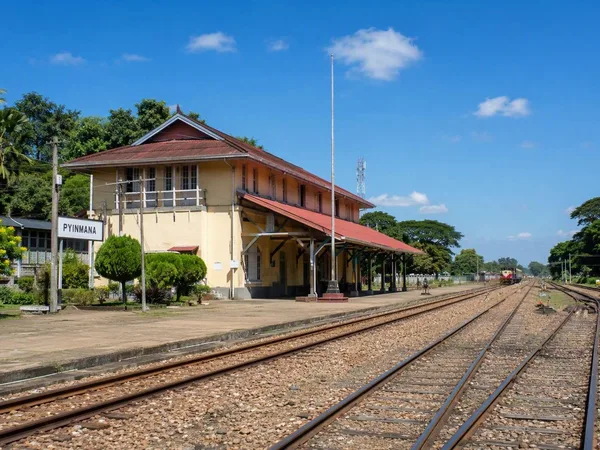
The Yangon Circular Railway is a working 46-kilometre loop, not a fast city transfer. Board from Yangon Central Station for a slow view of neighbourhoods beyond the central sights. Services and timings can change, so confirm the day’s operating pattern at the station before committing several hours.
Timing and travel conditions
Yangon is warm, humid and rainy for much of the year. Plan outdoor walks early or late, and keep the middle of the day for markets, museums or a tea stop.
Important: Myanmar’s security situation is unstable. Current Dutch travel guidance advises travel only when necessary and specifically urges caution in Yangon. Avoid demonstrations, military sites, personnel and vehicles; do not photograph military targets, uniformed people or infrastructure such as bridges. Conditions and local restrictions can change quickly.
From the magazine
Stories about Yangon
Editorial stories linked directly to Yangon.
No stories about Yangon have been published yet.
Routes from our editors
Travel through Yangon
Editorial routes connecting Yangon with other countries, cities and hotspots.
No routes through Yangon have been published yet.
More in Myanmar
Related hotspots
Other cities, nature areas and places within Myanmar.