City · Azerbaijan
Baku
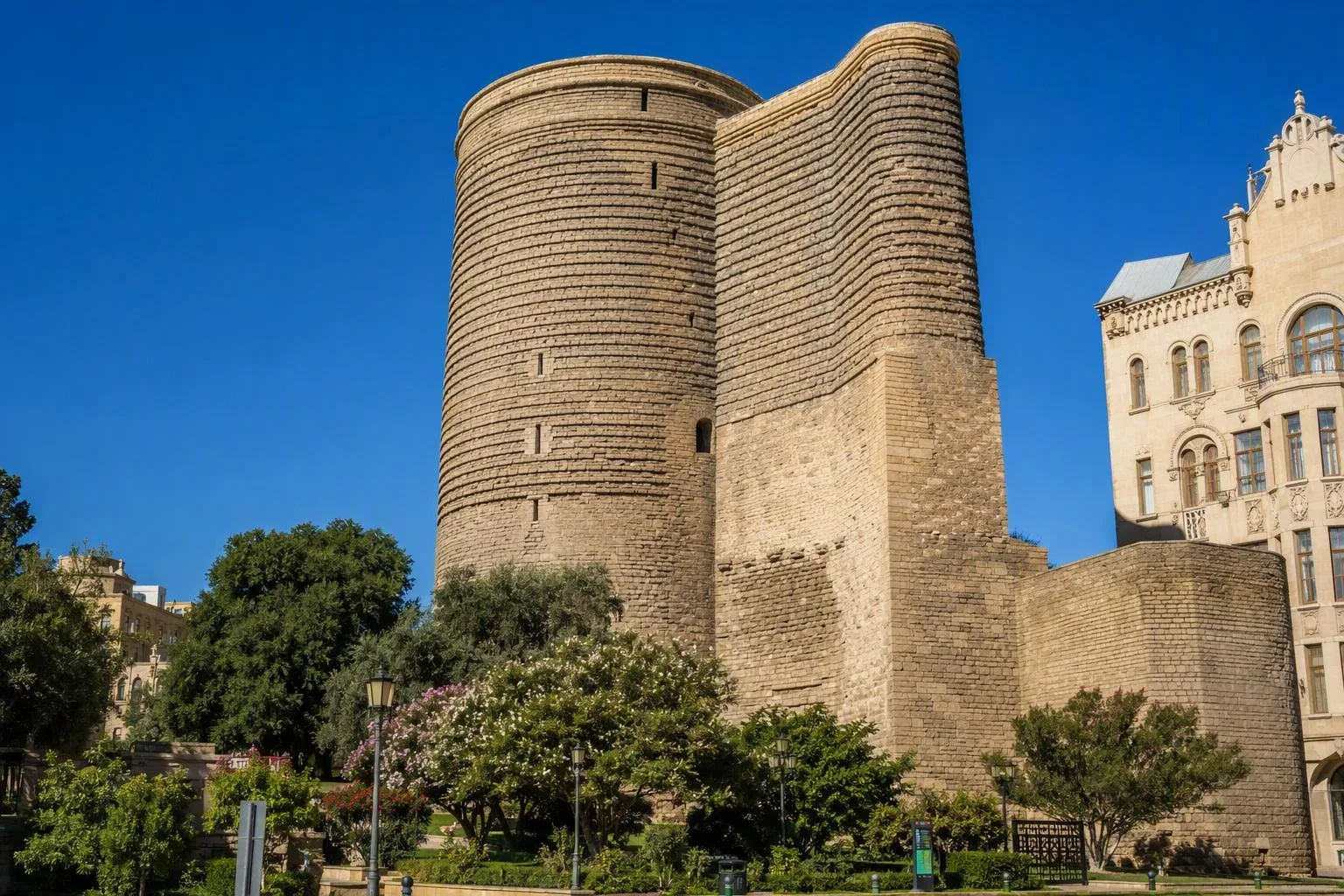
Baku is Azerbaijan’s Caspian Sea capital, where the medieval walled quarter of Icherisheher meets a modern waterfront city. Come for the Old City, the landmark Maiden Tower and a food culture built around herbs, saffron, pomegranate and qutab.
Start with the old city
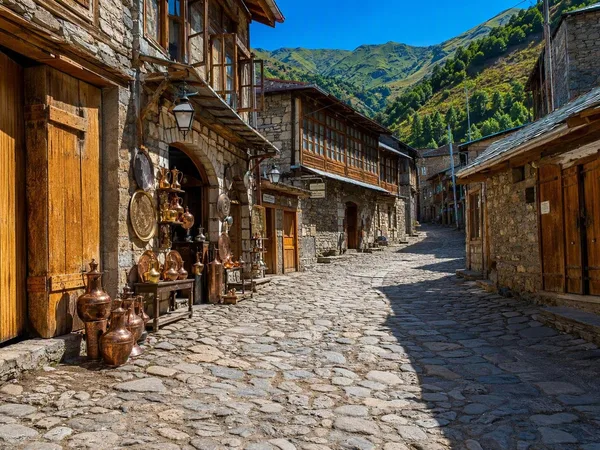
Icherisheher is Baku’s historic core: a compact walled district of stone lanes, caravanserais, mosques and bathhouses. Its defensive walls largely date from the 12th century. This is the place to walk rather than race between landmarks.
The essential stops are close together:
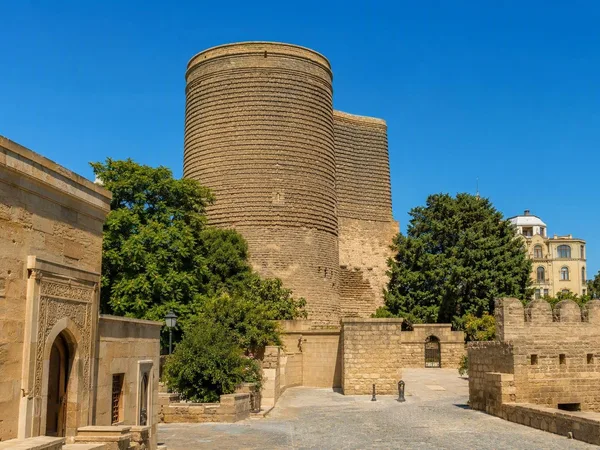
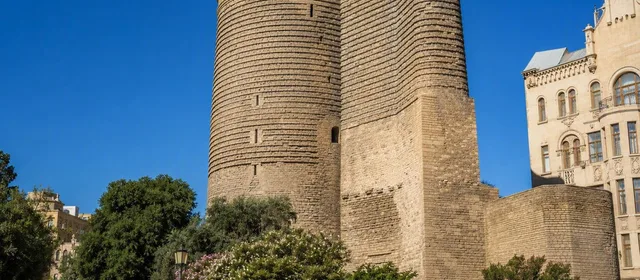
- Maiden Tower: the city’s cylindrical stone symbol, rebuilt in the 12th century over much older structures.
- Palace of the Shirvanshahs: a 15th-century palace complex on the high ground of Icherisheher.
- Caravanserais and hammams: reminders that this was a working trading city, not a sealed monument district.
The Old City is still lived in and used daily. Keep voices down in residential lanes and do not treat doorways or shopfronts as photo sets.
Read the city from the waterfront
Baku sits on the western shore of the Caspian Sea, and the seafront gives the clearest sense of its scale. Use the promenade as the link between the old stone city and the newer districts. The Flame Towers are the most conspicuous modern marker on the skyline; Icherisheher supplies the architectural counterweight.
Baku is known as the City of Winds. A windproof outer layer is useful in every season, particularly along the exposed waterfront. Build walks around the Old City and boulevard, then use taxis or the metro for longer cross-city hops.
Eat qutab and follow the ingredients
Qutab is Baku’s fast, practical flatbread: thin dough folded into a half-moon around minced meat, herbs, cheese or pumpkin, then baked quickly on a convex saj. Eat it hot, often with yoghurt; sumac adds a sharp, tart finish.
For the herb version, göy qutabı, look for fillings based on dill, coriander, mint, spinach, parsley and onion. Meat qutab commonly uses lamb or beef and onion; pomegranate or sour plum paste can cut through its richness.
Other useful orders:
- Dushbara: very small lamb dumplings in broth, finished with dried mint.
- Plov: rice dishes often accented with saffron, meat, dried fruit or herbs.
- Pakhlava with tea: layered walnut pastry finished with honey, served as part of the tea table.
Shop Yashil Bazaar
Yashil Bazaar, the Green Bazaar, is Baku’s principal food market. Its rows bring together fresh fruit and vegetables, herbs, spices, nuts, dried fruit, juice, compotes, jam, saffron and other regional products. It is a useful first stop for understanding the ingredients behind the restaurant menu.
Ask to taste dried fruit, nuts or preserves when offered, compare grades before buying saffron, and bargain politely rather than aggressively. Spring through autumn brings the broadest seasonal choice. For food gifts, dried fruit, nuts and spices travel more easily than fresh produce.
Practical rhythm
Give Icherisheher a full morning or late afternoon; its narrow streets are most manageable on foot. Pair the bazaar with lunch centred on qutab, then return to the waterfront toward evening. The city uses the Azerbaijani manat (AZN); carrying some small notes is useful for market purchases.
From the magazine
Stories about Baku
Editorial stories linked directly to Baku.
No stories about Baku have been published yet.
Routes from our editors
Travel through Baku
Editorial routes connecting Baku with other countries, cities and hotspots.
No routes through Baku have been published yet.
More in Azerbaijan
Related hotspots
Other cities, nature areas and places within Azerbaijan.